
NEW YORK, July 15, 2026, 09:07 EDT
- U.S. producer prices fell 0.3% in June, yet the 10-year Treasury yield remained near 4.58% after the release.
- Since January 2, the 10-year nominal and inflation-adjusted yields have each risen 39 basis points, leaving implied inflation compensation near 2.25%.
U.S. Treasury yields eased only slightly on Wednesday after a surprise fall in producer prices, with the 10-year note around 4.58%, the two-year near 4.16% and the 30-year close to 5.10% in early New York dealing. The harder signal for investors is that long borrowing costs are being held up by real yields, the return after inflation, rather than by a fresh jump in market inflation expectations.
The Producer Price Index fell 0.3% in June after May’s increase was revised down to 0.6%, while its 12-month rate slowed to 5.5%. Goods prices dropped 1.4%, led by a 6.4% energy decline, but services rose 0.2% and the index excluding food, energy and trade services remained 5.1% higher than a year earlier. Tuesday’s consumer-price report showed a similar energy-heavy cooldown.
| Inflation gauge | June monthly change | 12-month rate |
|---|---|---|
| PPI, final demand | -0.3% | 5.5% |
| PPI excluding food, energy and trade | +0.1% | 5.1% |
| CPI, all items | -0.4% | 3.5% |
| CPI excluding food and energy | 0.0% | 2.6% |
Treasury’s official par curves show how little the inflation component has changed. From January 2 through July 14, the five-year nominal yield rose 57 basis points and its real yield increased by the same amount. The 10-year nominal and real yields each gained 39 basis points. One basis point is 0.01 percentage point. The implied inflation spread, calculated by subtracting the real yield from the nominal yield, was essentially flat.
| Maturity | Nominal-yield change since Jan. 2 | Real-yield change | Implied inflation-spread change | July 14 nominal yield | July 14 real yield |
|---|---|---|---|---|---|
| 5-year | +57 bp | +57 bp | 0 bp | 4.31% | 2.03% |
| 10-year | +39 bp | +39 bp | 0 bp | 4.58% | 2.33% |
| 30-year | +22 bp | +24 bp | -2 bp | 5.08% | 2.87% |
At Tuesday’s close, the 10-year real yield stood at 2.33%, up from 1.94% at the start of the year. By calculation, that real component accounted for about 51% of the nominal yield. An Axios snapshot last week showed the same pattern across maturities, with real yields of 2.31% at 10 years and 2.86% at 30 years, levels high by the standards of recent decades.
For stocks, that is a valuation headwind even when monthly inflation cools, because future profits are measured against a higher risk-free return. Bond buyers get the other side of the trade: more inflation-adjusted income without taking corporate credit risk. The hurdle rate remains high.
A Reuters poll of 74 strategists put the 10-year yield at 4.48% in three and six months and 4.39% in a year. That is only 10 basis points below Wednesday’s level at the nearer horizons. Joseph Purtell of Neuberger Berman said “Current market pricing of Fed policy … is excessive,” and expected any yield decline to be led by shorter maturities. Reuters
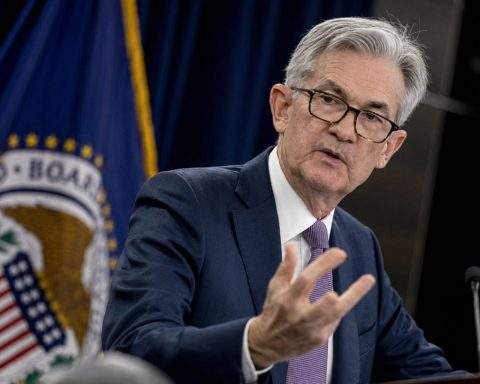
Near-term rates did react more strongly. The two-year yield fell to about 4.16% after the PPI release but remained roughly 41 basis points above the Federal Reserve’s 3.75% policy ceiling. Fed Chair Kevin Warsh said on Tuesday that the central bank had “no tolerance for persistently elevated inflation,” limiting how far one soft month can shift rate expectations. MarketWatch
But June’s relief may not survive July. Gasoline prices fell 12% in the PPI and 9.7% in the CPI during the ceasefire period. That ceasefire has since collapsed, and oil reached a four-week high after the United States reimposed a naval blockade of Iran. A renewed energy surge would hit headline inflation first and could feed into transport and distribution costs later.
The hawkish case remains visible in the analyst split. Meghan Swiber at Bank of America Corp. NYSE:BAC said the Fed’s June discussion showed inflation risks were the dominant concern. The bank forecast three quarter-point increases in 2026 and a 4.50% two-year yield at year-end. That outcome would turn Wednesday’s PPI rally into a false start.
Citigroup Inc. NYSE:C takes the other side. Rates strategist Jason Williams said, “Inflation is priced too sticky in the marketplace right now,” adding that no further Fed increases could remove more than 30 basis points from the 10-year yield. His 3.9% year-end forecast was the lowest in the Reuters survey. Reuters
For investors, the cleanest dividing line is now the real yield, not the next headline inflation print. If real rates stay near 2.3% at 10 years, softer data may help short-dated Treasuries without delivering a large fall in mortgage rates, corporate funding costs or equity discount rates. A broader market rally needs the real component to break lower too.
Related articles: Interest Rates








![US Stock Market Today 08/25/2026 [UPDATE: 00:06 EDT] [Micron and Sandisk Turn Green as QQQ Gains Overnight]](https://ts2.tech/wp-content/uploads/2026/08/US-market-dashboard-2026-08-25-0002-480x384.jpg "US Stock Market Today 08/25/2026 [UPDATE: 00:06 EDT] [Micron and Sandisk Turn Green as QQQ Gains Overnight]")