
NEW YORK, July 30, 2026, 07:04 EDT — The yield on the 30-year U.S. Treasury climbed to its highest mark since 2007 following the Federal Reserve’s decision to keep interest rates steady, as rising real yields spurred a sixth consecutive week of gains.
- U.S. cash equities were still in pre-open status, as trading in Treasuries continued.
- The yield on the 30-year bond was at 5.231% following a high of 5.247%.
- As of July 29, real yields accounted for roughly 93% of the gain in the 30-year since June 17.
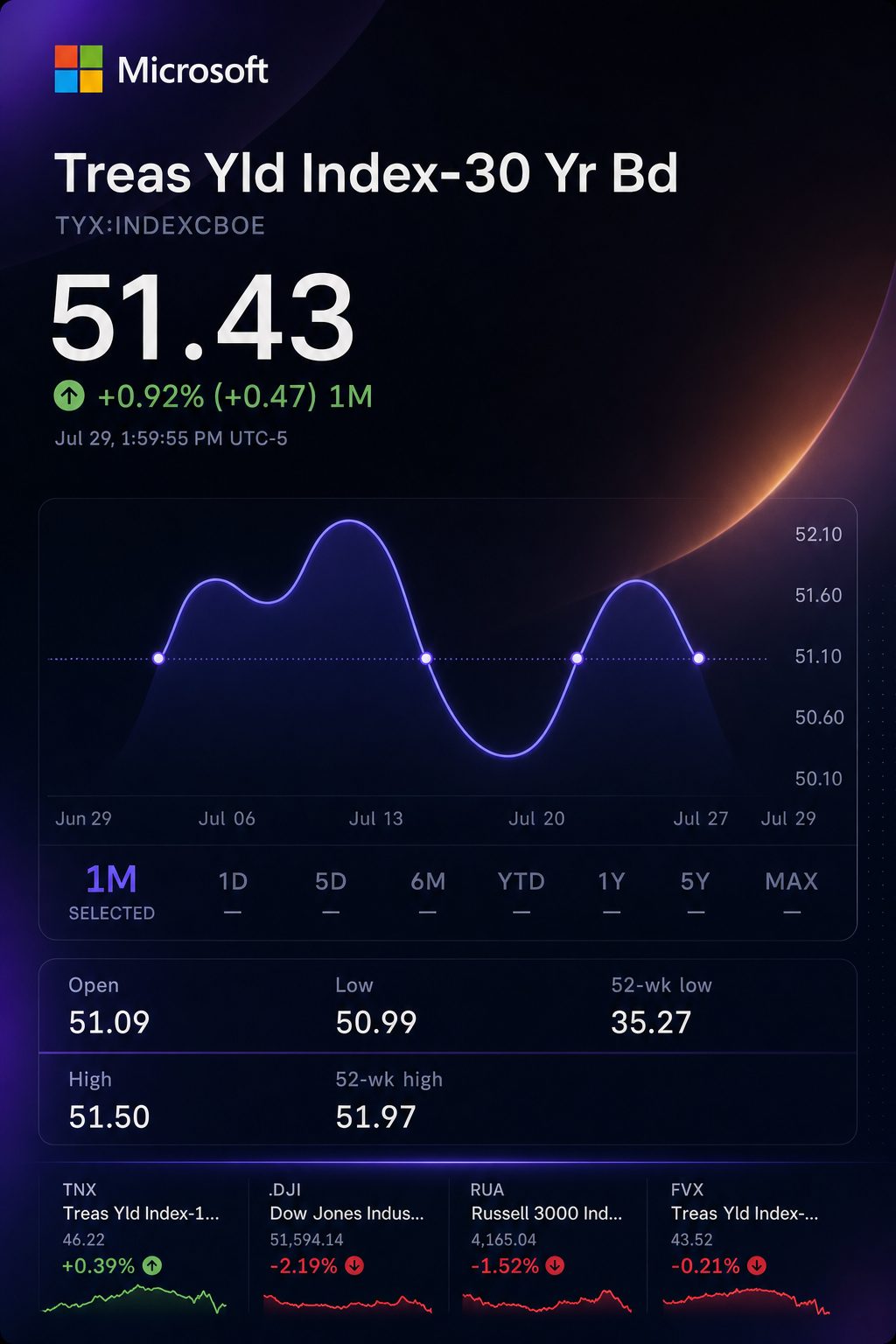
The yield on the 30-year U.S. Treasury held close to its highest level in 19 years on Thursday morning, after the Federal Reserve opted to keep interest rates steady. It stood at 5.231% at 6:49 a.m. EDT, rising by 2.7 basis points.
The increase has implications beyond just government bonds. Extended yields impact mortgage rates, corporate financing, and the expected returns on equities.
In initial trading, a pronounced steepening trend appeared. The yield on the policy-sensitive two-year note declined while yields on longer-dated maturities advanced.
| Treasury maturity | Early yield | Change from Wednesday | Intraday range |
|---|---|---|---|
| 2-year | 4.275% | -0.6 bp | 4.269%-4.306% |
| 10-year | 4.697% | +1.3 bp | 4.670%-4.715% |
| 30-year | 5.231% | +2.7 bp | 5.194%-5.247% |
The spread between yields on two-year and 30-year notes widened to approximately 95.6 basis points. Longer-dated bonds faced increased selling, while short-term rate expectations softened.
The six-week trend offers a stronger indication from investors. According to official Treasury curves, nearly all of the rise was driven by real yields.
| Maturity | Nominal-yield move | Real-yield move | Inflation-compensation proxy | Share from real yields |
|---|---|---|---|---|
| 10-year | +18 bp | +18 bp | 0 bp | 100% |
| 20-year | +26 bp | +21 bp | +5 bp | 81% |
| 30-year | +27 bp | +25 bp | +2 bp | 93% |
The period from June 17 to July 29 is included in the calculation. The inflation proxy is determined by subtracting the real par yield from the nominal par yield. This figure acts as an approximate indicator and is not considered a traded breakeven rate.
The difference matters to investors. Increases in real yields push up required returns, even with little movement in inflation compensation. This typically benefits cash and short-term debt while disadvantaging long-duration bonds and high-valuation stocks.
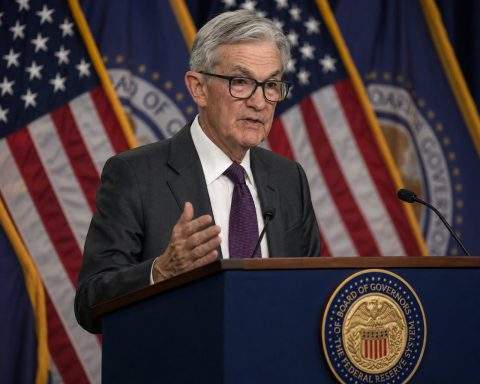
The Federal Open Market Committee maintained its target range at 3.50% to 3.75%. The decision passed with a 9-3 vote. Beth Hammack, Neel Kashkari, and Lorie Logan supported a 0.25 percentage point hike.
| Federal Reserve decision | June 17 | July 29 |
|---|---|---|
| Policy outcome | No change | No change |
| Rate target | 3.50%-3.75% | 3.50%-3.75% |
| Result of committee vote | 12-0 | 9-3 |
| Members favoring increase | 0 | 3 |
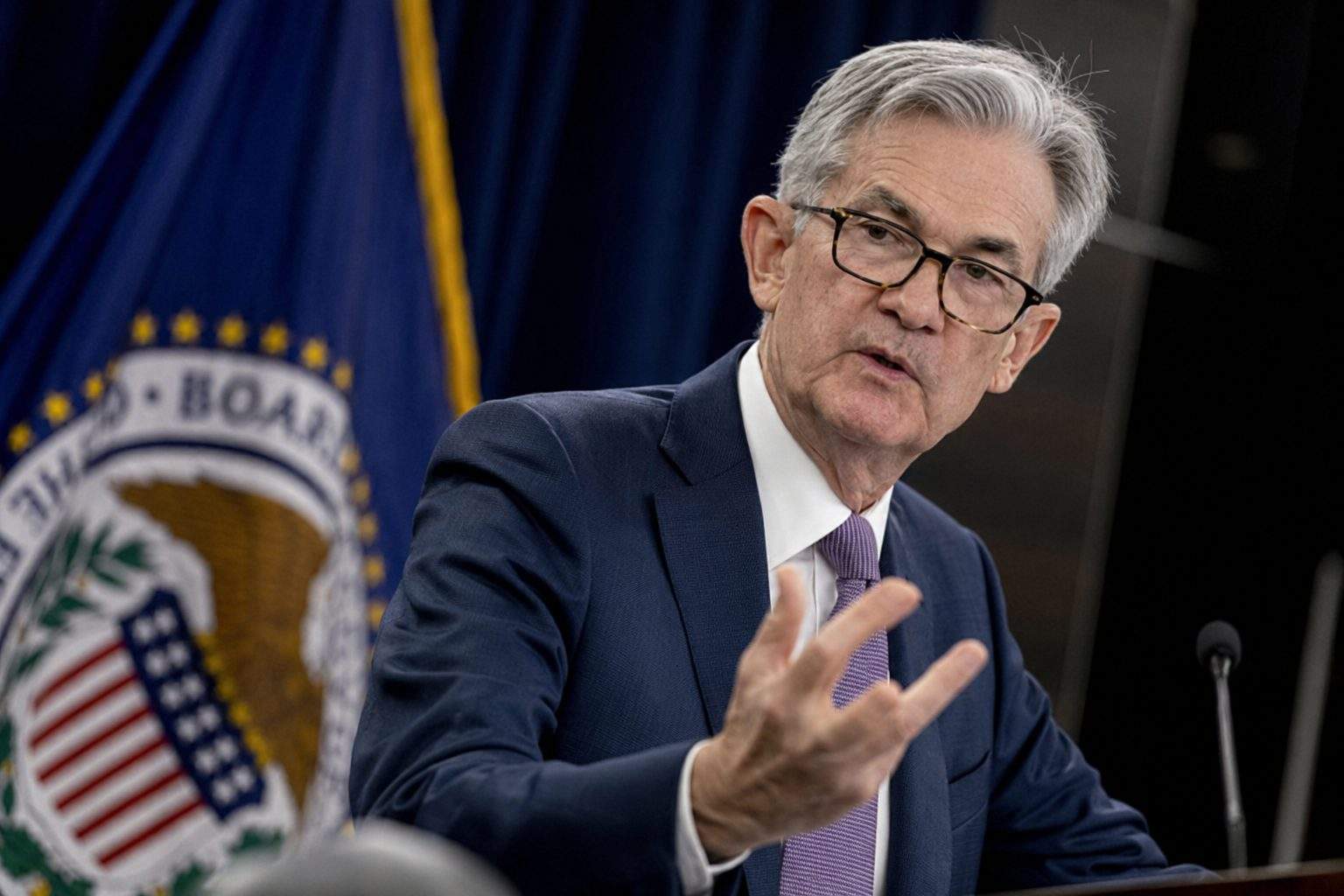
During an initial press conference transcript, Chair Kevin Warsh stated that markets were starting to “play the ball, not the referee.” He also noted that policymakers would take action whenever needed. Federal Reserve
Calvin Tse, head of U.S. strategy at BNP Paribas EPA:BNP, summed up investor worries. “If he is tough on inflation as he says, why has he not already acted?” he stated. Reuters
Rate pricing fluctuated significantly in response to the conflicting signals.
| Timing | Market-implied rate signal |
|---|---|
| Prior to the July meeting | 36% probability of an immediate hike |
| After the meeting peak | 77% likelihood of a September hike |
| Late Wednesday | 57% likelihood of a September hike |
| Early Thursday | 69% probability of a September hike |
| Up to end-2026 | Roughly 35 basis points of hikes factored in |
The figures represent estimates implied by the market, as opposed to forecasts. Their swift changes indicate uncertainty instead of a definitive policy trajectory.
The repricing extended across Europe, with Germany’s 30-year Bund yield climbing to 3.687%, a peak not seen in two months.
Wall Street was already factoring in increased financial pressure. On Wednesday, the Dow declined by 2.2%. The S&P 500 slipped 1.5%, and the Nasdaq retreated 1.7%.
September pricing will be assessed by upcoming labor and inflation data. Financial conditions would remain tighter than in June if real yields hold steady at these levels, even without further hikes.
Risks: Weaker economic figures could swiftly undo the recent long-end selloff. A fresh push in oil prices might raise inflation expectations and push yields further up.
Related articles: Interest Rates











![Australia Stock Market Today 08.22.2026 [UPDATE: 08.22.2026 08:37 AEST] [Weekly Recap and Week Ahead: Healthcare Leads, CPI Looms]](https://ts2.tech/wp-content/uploads/2026/08/AU-market-dashboard-2026-08-22-0837-480x384.jpg "Australia Stock Market Today 08.22.2026 [UPDATE: 08.22.2026 08:37 AEST] [Weekly Recap and Week Ahead: Healthcare Leads, CPI Looms]")