NEW YORK, July 29, 2026, 18:00 (EDT) — US mortgage rates increased after the Federal Reserve maintained its policy stance, with yields on long-dated Treasury notes also moving higher.
The 30-year fixed mortgage rate increased by two basis points to 6.78%.
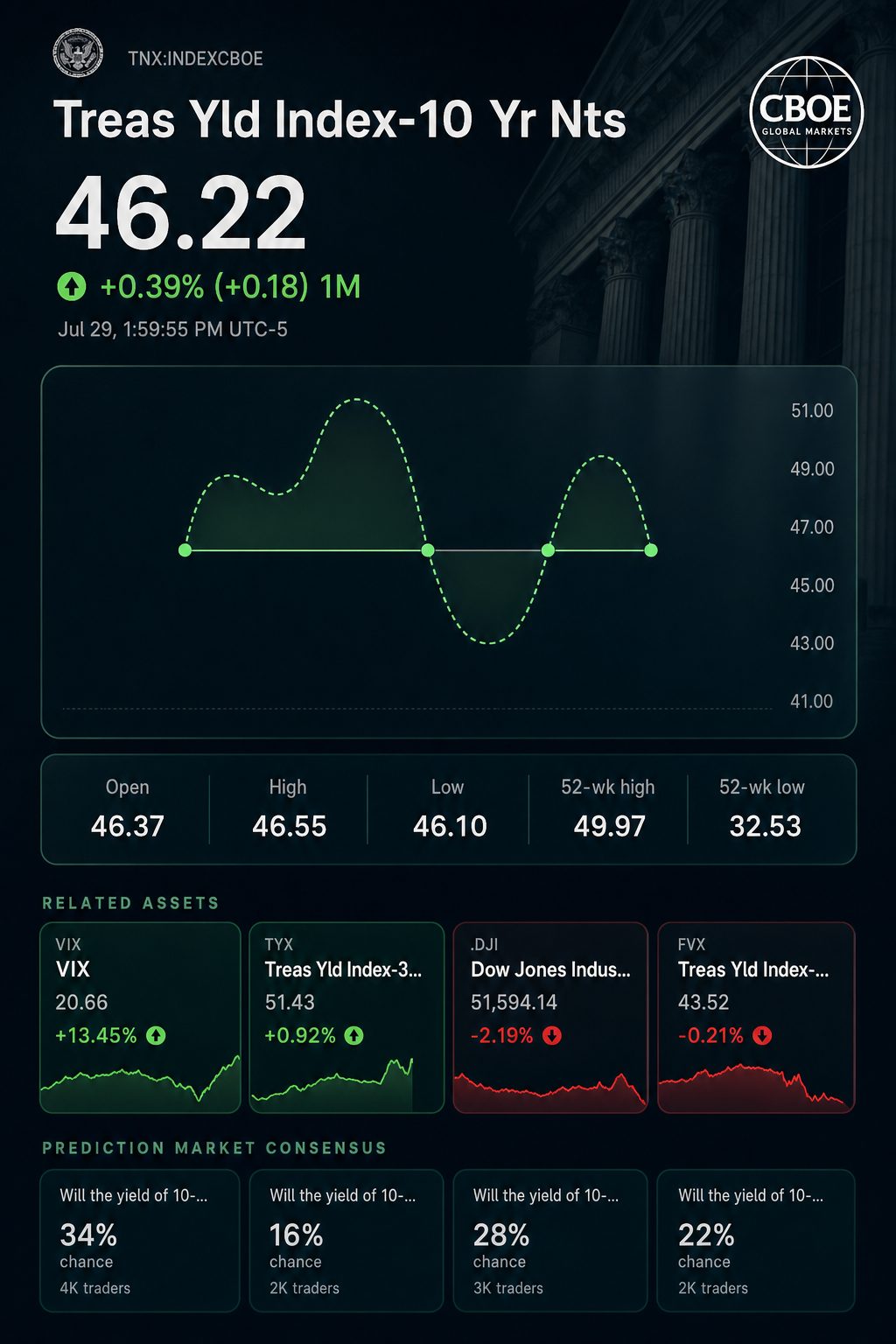
The yield on the 10-year Treasury rose by six basis points, while the 30-year yield increased by 11.
The gap between mortgage rates and Treasuries tightened, suggesting that the pressure is coming from long-term yields instead of issues unique to the mortgage market.
U.S. equity markets closed regular session at 4 p.m. EDT, while after-hours trading continued.
U.S. mortgage rates climbed after the Federal Reserve left its policy rate unchanged. The rise was attributed to higher long-term Treasury yields rather than changes in overnight borrowing costs.
The distinction is significant for investors involved in housing and mortgage credit. The gap between mortgage rates and 10-year Treasuries tightened by around four basis points. However, the rate for borrowers rose further.
The Federal Reserve left its target range unchanged at 3.50% to 3.75%. The decision saw a 9-3 split, with three regional presidents supporting a 0.25 percentage point hike. The statement noted that inflation was still above the 2% target.
Chair Kevin Warsh stated in an initial transcript, “This Fed will not waver.” He also pointed out that nominal and real Treasury yields are materially higher. Federal Reserve
Rate or yield
July 28
July 29
Daily change
Fed funds target range
3.50%-3.75%
3.50%-3.75%
0 bp
2-year Treasury
4.26%
4.22%
-4 bp
10-year Treasury
4.61%
4.67%
+6 bp
30-year Treasury
5.09%
5.20%
+11 bp
30-year fixed mortgage
6.76%
6.78%
+2 bp
Approximate mortgage/10-year spread
215 bp
211 bp
-4 bp
The spread uses same-day rates as published. Timing of publication and calculation methods vary.
The shift resulted in a steeper yield curve, with long-term yields climbing more than short-term yields. This scenario tends to be more challenging for mortgage borrowers.
The mortgage spread narrowed, indicating lender pricing was not the primary factor. The benchmark shift hurt borrowers. Housing-linked assets now require a rebound in long Treasuries, rather than just another pause from the Fed.
Demand had already softened during the prior week. The contract rate from the Mortgage Bankers Association increased by seven basis points to 6.76%. Overall applications decreased by 6.4%, with refinance activity down 9.9%. Applications for home purchases also saw a decrease.
MBA deputy chief economist Joel Kan stated that increased rates have contributed to “ongoing affordability challenges.” The data indicate there is pressure on volume, in addition to elevated monthly payments. Reuters
Prior to the decision, certain mortgage analysts anticipated a modest short-term drop. Lenders had already factored in some of the risk of an increase. However, after the meeting, the initial market close shifted in the opposite direction.
The possibility of another rate hike remains. CME Group’s NASDAQ:CME FedWatch tool indicated a 57% chance of a rate increase in September after the central bank left rates unchanged on Wednesday.
Nationwide’s chief economist, Kathy Bostjancic, described the three dissents as “increasingly more hawkish.” However, she maintained her view that existing rates should stay steady this year. Reuters
June inflation figures and the preliminary estimate for second-quarter GDP are due Thursday. The July employment report will be published on August 7. Either release could swiftly impact long-term yields and mortgage rates.
Risks: A pullback in inflation or growth numbers may undo Wednesday’s selloff in long-dated yields. Stronger data or new energy price pressures could drive mortgage rates up to 7%. These are possible scenarios, not predictions.
The message is direct. Keeping rates steady by the Fed has not brought relief to housing finance. Easing for mortgages now relies increasingly on a decline in long-term Treasury yields.
According to Mortgage News Daily’s most recent confirmed daily index, the 30-year fixed mortgage rate on July 29 stands at 6.78%. The 15-year fixed rate averages 6.32%, with jumbo mortgage rates at 6.90%. Current averages for FHA and VA loans are reported at 6.34% and 6.36%. By comparison, Freddie Mac’s latest weekly figure for the 30-year average is lower at 6.58%. The difference between these numbers is due to Freddie Mac’s survey methodology covering multiple days.
What caused mortgage rates to increase despite the Fed keeping rates unchanged?
The Federal Reserve kept its target range steady at 3.50% to 3.75%. Three policymakers supported a quarter-point hike, indicating ongoing worries about inflation pressures. The 10-year Treasury yield climbed by six basis points to 4.67%. Mortgage rates generally track longer-term bonds rather than the overnight federal funds rate, meaning borrowing costs still increased.
Have mortgage rates nearly reached their highest point?
The current daily 30-year average rate is 6.78%, just below the 52-week high of 6.85%. It stands 79 basis points higher than the 52-week low of 5.99%. The daily index is only one basis point below the level from the same day last year. Positioned near the top of the recent range, but not at a confirmed peak, as long-term yields and inflation risks remain volatile.
What are the most recent projections for mortgage rates up to 2027?
Fannie Mae forecasts average mortgage rates at 6.4% for both the third and fourth quarters of 2026. For most of 2027, it predicts an average of 6.3%, dropping to 6.2% in the fourth quarter. These interest rate projections are based on market data up to June 30. Fannie’s outlook also used an assumed 4.5% yield for the 10-year Treasury in late 2026. As of July 29, the official yield was 4.67%, above that assumption. This difference points to potential upward risk for Fannie’s mortgage rate forecast.
Is it possible for the 30-year mortgage rate to dip under 6% in 2026?
While rates under 6% are still attainable, this is not Fannie Mae’s main scenario. For the fourth quarter of 2026, it projects an average rate of 6.4%. The lowest rate from Mortgage News Daily in the past 52 weeks was 5.99%, indicating that short-term declines are possible. For rates to stay below 6%, Treasury yields would likely need to decline significantly. This could be prompted by slower economic growth or reduced inflation. The timing for such developments remains unclear.
How does a 6.78% mortgage rate affect monthly payments?
A 30-year mortgage of $400,000 at a 6.78% interest rate requires a monthly payment of around $2,602. If the rate is 6.00%, the monthly payment for the same loan amount drops to about $2,398. That results in a $204 difference per month, or approximately $2,450 more in costs over a year. These figures account only for scheduled principal and interest. Actual payment amounts would be higher when including taxes, insurance, association fees, and mortgage insurance.
What do mortgage applications indicate about the demand in the housing market?
Latest application figures indicate another decline from would-be homebuyers. The dollar amount of purchase applications slipped 2.5% for the week ending July 24, standing 14.8% lower than the same period a year ago. Refinance application dollar volume fell 6.2% on the week, but was still up 6.0% on an annual basis. The trend points to more significant pressure on purchase demand compared with the same time last year.
Are elevated mortgage rates likely to push down national home prices?
Fannie Mae anticipates total home sales will reach 4.763 million in 2026, reflecting an increase of just 0.2% from 2025. Its outlook for the home-price index indicates 2.3% year-over-year growth in the fourth quarter. The base forecast signals that transaction volumes will remain mostly flat, with no widespread price drop across the country. However, conditions in individual local housing markets may vary significantly from the national trend.
How do present rates affect stocks in the mortgage sector?
Fannie projects single-family mortgage originations to reach $2.298 trillion in 2026. Of that amount, $1.446 trillion comes from purchase loans and $852 billion from refinancing, with refinancing accounting for around 37% of the total. Should rates stay close to 6.8%, these origination volume expectations may come under strain. Originators are likely to see diminished volumes, whereas businesses with a larger servicing focus may hold up better. Effects on stocks will depend on the particular company.
What are the next key factors for mortgage-rate investors to monitor?
The 10-year Treasury yield continues to serve as the most transparent daily market benchmark, closing at 4.67% on July 29, up six basis points. The Federal Reserve noted ongoing energy supply shocks and inflation that exceeds its target. Typically, a decline in long-term yields would drag mortgage rates lower. However, if energy inflation returns or bonds are repriced with a hawkish outlook, mortgage rates may rise further. Volatility remains the more prudent expectation.
Shan Ahmed Khan is a senior markets reporter at TS2.tech. His coverage ranges from stocks and technology to economic developments across global markets. He worked in investment research and market analysis before becoming a financial journalist and is a graduate of the Lahore University of Management Sciences (LUMS).
Surprising starts and permits data can impact homebuilders, mortgage-sensitive stocks, Treasury yields, and the dollar if results deviate significantly from consensus estimates.
#02
Home Depot Q2
The results and outlook provide key insights into housing turnover, renovation demand, professional customer activity, and U.S. discretionary spending.
#03
09:15 ET industrial production
A robust or disappointing factory or utilities report can shift expectations for economic growth, cyclical stocks, bond yields, and the Federal Reserve’s policy direction.