
NEW YORK, April 27, 2026, 05:34 EDT
U.S. Treasury yields climbed early Monday, with investors heading into a Federal Reserve week and crude prices sticking close to $108 a barrel. Persistent jitters from the Middle East kept inflation risk in focus.
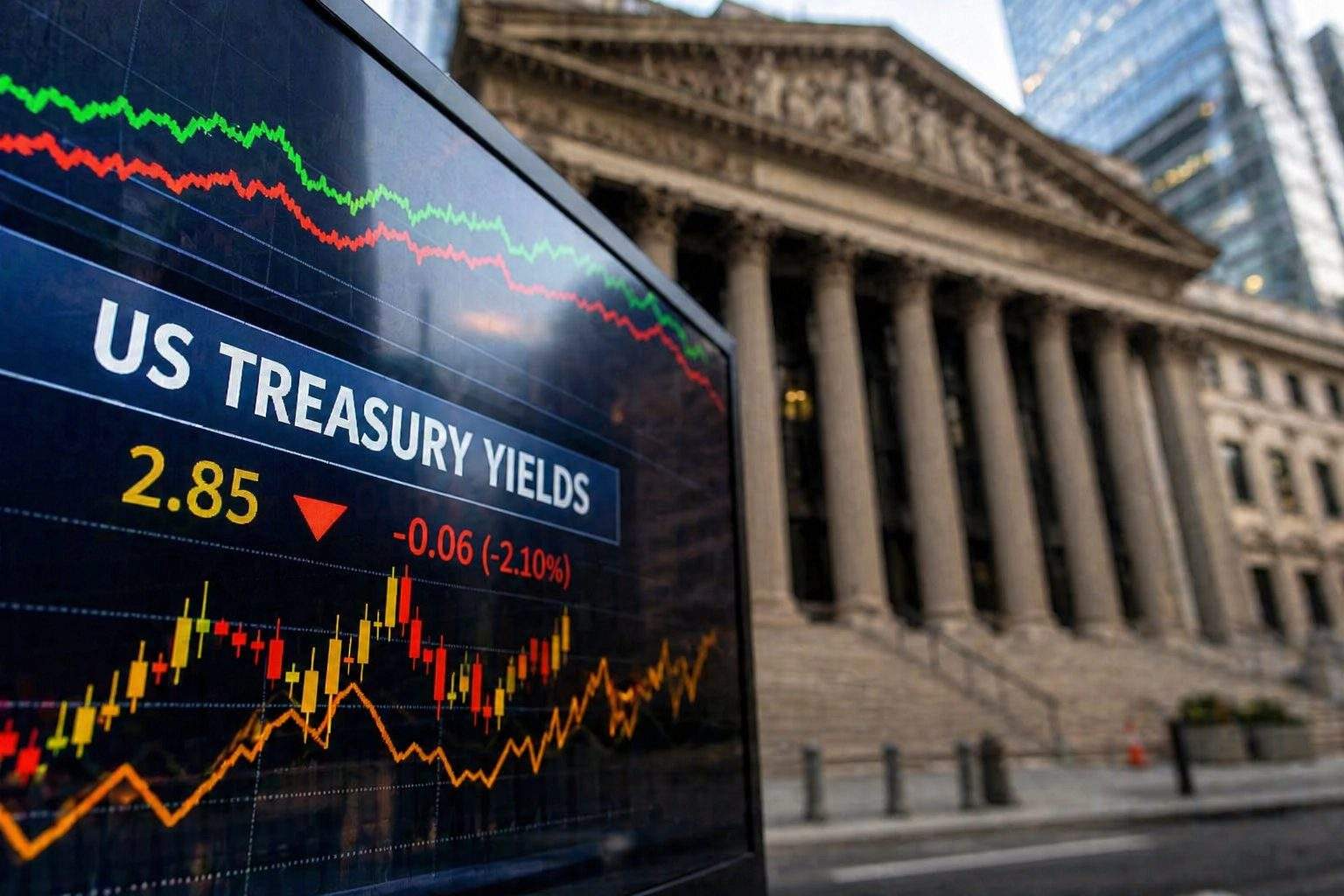
The two-year Treasury yield climbed 2.3 basis points, reaching 3.798%, and the 10-year yield tacked on 1.4 basis points to land at 4.323%, according to Tradeweb figures cited by Barron’s. For context, a single basis point equals one-hundredth of a percentage point. Yields tick higher as bond prices retreat.
This shift lands just ahead of the Fed’s two-day meeting, kicking off Tuesday and wrapping with a rate call Wednesday. According to the central bank’s calendar, the April 28-29 session closes out with a 2:30 p.m. press conference on April 29—leaving bond desks tight windows to adjust before Chair Jerome Powell steps up.
Back in March, the Fed kept its target range locked at 3.50% to 3.75%, calling inflation “somewhat elevated.” Governor Stephen Miran broke ranks, pushing for a 25 basis-point cut—a rare dissent that’s become a focal point for traders trying to gauge if the next shift is a rate cut or an extended hold. Federal Reserve
Oil’s the outlier here. Brent crude climbed 2.6% to $108 a barrel. The Strait of Hormuz—crucial for roughly 20% of worldwide oil and gas flows—stayed at the forefront for traders, with prices sensitive to the impasse in U.S.-Iran negotiations and new chatter around a possible reopening of the shipping lane.
ING’s Chris Turner says the Fed can’t call the inflation fight won just yet—not with energy costs climbing and jobs data still solid. Turner expects policymakers could stress the need for rates to remain steady for an extended stretch, a stance that tends to prop up the front end of the Treasury curve.
Hopes for rate cuts are still alive. As of Friday, swaps markets—derivatives used to gauge policy-rate bets—were pricing in roughly a 40% chance the Fed cuts rates before year-end, Bloomberg said; not long ago, that probability sat near 20%. Traders now find themselves balancing growth concerns against the possibility that rising energy prices could stall any Fed easing.
Supply isn’t helping, either. Treasury offering notices put $69 billion in two-year notes up for sale Monday, with competitive bids due by 11:30 a.m. ET. Another $70 billion in five-year notes is on the block, with bids closing at 1:00 p.m. ET.
Pressure remained on the long end too. The 30-year Treasury yield inched up to 4.93% on April 27—just 0.02 percentage point higher than the prior session, Trading Economics data showed. Mortgage rates, corporate financing, and government borrowing all remain expensive.
It wasn’t just U.S. markets feeling the heat. Eurozone yields crept up alongside Treasuries. Over in the UK and Japan, gilts and JGBs tracked the same nervousness, with the European Central Bank, Bank of England, and Bank of Japan all looming large in a packed week for central banks.
The trade can flip fast. Thu Lan Nguyen, who leads FX and commodity research at Commerzbank, pointed out that any market excitement about the chance of Hormuz reopening would probably be “much more muted”—this after earlier optimism fizzled in just a day. An actual reopening could drag oil down and push yields lower; on the flip side, another obstacle could keep the Fed cautious and force bond buyers to hold out for higher yields. Reuters
Related articles: Interest Rates