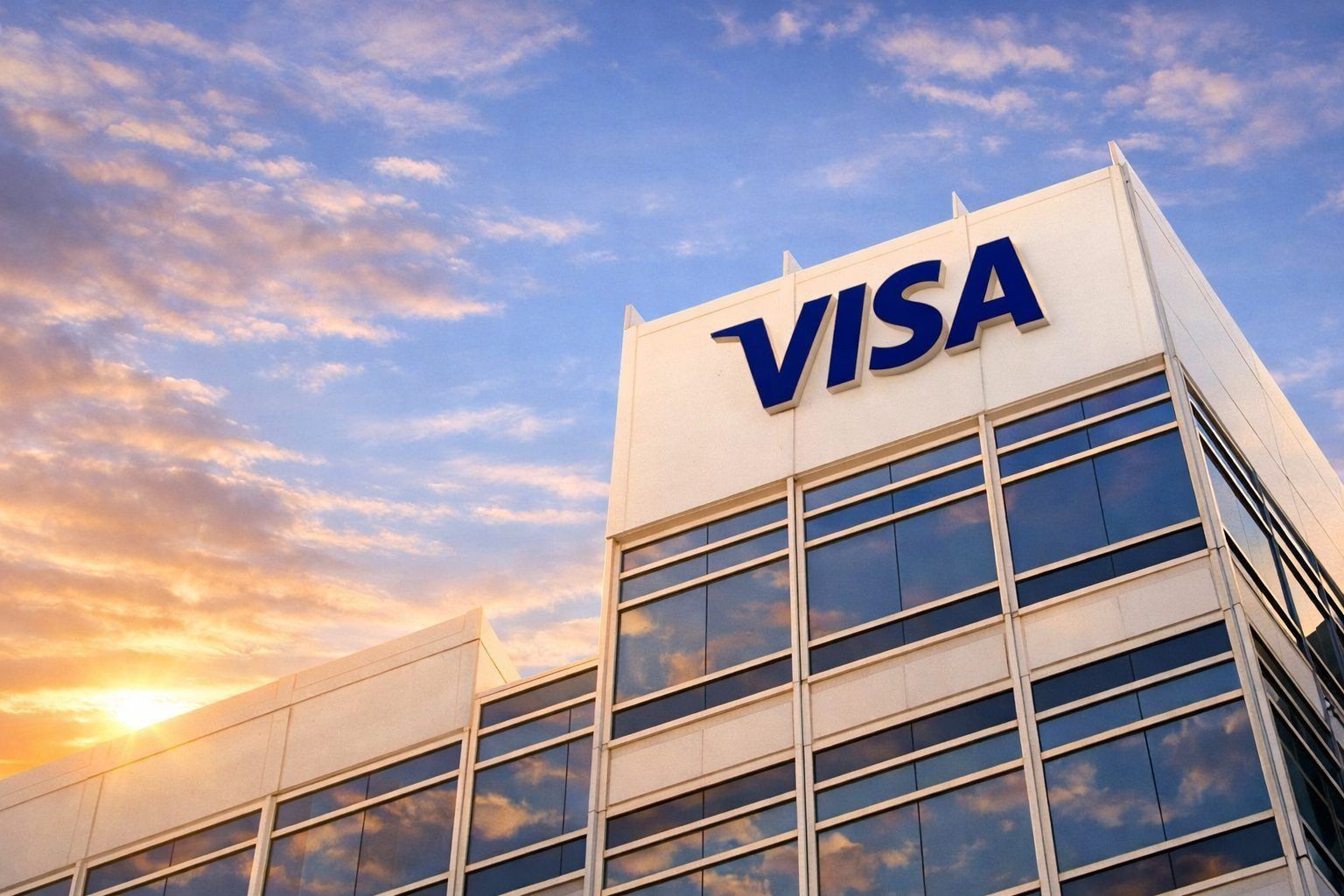

Visa Inc. NYSE:V finished Monday’s session higher and is trading essentially flat after the closing bell, as investors weigh fresh “agentic commerce” partnership news, ongoing regulatory and legal headlines tied to card payments, and a macro-heavy calendar ahead of Tuesday’s open.
Below is what matters most after the bell on 22.12.2025—and what to watch before the U.S. stock market opens tomorrow, Tuesday, Dec. 23, 2025.
Visa stock price action: where V stands after the bell
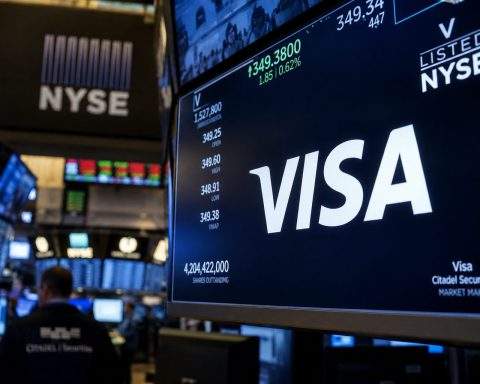
Visa shares closed at $352.09 on Monday, up about 0.8% versus Friday’s close, after trading between $349.59 (low) and $353.44 (high). Reported volume was about 4.9 million shares.
In after-hours trading, Visa was hovering around the $352 level (little changed versus the close) as of early evening quotes.
Context for investors tracking longer-term positioning: Visa’s 52-week range is roughly $299.00 to $375.51, putting the stock about 6% below its 52-week high and about 18% above its 52-week low.
The biggest Visa-related news stories published today
1) Visa + Fiserv: “Agentic commerce” gets a major distribution partner
The most market-relevant headline Monday was Fiserv’s announcement of a strategic collaboration with Visa to enable Visa Intelligent Commerce and deploy Visa’s Trusted Agent Protocol across Fiserv’s acceptance ecosystem—aimed at helping merchants participate in “agentic commerce,” where AI-driven agents can discover, compare, and purchase on consumers’ behalf. FT Markets+1
Trade coverage added important color: Payments industry reporting noted that AI agents today are largely used for comparison shopping, but the direction of travel is toward agents making purchases—raising questions about authentication, trust, and liability, which is where Visa’s protocol is intended to help.
Why it matters for Visa stock:
This is not an “earnings tomorrow” catalyst—but it reinforces Visa’s longer-term strategy to keep its network rails central as commerce becomes more automated, while trying to reduce merchant and consumer fears around fraud/bots.
2) Visa expands travel-focused offerings in Dubai
Another Visa headline Monday came from payments-industry coverage reporting that Visa has expanded a global travel program into Dubai, positioning it alongside cities like London and Paris, and leaning on spending insights to tailor cardholder benefits and merchant partnerships.
Why it matters:
Travel and cross-border volumes are closely watched drivers for Visa. Even when a story is “brand/program” oriented, the market often reads it as part of a broader push to defend premium spend and strengthen international acceptance.
3) Visa partners with Sun Group on Vietnam tourism platform initiative
A separate company announcement highlighted Visa’s collaboration with Sun Group around a “Visit Vietnam” platform integrating Visa’s payment technology and data-driven insights to improve the traveler experience. FT Markets
Why it matters:
This fits the same pattern: Visa using payments + data/AI tooling to embed itself into “end-to-end journeys” (travel planning, booking, on-the-ground spend), which supports acceptance and volume growth over time.
The policy and legal backdrop investors are still digesting
The Fed’s debit report: interchange fees and fraud loss allocation back in the spotlight
While the underlying Federal Reserve release is dated Dec. 19, it remained a live topic in Monday coverage and industry commentary. The Fed’s biennial debit card report provides data on interchange fees, issuer costs, and fraud losses for debit transactions in calendar year 2023.
One notable data point from the report: merchants absorbed 49.9% of fraudulent transaction losses (as reported by covered issuers) in 2023, up from 46.9% in 2021.
Banking-industry coverage emphasized the rise in fraud losses (as a share of transaction value) and highlighted how these figures feed the broader interchange and fraud-liability debate.
Why it matters for Visa:
Anything that fuels renewed debate around debit economics, fraud allocation, or network rules can influence investor sentiment—especially as regulators and merchant groups continue pushing on card fees and routing/competition themes.
ATM user fee settlement and antitrust overhang
Reuters reported recently that Visa and Mastercard agreed to pay $167.5 million to settle a class action tied to ATM access fees (subject to court approval), and also noted Visa continues to face other antitrust scrutiny (including a DOJ lawsuit allegation related to debit).
Why it matters into the open:
This category of headline rarely changes Visa’s fundamentals overnight, but it can shape the risk premium investors assign to large payment networks—especially in thin, holiday-week liquidity.
What Wall Street forecasts are implying right now
Across widely followed analyst-consensus trackers, the message is broadly consistent: analysts still skew bullish, but the stock is not “cheap,” and near-term upside often depends on sustained volumes (especially cross-border) plus execution in newer growth areas (AI commerce, stablecoins, value-added services).
- StockAnalysis shows a consensus “Strong Buy” with an average price target around $398.88 (about 13% upside from ~$352). StockAnalysis
- MarketBeat lists a consensus price target around $402.52 (roughly 14% upside).
- Investing.com’s consensus snapshot also points to a “Strong Buy”-leaning analyst mix with an average target around $395.44 (low ~$305, high ~$450 cited on the page). Investing.com
What to take away before Tuesday’s open:
If V moves sharply tomorrow without company-specific news, it’s more likely to be driven by (1) macro data risk-on/risk-off, (2) holiday-week positioning, or (3) payments-sector sympathy moves—than a sudden fundamental re-rate.
The technical setup into Tuesday: simple levels traders are watching
Based on Monday’s tape:
- Near-term support zone: roughly $349–$350 (today’s low $349.59 and prior close area).
- Near-term resistance zone: roughly $353–$354 (today’s high $353.44).
- Bigger reference point: the 52-week high near $375.51 if bullish momentum returns later this winter.
In holiday weeks, these levels can matter more than usual because liquidity is thinner and moves can become more “technical” than “fundamental.”
What to know before the stock market opens tomorrow (Tuesday, Dec. 23, 2025)
1) Several high-impact U.S. economic releases hit before or shortly after the open
Per the New York Fed’s U.S. economic indicators calendar, Tuesday’s key releases (all Eastern Time) include:
- 8:30 a.m.: Gross Domestic Product (GDP), 3rd release Federal Reserve Bank of New York
- 10:00 a.m.: Consumer Confidence (Conference Board) Federal Reserve Bank of New York
- 10:00 a.m.: New Residential Sales Federal Reserve Bank of New York
- 10:00 a.m.: Richmond Fed Survey of Manufacturing Activity Federal Reserve Bank of New York
Why Visa investors should care:
Visa is often treated as a real-time barometer for consumer activity. Stronger growth/confidence data can lift “quality compounders” and payments names; weaker data can pressure multiples—especially if investors rotate defensively.
2) It’s a holiday-shortened week, and market hours matter for volatility
This is a Christmas week with altered trading conditions:
- Christmas Day (Thu, Dec. 25, 2025): markets closed Nasdaq
- Christmas Eve (Wed, Dec. 24, 2025): early close at 1:00 p.m. ET (NYSE and also reflected in major holiday schedules).
AP’s market wrap also underscored the holiday-shortened nature of the week and noted the early close/holiday closure in its Monday coverage.
Practical implication for V tomorrow:
Expect potentially choppier price discovery, especially midday onward, as traders adjust exposure ahead of the early close Wednesday.
3) Don’t expect a flood of new Visa filings overnight
As of the latest snapshot visible on Visa’s investor-relations SEC filings page, the most recent filings shown were dated Dec. 12, 2025 (Form 4s). Visa Investor Relations
That doesn’t guarantee “nothing happens,” but it suggests no obvious late-day filing catalyst was already queued on the IR feed.
Bottom line for Tuesday’s open
Visa stock ended Dec. 22 higher and is steady after hours near $352, with the day’s narrative driven more by strategic positioning (AI/agentic commerce partnerships and travel ecosystem expansion) than by any single financial surprise.
Into Tuesday morning, the biggest swing factor for V may be macro tone—especially GDP and consumer confidence—layered on top of holiday-week liquidity and the ongoing background noise of fees/fraud/antitrust debate in payments.
Related articles: NYSE:V






![UK Stock Market Today 29/08/2026 [UPDATE: 08:49 BST] [Weekly Recap + Week Ahead: Midcaps Lead Before Bailey and Gilt Auction]](https://ts2.tech/wp-content/uploads/2026/08/UK-market-dashboard-2026-08-29-0843-480x384.jpg "UK Stock Market Today 29/08/2026 [UPDATE: 08:49 BST] [Weekly Recap + Week Ahead: Midcaps Lead Before Bailey and Gilt Auction]")