
NEW YORK, Dec. 27, 2025, 11:25 a.m. ET — Market closed (weekend)
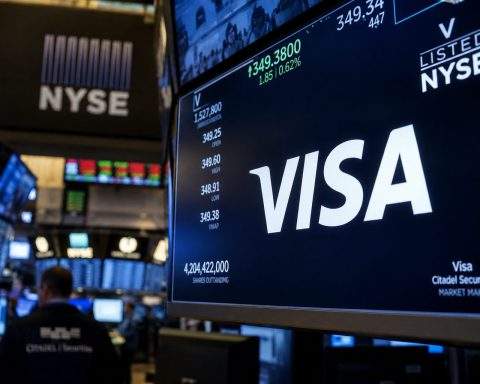
Visa Inc. NYSE:V stock enters the final stretch of 2025 with U.S. markets shut for the weekend and investors recalibrating for a potentially thin, headline-sensitive final week of trading. Visa shares last closed at $355.00 on Friday, down 0.04%, with an intraday range of $353.71–$356.73 and a 52‑week range of $299.00–$375.51, according to Visa’s investor relations quote page.
While Visa-specific headlines have been relatively scarce over the past couple of days on major wires (Reuters’ most recent Visa company item on its tracking page dates to Dec. 23), the broader setup into Monday’s open matters for “steady compounder” financial franchises like Visa—especially in year-end trading, when positioning and liquidity can amplify moves. Reuters+1
Where Visa stock stands as the market pauses
Friday’s U.S. session—the last opportunity for investors to adjust positions before the weekend—was marked by light post-holiday volume and muted index moves, a pattern that can carry into year-end. Reuters described the day as a low‑catalyst, low‑conviction session with Wall Street ending close to record territory.
That backdrop matters for Visa because the stock often trades as a “quality financial” tied to consumer and business activity, cross-border travel, and risk appetite—factors that can drift with macro narratives when company news is quiet.
The freshest Visa-linked headlines in the last 24–48 hours
Over the last 24–48 hours, much of the Visa-specific news flow has come from institutional filing roundups rather than new company announcements.
- Dec. 27: MarketBeat reported that Milestone Asset Management LLC increased its Visa stake (based on its Form 13F disclosure), describing the position and summarizing Street sentiment and valuation metrics.
- Dec. 26: MarketBeat reported DAVENPORT & Co LLC trimmed its Visa stake, also based on disclosed holdings, alongside a recap of Visa’s most recent quarterly results and analyst consensus.
These filings can help investors gauge longer-horizon institutional positioning, but they typically reflect quarter-end snapshots rather than real-time buying or selling.
Demand check: Holiday spending data remains the key “read-through”
The most meaningful near-term datapoint for Visa fundamentals remains the latest holiday spending snapshot released earlier this week.
Reuters reported that Visa’s total U.S. retail spending (excluding autos, gasoline and restaurants) rose 4.2% for the Nov. 1 to Dec. 21 period—slightly below Visa’s October forecast of 4.6% for the full two-month window.
Importantly for investors, the story also included commentary from Wayne Best, Visa’s chief economist, who pointed to consumers being more deliberate and using AI tools to compare prices and stretch budgets—an angle that aligns with the broader 2025 theme of “value-seeking but still spending.” Reuters
For Visa stock, this kind of data is relevant because it reinforces the base case that payment volumes are still growing—even if consumers are increasingly price-sensitive—supporting transaction-driven revenue streams.
Forecasts and analyses: What Wall Street is pricing in for Visa
Visa’s own outlook: “low double-digit” revenue growth for FY2026
Visa’s last earnings update continues to anchor the forward narrative. In its Oct. 28 report, Reuters noted Visa delivered adjusted EPS of $2.98 on net revenue of $10.72 billion (above estimates), with global payments volume up 9% (constant dollar basis).
On the outlook, Reuters reported Visa expects “low double-digit” FY2026 net revenue growth, roughly in line with analysts’ ~11% expectations cited in the same report. Reuters
Visa CFO Chris Suh also highlighted broad-based U.S. strength across categories including travel and fuel on the post-earnings call, while Third Bridge analyst Jonathan King characterized the quarter as steady—with cross-border softness muting upside surprise versus some prior quarters.
Analyst targets: A “Buy” consensus with low-teens implied upside
According to MarketBeat’s compiled analyst data, Visa carries a consensus “Buy” rating and an average price target of about $402.52, implying roughly low‑teens upside from the mid‑$350s level. MarketBeat+1
Recent analyst commentary has also focused on the “stablecoin question”—whether blockchain-based payment rails are a threat, a tool, or both.
- Bank of America (BofA) upgraded Visa to Buy and set a $382 target in a note highlighted by Barron’s, framing Visa as a high-quality business with a stablecoin narrative that the analyst viewed constructively rather than as a destabilizing threat.
- HSBC analyst Saul Martinez upgraded Visa to Buy and raised his target to $389 (Dec. 8), citing durable growth and competitive positioning, according to Benzinga’s recap.
Innovation watch: Stablecoins as both risk and opportunity
One reason Visa remains a frequent “core holding” in many long-term portfolios is its strategy of adapting to emerging payment technologies rather than fighting them.
Reuters reported in September that Visa is testing a model allowing businesses to fund international payments using stablecoins instead of pre-depositing cash in local accounts—an approach aimed at reducing friction and potentially improving liquidity efficiency for cross-border flows.
Visa executive Mark Nelsen, head of product for Visa’s commercial and money movement solutions, told Reuters that regulatory clarity was pivotal—saying, “The Genius Act changed everything.” Reuters
The same Reuters piece also underscored the debate investors are having: stablecoins could eventually erode some incumbents’ dominance, but Visa’s approach suggests incumbents may also incorporate stablecoin rails into existing payment workflows.
Risks investors still need to price: Legal and regulatory overhangs
Visa’s premium valuation and “wide moat” narrative are periodically tested by regulatory scrutiny and litigation tied to fees and network rules.
- In December, Reuters reported Visa and Mastercard agreed to pay a combined $167.5 million to settle a class action over ATM access fees (subject to court approval), with Visa contributing about $88.8 million. Reuters also noted Visa is facing additional antitrust scrutiny, including a U.S. Justice Department lawsuit alleging the company illegally monopolized the U.S. debit card market—claims Visa has denied.
- In November, Reuters reported Visa and Mastercard announced a revised $38 billion swipe-fee settlement with merchants, which still drew opposition from some merchant groups. The report also cited the National Retail Federation’s estimate that U.S. swipe fees totaled $111.2 billion in 2024.
For Visa stock, these issues rarely change the near-term quarter-by-quarter revenue arc, but they can influence sentiment, multiples, and headline risk—especially in thin trading.
If you’re watching Visa ahead of Monday’s open: What matters most
With the market closed today and reopening Monday (Dec. 29, 2025), investors focused on Visa typically watch a blend of macro and company-specific signals:
1) Year-end liquidity can exaggerate moves
Reuters’ year-end “Week Ahead” preview flagged that light volumes and portfolio adjustments can increase volatility into the final sessions of the year—important context for a mega-cap like Visa that can still swing on flows. Reuters
2) Fed narrative remains a market driver
Reuters reported investors are focused on the interest-rate path, and highlighted that the Fed had lowered its benchmark rate by 75 basis points over the last three meetings of 2025, bringing it to 3.50%–3.75%, with minutes from the most recent meeting due the following week.
A softer-rate narrative can support equity multiples broadly; for Visa specifically, the more direct linkage tends to be how rates affect consumer confidence, travel, and overall spending momentum.
3) Track the “real economy” read-throughs: retail + travel
Visa’s network is a real-time reflection of spending. That’s why investors are still digesting Visa’s holiday snapshot showing 4.2% U.S. retail spending growth (in its defined basket) through Dec. 21.
4) Watch legal dockets for settlement milestones
Court approvals and procedural updates can spark short-lived volatility. Reuters’ reporting on both the ATM-fee settlement and the swipe-fee settlement makes clear these matters are ongoing and can resurface in headlines.
5) Shareholder returns are part of the “floor”
Visa’s dividend is modest in yield terms, but it remains a component of total return. Visa’s investor relations dividend table shows a $0.67 Class A dividend declared Oct. 28, 2025 with a record date of Nov. 12, 2025 and payable Dec. 1, 2025 (annualized $2.68 based on that quarterly rate).
Bottom line for Visa stock heading into the next session
With markets closed for the weekend, Visa stock is essentially in a “hold the line” posture near $355, just below recent highs, in a tape where year-end positioning and macro headlines can matter more than company news. Visa Investor Relations+1
The bullish case still centers on resilient payment volumes, a durable network model, and management’s ability to incorporate new rails like stablecoins. Reuters+1 The bear case focuses on valuation sensitivity and the recurring legal/regulatory pressures tied to fees and market structure.
For investors looking into Monday’s open, the practical checklist is simple: watch the macro tape (rates and year-end flows), monitor any legal headlines, and keep an eye on incremental spending data that either reinforces—or undermines—the idea that U.S. consumers remain steady heading into 2026.
Related articles: NYSE:V