
Washington, June 16, 2026, 15:09 (EDT)
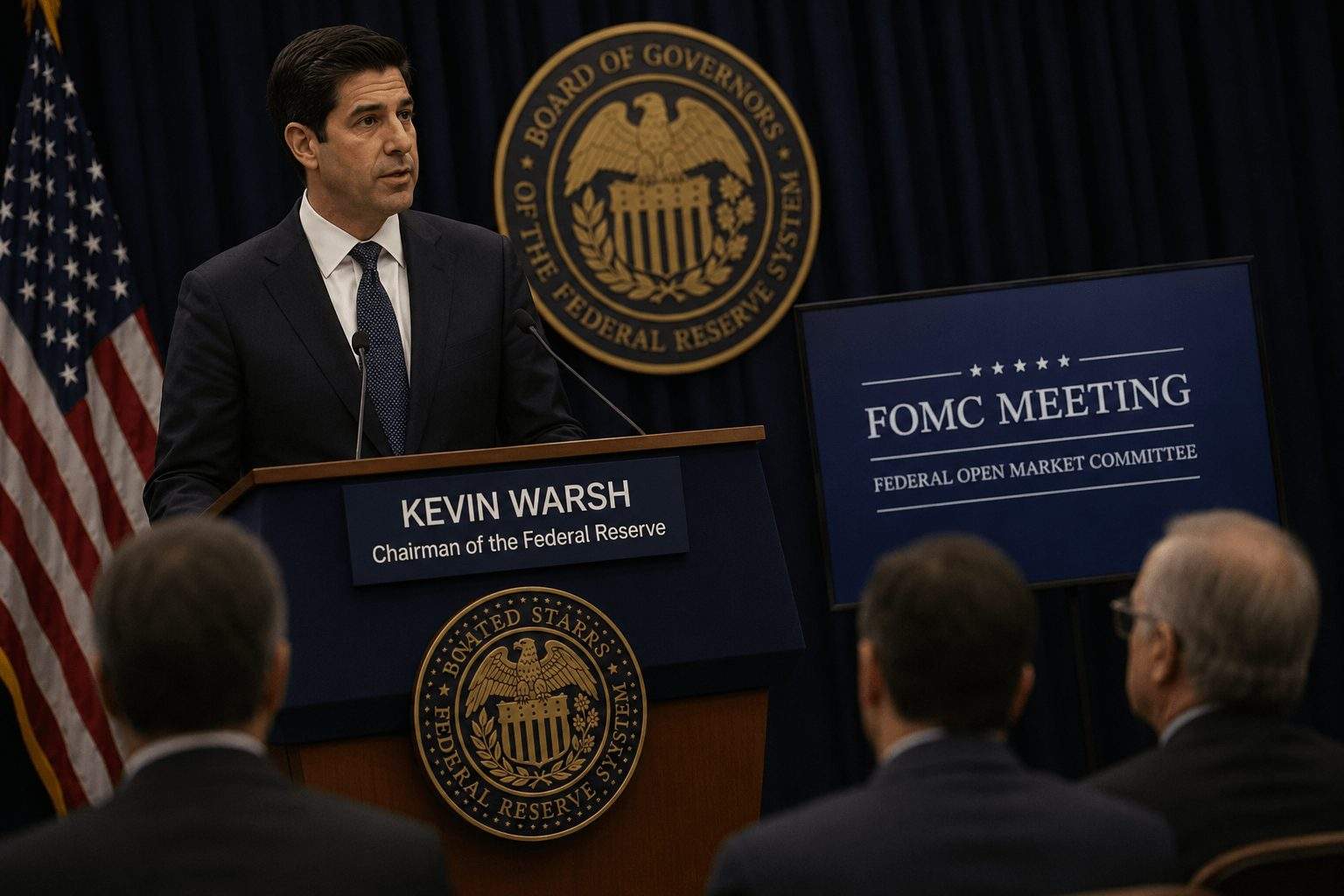
- Kevin Warsh leads his first Fed policy meeting this week, and the market expects the central bank to leave rates steady at 3.50%–3.75%.
- Investors want to see if Warsh adds his own “dot” to the Fed’s rate outlook this quarter. Reuters
- Oil is down after a U.S.-Iran interim deal, but inflation risk is still in play.
Fed starts its June meeting Tuesday, with traders looking past the likely rate hold on Wednesday and focusing on what new Chair Kevin Warsh will say after. The June 16-17 meeting includes an updated Summary of Economic Projections, according to the Fed’s calendar. That report brings the quarterly rate forecasts from policy makers. Reuters said the Fed is seen keeping its key overnight rate steady at 3.50%–3.75%.
The main issue is whether Warsh will enter his own forecast in the Fed’s “dot plot.” Reuters reported that analysts aren’t sure if Warsh will offer a rate-path dot at all, since he’s been critical of forward guidance. Regions Bank Chief Economist Richard Moody wrote that Warsh might sit out the process “as a means of signaling how little regard he has for this exercise.” But JPMorgan Chief U.S. Economist Michael Feroli expects the opposite. “We expect Warsh will submit his own projections,” Feroli said. Not doing so, he argued, “would look like a spiteful dissent against his own committee.” Reuters
The rates outlook has shifted since March. Back then, Reuters reported most Fed officials were leaning toward a cut by year-end. Now, most are expected to keep rates steady through 2026. Some still see a hike as possible. Another survey, this one from Duke University, asked 32 former Fed staff and officials for rate views. Seventeen said raising rates would likely make sense this year. Fourteen preferred no move, and one wanted a cut. The Duke survey also found the group expects year-end PCE inflation at a median of 3.5%, higher than the Fed’s 2% goal.
Deal between the U.S. and Iran is giving Warsh some relief, but inflation concerns linger. Reuters said Tuesday that new details have started to come out about an interim deal set to be signed in Switzerland on Friday. The agreement would extend the ceasefire by another 60 days and reopen the Strait of Hormuz. Oil prices dropped sharply—Brent lost about 5% to $78.92, WTI was at $75.95 as of 12:02 p.m. ET—as traders anticipated more crude could get through the strait. Before the war, about 20% of world oil moved through there. Experts said it might take weeks for shipping and energy flows to get back to normal.
Wednesday’s message threw market expectations again. UBS Global Wealth Management now doesn’t see Fed rate cuts until March and June 2027, dropping any forecast for easing this year. CME FedWatch data put the market-implied chance of a 25-basis-point hike in December at about 42%, Reuters reported. Bond investors are staying cautious. J.P. Morgan’s survey said neutral positions in Treasuries jumped to 58% of all clients.
Warsh’s first press conference could show if he wants the Fed to talk less about its plans. Jonathan Pingle at UBS said in a note, “we expect the press conference to be pivotal,” adding, “we do not really know what his policy views are.” William English, a former Fed economist, summed up the short-term call as, “The right thing to do now is wait and see.” abcnews.com
Related articles: NYSE:JPM