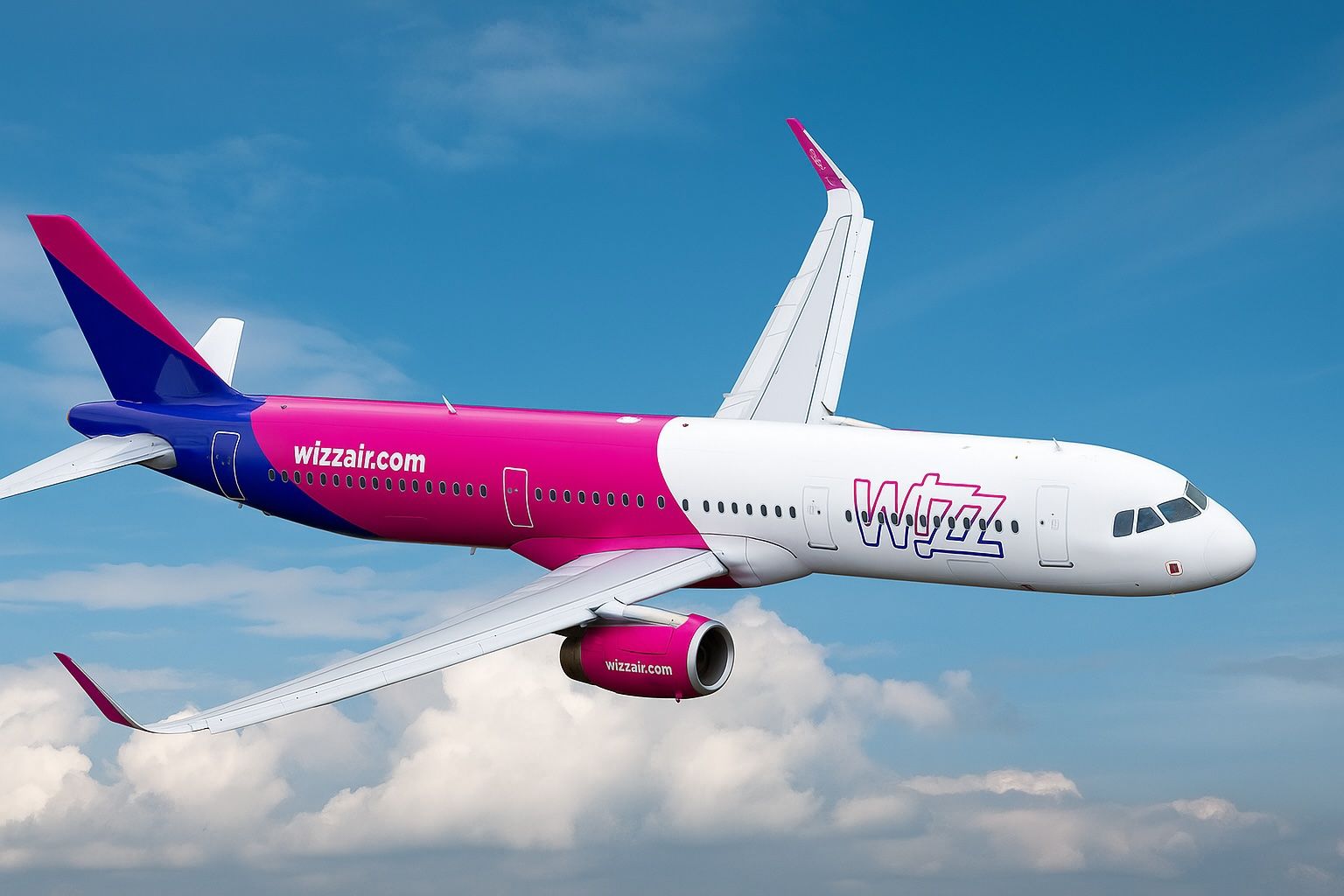

- Trial Launch: Wizz Air will trial a “Wizz Class” premium seat option from December 2025 on select A320/A321 flights. Only the very front rows (4 seats per flight) in London, Rome, Warsaw, Bucharest and Budapest will be offered as Wizz Classthe-independent.comaviationbusinessnews.com.
- What You Get: Wizz Class blocks the middle seat for extra elbow room and legroom, and adds priority boarding plus a free carry-on (with guaranteed overhead bin space)the-independent.comaviationa2z.com. No free meals, drinks or lounge access are includedaviationa2z.comthe-independent.com. It’s essentially an economy seat with perks.
- Pricing: Management says the premium fares will be roughly the cost of buying an extra seat – “never going to be more than… another seat”the-independent.com – and “not meant to be a money-grab”the-independent.com. Early reports suggest Wizz Class fares will be modest, “possibly aligning…with the cost of reserving an additional seat”aviationa2z.com.
- Industry Trend: This move follows a wider trend. European LCCs (Ryanair, easyJet, Jet2) already sell extra-legroom rows or seatsthe-independent.com, and US ultra-low-cost airlines (Frontier, Spirit, Southwest) offer paid seat upgrades. In fact, Southwest and JetBlue recently launched their own premium-seat productsthe-independent.com. Aviation analysts note that Wizz Class echoes concepts like Eurowings’ “Bizclass”aviationa2z.com – adding value without overhauling the cabin.
- Stock Snapshot: Wizz Air shares LON:WIZZ traded around 1050–1060 GBX at end-Oct 2025stockinvest.us. Analysts’ consensus target (~1130p) implies only modest upsidemarketbeat.com. Some models are cautious: e.g. an AI-driven forecast sees a potential 20–22% drop to ~817–875p in the next 3 months under current trendsstockinvest.us.
- Business & Finance: In FY2025 Wizz carried a record 63.4M passengers (↑2.2%) with a 91.2% load factorfinimize.com. Revenue hit ~€5.27B (+3.8%)finimize.com, but profits were squeezed by currency losses and grounded Pratt & Whitney enginesfinimize.com. The airline plans to grow its fleet to ~260–270 aircraft by March 2026 (+20% YoY) on the way to 500 jets by 2030finimize.com. Management still forecasts mid-teens annual growth going forward.
What is “Wizz Class”? How It Works
Wizz Class is essentially a stripped-down “business-class” experience on a budget. On each participating flight, the first row’s middle seat will be kept empty to give the two Wizz Class customers extra spaceaviationa2z.com. These row-1 seats already have bulkhead legroom, and the unused middle means true 2‑seat rows (similar to legacy short‑haul biz class). Passengers get guaranteed overhead bin space for a larger carry-on, plus early boarding – all aimed at higher-paying travelers who want comfort and quick exitaviationa2z.comaerotime.aero. No cabin refit is needed – the middle-seat block is virtual – so Wizz can revert to normal layout anytimeaviationa2z.comaviationa2z.com.
Wizz Air is clear that Wizz Class is an add-on service, not a full business-class product. There will be no included meals, drinks or lounge passesaviationa2z.comthe-independent.com. In other words, you fly in economy seats (just with more legroom) and pay a premium for the space. CEO Michael Delehant explained that this approach was driven by feedback: travelers (especially business flyers) wanted a bit more room and speed without paying for full premium faresthe-independent.comaerotime.aero. “We’ve had a lot of requests from customers that are on business… Like getting on and off quickly, with a little bit more space,” he saidaerotime.aero. Wizz’s commercial chief Silvia Mosquera similarly noted the rollout “follows feedback from our growing number of business travellers who value low-cost travel options and prefer additional space”the-independent.com.
The trial will begin on a few key routes out of Wizz’s bases (London, Rome, Warsaw, Bucharest, Budapest) in December 2025the-independent.comaviationa2z.com. Only four Wizz Class seats (row 1) will appear on each flight to test demand without upsetting yield managementaviationa2z.comaviationa2z.com. If successful, Wizz Air could expand the service, but initially the airline says it will keep pricing “modest” (roughly a seat’s extra cost) and monitor how business travelers respondaviationa2z.comthe-independent.com.
Industry Context: LCCs and Premium Seats
Wizz Air’s move is part of a broader shift in low-cost travel. Once all about cramming seats, many “ultra-low-cost” carriers are now exploring higher-end add-ons. In the US, Frontier and Spirit long ago began selling extra-legroom “Stretch” seats, and Southwest (historically middle-seat-free) is ditching open seating to launch premium Economy Plus-style rows in 2026the-independent.comaviation.direct. Even JetBlue’s “Even More” fare for American carriers resembles this idea (free drinks, priority boarding, better seats)the-independent.com.
In Europe, Ryanair and easyJet have quietly offered extra-comfort seating in the form of certain aisles or exit rows, and monetized extras to boost revenuethe-independent.com. Wizz’s plan differs mainly in marketing it as a mini-business class experience. Aviation analysts note the similarity to concepts like Eurowings’ “Bizclass” (since 2017), where a blocked middle seat and priority perks are sold on short-haul flightsaviationa2z.com. The rationale is clear: ULCCs rely on ancillary income, so selling a few extra-seat upgrades can lift average ticket revenue without changing base faresaviationa2z.comaviation.direct.
TS² Tech commentary warns, however, that competition is fierce. “Europe’s short-haul sector is crowded,” it notes – easyJet, Wizz Air and others are “adding capacity aggressively,” a trend Morgan Stanley predicts will lead to “declining yields”ts2.tech. In other words, filling these seats (or selling upgrades) may help Wizz Air capture revenue, but fierce price competition on economy tickets could limit how much “premium” it can really charge.
What the Experts Say
Wizz Air Management: Both Mosquera and Delehant emphasize that Wizz Class is a response to clear passenger demand. Delehant said the product “was designed to meet the demand of WIZZ travellers seeking more space, comfort and a quicker exit from the aircraft”aviationbusinessnews.com. He stressed the airline’s traditional focus on full planes, but noted that as Wizz attracts more business flyers “they’re requesting a little bit more” (legroom and convenience)exyuaviation.com. Mosquera reiterated that Wizz Class “follows feedback from our growing number of business travellers” who want low fares with extra spacethe-independent.com.
Analysts and Industry Experts: Financial observers are mixed. Some note the stock’s valuation already reflects caution: according to MarketBeat, the average analyst rating is Reducemarketbeat.com and a £1.13 IPO-equivalent price target is only slightly above the current ~£1.06 share pricemarketbeat.com. StockInvest’s AI analysis highlights multiple “sell” signals and foresees more weakness unless conditions changestockinvest.us. However, on industry tailwinds, many experts are upbeat: Europe’s airlines are riding a post-pandemic travel boom. TS² Tech reports that IAG (British Airways’ owner) saw its stock soar ~360% off Covid lows and is near record highs thanks to “revenge travel” demandts2.techts2.tech. IAG’s CEO Luis Gallego attributes the surge to a “structural shift in consumer spending towards travel”ts2.tech and exceptionally strong business-class demandts2.tech.
Morgan Stanley’s European airline team similarly points out that premium-cabin travel is rebounding, even if economy seats are under pressurets2.techts2.tech. “The strength of [IAG’s] premium cabin offering has more than offset any weakness” in other segments, one analyst notedts2.tech. By analogy, Wizz Air is betting it can tap this trend in its own way.
Financial Analysts: The consensus among brokers is cautious. Wizz Air’s forward earnings multiple (~8–9×) and EV/sales (~1.2×) are far below sector averagesfinimize.com, implying investors have little margin for error. Some analysts have been cutting targets: a Simply Wall St. note (Oct 2025) showed price targets creeping down (from ~1412p to 1343p) amid slowing growth assumptions. Nonetheless, a bullish case exists: Finimize highlights Wizz’s strong ancillary revenue (over 40% of sales) and the airline’s plan to double its fleet by 2030, both of which could re-rate the stock if execution succeedsfinimize.comfinimize.com. For now, most experts say Wizz Class alone won’t move the needle dramatically – it’s more about incremental ancillary revenue and customer satisfaction.
Market Impact and Stock Outlook
Wizz Air’s stock has been volatile. It rose sharply in the 2024–25 rebound but then slid as global markets wobbled in 2025 and company-specific issues emerged. In mid-2025 the share price fell about 41% YoYfinimize.com, partly on a €160M FX loss and grounded engines. A recent Reuters report notes Wizz has delayed dozens of new aircraft to ease capacity and incurred two profit warnings; it says Wizz’s share price is down over 20% this yearreuters.com.
Will Wizz Class change the story? Probably not on its own. As AviationA2Z puts it, blocking a middle seat is “a calculated risk” for a low-cost airlineaviationa2z.com: you sacrifice some load for a higher fare. If enough customers buy the premium seats, Wizz Air pockets extra revenue; if not, those seats fly empty at a loss of income. The A2Z analysis notes that having fewer passengers per flight means the airline “must generate higher returns from those purchasing the Wizz Class upgrade”aviationa2z.com. In practice, this trial is modest (just 4 seats per flight), so any revenue upside is limited.
Investors will likely focus more on the big picture: recovering demand, cost control and fleet growth. If travel stays strong (as Gallego’s comments suggest) and Wizz executes its fleet expansion and ancillary strategy, the stock could rebound from current levels. On the other hand, any fresh cost shocks (fuel, currency, further engine issues) will temper enthusiasm. In short, experts say Wizz Class is a creative product tweak, but the stock’s trajectory depends on Wizz Air’s overall financial health. The company’s transformation to a broader “customer first” model is still unfolding, and capital markets will judge it on results.
Sources: Key details are drawn from Wizz Air statements and recent press coveragethe-independent.comaviationa2z.com, industry analysists2.techts2.tech, and market datastockinvest.usmarketbeat.com. Experts quoted include Wizz Air executives (Mosquera, Delehant) and finance analysts from Morgan Stanley and TS² Techthe-independent.comts2.tech.