
New York, Jan 31, 2026, 14:00 (EST) — Market closed.
- Real estate stocks ended the week slightly higher, only to slip in after-hours trading.
- Rates remained in focus after Donald Trump unveiled his pick for Federal Reserve chair and inflation figures came in unexpectedly.
- Monday’s focus for investors will be on jobs data, bond yields, and the upcoming schedule of REIT earnings reports.
Real Estate Select Sector SPDR Fund (XLRE) ended Friday at $41.43, edging up 0.15%, before slipping 0.8% to $41.10 in after-hours trading. During the day, it fluctuated between $40.89 and $41.44. For the week, XLRE gained roughly 0.5%, according to closing prices from Investing.com.
This matters now since REITs — real estate investment trusts that hold property and usually distribute most of their taxable income as dividends — rely heavily on borrowing and frequent refinancing. When interest-rate forecasts change, the sector tends to react swiftly.
Rates are back in focus as investors parse fresh inflation data alongside shifting political signals on monetary policy. The market wrestles with whether the next rate cut will arrive soon or slip further into 2026.
Friday’s mood was risk-off, with the S&P 500 slipping 0.43% to close at 6,939.03. Meanwhile, the U.S. 10-year yield hovered near 4.241%, LSEG data via Reuters showed.
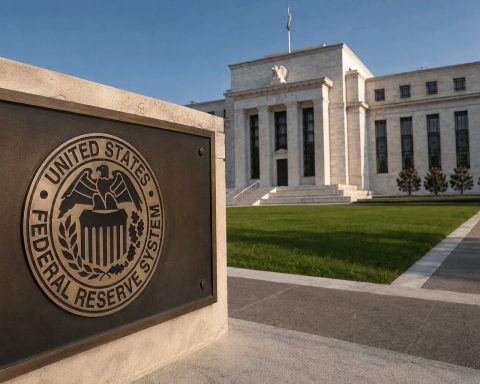
On Friday, Trump selected former Fed governor Kevin Warsh to lead the central bank once Jerome Powell’s chairmanship ends in May, triggering what could be a tough Senate confirmation. Reuters noted that markets “for now don’t expect another rate cut until June,” despite Warsh’s advocacy for sharp borrowing cost cuts. Reuters
The inflation update on Friday arrived with the Producer Price Index — tracking prices received by U.S. producers — which climbed 0.5% in December, outpacing the 0.2% expected, according to the U.S. Labor Department. “This report validates the pivot of the Fed away from labor market risks back toward price stability,” said Carl Weinberg of High Frequency Economics. Reuters
Fed Vice Chair Michelle Bowman reiterated her backing for three quarter-point rate cuts in 2026 — each cut being 0.25 percentage point — but said she preferred to keep policy options open after this week’s vote to pause rate hikes.
XLRE’s holdings lean heavily on large, rate-sensitive firms. Leading the pack are Welltower and Prologis, with American Tower and Equinix close behind. State Street data lists CBRE, Simon Property Group, and Realty Income as key components too. Office REITs make up roughly 1% of the fund, which carries a gross expense ratio of just 0.08%.
Overseas, property sentiment took a sharp turn. In Hong Kong, developer shares surged on Jan 29 after China Real Estate Business reported that the borrowing restrictions known as the “three red lines” had effectively been scrapped. Another move would let some loans be extended by as much as five years, Reuters reported. Liu Shui from China Index Holdings said the rules no longer fit the market. Still, Citigroup analysts warned the shift probably won’t free up new funding anytime soon. Reuters
Still, the risk to U.S. real estate stocks hasn’t disappeared. Should inflation hold steady and yields climb, refinancing costs could rise sharply. Investors might then push for higher income from REITs, putting pressure on valuations.
Coming up, the January U.S. employment report hits on Feb 6 at 8:30 a.m. ET, with the Fed’s January meeting minutes following on Feb 18, per official schedules. On the earnings front, Welltower will roll out its quarterly results on Feb 10. Realty Income has penciled in Feb 24 for its report.
Related articles: Federal Reserve