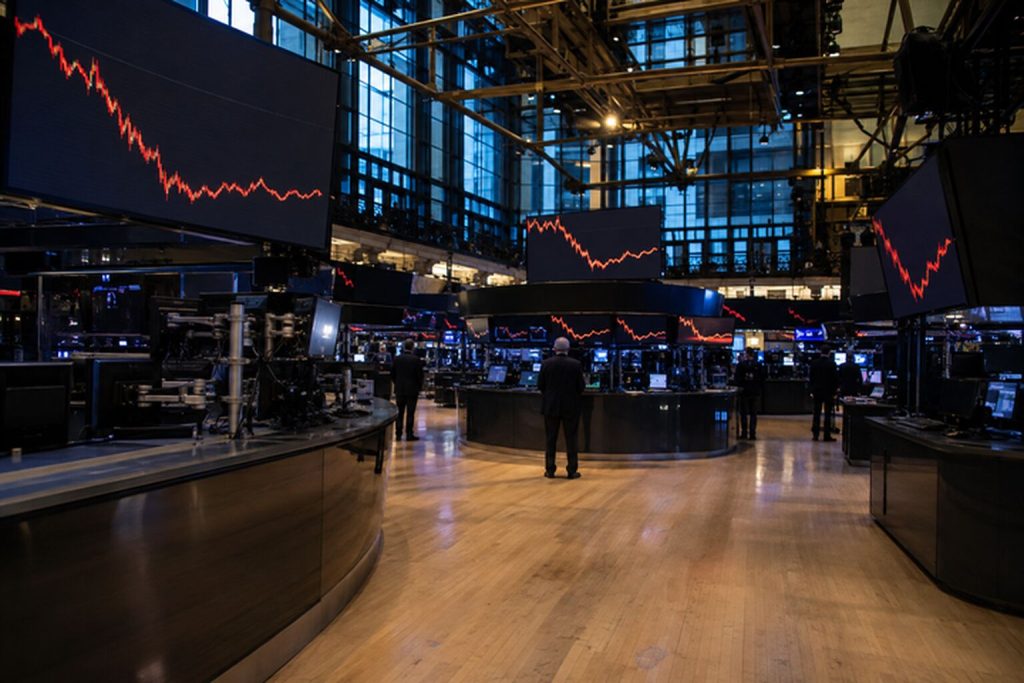

NEW YORK, September 6, 2026, 11:31 a.m. EDT — XRP traded near $1.42 on Sunday after BIS researchers tested the XRP Ledger. The experiment validates a narrow but potentially useful institutional data-verification use case. Its own published numbers do not validate a token supply squeeze.
The difference sits in three operational details. The system ran on XRPL DevNet, not mainnet. It bundled thousands of datasets into one transaction and was designed to work with other blockchains.
XRP (XRP-USD) was up less than 1% over 24 hours, according to CoinMarketCap’s live reading. Its market value was about $89.1 billion. The token remains below Thursday’s $1.4516 close.
Seven-day price path
XRP recovered part of Friday’s decline
Daily prices through Sept. 5 and current Sunday reading. Sources: Investing.com and CoinMarketCap. Crypto trades continuously.
The September 2 BIS working paper tackles a real problem. Official statistics can be copied, reformatted or altered after publication. Existing SDMX files lack a native way to prove their source and integrity.
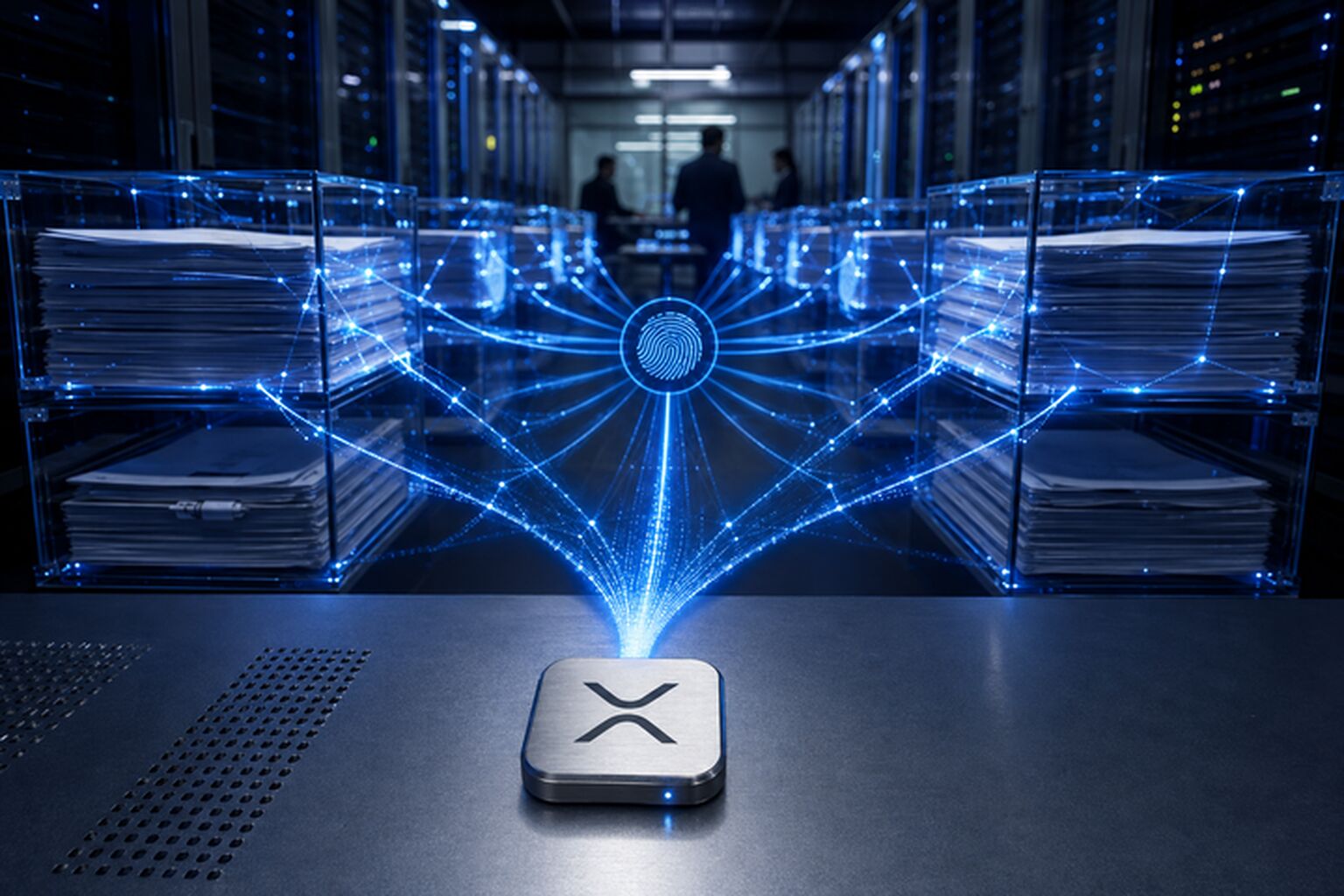
The five authors built a cryptographic fingerprint for each dataset. A Merkle tree combines those fingerprints into one root. That root is timestamped on XRPL.
A reader can then verify the publisher and the unchanged data with one ledger lookup. The raw statistics stay off-chain. Confidential information does not enter the public ledger.
What was actually tested
One public timestamp, thousands of private datasets
The file carries the proof and publisher credential. Source: BIS Working Paper 1374.
Prototype publication took three to five seconds. Verification took one to two seconds. That speed could support automated data checks before a trading model consumes an economic release.
The paper is unusually clear about its boundary. “These figures describe a proof of concept rather than a hardened production system.”
Tests used synthetic files on one developer workstation. They did not measure sustained mainnet load, enterprise firewalls or hardware-backed keys. Adversarial conditions were also outside the trial.
The evidence boundary
Technology validation is not institutional adoption
The paper shows
Fast verification: median 1–2 seconds
Efficient batching: one root covers thousands of files
Data privacy: only fingerprints go on-chain
The paper does not show
No mainnet rollout: reported runs used DevNet
No BIS procurement: this is a working paper
No XRPL lock-in: the gateway is replaceable
The authors say the design is blockchain-agnostic and their views do not necessarily represent the BIS. Read the publication record.
The token economics are smaller still. A standard XRPL transaction currently destroys at least 10 drops, or 0.00001 XRP. The fee goes to nobody.
At $1.42 per XRP, that minimum costs about $0.0000142. Roughly 70,423 minimum-fee transactions would destroy one dollar of XRP. Network congestion can raise the fee.
Batching weakens the link further. If one transaction anchors 1,000 datasets, about 70.4 million datasets would consume one dollar at that minimum. This is arithmetic, not a usage forecast.
Fee-demand reality
Batching makes the XRP burn almost invisible
Minimum standard fee
0.00001 XRP
Value at $1.42
$0.0000142
Transactions to burn $1
70,423
TS2 calculation at Sunday’s price. The minimum fee is destroyed, not paid to a validator. Source: official XRPL transaction-cost documentation.
That does not make the research irrelevant. A public audit trail for GDP, inflation or regulatory filings could become useful infrastructure. The paper also extends the design to XBRL and AI-agent verification.
The opportunity is reputational and architectural today. Production deployments could add accounts, reserves and transaction activity later. None appears in the published test.
The risk is narrative outrunning evidence. At a roughly $89 billion valuation, XRP needs demand measured in capital flows, not microscopic fee burn. This prototype supplies credibility, not that demand.