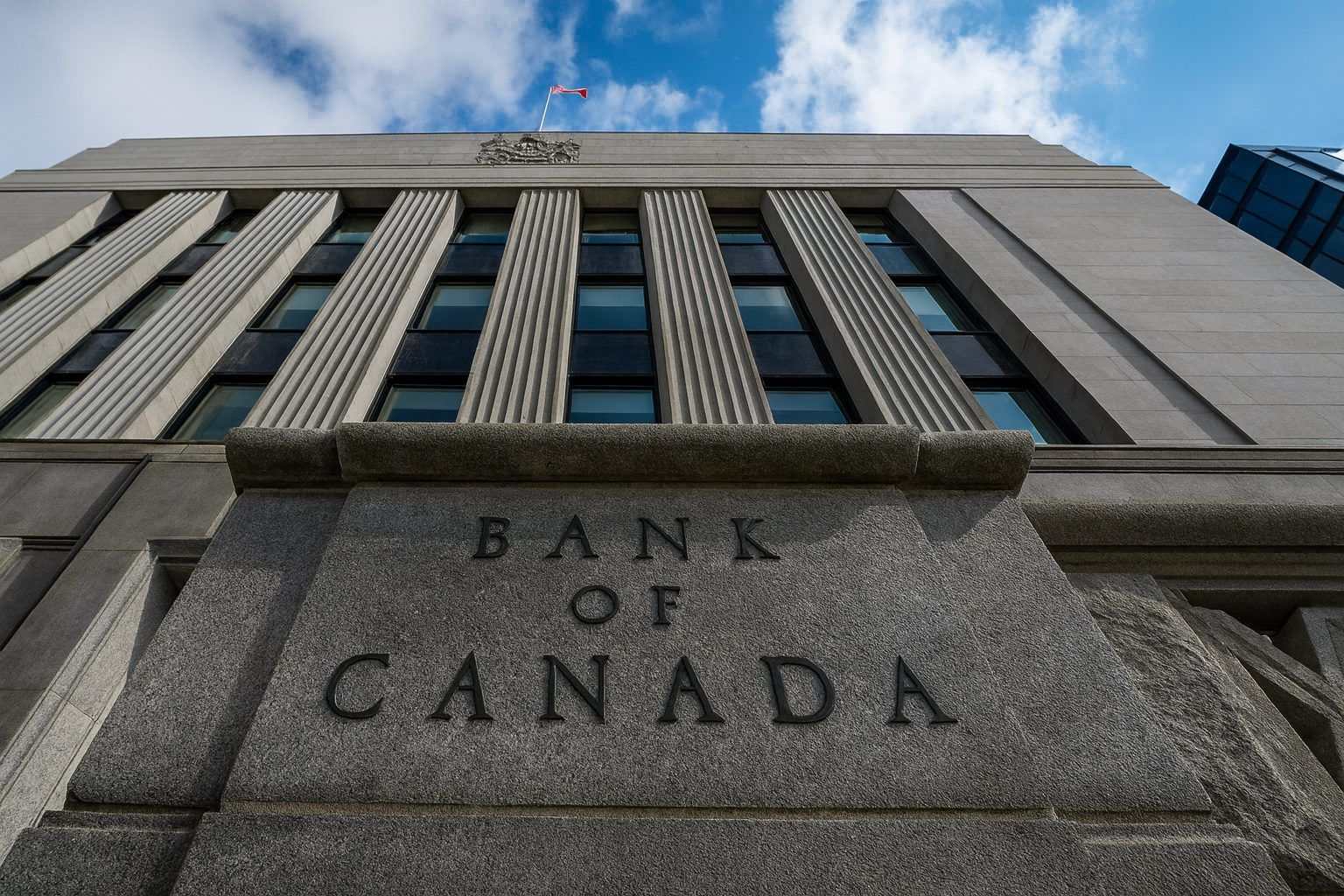

OTTAWA — December 9, 2025
The Bank of Canada is set to make its final interest rate decision of the year on Wednesday, December 10, and virtually everyone watching expects the same outcome: no move. The central bank’s target for the overnight rate is widely forecast to remain at 2.25 per cent, cementing what many economists believe will be the start of a long pause after one of the most aggressive cutting cycles among advanced economies.
The decision will be announced at 9:45 am Eastern, followed by a press conference with Governor Tiff Macklem and Senior Deputy Governor Carolyn Rogers at about 10:30 amBank of Canada+ 1
Markets See a Near-Guaranteed Hold at 2.25%
In a Reuters poll conducted from December 2 to 5, all 33 economists surveyed said the Bank of Canada will leave its overnight rate unchanged at 2.25 per cent on December 10. A majority of them expect that rate to remain in place at least until 2027, signaling that the era of rapid rate cuts is effectively over.
A separate round-up of market views published today by Wealth Professional Canada reached the same conclusion: every economist in that sample also expects a hold, and traders are pricing in roughly “done for now” as the base case.Wealth Professional+ 1
The Financial Post, citing economists surveyed ahead of the decision, put it bluntly: there is “no major compelling reason” for the Bank to cut rates again this week. Stronger-than-expected job gains and a better-than-forecast third-quarter growth reading have reduced the urgency for more stimulus, even as borrowers still feel the bite of higher living costs.linkedin.com+ 2Reuters+ 2
Global News reports that most private‑sector forecasters now see a straightforward outcome on Wednesday: a rate hold at 2.25 per cent, followed by a period of stability as policymakers watch how earlier cuts flow through the economy.
From Aggressive Cuts to Pause Mode
Over the past year and a half, the Bank of Canada has shifted from fighting inflation with high rates to cushioning the economy from a series of shocks — notably a sharp drop in export demand and continued US tariff pressure.
According to the Bank’s own policy-rate history, the overnight rate has fallen from 4.75 per cent in mid-2024 to 2.25 per cent after a series of cuts:
- December 11, 2024: cut to 3.25%
- January 29, 2025: cut to 3.00%
- March 12, 2025: cut to 2.75%
- September 17, 2025: cut to 2.50%
- October 29, 2025: cut to 2.25%Bank of Canada
Those moves add up to a reduction of about 2.5 percentage points from the mid‑2024 peak. Reuters notes that, depending on where one starts the count, that’s roughly 275 basis points of easing — among the most aggressive cutting cycles in the G10.
At its most recent meeting on October 29, the Bank trimmed rates by 25 basis points and signaled that, barring a significant deterioration in the outlook, the cutting cycle was likely over. Governor Macklem said policy was now “about the right level” to keep inflation close to target while helping the economy navigate a structural adjustment driven in part by tariffs and global trade reconfiguration.Reuters+ 1
That message — cuts are probably done, but the Bank is still data‑dependent — is the foundation for this week’s “hold” consensus.
Inflation Is Back in the Target Range
The Bank of Canada’s mandate is to keep inflation within a 1–3 per cent band, aiming for 2 per cent over the medium term. In its October Monetary Policy Report, the Bank said total inflation has been hovering around 2 per cent, with underlying (core) inflation running closer to 2.5 per cent.
That backdrop is echoed in the latest Reuters poll, which states that inflation is “easing and firmly within the central bank’s target range.” With price growth no longer pressing against the upper end of the band, economists argue that further rate cuts risk overheating rate‑sensitive sectors without a clear macroeconomic need.Reuters+ 1
In other words, inflation no longer justifies higher rates — but it also doesn’t justify more cuts. That’s classic “on hold” territory.
Economy and Jobs: Better Than Expected
If the argument for holding stems partly from inflation, the other half comes from growth and jobs.
Global News points out that key data released since the October meeting have surprised on the upside: a stronger‑than‑expected third‑quarter GDP print and a notable drop in the unemployment rate.
Reuters cites the economy’s resilience despite US tariffs, with real GDP expanding at an annualized pace of about 2.6 per cent in the most recent quarter — better than earlier forecasts from the Bank itself.
Independent think tanks are drawing similar conclusions. The CD Howe Institute’s Monetary Policy Council — a “shadow” committee of economists that simulates the Bank’s Governing Council — recommended that the overnight rate stay at 2.25 per cent at the December 10 announcement and remain there over the next year. Eight of nine members voted to hold; only one favored a small cut.CD Howe Institute
Financial Post reporting, amplified via social and syndicated channels, underlines that improved labor data and stronger growth have eroded the case for further easing this week.
Housing Market: From Slump to Slow Rebound
The housing market sits at the center of the rate‑pause debate.
The Reuters poll notes that Canadian home prices have fallen around 3.2 per cent so far in 2025, even in the face of significant rate cuts. Analysts surveyed expect that decline to end soon, with prices forecast to rise by about 1.8 per cent in 2026 and 3.5 per cent in 2027.
Home sales, however, are already picking up. October data showed renewed momentum, suggesting cheaper borrowing has started to lure buyers back into the market.
Robert Hogue, assistant chief economist at RBC, told Reuters that the rate reductions in September and October have meaningfully improved affordability, especially in regions where home values have softened. Lower borrowing costs, he argued, are beginning to unlock pent‑up demand from households sidelined during the high‑rate period.
True North Mortgage’s latest forecast similarly explains that 2025 is likely to “end on the current 2.25% rate note,” with a pause expected on December 10. A strong November jobs report, they add, gives the Bank even less reason to ease further.True North Mortgage+ 1
For policymakers, the challenge is to support housing without reigniting the kind of price surge that dominated the pre-tightening years. That balancing act also favors leaving rates where they are for now.
What This Means for Mortgage Borrowers and Savers
For households, the overnight rate isn’t just a number in a press release — it’s the anchor for many forms of borrowing.
- Variable‑rate mortgages and lines of credit: These tend to move almost one‑for‑one with changes in the Bank of Canada’s policy rate via the commercial banks’ prime rates. A hold at 2.25 per cent means most variable‑rate borrowers are unlikely to see their payments change this month.
- Fixed‑rate mortgages: These are more closely tied to Government of Canada bond yields, which reflect market expectations for future rates rather than the current setting alone. With markets already pricing in a long pause, a hold on December 10 is largely “in the price,” so dramatic moves in fixed mortgage rates are unlikely unless the Bank’s forward-looking language surprises.True North Mortgage+ 1
Clay Jarvis, a mortgage analyst quoted by Global News, expects mortgage rates to remain broadly where they are if the Bank stands pat. He does warn that a surprise third consecutive cut could spark an “unseasonably warm” winter housing market — precisely the kind of outcome policymakers may want to avoid.Global News+ 1
For savers, a pause means deposit rates, high‑interest savings products and GIC yields are unlikely to move much in the short term, though these are influenced by competition among banks as well as central‑bank policy.
The Fed, Tariffs and the Global Backdrop
Wednesday’s decision won’t happen in a vacuum. South of the border, the US Federal Reserve is widely expected to deliver another quarter‑point cut later the same day, potentially lowering its target range to roughly 3.75–4.00 per cent.
That would leave the Federal Reserve’s policy rate higher than the Bank of Canada’s, but the gap between them has narrowed substantially over the course of 2025. Markets are now gaming out how long that divergence can last and what it means for the Canadian dollar, bond yields and capital flows.
The trade backdrop also looms large. The Bank’s October communication stressed that the Canadian economy is dealing with both weaker export demand and higher costs tied to US tariffs. The central bank framed this as more than a simple cyclical slowdown — a structural shift that monetary policy alone cannot fully offset.
Meanwhile, Prime Minister Mark Carney’s first federal budget set out roughly C$280 billion in new investments over five years, including about C$25 billion earmarked for housing, which economists say should help support growth and ease some supply‑side pressure in the housing market — though many argue the funding still falls short of what’s needed.
Put together, this mix of modest but positive growth, contained inflation and ongoing trade uncertainty helps explain why economists see a long central-bank pause as more likely than either renewed rate cuts or early hikes.
What to Watch on December 10
While a hold at 2.25 per cent is overwhelmingly expected, the wording of Wednesday’s press release — and Governor Macklem’s remarks at the press conference — will still matter a lot.
Here’s what analysts and markets will be analyzing:
- Forward guidance: Does the Bank explicitly describe policy as “well‑calibrated” or “appropriate,” reinforcing the idea of a multi‑quarter pause? Or does it inject new uncertainty about future moves?Reuters+ 1
- Inflation language: Any shift in how the Bank characterizes inflation risks — for example, more emphasis on upside price pressures — could nudge expectations about the next move being a hike rather than another cut.
- Growth and labor assessment: Markets will look for updated commentary on the strength of the labor market and the impact of tariffs on investment and exports, following stronger‑than‑anticipated Q3 data and improved jobs numbers.
- Housing and financial stability: With home sales stabilizing and prices poised to rebound modestly, any mention of housing imbalances will be closely watched by both lenders and regulators.
The Bank’s blackout rules mean that Wednesday’s announcement and press conference will be the first fresh guidance from policymakers since late October. Even if the headline decision is widely anticipated, small tweaks in tone could ripple through bond markets, mortgages and the broader economic outlook.
Related articles: Canadian Economy