
December 16, 2025 is shaping up as a strong night for stargazing—especially if you’ve been waiting for darker skies. The Moon is now a slim waning crescent (about 12% illuminated), which means less moonlight glare and better contrast for meteor-watching, star clusters, and faint deep-sky targets.
But tonight isn’t just about “pretty stars.” Several space-and-sky stories are driving headlines today, from a rare interstellar comet nearing its best observing window, to a predawn rocket launch that lit up skies along Florida’s Space Coast, to fresh talk of micrometeorites (the tiny dust-sized leftovers of meteor showers) quietly piling up on rooftops. AP News+2Spaceflight Now+2
Below is an up-to-the-minute, reader-friendly guide to what’s happening in the night sky tonight—plus what today’s astronomy news means for what you can actually see when you step outside.
Today’s night-sky news (Dec. 16, 2025): what people are watching right now
1) A rare interstellar visitor: Comet 3I/ATLAS is in its closest-approach week
A major headline today: Comet 3I/ATLAS, described as an interstellar comet, is making its closest approach to Earth this week—with the closest point expected around Friday, Dec. 19—while remaining safely far away (about 1.8 astronomical units, roughly 168–170 million miles / ~270 million km).
Researchers care because close approach is when observations can be most productive. For skywatchers, the practical takeaway is simpler: this is the week to try (with binoculars at minimum, and preferably a telescope), or to follow along via livestreams if your local weather won’t cooperate.
2) A predawn “human-made shooting star”: Atlas V launched Amazon’s satellites early today
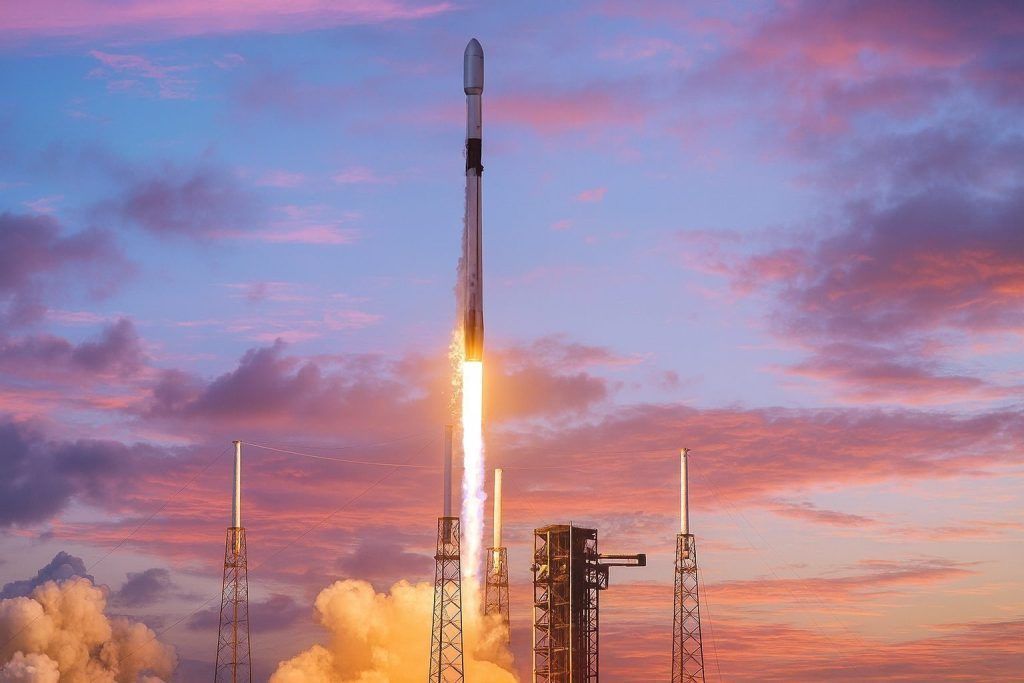
If you were awake very early (or you’re in the habit of watching launch streams), today also featured a significant rocket story: United Launch Alliance’s Atlas V lifted off at 3:28 a.m. EST (08:28 UTC) from Cape Canaveral, carrying 27 Amazon Leo broadband satellites (Amazon’s re-branded Project Kuiper constellation). Reporting notes the launch was successful and marked ULA’s final launch of 2025, bringing the total number of Amazon Leo satellites in orbit to 180after this mission.
Even if you didn’t see it live, it’s part of a broader reality of the modern night sky: on any clear night, what you see overhead increasingly includes satellites along with stars.
3) Meteor talk continues after the Geminids—plus the Ursids are next
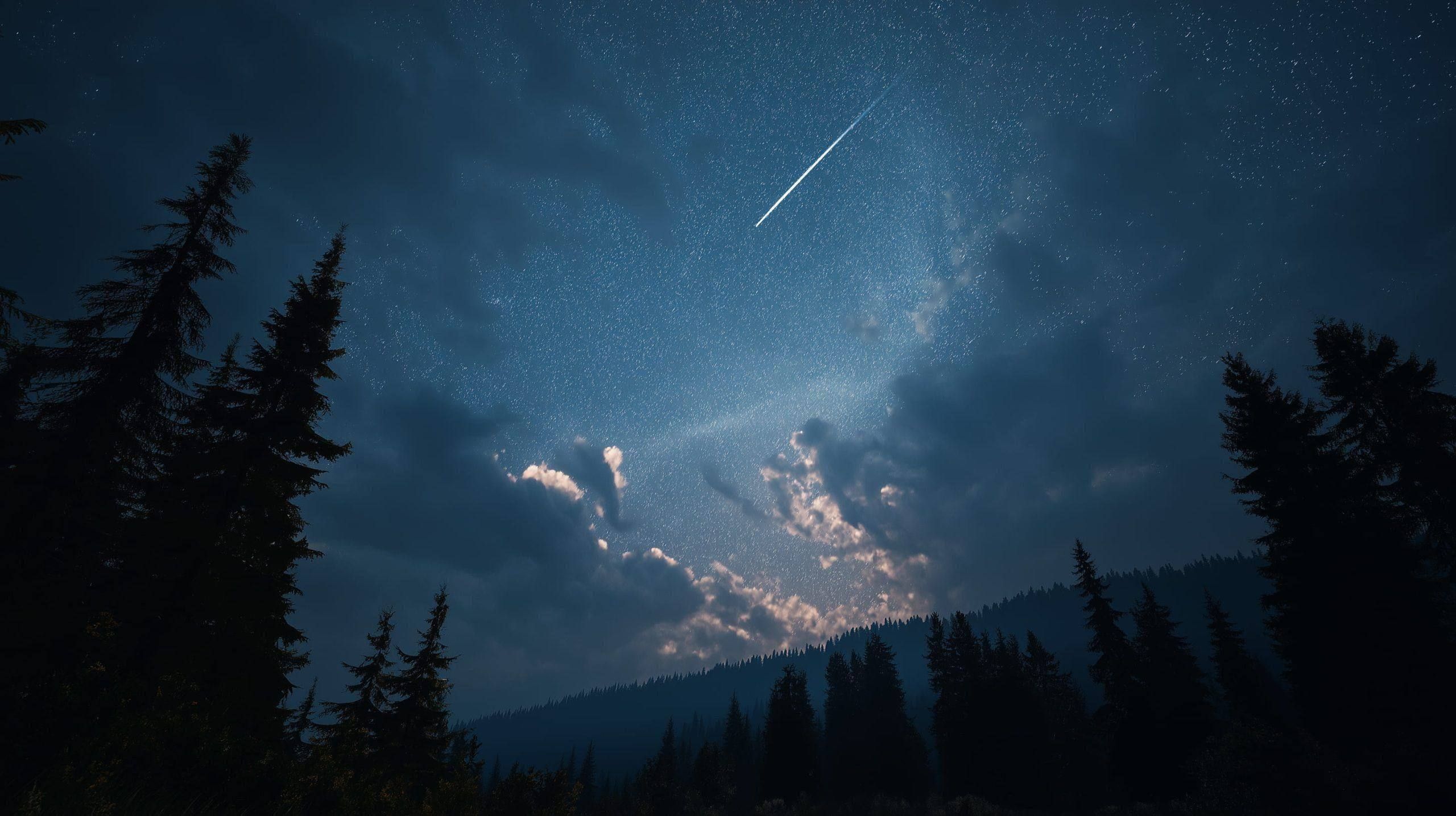
Although the Geminid meteor shower peaked a few nights ago, it’s still dominating conversation. Space outlets published fresh roundups of Geminid imagery, highlighting the shower’s link to debris from asteroid (3200) Phaethon and the way meteors appear to radiate from Gemini.
Meanwhile, today’s local coverage is already pointing to the Ursid meteor shower coming up around the solstice. One report notes the Ursids are typically a modest shower (often 5–10 meteors per hour, sometimes more) and suggests the best viewing will be after midnight as the peak approaches.
4) A surprising angle: micrometeorites “pitter-pattering” onto roofs
A conversation-starter published today: while meteor streaks grab attention, the smallest fragments—micrometeorites—can be collected and studied, and may accumulate in surprising places like rooftops (including cathedral roofs used for research sampling).
It’s a reminder that meteor showers aren’t only “sky events.” They’re also a slow, ongoing delivery system of cosmic dust to Earth.
Night sky tonight: the quick checklist (best for most locations)
Here’s the fast, practical version—then we’ll break it down.
- Moon: Waning crescent (~12% lit). Darker skies for stargazing.
- Next big dark-sky milestone: New Moon arrives Dec. 20 at 01:43 UTC (which is Dec. 19 at 8:43 p.m. EST in North America).
- Bright planet of the night: Jupiter dominates later in the evening and overnight (excellent in a small telescope).
- Best early-evening planet: Saturn is well-placed after dusk, with its rings still very close to edge-on—a rare kind of view.
- Best naked-eye target: The Pleiades star cluster is high for many Northern Hemisphere viewers—great with binoculars.
- Meteor bonus: Geminids linger; Ursids are next; and some calendars note a minor Comae Berenicid peak around this date (very low rates, but dark skies help).
- Aurora watch: Some forecasts hint at a chance of minor geomagnetic activity in the near-term—worth checking live aurora dashboards if you’re at higher latitude.
The Moon tonight: why this week is prime time for dark skies
Tonight’s Moon is a thin waning crescent (around 11–12% illumination). That’s ideal for stargazing because the Moon’s brightness is the single biggest natural factor that washes out faint stars and meteors.
And the darkness gets even better soon: the New Moon occurs at 01:43 UTC on Dec. 20 (time-zone conversions vary; in North America it falls on the evening of Dec. 19).
If you’ve been waiting to try:
- your first meteor shower session,
- the Andromeda Galaxy,
- faint winter nebulae,
- or a comet through binoculars…
…this is the part of the month when it’s smartest to schedule it.
Planets tonight: Jupiter shines late, Saturn owns the early evening
Jupiter: the bright “anchor” in the late-evening sky
For many mid-northern latitude viewers, Jupiter becomes a dominant object as the evening progresses, and it’s headed toward opposition in early January—meaning it’s bright, big, and worth the effort.
What to do with Jupiter tonight:
- Naked eye: enjoy the brightness and watch it climb.
- Binoculars: spot the Galilean moons as tiny points of light.
- Small telescope: look for cloud bands; if your seeing is steady, you can sometimes catch major features (timing varies by location and night).
Saturn: a rare season for thin rings
Saturn is also a key target after dusk—and this month is special because its rings remain very close to edge-on (tilted less than 1° in one observing roundup). That makes the ring system look dramatically thinner than usual, and it also changes how easily you can pick out moons close to the planet.
Tonight’s extra Saturn challenge: one sky guide highlights a close apparent encounter between Titan and the fainter moon Tethys near Saturn’s rings around the evening hours (timing given in that report is shortly after 9 p.m. EST, with visibility dependent on your location and equipment).
Mercury: a dawn cameo
If you’re up before sunrise, Mercury remains a low dawn object in some sky guides (binocular-friendly because it’s near the horizon glow).
“Count the Pleiades” tonight: the easiest sky challenge with the biggest payoff
One simple reason tonight feels especially “winter-sky electric” (in the Northern Hemisphere): the Pleiades are high and prominent in the evening.
A skywatching roundup for this week specifically calls out Tuesday night as a good time to look at the Pleiades and try counting how many stars you can see with the naked eye—then compare with binoculars, which can reveal dozens.
Why this matters for SEO—and real life:
- “Pleiades” is one of the most searched star-cluster terms.
- It’s also one of the few deep-sky objects that rewards any skill level, from casual to serious.
Meteor showers: what’s realistic to see tonight (and what’s hype)
The Geminids: the peak is over, but the story isn’t
The Geminids peaked a few nights ago, but coverage is still rolling—especially photo galleries showcasing meteor streaks near Orion, Taurus, and the Pleiades region, and reminding readers the Geminids come from debris associated with asteroid (3200) Phaethon.
Even after peak, you can still catch occasional Geminids—just set expectations lower than the headline nights.
The Ursids: the next meteor shower to circle
Today’s coverage points ahead to the Ursid peak on the Dec. 21–22 night, and a major meteor calendar also lists that window as the next key date, noting very dark skies around the peak.
A practical plan:
- If you’re choosing one meteor session this week, pick a night closer to New Moon or the Ursid peak window (weather permitting).
A small extra: Comae Berenicids around Dec. 16 (minor, debated, and dim)
Some sky-event listings place a Comae Berenicid peak around Dec. 16. in-the-sky.org
At the same time, meteor-organization outlooks can describe very low expected rates for similarly named radiants in this period.
Translation: treat it like a bonus. If you see a few extra meteors while you’re out for planets or the Pleiades, great—but don’t expect a “shower” experience.
The interstellar comet story: how to follow 3I/ATLAS this week
If there’s one headline that truly feels “once in a lifetime,” it’s the interstellar object:
- News coverage describes 3I/ATLAS as only the third confirmed interstellar object observed in our solar system, after ’Oumuamua (2017) and 2I/Borisov (2019).
- It remains no threat to Earth, staying roughly 1.8 AU away at closest approach.
How to “see” it (realistically)
Most people will not spot this comet with the naked eye. The realistic options:
- A telescope (best chance), from a dark site.
- Online tracking via astronomy software or sky charts from reliable sources.
- Livestream viewing: one Space.com report notes a planned free livestream around the close-approach window (timing and weather dependent).
If you try from home, don’t be discouraged if it looks like a faint smudge. That’s normal for comets—especially from light-polluted areas.
A headline you can recreate tonight: Andromeda is up — and NASA’s APOD is leaning into it
NASA’s Astronomy Picture of the Day for Dec. 16 features a dramatic pairing: the Andromeda Galaxy (M31) alongside red sprites—brief, high-altitude lightning flashes above thunderstorms—captured over Western Australia.
You won’t recreate the “sprites over a storm” moment easily, but you can use tonight as an Andromeda night:
- If you’re under dark skies, Andromeda can appear as a faint, elongated glow.
- In binoculars, it becomes unmistakable—a real galaxy you’re seeing with your own eyes.
Aurora forecast tonight: worth a check if you live far enough north
Aurora visibility depends on solar wind and geomagnetic conditions, which can change quickly. If auroras matter in your region, don’t rely on a single article—use live updates.
- NOAA’s Space Weather Prediction Center provides an aurora “viewline” style product that updates regularly and is specifically built to estimate where aurora may be visible tonight and tomorrow night. swpc.noaa.gov
- Recent sun-and-aurora reporting notes periods where minor storm levels (G1 / Kp ~5) are possible in the near-term under certain solar wind conditions.
If you’re in Alaska, northern Canada, Scandinavia, Iceland, or similar latitudes, tonight is the kind of night where it’s smart to:
- check the live dashboard after dinner,
- and keep your camera/coat ready just in case.
How to get a better view tonight (in 5 simple steps)
- Pick darkness over convenience. Even a 10–15 minute drive away from city glow can transform the sky.
- Give your eyes 20 minutes. Dark adaptation is real—and it’s the difference between “I see nothing” and “I see everything.”
- Use binoculars. They’re the best value tool for the Pleiades, Andromeda, and many bright sky objects.
- Look up in time blocks. Early evening for Saturn; later for Jupiter; pre-dawn for Mercury (where visible).
- Keep expectations honest. Meteors come in bursts; comets can be faint; auroras can tease. That’s normal.
Bottom line: Tonight is for dark skies, bright planets, and “bonus” meteors — and this week is for the comet
With the Moon down to a thin crescent and New Moon approaching, the night sky on Dec. 16, 2025 is exactly what stargazers want: darker, cleaner, and full of targets.
Tonight’s top real-world plays:
- Pleiades + winter constellations for naked-eye wow,
- Saturn for a rare thin-ring season,
- Jupiter for telescope detail and moons,
- and, if you’re tracking headlines, the run-up to Comet 3I/ATLAS’ closest approach later this week.
Related articles: NASDAQ:AMZN