Ethical labels are becoming a trillion-dollar trust layer for consumer goods, while stablecoins push banks toward white‑label crypto payments. Here’s what’s driving both trends on Dec. 17, 2025.
On Dec. 17, 2025, two very different corners of the global economy delivered the same message: trust is now a product feature—and increasingly, a technology stack.
In consumer goods, “ethical labels” (think organic, Fairtrade, cruelty‑free, halal, and clean-label claims) are shifting from marketing add‑ons to purchase-deciding signals. A market outlook distributed via GlobeNewswire points to a massive runway for the ethical label ecosystem—powered by regulatory pressure, buyer expectations, and technology like QR codes, NFC, AI, and even blockchain-based traceability. GlobeNewswire
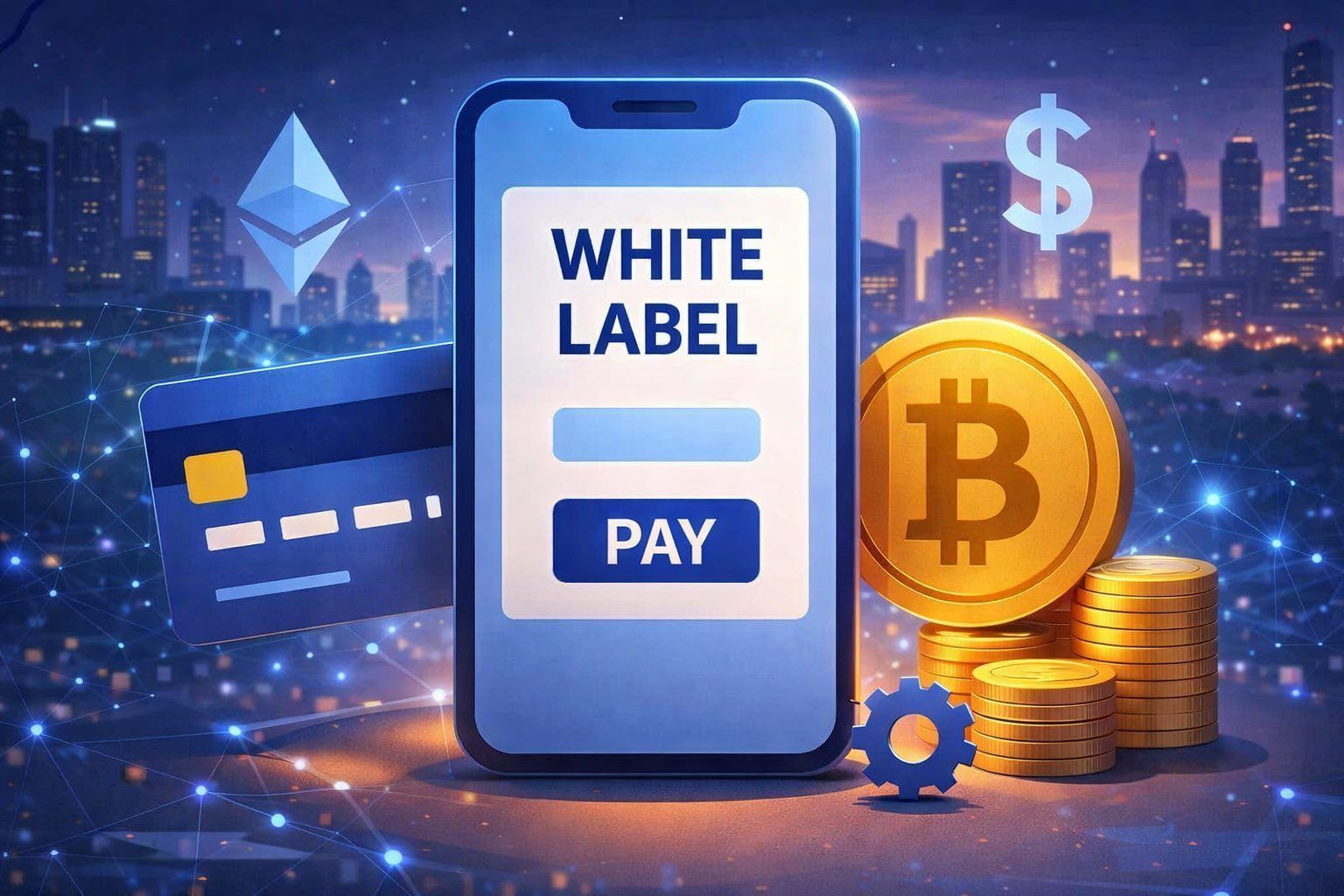
In financial services, stablecoins and on-chain settlement are pushing banks and payment institutions toward faster deployment models. A new PR Newswire release says B2BINPAY has expanded its white‑label crypto payments platform aimed at banks, electronic money institutions (EMIs), and payment service providers (PSPs) that want crypto rails without building everything in-house.
Below is a clear, publication-ready breakdown of today’s news—and why it matters for brands, banks, and the “trust economy” that links them.
Key numbers at a glance
| Metric | Latest figure | Source |
|---|---|---|
| Global ethical label market (2025) | ~$1,082.66B | GlobeNewswire / Towards Packaging summary |
| Ethical label market forecast (2034) | ~$1,962.5B (about 6.83% CAGR) | GlobeNewswire |
| Stablecoin on-chain volume (2025 YTD, as of Aug) | >$4T, +83% vs same period 2024 | TRM Labs report page |
| B2BINPAY scale cited in release | 980+ merchants; $5.1B+ incoming tx; 350+ assets; 10 blockchains | PR Newswire |
Ethical labels are becoming the “trust interface” for modern consumers
A GlobeNewswire-distributed market update (attributed to Towards Packaging, a sister firm of Precedence Research) frames ethical labeling as a fast-expanding system for proving product claims at shelf level—from ingredients and sourcing to labor practices and animal welfare.
Why the ethical label market is growing now
According to the report summary, the market is expanding because consumers increasingly favor products that are positioned as socially conscious, cruelty‑free, and sustainably sourced, while brands face rising pressure to prove those claims.
What’s changed in the past few years is not just awareness—it’s the expectation of verification. “Trust me” branding is being replaced by “scan it and see” product storytelling, where labels act as gateways to supply-chain narratives.
The tech shift: QR codes, smart labels, blockchain, and AI
The same report highlights a set of technology shifts that are turning labels into data carriers:
- Blockchain for transparency (verifying origins and supply chains)
- QR codes that link shoppers to sourcing and sustainability information instantly
- Smart/digital labels (including NFC-enabled tracking and engagement)
- AI & analytics to monitor compliance, detect fraud, and optimize ethical sourcing
- Eco-friendly printing (biodegradable / low-impact inks)
Why this matters: Ethical labels are increasingly behaving like micro compliance reports—compressed into a symbol, then expanded via mobile.
Which ethical labels and categories are leading
The market snapshot calls out several competitive patterns that are useful for retailers, CPG brands, and packaging suppliers planning 2026 roadmaps.
Label types: “Organic” leads, “Halal” accelerates
- Organic held the largest share (as described for 2024 in the key takeaways).
- Halal is flagged as a high-growth label type through 2025–2034.
This is a notable signal: ethical labeling isn’t a single consumer trend. It’s a stack of overlapping trust frameworks, each with its own certification ecosystem.
Product focus: food dominates, beverages grow quickly
The report summary says:
- Food contributes the largest share (2024).
- Beverages are expected to grow at a notable pace through 2034.
For brands, this points to a practical reality: ethical claims are most powerful where consumers purchase frequently and compare brands quickly—especially in grocery aisles.
Channels and regions: offline still leads, online grows faster; North America strong, APAC fastest growth
Key takeaways include:
- Offline channels contributed the biggest share (2024), while online is expected to grow faster over the forecast period.
- North America is described as the dominant region (2024), with Asia-Pacific expected to grow at a notable CAGR from 2025–2034.
A deeper “insight” page from Towards Packaging also cites North America at 35.01% share (2023) and Asia-Pacific growth at 8.91% CAGR in its longer report framing. Towards Packaging
The big takeaway for brands: ethical labels are moving from marketing to infrastructure
What the ethical label story really signals is a shift from claims to systems.
As more brands add certifications, the competitive edge moves to the companies that can answer, quickly and credibly:
- What exactly does this label certify?
- Who audited it?
- How recent is the verification?
- Can shoppers see supporting evidence—without hunting for it?
That’s why QR/NFC and traceability tools are so central in the forecast narrative.
White‑label crypto payments: B2BINPAY targets banks and EMIs that want speed to market
In parallel with the ethical-label trust push, today’s fintech news is about payment rails and deployment speed.
A PR Newswire release dated Dec. 17, 2025, says B2BINPAY has introduced an expanded White Label Solution that lets banks, EMIs, and PSPs launch branded crypto payments and wallets “without long development cycles.” PR Newswire
Why this is happening now: stablecoins are reaching “network scale”
The release positions stablecoins as moving from niche to core settlement infrastructure, citing transaction volumes above $4 trillion and 83% year-on-year growth.
Independent context: TRM Labs’ 2025 crypto adoption/stablecoin usage report also states stablecoins reached over USD 4 trillion in annual volume for 2025 year-to-date by August, representing an 83% increase versus the same period in 2024—and that stablecoins comprise about 30% of all on-chain crypto transaction volume.
That combination—scale + demand—is what’s forcing institutions to choose between:
- building internal blockchain capability, or
- adopting an external platform and focusing on distribution, compliance, and customer experience.
What B2BINPAY says its expanded white-label platform changes
The PR Newswire release frames the pain points clearly: few institutions want to staff blockchain teams, manage nodes, onboard KYT providers, or handle multiple chain integrations just to meet customer demand.
B2BINPAY’s pitch is that financial institutions can instead deploy a branded crypto payments + wallet stack on top of its existing infrastructure.
The company also cites its operating scale as proof of maturity:
- 980+ merchants served
- $5.1B+ in incoming transactions processed
- 350+ digital assets supported across 10 blockchains
A same-day explainer from BitcoinSensus echoes this “white label vs in-house” positioning and emphasizes time-to-market and operational complexity as key drivers. Bitcoinsensus
How white-label crypto payments can become a revenue line for institutions
B2BINPAY lists several monetization levers institutions can use while retaining the client relationship:
- tiered deposit/withdrawal fees
- configurable markups on swaps/conversions
- hedging and risk-management tools aimed at internal spread capture
This is the same playbook that shaped earlier fintech waves: own the customer, rent the infrastructure.
The risk layer: trust cuts both ways
Both stories—ethical labels and stablecoin rails—are ultimately about compressing complexity into something usable. But both also carry credibility risk.
Ethical labels: the “signal overload” problem
As ethical labels multiply, shoppers can face a paradox: more labels, less clarity. If consumers can’t distinguish rigorous certifications from weaker ones, the system becomes noisy—and brands can be tempted into “badge collecting” rather than making measurable changes.
Stablecoins: concentration and compliance realities
The stablecoin economy is also highly concentrated. Decrypt’s coverage of TRM Labs’ findings notes that major stablecoins dominate and that stablecoins account for a large share of crypto transaction activity.
It also highlights a key compliance tension: stablecoins are widely used for legitimate activity, but they also appear in a rising share of illicit crypto transactions.
This is why terms like KYC and KYT show up prominently in B2BINPAY’s own positioning.
Where these two stories intersect: verification becomes the product
At first glance, ethical food labels and bank crypto rails don’t belong in the same headline. But they do share a common theme:
Modern markets increasingly run on verifiable claims.
- Ethical labels aim to prove how something was made.
- Stablecoins aim to move value with speed and auditability, pushing institutions toward plug‑and‑play infrastructure.
In both cases, the winners are likely to be the organizations that can make verification:
- fast (scan/settle),
- clear (simple UX),
- and defensible (auditable standards).
What to watch next
For consumer brands and retailers
- Expect stronger competition around digital label experiences—where QR/NFC isn’t an extra, it’s the product narrative layer.
- Watch how online marketplaces and grocery delivery apps surface ethical claims, since online channels are projected to grow faster.
For banks, EMIs, and PSPs
- White-label offerings will compete on compliance tooling, reliability, and integration depth, not just coin support.
- Stablecoin adoption metrics—and how regulators respond—will shape which institutions move first and which wait.
FAQ
What is the ethical label market?
It broadly covers the ecosystem of certifications and labeling used to signal ethical, sustainable, or values-based product attributes—such as organic, Fairtrade, halal, vegan, animal welfare, and clean-label claims.
How big could the ethical label market get?
The GlobeNewswire-distributed outlook projects the global ethical label market rising from about $1.08T (2025) to about $1.96T (2034) at roughly 6.83% CAGR.
What are white-label crypto payments?
White-label crypto payments let a bank/EMI/PSP launch crypto payment and wallet features under its own brand—while using a third-party infrastructure provider to handle major technical and operational components.
What did B2BINPAY announce on Dec. 17, 2025?
B2BINPAY announced an expanded white-label platform targeting banks, EMIs, and payment providers—positioned to shorten time-to-market for crypto payments and wallets and to reduce the need for in-house blockchain operations.