
NEW YORK, Dec. 28, 2025, 2:01 p.m. ET — Market closed (weekend)
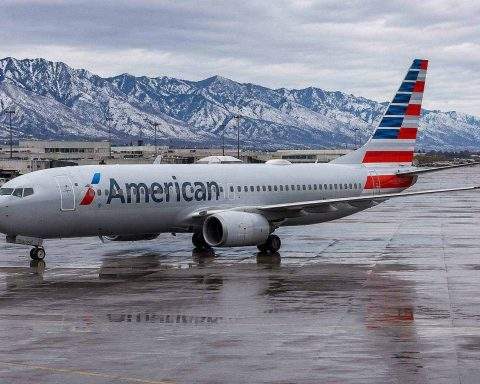
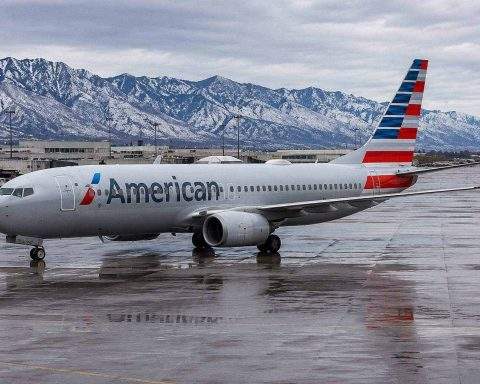
American Airlines Group, Inc. (NASDAQ: AAL) heads into Monday’s reopening with investors balancing two narratives that can move airline stocks quickly: near-term operational turbulence from Northeast winter weather and a longer-term operational reset at its most important hub aimed at improving reliability.
With U.S. equity markets closed on Sunday, AAL’s next real-time price discovery comes Monday’s premarket and the 9:30 a.m. ET open. The stock last traded around $15.44, down about 1.56% versus the prior close, on heavy end-of-week volume.
AAL stock snapshot as markets pause for the weekend
Going into the next session, AAL’s latest traded price sits in the mid-teens after a choppy holiday week. In the most recent session reflected by market data, AAL traded roughly between $15.31 and $15.69 with volume near 37.8 million shares—a reminder that liquidity can spike even in year-end tape when headlines hit.
For investors, the key question isn’t just “where did AAL close?”—it’s “what changed over the weekend that could reprice airlines at the open?”
1) Winter storm disruptions: what the last 48 hours of headlines mean for American
Over the past 24–48 hours, the most market-relevant flow for U.S. airlines has been weather-driven disruption in the Northeast during one of the busiest travel windows of the year.
Reuters reported that on Friday, Dec. 26, U.S. carriers faced widespread cancellations and delays tied to winter storm Devin, citing FlightAware figures of 1,802 flights canceled and 22,349 delayed as of late afternoon. American was among the impacted carriers, with 146 cancellations cited in the report, and airlines told Reuters they were waiving change fees for affected travelers.
By Saturday, Dec. 27, Reuters said the disruption lingered even as the storm began to ebb, with more than 9,000 domestic U.S. flights canceled or delayed (again citing FlightAware). The report also highlighted that American, United, and JetBlue had waived change fees for customers whose plans were affected.
Why this matters for AAL stock:
- Operational disruption can pressure near-term unit revenues (missed trips, reaccommodation, waived fees) even when demand is strong.
- It can also raise irregular operations costs (crew and aircraft repositioning, overtime, hotels, customer handling).
- The flip side: storms are typically viewed as temporary, and travel demand around holidays often supports faster network normalization once weather clears.
For context on the meteorological side of the event, Reuters quoted Bob Oravec, a meteorologist at the National Weather Service’s Weather Prediction Center, noting the heaviest snow was largely done with only flurries expected to taper off later in the day—useful color for investors thinking about whether disruption is “one more day” or “multi-day rolling mess.” Reuters
2) DFW overhaul: American’s flagship hub is being re-timed for reliability
While storms dominate short-term headlines, American also delivered a materially important operational update over the weekend—one that speaks directly to a long-running investor debate: can American close the operational reliability gap and improve customer experience without sacrificing network breadth?
In a company announcement, American said that after operating for more than a decade with nine “banks” of flights concentrated across the day at Dallas/Fort Worth (DFW), it is moving to a 13-bank structure beginning in April, with changes already becoming visible in schedules starting Dec. 27. American framed the shift as a reliability and “trip certainty” push for an average 100,000 peak daily customers traveling through more than 930 average peak DFW daily departing flights. American Airlines Newsroom
American also highlighted an “unprecedented” investment in block time—the scheduled gate-to-gate time—intended to improve on-time performance and reduce misconnects and baggage issues. American Airlines Newsroom
Jim Moses, American’s Senior Vice President of DFW Operations, said the hub approach must evolve with the operating environment and customer expectations as the airline makes this shift while maintaining schedule “breadth” and “quality.” American Airlines Newsroom
Why this matters for AAL stock:
- A more balanced bank structure can reduce extreme peak congestion, improving resilience when disruption hits (weather, ATC, mechanical).
- Better reliability can support higher-yielding demand, including business travel and premium upsell, and protect the brand at key hubs.
- Investors may read this as a management acknowledgment that operational execution is a competitive differentiator, not just a cost line.
3) Wall Street’s near-term view: targets cluster in the mid-to-high teens, but dispersion is real
AAL’s analyst narrative has been active in December, and it remains relevant heading into the next open—especially because airline stocks can react to shifts in cycle expectations (corporate travel, capacity discipline, pricing) and to debates about balance sheets.
Here are the most cited recent Street markers:
UBS: upgrade to Buy, $20 target
UBS analyst Atul Maheswari upgraded American to Buy with a $20 price target, arguing the market isn’t fully appreciating American’s opportunity to expand profits as corporate revenues recover, and highlighting the potential for loyalty income growth.
Citi: Buy initiation, $19 target
Citi analyst John Godyn initiated coverage at Buy with a $19 price target, citing what he called an “elongated mid-cycle” beginning in 2026 and favoring the “supermajors” on risk/reward. TipRanks
Wells Fargo: Equal Weight initiation, $17 target
Wells Fargo initiated coverage at Equal Weight with a $17 target, pointing to a new co-branded card agreement and improving main cabin economics as positives—but also flagging elevated debt and a need for “premium catch up” as offsets. TipRanks
(For background on the co-branded card theme: American and Citi previously announced an extension and expansion of their co-branded partnership, with Citi set to become the exclusive issuer of the AAdvantage co-branded card portfolio in the U.S. in 2026.
BMO: Market Perform initiation, $16.75 target
BMO initiated at Market Perform with a $16.75 target, describing improving sector conditions after a challenging 2024–2025 environment and emphasizing longer-term opportunities for carriers that can sustain margin expansion. TipRanks
In a separate write-up, Investing.com summarized BMO’s view that American’s EBIT remains below 2019 levels and noted the airline’s unit revenue challenges alongside cost performance.
The consensus view
Aggregated analyst forecasts still imply a market that sees modest upside rather than a runaway bull case, with MarketBeat data showing an average target price around $16.46 (with a wide high/low range).
What investors should take from this: even when targets are “close,” the reasons differ—some analysts are leaning into cycle recovery and loyalty economics, while others keep focus on leverage, premium mix, and execution risk.
If the exchange is closed: what investors should know before Monday’s session
Because the market is closed now, the most useful preparation is building a checklist of catalysts that can affect AAL’s Monday tape—especially in premarket, when airline names can gap on operational headlines.
What to monitor between now and Monday’s open
- Weather normalization and residual disruption: headlines about continued Northeast delays, ATC constraints, de-icing impacts, or recovery timelines can shape sentiment after Reuters’ reports of widespread disruptions.
- Further details on the DFW banking shift: investors may look for follow-up coverage, operational metrics, or competitive response as American moves from nine banks to thirteen and adds block time.
- Balance-sheet sensitivity and “premium catch-up” narrative: Wells Fargo explicitly raised the issue of elevated debt and premium positioning—topics that can resurface fast if macro risk appetite changes. TipRanks
- Cycle calls into 2026: Citi’s “elongated mid-cycle” framing and UBS’s profit expansion thesis are bullish signposts, but they also set expectations—any contradictory datapoint (pricing pressure, capacity creep, cost surprises) can trigger rapid repricing. TipRanks+1
- Next earnings timing: American has not confirmed a date in this source, but multiple trackers estimate late January 2026—MarketBeat lists an estimated report date of Thursday, Jan. 22, 2026. That matters because airlines often start to trade more “fundamentals-first” as earnings approach. MarketBeat
A practical Monday open framework for AAL stock watchers
- Headline scan (6:00–9:30 a.m. ET): look for operational updates—waivers, cancellations, hub congestion, and recovery progress.
- Sector read-through: check how other airlines trade premarket; storm effects and fuel sensitivity can move the whole group in tandem.
- Level-setting: note that recent analyst targets concentrate between roughly $17–$20, so moves toward/away from those levels may attract commentary and momentum flows.
Bottom line for American Airlines (AAL) stock right now
With markets closed, AAL’s weekend setup is defined by short-term operational noise and medium-term execution messaging. The storm disruption coverage underscores how quickly irregular operations can dominate narratives during peak demand windows. Reuters+1 At the same time, American’s DFW schedule overhaul is a concrete attempt to improve reliability at the hub that matters most to its network economics—an initiative investors will likely revisit as 2026 cycle optimism builds.
When trading resumes Monday, the first real test will be whether the market treats the weekend headlines as a transitory operational hit—or as a reminder of why reliability and resilience are central to the American Airlines investment case.
Related articles: NASDAQ:AAL