
BOSTON, May 1, 2026, 11:03 (EDT)
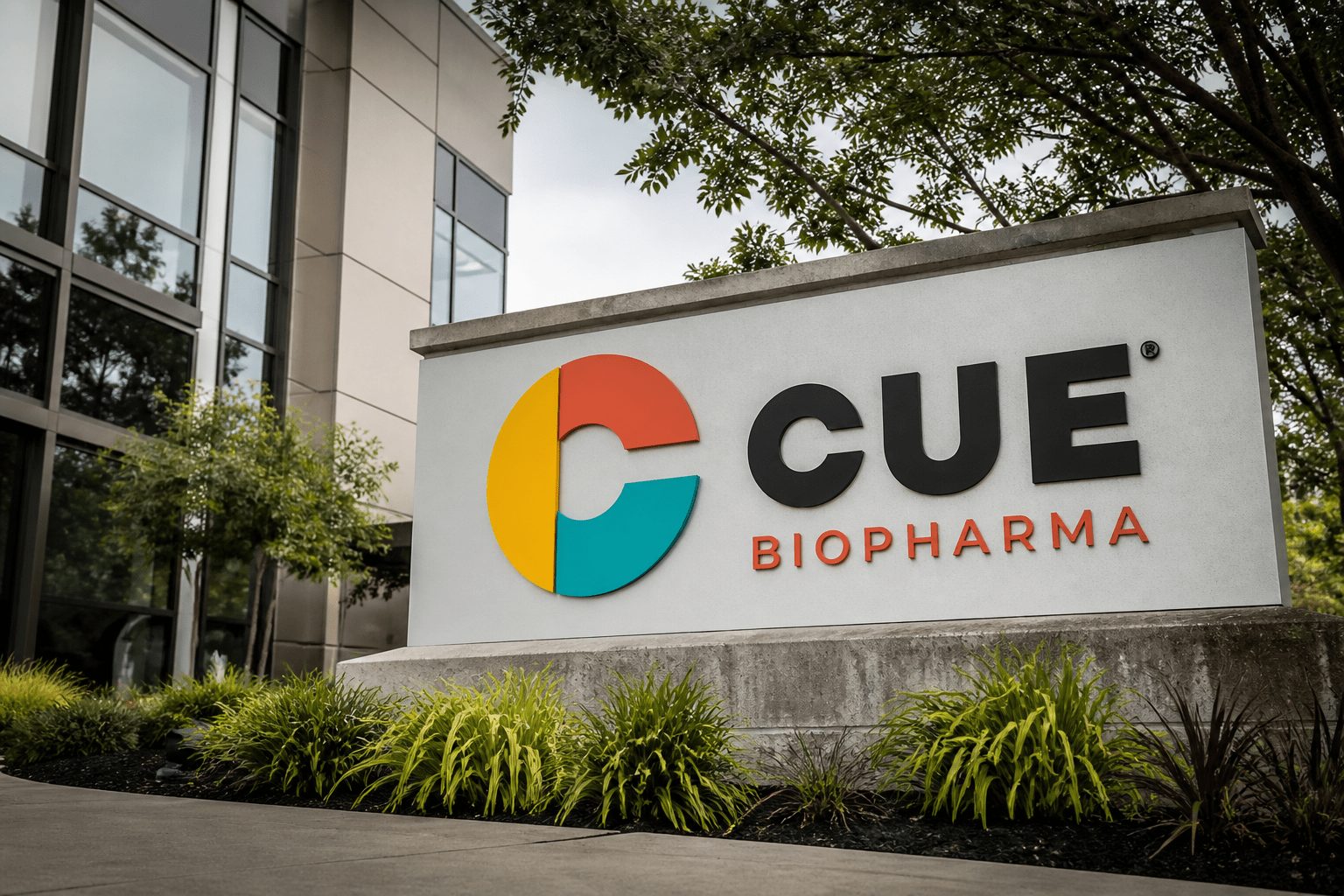
Cue Biopharma surged Friday morning, the stock boosted by news of a fresh allergy drug license. The Boston biotech also unveiled a $30 million private placement and named Shao-Lee Lin as its new chief executive.
Shares jumped 91.4% to $28.21 as of 11:03 a.m. EDT, according to market data, following a Thursday close at $14.74. The stock had kicked off the session at $33.75, but later lost some ground.
This shift comes as Cue pushes to rebuild its business on clinical-stage immunology assets, following a rough stretch for the shares. Just last week, the company pulled off a 1-for-30 reverse stock split—an effort, Cue said, designed partly to get back in line with Nasdaq’s minimum bid price rule.
That move hands Cue a late-stage allergy program just as big pharma is doubling down on immunoglobulin E, or IgE—the antibody at the center of many allergy responses. Back in March, Novartis struck a deal to buy Excellergy for as much as $2 billion, aiming to beef up its allergy lineup. The Swiss group already co-markets Xolair, an anti-IgE therapy, alongside Roche’s Genentech in the U.S., while Novartis handles sales outside the country.
Cue has picked up global rights—except for mainland China, Hong Kong, Macau and Taiwan—to Ascendant-221, a Phase 2 anti-IgE monoclonal antibody, through a licensing agreement with Ascendant Health Sciences. Under the terms, Cue is paying $15 million up front, and could hand over up to $676.5 million in milestones, plus tiered royalties down the line if sales materialize.
Researchers in China are testing Ascendant-221 for chronic spontaneous urticaria—a condition marked by recurring hives—with data expected in the back half of 2026. Cue, for its part, intends to launch a global Phase 2b trial targeting food allergy, but only after reviewing results from the urticaria study.
Lin pointed to Phase 1 results indicating a “rapid and durable suppression of free IgE” lasting over 12 weeks from a single dose, and argued the therapy could back a “best-in-class anti-IgE approach.” Those are early days, though—the real hurdle comes with the upcoming China study, and then a larger global trial, to see if those results hold up in patients. GlobeNewswire
Cue has tapped Lin to take over as president, CEO, and board director, replacing interim chief Lucinda Warren. According to Cue, Lin is the founder of ACELYRIN and has held top positions at Horizon Therapeutics, AbbVie, Gilead Sciences, and Amgen.
Lin, in the CEO announcement, called Cue “a unique opportunity to bring meaningful medicines to patients,” with a nod to CUE-401 and the new Phase 2 program. Board chairman Pasha Sarraf said Lin’s “disciplined approach” is expected to drive CUE-401 forward and expand the clinical pipeline. GlobeNewswire
This is a PIPE deal—private investment in public equity. Cue’s lined up to sell pre-funded warrants covering as many as 2,727,272 common shares, plus warrants for up to 1,363,636 more shares, all coming in at an effective $11 apiece for each pre-funded warrant and its matching warrant.
Cue is eyeing gross proceeds of around $30 million, according to a regulatory filing. After fees paid out to the placement agent—Newbridge Securities—the company estimates net proceeds will land near $28 million. The filing also lists Lin as one of the investors participating in the deal.
The competitive bar is high. In 2024, Xolair grabbed FDA approval as the first drug to cut allergic reactions to multiple foods after accidental contact, giving Roche and Novartis an early lead in the food allergy space. Cue’s angle: Ascendant-221 might keep free IgE down for longer stretches, maybe even opening the door to less frequent dosing. But that’s a claim still waiting on proof from bigger trials.
The risks aren’t just about clinical results. Cue flagged that the financing isn’t final until standard closing steps are wrapped, and shareholders have to sign off before the warrants go live. They also cited thin cash reserves, a string of losses, going-concern doubts, dependence on partners, and a real risk that trial results could disappoint or leave the case unsettled—any of which could scuttle the plan.