
New York, May 6, 2026, 05:59 EDT
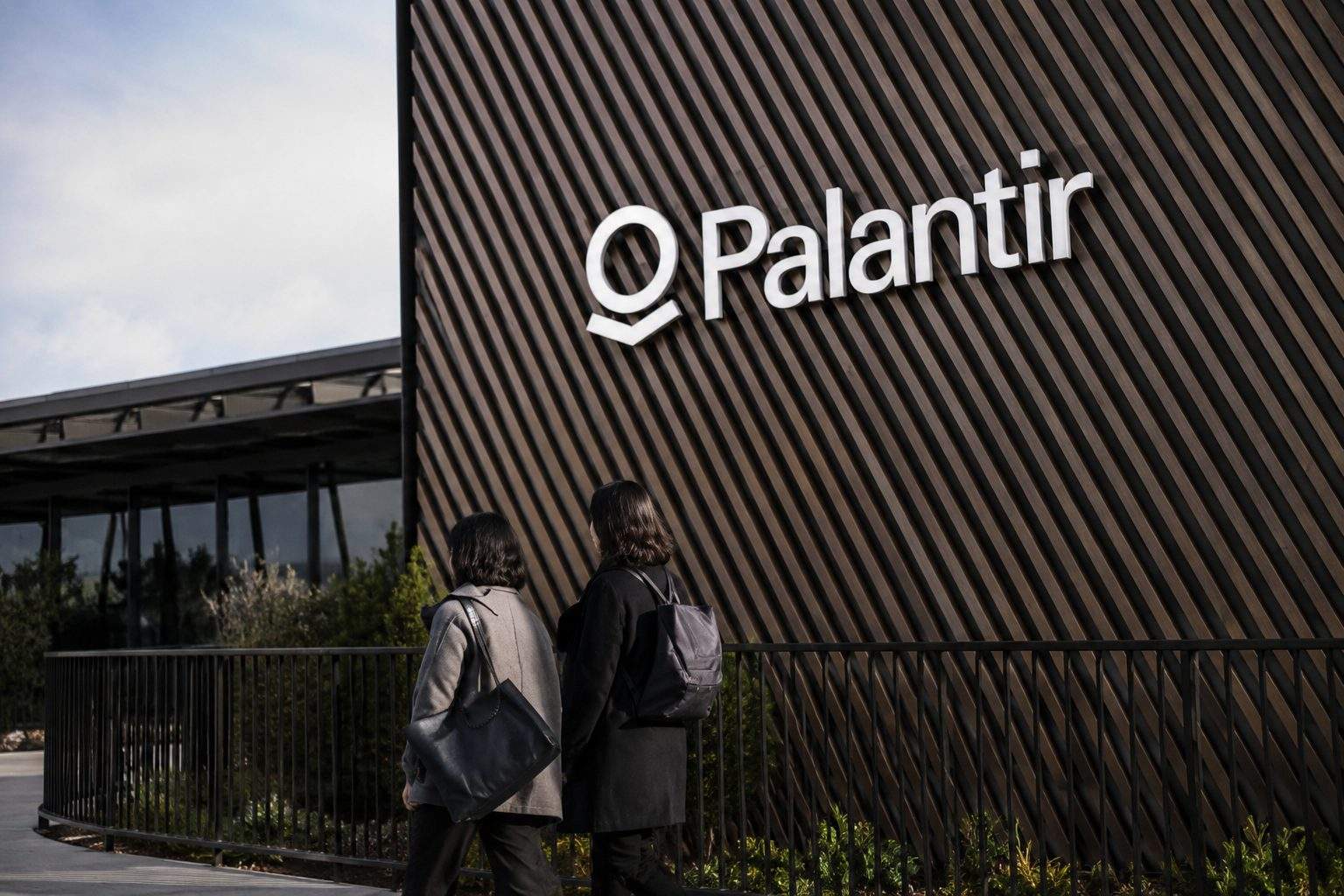
Palantir Technologies shares slumped 6.9% to $135.91 on Tuesday, as Wall Street punished the stock in spite of record first-quarter revenue, stronger profit, and a bumped-up 2026 forecast. Investors zeroed in on valuation concerns and a U.S. commercial sales number that missed the mark. The stock was still under pressure headed into Wednesday’s U.S. premarket.
The stakes are high right now: Palantir’s stock remains one of the purest enterprise AI plays in public markets. The company sits at a market cap near $349 billion, and shares fetch around 153 times earnings. That multiple doesn’t leave much tolerance for quarterly results that impress but don’t hit every mark.
This timing lands right in the thick of a bigger battle. Reuters reported Tuesday that OpenAI and Anthropic are stepping past just building models, moving into AI deployment, and both have joint ventures negotiating to acquire services firms that help businesses get AI running in real-world workflows. Blackstone President Jon Gray weighed in, pointing to skilled workers as the potential fix for “one of the most significant bottlenecks” in rolling out enterprise AI — the same hands-on, labor-intensive turf where Palantir claims it’s already ahead. Reuters
Palantir posted solid results. For the quarter ended March 31, revenue jumped 85% year over year to $1.633 billion. U.S. sales more than doubled, hitting $1.282 billion. On the commercial side in the U.S., revenue surged 133% to $595 million. Government business in the U.S. brought in $687 million, up 84%. Adjusted earnings—excluding some items—landed at 33 cents a share.
The company bumped its full-year revenue outlook, now guiding for $7.65 billion to $7.66 billion, compared with its earlier $7.18 billion to $7.20 billion range. “The United States remains the center, the constant core, of our business. And that business is erupting,” Chief Executive Alex Karp told shareholders. Reuters
The sticking point? U.S. commercial revenue landed at $595 million, Bloomberg noted, missing what analysts had penciled in. That shortfall took some shine off an outlook that was otherwise robust for a company entrenched in discussions around surveillance, defense tech, and AI-driven warfare.
Palantir highlighted its “Rule of 40” score—an investor favorite that tallies up revenue growth plus adjusted operating margin. Anything over 40 is considered solid. The company’s latest read: 145%. That breaks down to 85% revenue growth paired with a 60% adjusted operating margin. Palantir Investors
Opinions diverged quickly. Dan Ives of Wedbush stuck with his Outperform and a $230 target, hailing the quarter as a “validation moment.” Over at Loop Capital, Mark Schappel left his Buy rating unchanged. But DA Davidson’s Gil Luria trimmed his price target down to $165 from $180 and remained Neutral, citing premium valuation. TipRanks
The risk is straightforward. Analysts, according to MarketWatch, are zeroing in on Palantir’s valuation—34 times estimated 2027 sales, and 56 times expected free cash flow. Jefferies’ Brent Thill pointed to Palantir’s lean sales team and a lack of bigger bets to expand its market footprint. While international commercial revenue is getting less attention, that segment lagged well behind the growth pace of Palantir’s U.S. business.
Impacts on peers are all over the map. According to Barron’s, Palantir’s call knocked enterprise software sentiment. UBS analyst Karl Keirstead, however, pointed to a potential win for AI-centric players like OpenAI, Anthropic, and data-focused companies such as Snowflake, while less optimistic about legacy software names.
With Palantir, it’s less a question of growth now and more about whether U.S. commercial demand keeps topping what the Street expects. Investors also have to decide: are they willing to stick with those lofty AI valuations if even a single line disappoints?