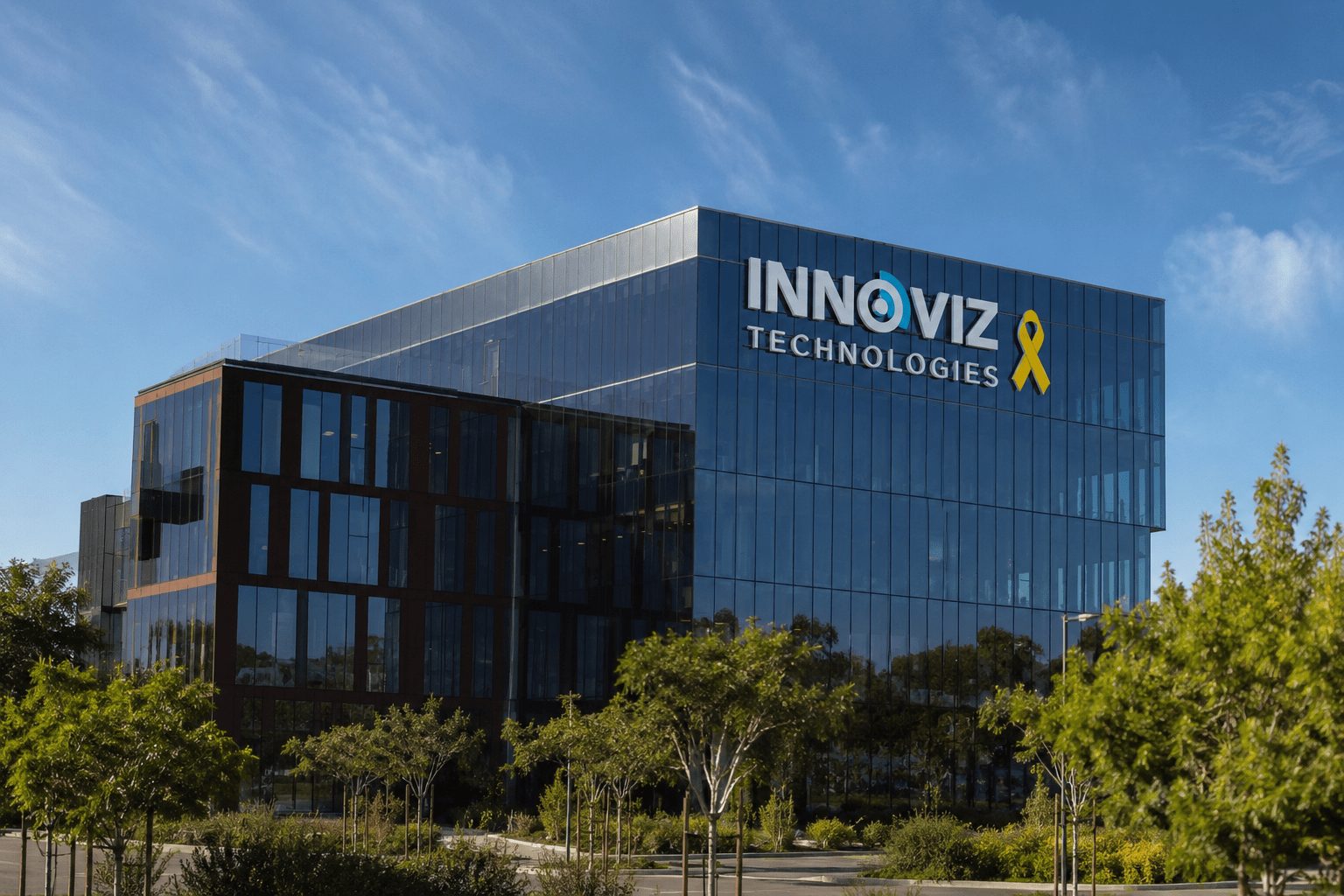

TEL AVIV, May 14, 2026, 12:20 IDT
- Kela Technologies has agreed to buy several hundred InnovizTwo LiDAR sensors—potentially scaling that up to thousands down the line.
- Innoviz disclosed it has landed a separate agreement to develop software for an upcoming autonomous-vehicle initiative.
- Innoviz’s first-quarter 2026 results are still ahead, set for release before the U.S. market opens, but the news drops beforehand.
Innoviz Technologies Ltd. secured a pair of new commercial deals in LiDAR, the laser-driven tech used for high-res 3D mapping. These latest wins provide the Israeli sensor firm with fresh momentum just ahead of its first-quarter earnings release.
Kela Technologies and Innoviz announced on Wednesday a framework deal that could see Kela buying several hundred InnovizTwo sensors, with the option to ramp up to thousands over the next few years. Those sensors are headed for use in armored vehicles, as well as border and perimeter defense roles.
Timing is crucial here. Innoviz wants to prove its automotive-grade sensors have traction outside the usual passenger car market, even as investors look ahead to its May 14 earnings and the 9 a.m. Eastern conference call. Pre-market figures had INVZ trading at $0.9165—still under the $1 threshold that triggers Nasdaq’s compliance watch.
Kela said its sensors are meant to work in tandem with radar, electro-optical, thermal, and radio-frequency systems, giving commanders and autonomous systems a unified operational view. According to the companies, LiDAR offers depth and shape measurement, which can distinguish a drone from clutter or a decoy.
“Civilian autonomy proved that LiDAR can be built reliably and at scale. Defense now needs exactly that,” said Kela co-founder and President Hamutal Meridor. PR Newswire
In another move, Innoviz announced a software-development pact with an undisclosed autonomous-driving tech partner. The focus: testing “on-sensor” perception—software that processes LiDAR data directly within the sensor, not just in the vehicle’s main computer. Innoviz Technologies Ltd.
Innoviz said the agreement could strengthen its current supply ties. Chief Executive Omer Keilaf called the choice a sign of recognition for “the full autonomy stack”—industry jargon for the combined hardware and software that let a vehicle sense and respond. Innoviz Technologies Ltd.
Innoviz has broadened its focus. Back in February, the company posted 2025 revenue of $55.1 million, up sharply from the previous year, and outlined 2026 revenue guidance in the $67 million to $73 million range. The company pointed to collaborations with Daimler Truck, Torc Robotics, Mobileye, Volkswagen, among others.
Zacks analysts, in a report published via TradingView, had been looking for Innoviz to post a Q1 loss of 6 cents per share, with revenue coming in at $13.81 million.
Competition hasn’t let up. Innoviz’s annual report lists Valeo, Hesai, and Ouster as key LiDAR competitors, noting that some of these players are better resourced. There’s also indirect heat from camera and radar systems increasingly used in driver-assistance tech.
There’s a risk here. A framework agreement doesn’t guarantee a locked-in long-term order, and development projects sometimes never translate into actual production revenue. Even Innoviz cautions that its various strategic, development, or supply deals could end early or fail to convert into binding long-term contracts.
Then there’s the listing problem. Back in March, Innoviz disclosed it got a warning from Nasdaq: its shares stayed under the $1 mark for 30 sessions in a row. The company now has until Sept. 21, 2026 to fix that, meaning it needs to finish at $1 or higher for a run of at least 10 trading days.
Related articles: Earnings