
WASHINGTON, July 5, 2026, 12:03 (EDT)
- FAA rule affects 11 Boeing 747-8F freighters registered in the U.S. and is set to take effect Aug. 6.
- Direct inspection costs start at $31,280 for each plane, so U.S. operators face a total of $344,080 even before any repairs or lost time.
- Investors are dealing with tight capacity for large freighters, as May dedicated freighter traffic jumped 11% from a year ago.
- No new U.S. equity prints for Boeing or UPS on July 5 in the finance feed. The most recent trades were from July 2 UTC.
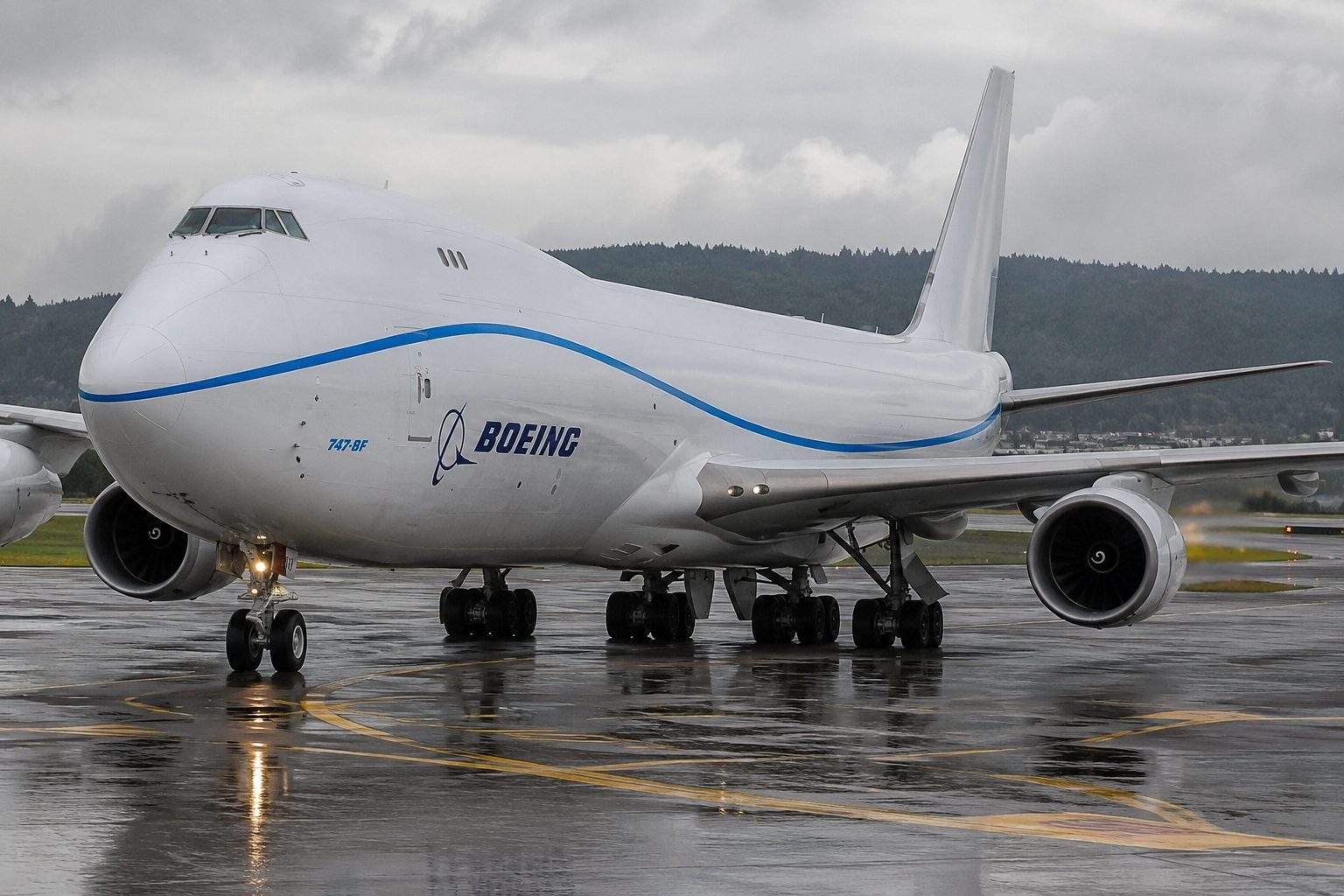
The U.S. FAA is calling for checks on some Boeing Co NYSE:BA 747-8F freighters, asking airlines to look for cracks in fuselage stringers and splice fittings. It’s a limited safety order, but shows how four-engine passenger jumbos are on their way out, even as large nose-loading freighters stay in demand. This directive covers 11 planes registered in the U.S. and flagged by Boeing’s alert bulletin, and kicks in Aug. 6.
The direct cash bill is small. FAA estimates put the work at 124 hours for the radius-filler inspection and 244 hours for the cracking check, at $85 per hour. That means $31,280 in inspection costs for each plane, or $344,080 for all 11 U.S. planes.
| FAA required action | Labor estimate | Direct cost per aircraft | Direct cost across 11 U.S. aircraft |
|---|---|---|---|
| Radius-filler check | As much as 124 hours | As much as $10,540 | As much as $115,940 |
| Crack check | As much as 244 hours | As much as $20,740 | As much as $228,140 |
| Total for first round of checks | As much as 368 hours | As much as $31,280 | As much as $344,080 |
Investors can’t estimate downtime from the rule. The FAA said its cost analysis leaves out indirect costs, saying it doesn’t have the data and those costs depend on the operator. The agency also said it doesn’t know how many planes might need extra work. Replacing a cracked splice-channel is put at $26,309 for each job, with 300 hours of labor and $809 in parts.
The FAA hasn’t disclosed which carriers were hit. It only said two are involved, and both count as large businesses under U.S. small-business guidelines. That suggests this is a utilization issue—not a balance sheet one. Pulling a big freighter from service can sting more than the cost of an inspection.
United Parcel Service NYSE:UPS is one of the main tickers investors track for 747-8F exposure. The company says it runs 30 747-8 freighters, each with a max payload of 307,600 pounds. The jets are built for 34 main deck containers and 12 positions in the belly. UPS’s cargo site points out the 747-8F also gets a nose door for oversized or extra-long cargo.
| Capacity marker | Latest available figure | Why it matters |
|---|---|---|
| FAA affected U.S. 747-8F aircraft | 11 | Small fleet but lots of cargo per jet |
| UPS 747-8 fleet | 30 | UPS shows largest exposure in public data |
| Global air cargo demand, May | +6.0% year on year | Demand moved ahead of available space |
| Global cargo capacity, May | +1.9% year on year | Less extra capacity for disruptions |
| Dedicated freighter traffic, May | +11.0% year on year | Freighter flights drove most of the increase |
| Air cargo yields, May | +37.9% year on year | Strong use helped pricing hold |
IATA Director General Willie Walsh said June 29 that “yield growth and higher load factors are helping to recoup higher fuel costs.” The group’s May update showed global cargo demand up 6.0% year over year. Capacity increased 1.9%. Dedicated freighter traffic rose 11.0% and made up most of the new cargo volumes. IATA
The 747 still matters in the market, even after Boeing ended the line. Boeing handed over the last 747, a 747-8F, to Atlas Air in January 2023, wrapping up the program with 1,574 jets built. At the time, Boeing called Atlas the biggest 747 operator. Atlas Air’s then CEO John Dietrich said the company’s “history and success are directly linked to the 747 platform.” Boeing Investors
Lufthansa has had a long run with Boeing’s 747 lineup, a July 2 article said. The airline flew the 747-100, 747-200, 747-400 and now uses 747-400 and 747-8 models. But it’s making a move to more twin-engine aircraft.
Investors see it in plain terms. Nostalgia for the passenger 747 is about branding, but 747-8F availability affects freight rates and service. If inspections line up with scheduled maintenance, direct costs stay low. But if cracks mean an aircraft comes out of service in a busy corridor, costs may go to charters, missed shipments, or less aircraft utilization.
No new U.S. equity tick on July 5 at press time. Boeing last traded at $226.49, up $7.83 from the last close, timestamped July 2 UTC. UPS was last at $110.66, up $1.10, also July 2 UTC.
Related articles: NYSE:BA