
New York, July 10, 2026, 07:39 EDT
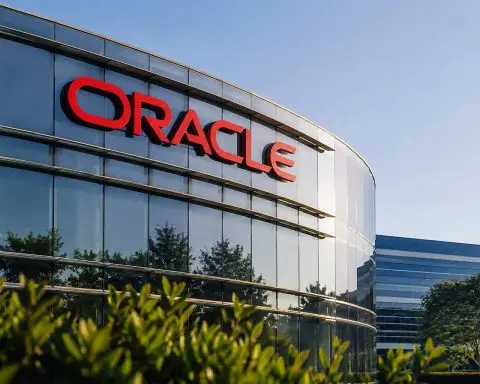
Oracle NYSE:ORCL stock traded up nearly 2% in premarket action Friday. That builds on Thursday’s 2.65% jump to $144.22, which came even after S&P Global Ratings pushed the company’s credit rating down to BBB-, just above junk. Investors kept buying the shares, even as bond investors asked for more yield.
It’s important because Oracle’s AI infrastructure push is leaning more on outside funding. At Thursday’s close, a $20 billion at-the-market share sale would mean about 138.7 million new shares, sold into the open market in steps. That would add 4.8% to the June share count and leave current holders with 4.6% less of the company, before possible price changes, fees, or previous sales. Oracle has rolled this into a broader plan to raise $40 billion from debt and equity in fiscal 2027.
| Thursday’s signal | Move | Level |
|---|---|---|
| Oracle shares | rose 2.65% | $144.22 |
| S&P 500 | gained 0.81% | 7,543.64 |
| Nasdaq Composite | up 1.30% | 26,206.89 |
| Oracle 5.7% bond due 2036: spread over Treasuries | wider by 9 bps | 184 bps |
One basis point is equal to 0.01 percentage point. Oracle beat the S&P 500 by 1.84 points and led the Nasdaq by 1.35 points, as the bond spread moved up from 175 basis points on Wednesday. With the latest share count, Thursday’s gain pushed up Oracle’s market value by about $10.7 billion, but shares still closed 3.3% below the $149.07 intraday high.
S&P analysts Andrew Chang and Christian Frank said Oracle’s push into AI infrastructure is weakening the company’s business risk profile, and the rating firm said it had underestimated how much Oracle would need to spend. S&P put a stable outlook on Oracle, but warned the firm might sell more equity after 2026 if its credit health slips. If adjusted leverage stays above 4.5 times earnings, Oracle faces another downgrade.
Oracle’s common share count was up 2.55% for the year through mid-June, according to SEC filings. That covers all share issuance and stock-based comp, not only financing deals. The last line here is just an illustration if the entire $20 billion goes at Thursday’s closing price.
| Share-count checkpoint | Common shares | Change |
|---|---|---|
| June 13, 2025 | 2.8088 billion | — |
| June 12, 2026 | 2.8805 billion | up 2.55% |
| Sample count after $20 billion sale at $144.22 | 3.0191 billion | 4.81% above June 2026; 7.49% above June 2025 |
Oracle’s argument for the dilution comes down to its locked-in growth. Cloud infrastructure sales were up 93% in the May quarter. For fiscal 2026, growth is 77%. Remaining performance obligations, which are contracted but not booked yet, stand at $638 billion. Oracle said customers either prepaid for or sent $75 billion in GPU hardware, so the company didn’t have to fund all that capital.
Free cash flow remains a problem. For 2026, it was negative $23.7 billion, with capital spending at $55.66 billion. Oracle said spending in 2027 might hit $95 billion, with $20 billion to $25 billion expected to come back from customers. Oracle’s own share, about $70 billion, would be 78% of its predicted $90 billion in revenue. CEO Clay Magouyrk said first-quarter capacity delivery was “approaching one gigawatt.” “The demand is real,” eMarketer analyst Jacob Bourne said, but added that the funding question is getting tougher. Reuters
Oracle is fighting for cloud business against rivals with much higher credit ratings. Microsoft NASDAQ:MSFT holds an AAA score from S&P, Alphabet NASDAQ:GOOGL is rated AA+, and Amazon.com NASDAQ:AMZN has AA — all seven to nine notches above Oracle. Britain on Friday labeled all four companies as critical suppliers to its financial sector, which increases Oracle’s profile but also brings new resilience and incident-reporting rules from July 13.
Bulls are counting on customers paying up, data centers launching on time, and the backlog turning into revenue without bigger margin pressure. Oracle hasn’t said when it will get the $20 billion to $25 billion in repayments. If those are late, it has to put up more of its own cash for the build. A weaker stock price means Oracle would have to sell more shares to raise the same amount. Slipping below investment grade could push up borrowing costs, too.
Oracle goes ex-dividend Friday for its $0.50 quarterly payout, so anyone buying the stock after that date won’t get the dividend. That’s a mechanical drop of about 0.35% from Thursday’s close. The bigger read comes from the bond market. If Oracle holds its premarket move but the 2036 spread doesn’t narrow, equity holders are still betting on backlog growth, while bond investors are focused on the cost to get there.
Related articles: NYSE:ORCL