KOSPI Sheds 10.8% as Chip Sector Focus and China Concerns Knock AI Stocks

KOSPI Sheds 10.8% as Chip Sector Focus and China Concerns Knock AI Stocks

SEOUL, July 28, 2026, 17:12 KST — Trading ended for the day.

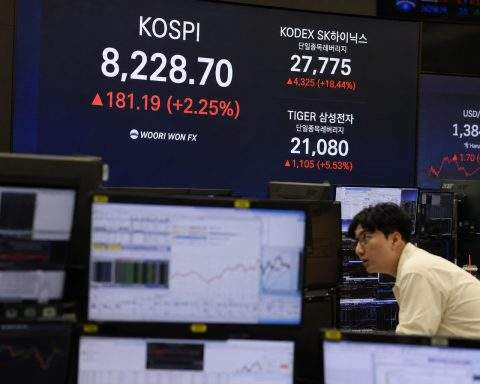
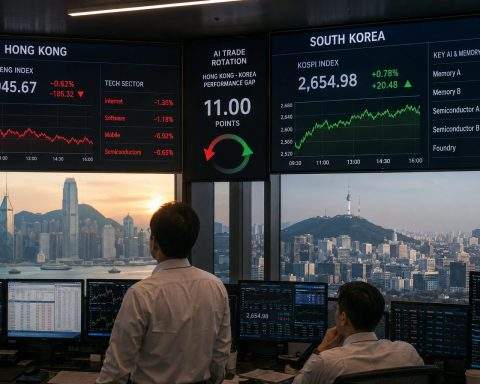
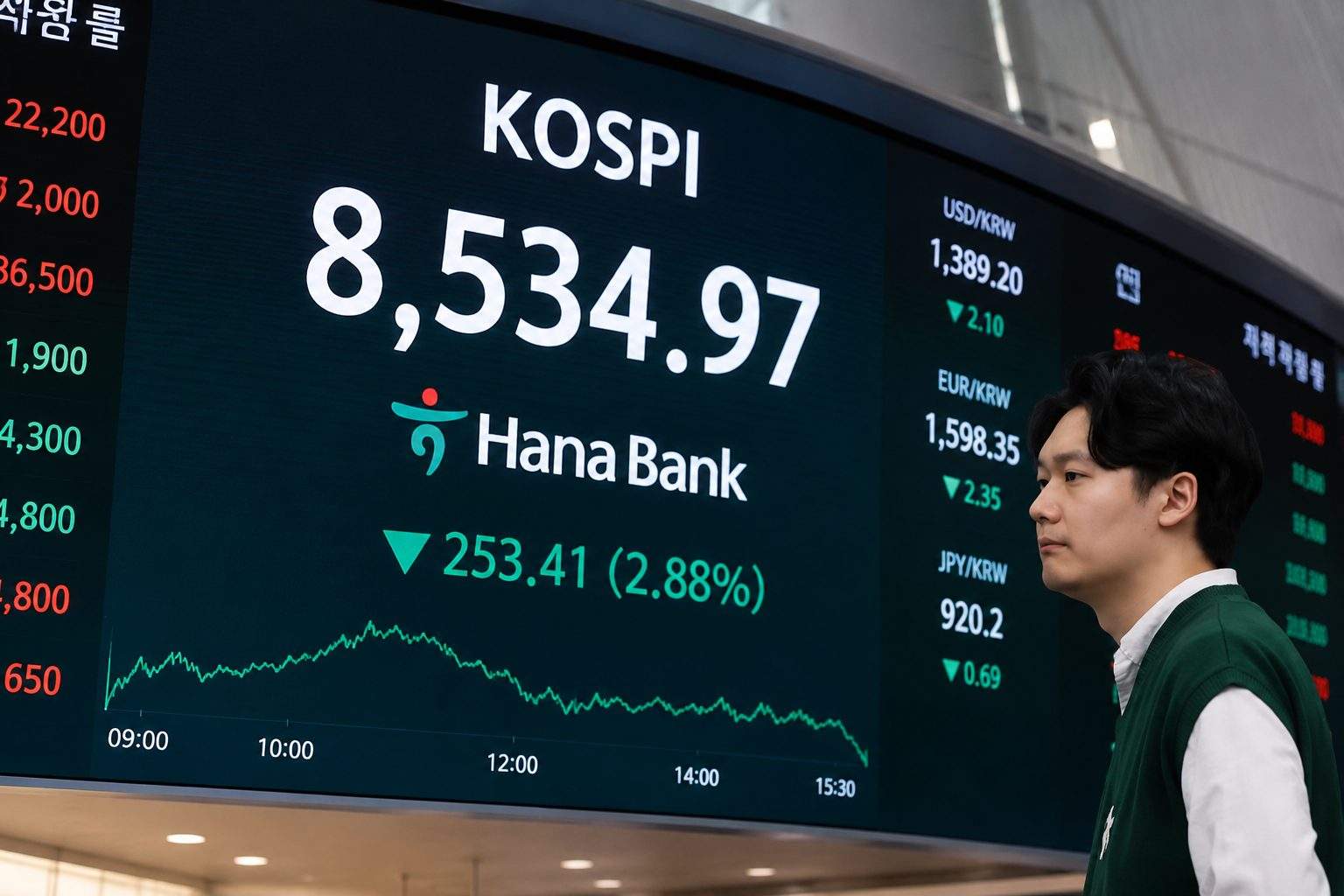
  • The KOSPI dropped 10.84% to close at 6,023.66, marking its steepest one-day loss since March 4.
  • Shares of SK Hynix dropped 14.7%, while Samsung declined 13.4%.
  • Foreign investors offloaded 5 trillion won, as retail investors bought 4 trillion.

South Korea’s main index slumped on Tuesday, weighed by a sharp sell-off in chipmakers. SK Hynix plunged 14.7% as Samsung Electronics fell 13.4%.

Investor concern was focused more on concentration than just panic. The two major chipmakers account for over half of KOSPI’s total market weight. Taking Samsung’s lesser drop sets a conservative baseline for their combined effect. Based on a straightforward calculation of weighting and returns, the duo contributed a minimum of 6.7 percentage points. This represents approximately 62% of the index’s overall decline.

However, losses were widespread across the board. Out of 917 shares traded, 878 fell while just 36 gained. Declining stocks made up 95.7% of the market.

AssetTuesday moveInvestor signal
KOSPI-10.84% to 6,023.66Sharpest drop since March 4; circuit breaker initiated
SK Hynix-14.7%U.S. stock ended Monday at $143.02, under the $149 offer price
Samsung Electronics-13.4%Largest one-day fall in nearly 20 years
Kioxia Holdings -18.3%Biggest drop among major memory chipmakers in the region
Nikkei 225-4.0% to 62,364.92Selloff spread into Japan’s tech sector

The KOSPI fell 29% in July after Tuesday’s close. While the index was 34% off its June high, it was still 43% higher in 2026.

Foreign investors recorded net sales of 5 trillion won, equal to $3.42 billion. In contrast, retail investors made net purchases amounting to 4 trillion won. As a result, domestic investors ended up shouldering increased near-term market exposure.

Leverage intensified the shift. Regulators have indicated they could limit retail access to single-stock leveraged ETFs. Imposing restrictions may prompt additional position reductions ahead of a return to calmer conditions.

China introduced a second trigger. ChangXin Memory Technologies secured $8.6 billion in Shanghai on Monday. The company’s shares surged 466% before falling roughly 4% on Tuesday.

Investors responded to news regarding Chinese immersion-DUV manufacturing. Competing equipment may speed up increases in memory capacity. Still, details on performance and timelines for commercial launch have not been provided.

Analyst Kim Seok-hwan from Mirae Asset noted that investors were concerned about prospective capacity rather than present earnings. Cameron Systermans at Mercer, however, provided a differing perspective, stating that CXMT is still several years behind their Korean competitors in the area of high-bandwidth memory.

Wall Street’s performance pulled down Asia’s opening levels. Nvidia slid 5% on Monday. Advanced Micro Devices retreated 5.2%. Micron Technology declined 2.3%.

The Wall Street Journal reported that Nvidia might provide up to $250 billion in guarantees for OpenAI. According to Reuters, the deal is still being negotiated and has not yet been finalized. The news intensified worries that chip demand is becoming more tied to financing offered by suppliers.

Scheduled supply is another key factor. According to the Financial Times, Samsung and SK Hynix have outlined four planned Korean semiconductor plants. Their collective investment over five years reaches roughly 800 trillion won, or $548 billion. The initiative targets a twofold increase in DRAM output.

As earnings take center stage over macro headlines, SK Hynix is set to release results on Wednesday ahead of 9:00 a.m. KST, with its conference call beginning at 9:00 a.m. Samsung will publish its full results Thursday at 10:00 a.m. KST.

Investors are set to gauge appetite for HBM, assess DRAM price trends, and monitor capacity strategies. In the first quarter, SK Hynix accounted for 58% of HBM revenue, while Samsung and Micron each secured 21%. This dominance bolsters margins, but also increases risk if AI-driven demand shifts.

Markets have entered “the despair part of the selloff,” according to StoneX analyst Matt Simpson. Opinions are divided; Morningstar’s Jing Jie Yu described Tuesday’s trading as “largely a knee-jerk reaction and overdone.” Reuters

The primary threat to a recovery is the potential for another forced sell-off if guidance remains weak. Chinese equipment updates also do not provide clear information on performance or commercialisation schedules. However, an upbeat HBM forecast might swiftly shift the trade direction.

The tone on Tuesday was direct. South Korea continues to handle AI risk at the company level using a single national benchmark. Now, earnings results will show whether the market overreacted when adjusting for that risk.

How did the KOSPI perform on July 28?

KOSPI finished at 6,023.66, down 732.09 points, or 10.84%. This marked the index’s steepest drop since March 4. The benchmark shed up to 11.3% at its session low, prompting the eighth circuit breaker of the year. July’s slide hit 29%, overtaking the previous October 1997 loss record of 27%. Reuters

What caused the index to drop so steeply?

Shares of Samsung Electronics and SK Hynix declined by about 13% to 15%. Market participants weighed concerns over funding for AI infrastructure and a growing competitive threat from Chinese memory-chip makers. The high-profile debut of CXMT and developments around Chinese DUV equipment added to investor anxiety. Yet, details about the equipment’s performance and plans for commercial use remain mostly unreported. Reuters

What portion of the drop was attributable to Samsung and SK Hynix?

Combined, the two firms account for just over half of the KOSPI’s total weighting. Their drops of more than 13% put at least 6.5 percentage points of downward pressure on the index. Based on simple weighting, this accounts for about 60% of Tuesday’s slide. This figure is an estimate, not an official index breakdown. Reuters

Was the decline widespread, or largely restricted to semiconductors?

Out of 917 listed securities, just 36 posted gains, while 878 finished lower. Nearly 96% of equities declined. Foreign investors were net sellers of 5 trillion won, as retail investors accumulated 4 trillion won. Although the initial trigger was localized, selling pressure ultimately affected the bulk of the market. Reuters

What is the current depth of the KOSPI bear market?

KOSPI is trading 34% under its record closing high of 9,114.55 from June. Still, the index is up 43% so far in 2026. To return to its peak, KOSPI needs to climb 51.3% from Tuesday’s close. A 34% decrease cannot be offset by a 34% increase. Reuters

Does this present a clear chance to buy?

Current information does not show that at this time. Projected earnings at Samsung and SK Hynix have depressed their future multiples. Still, leverage on the KOSPI stood at 28 trillion won as of July 14, close to the 29.8 trillion won record posted on June 24. Updated margin totals and final valuations have not been confirmed. Reuters

What is causing shares to decline even as Korean exports stay robust?

Exports increased by 52.3% on the year for the first 20 days of July. Semiconductor exports surged 180.6%, reflecting particularly robust demand. Still, stock valuations reflect expectations for future margins, supply expansion and investment. Investors are concerned that growing Chinese capacity could put pressure on pricing and high-end chip orders. Those risks remain partly speculative as commercial timing is still uncertain. Reuters

What do SK Hynix and Samsung need to demonstrate this week?

SK Hynix announces results on July 29 at 9:00 a.m. KST. Samsung’s earnings call is scheduled for July 30 at 10:00 a.m. KST. Samsung previously issued preliminary guidance, forecasting revenue in the range of 170–172 trillion won and operating profit estimated at 89.3 trillion to 89.5 trillion won. Investors seek clarity on HBM order stability, memory pricing, production capacity, and competition. SK hynix

What macro events might impact the KOSPI in the near term?

The Federal Reserve will announce its decision on July 29, following a two-day policy meeting. Markets currently see a 38% probability of a rate hike, despite 104 economists polled forecasting no move. This divergence highlights heightened event risk. The Bank of Korea has already lifted its policy rate to 2.75%. June industrial figures are due July 31, with July inflation numbers to follow on August 4. federalreserve.gov

Iwona Majkowska is a financial markets journalist at TS2.tech, specializing in stocks, artificial intelligence and technology. A graduate of the Warsaw School of Economics, she previously worked in equity research and financial analysis before focusing on market reporting. Her daily coverage helps investors follow major developments across U.S. and global markets. Follow Iwona Majkowska on Google News.

Stock Market Today

  • Commerzbank Delivers Strongest Quarterly Performance in Over 10 Years, Net Income Tops €800M, Hits Revenue Record
    July 28, 2026, 6:29 AM EDT. Commerzbank (XTRA:CBK) posted net income above €800 million for Q1, its strongest quarterly performance in more than ten years, as revenues surpassed €3 billion and RoTE reached double digits. Shares stand at €37.45, having gained 5.55% over the past 90 days and 29.2% over the year, buoyed by a €10 million fixed income issue. The current fair value estimate is €39.40, implying the stock remains modestly undervalued, with digital strategy and growing fee income cited as main drivers.
Nvidia (NASDAQ:NVDA) Slips 5% in Premarket Trade, Wiping Out $250 Billion in Value — Parallels with OpenAI Backstop
Previous Story

Nvidia (NASDAQ:NVDA) Slips 5% in Premarket Trade, Wiping Out $250 Billion in Value — Parallels with OpenAI Backstop

Intel Shares Steady in U.S. Premarket as AI-driven CPU Sales Lift Profits Expectations
Next Story

Intel Shares Steady in U.S. Premarket as AI-driven CPU Sales Lift Profits Expectations