
BENGALURU, August 7, 2026, 15:37 IST
- Microsoft launched its fourth and biggest cloud region in India.
- Shares rose 2.54% on Thursday before easing 0.47% in premarket trading on Friday.
- The $20.5 billion commitment is equivalent to one forecast for the size of India’s cloud market in 2026.
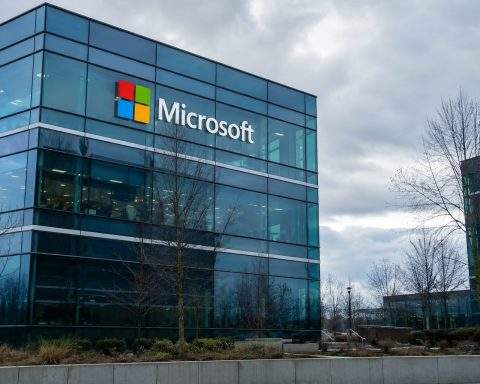
Microsoft Corp. NASDAQ:MSFT launched its India South Central cloud region in Hyderabad. The site consists of three zones and represents Microsoft’s biggest data-center region in India. Initial users include Adani Group and HDFC Bank Ltd. NSE:HDFCBANK.
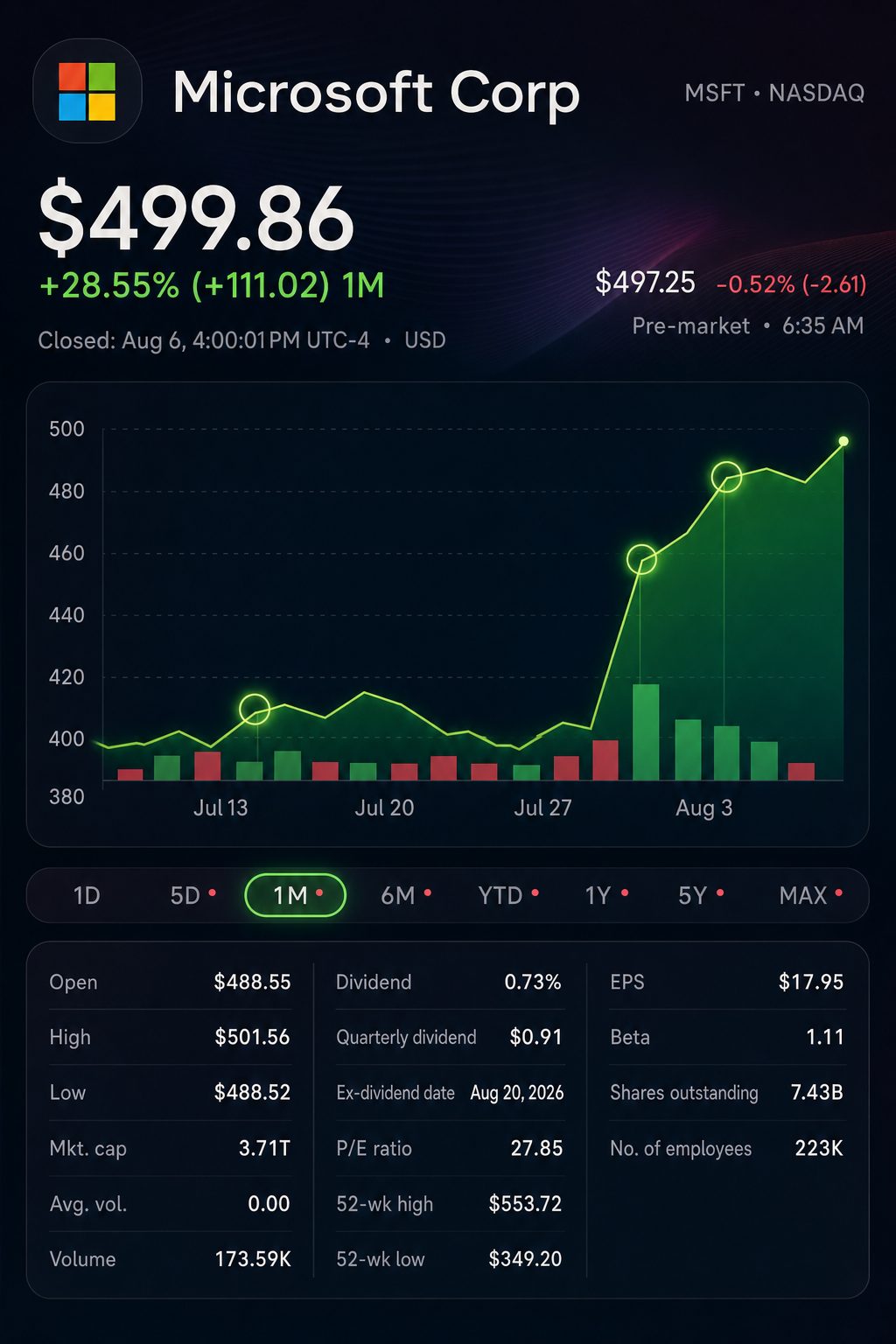
Shares finished Thursday at $499.86, increasing by 2.54%. Nasdaq’s main session had yet to start on Friday. In premarket trading at 06:04 EDT, Microsoft was last seen at $497.50, off 0.47%.
The move transforms a portion of Microsoft’s planned investment in India into available capacity for customers. It expands Azure’s network to a total of four local regions: Pune, Chennai, Mumbai and Hyderabad. According to Microsoft, this represents the largest hyperscale cloud footprint in India.
The investor calculation is straightforward. Microsoft’s $20.5 billion pledge for India is nearly the same as the projected size of the nation’s 2026 public-cloud market, according to an IDC estimate cited by the company.
| India cloud-market benchmark | Value |
|---|---|
| Total Microsoft commitment in India | $20.50 billion |
| IDC projection for public-cloud by 2030 | $45.70 billion |
| IDC projected annual growth rate, 2026–2030 | 22.2% |
| Estimated market size for 2026, implied | $20.49 billion |
| Gartner Inc. NYSE:IT 2026 projection | $17.50 billion |
| Microsoft commitment as percentage of Gartner projection | 117% |
The figure cited from IDC projects a 22.2% reduction from the 2030 estimate, looking four years ahead. Microsoft’s expenditures are distributed across multiple years and do not represent a revenue prediction.
The benchmark for monetization is set high by that comparison. The pledge involves infrastructure, expertise and continued operations. Nonetheless, it surpasses Gartner’s projection for all of India’s end-user cloud spending in 2026.
Hyderabad features three availability zones. Microsoft stated that its design complies with both Indian regulatory standards and seismic guidelines. The rollout of services will be gradual instead of launching all at once.
IDC’s senior research director William Lee stated that “proximity, sovereignty and resilience are no longer differentiators but baseline requirements.” Puneet Chandok, president of Microsoft India, said infrastructure needs to be located “close to where data lives.” Source
The initial range of customers reflects this perspective. HDFC Bank stated Hyderabad will add disaster-recovery capabilities in addition to its presence in Central India. Resilience and data residency are central selling points at the outset, especially appealing to regulated sectors.
Microsoft is also up against competitors with significant funding. The commitments these rivals have announced vary greatly in scope, making direct comparisons difficult.
| Company | Announced India commitment | Main scope | Stated period |
|---|---|---|---|
| Microsoft Corp. NASDAQ:MSFT | $20.5 billion | Investments span cloud, AI, workforce development and local operations | Up to 2029 |
| Amazon.com Inc. NASDAQ:AMZN | $48 billion | Encompasses all divisions; includes an extra $13 billion for AI and cloud | Up to 2030 |
| Alphabet Inc. NASDAQ:GOOGL | $15 billion | AI center in Visakhapatnam and associated connectivity efforts | From 2026 through 2030 |
Sources: Reuters and company announcements. The number for Amazon encompasses activities beyond its cloud segment.
Amazon and Alphabet are both increasing operations in India. Concerns over water use and effects on wildlife have been raised regarding Alphabet’s planned Visakhapatnam site. Authorities deny allegations that the approval process overlooked these environmental risks.
Microsoft surpassed the wider market on Thursday, also outpacing the advance seen in the technology sector.
| Market measure | August 6 move |
|---|---|
| Microsoft | up 2.54% |
| Technology sector | up 0.61% |
| S&P 500 | down 0.18% |
| Dow Jones Industrial Average | down 0.85% |
| Microsoft, Friday premarket at 06:04 EDT | down 0.47% |
Data provided by Wall Street Journal markets.
The response did not solely reflect sentiment toward Hyderabad. Microsoft was undergoing a broader shift in valuation following its earnings. Shares ended Thursday 7.6% higher than their July 31 closing level.
Latest performance figures bolster the argument for growth. In Microsoft’s fiscal fourth quarter, Azure revenue increased by 43%. Microsoft Cloud’s revenue climbed 27%, totalling $59.3 billion, as contracted commercial commitments hit $678 billion.
Microsoft 365 Copilot has surpassed 30 million paid users. The firm forecasts Azure will grow roughly 45% in constant currency this quarter. Executives continue to state that demand from customers is outpacing capacity.
Wall Street analysts have grown more positive since May, with the latest figures indicating zero underweight or sell ratings.
| Analyst recommendation | Three months ago | One month ago | Current |
|---|---|---|---|
| Buy | 52 | 51 | 53 |
| Overweight | 6 | 8 | 10 |
| Hold | 3 | 3 | 3 |
| Underweight | 0 | 0 | 0 |
| Sell | 0 | 0 | 0 |
| Consensus | Buy | Buy | Buy |
According to data from Wall Street Journal analysts.
The average price target stands at $561.28, suggesting a potential 12.3% gain from the close on Thursday. The median target is $550, with forecasts spanning from $400 to $870.
Risks: Committed investments may not ensure actual usage or sustained pricing leverage. Microsoft contends with large-scale international capital expenditures, significant competitors, and phased rollouts of services. Potential delays may also arise from issues with power, water, regulatory requirements, and construction. Microsoft cautions that returns on cloud and AI investments might fall short of projections.
Utilization remains the crucial metric. Investors seek proof that Hyderabad is translating local demand into steady Azure usage. The number of regions is less important than the revenue generated.
Related articles: NASDAQ:MSFT