
NEW YORK, August 12, 2026, 19:15 EDT
- Chevron ended nearly flat as Brent settled at $88.98 a barrel.
- New Gulf projects could lift Hormuz-bypass capacity by 7.3 million barrels daily by 2028.
- Current vessel traffic remains about 94% below its prewar norm.
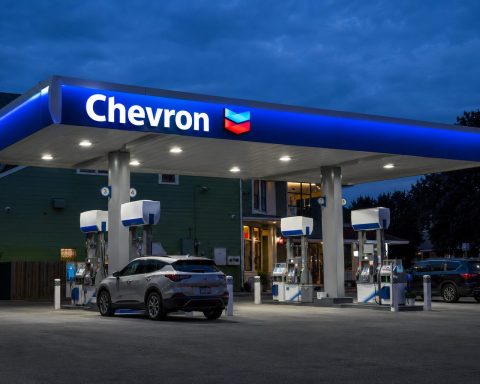
Chevron Corporation NYSE:CVX finished Wednesday almost unchanged, even as oil held near recent highs. Brent settled at $88.98 a barrel. West Texas Intermediate ended at $83.27.
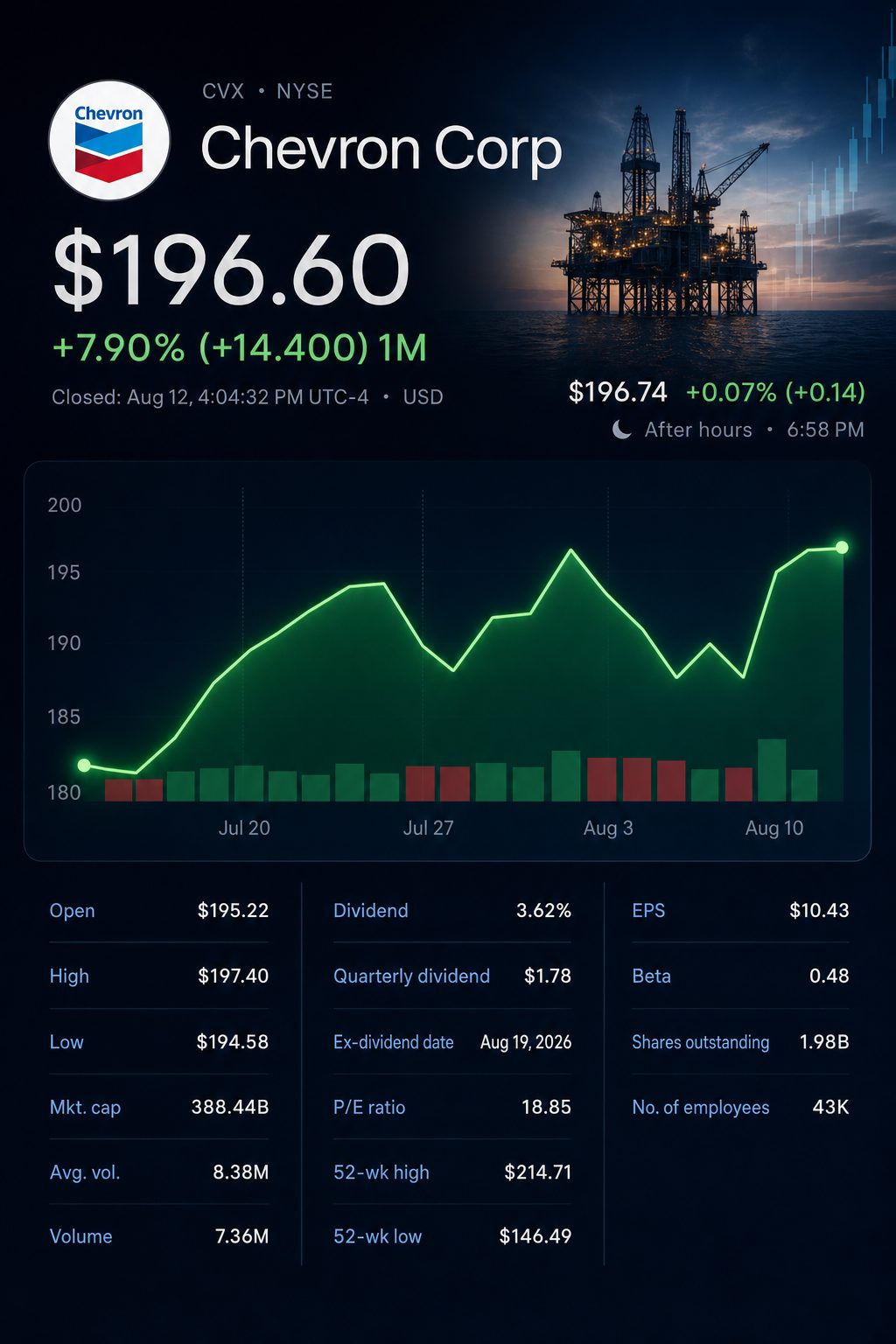
The muted stock move points to a longer investor debate. Gulf states are spending heavily on routes that bypass Hormuz. Those projects could erode part of today’s oil risk premium.
| Market measure | August 12 close | Daily change |
|---|---|---|
| Chevron stock | Nearly unchanged | -0.03% |
| Brent crude | $88.98/barrel | +$0.07 |
| WTI crude | $83.27/barrel | +$0.07 |
The long-term buildout is substantial. Projects under discussion could add 3.8 million barrels daily by end-2027. Added capacity may reach 7.3 million by end-2028. That equals 31.7% of the Gulf’s 23 million-barrel prewar export base.
| Hormuz-bypass milestone | Capacity or share | Calculated share of 23 million bpd |
|---|---|---|
| New capacity by end-2027 | 3.8 million bpd | 16.5% |
| New capacity by end-2028 | 7.3 million bpd | 31.7% |
| Total potential bypass by 2028 | About 13.8 million bpd | 60.0% |
That future capacity does little for today’s bottleneck. Kpler tracked eight Hormuz vessels on Tuesday. The prewar range was 125 to 140 daily. Traffic is therefore about 94% below the range midpoint.
| Shipping measure | Latest count | Comparison |
|---|---|---|
| Kpler Hormuz transits | 8 | 12 over the prior 10 days |
| LSEG Hormuz transits | 11 | 14 one day earlier |
| Prewar daily range | 125–140 | Current Kpler count is about 94% lower |
| Bab al-Mandab transits | 30 | 25 over the prior 10 days |
Simon-Peter Massabni of XS.com said markets increasingly doubted a quick agreement could ease crude disruptions. Demand is the counterweight. OPEC cut 2026 demand-growth expectations to 580,000 barrels daily. The IEA expects demand to contract by 1.6 million bpd.
Chevron has already converted the disruption into earnings and cash. Second-quarter adjusted profit reached $12.0 billion. Worldwide output rose 20% to 4.07 million oil-equivalent barrels daily.
| Chevron Q2 measure | 2026 | 2025 | Change |
|---|---|---|---|
| Adjusted earnings | $12.0 billion | $3.1 billion | +287% |
| Worldwide production | 4.07 million boe/d | 3.40 million boe/d | +20% |
| U.S. production | 2.08 million boe/d | 1.70 million boe/d | +23% |
| Operating cash flow | $22.6 billion | $8.6 billion | +164% |
| Free cash flow | $18.1 billion | $4.9 billion | +272% |
Chevron’s advantage is geographic. Its Middle East production is smaller than several peers. That allows the company to capture higher benchmark prices with less regional output loss. RBC analyst Biraj Borkhataria called its latest quarter “robust operational performance and strategic consistency.” Reuters
| Analyst recommendation | Count |
|---|---|
| Strong buy | 14 |
| Buy | 5 |
| Hold | 4 |
| Sell | 0 |
| Strong sell | 1 |
| Consensus | Buy |
Wall Street remains constructive but not unanimous. The average 12-month target was $215. Forecasts ranged from $170 to $236. One strong-sell rating remains against 19 positive recommendations.
Risks cut both ways. Renewed attacks could lift crude and Chevron’s upstream profit. A ceasefire, weaker demand or faster pipeline completion could remove the premium. Refining margins can also reverse quickly.
The practical investor test is timing. Bypass projects matter most after 2027. Current shipping data still governs near-term prices. Chevron’s $18.1 billion quarterly free cash flow provides the bridge between those two horizons.
Related articles: NYSE:CVX