
ARLINGTON, Virginia, August 18, 2026, 07:16 EDT — U.S. cash trading was in pre-market hours.
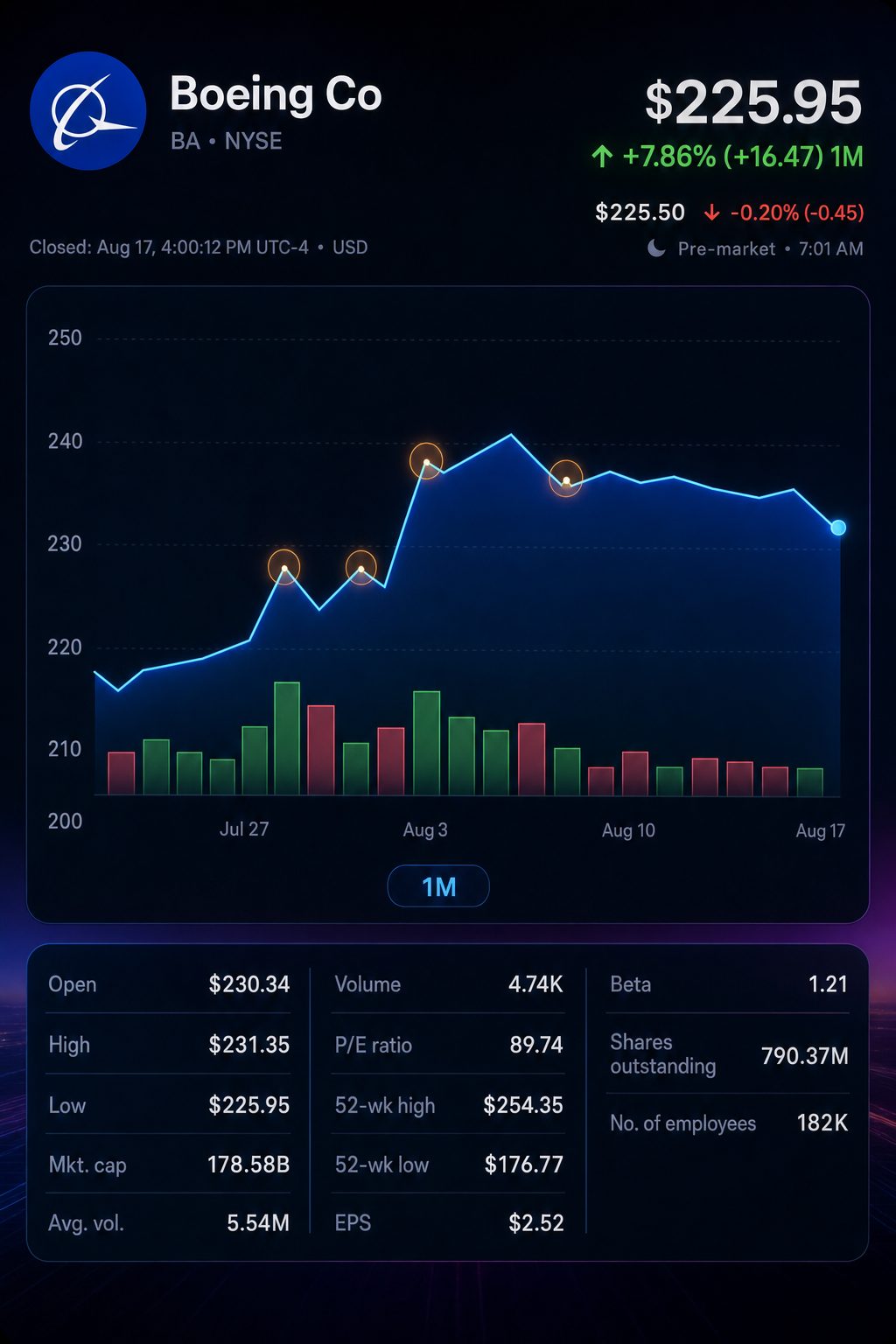
- Boeing shares closed Monday at $225.95, down 2.5%.
- A new Rory Kennedy documentary reaches Netflix on Wednesday.
- Boeing’s record $715 billion backlog now faces a cash-conversion test.
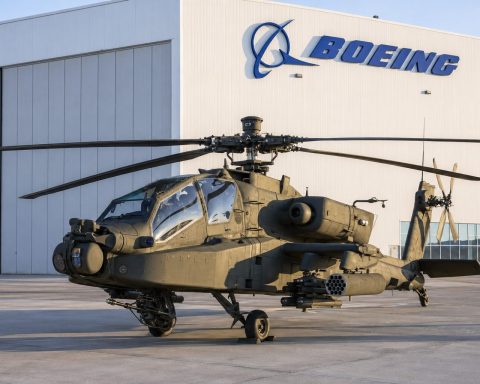
The Boeing Company NYSE:BA enters Tuesday with two trust tests at once. Its shares fell 2.5% on Monday after the U.S. Army grounded Apache helicopters. A new documentary will revive scrutiny of Boeing’s safety culture a day later.
The timing matters because demand is not Boeing’s immediate problem. The company ended June with a record $715 billion backlog. Converting those orders into aircraft and cash remains the harder task.
| Latest catalyst | Verified reading | Investor relevance |
|---|---|---|
| BA Monday close | $225.95, down 2.5% | Apache grounding drove the latest selloff |
| Netflix release | August 19 | Renews public scrutiny of safety culture |
| Second-quarter backlog | $715 billion | Demand cushion, but not yet cash |
| July deliveries | 53 aircraft | 17% below June |
Freefall: A Reckoning for Boeing premieres Wednesday on Netflix NASDAQ:NFLX. Director Rory Kennedy told People that whistleblower John Barnett’s death “compelled” her to revisit Boeing. The film follows her 2022 documentary Downfall. People
Boeing told People that some allegations remain unfounded. It said other issues were addressed or remain under improvement. That response puts management’s own credibility at the center of the release.
Chief Executive Kelly Ortberg used similar language after second-quarter results. He said Boeing’s focus “has been on restoring trust.” Operations were more stable, while key certification programs remained on plan, he added. Boeing second-quarter results
| Second-quarter measure | 2026 | 2025 | Change |
|---|---|---|---|
| Revenue | $24.560 billion | $22.749 billion | +8% |
| GAAP net loss | -$428 million | -$612 million | Loss narrowed |
| Operating cash flow | $1.364 billion | $227 million | +501% |
| Free cash flow | $631 million | -$200 million | Positive swing |
| Commercial deliveries | 171 | 150 | +14% |
The backlog equals about 7.3 times annualized second-quarter revenue. That is a preliminary calculation using reported quarterly sales. It shows scale, not guaranteed economics.
Cash conversion is the cleaner investor test. Boeing produced $631 million of free cash flow in the quarter. Yet first-half free cash flow remained negative by $823 million.
| Cash-flow bridge | Amount | Interpretation |
|---|---|---|
| Second-quarter free cash flow | $631 million | First positive quarter since 2023 |
| First-half free cash flow | -$823 million | First quarter still weighs on 2026 |
| Full-year guidance | $1 billion to $3 billion | Midpoint is $2 billion |
| Second-half need at midpoint | $2.823 billion | Preliminary calculation |
| Net debt | About $25.9 billion | Debt less cash and investments |
Boeing kept its $1 billion to $3 billion full-year free-cash-flow forecast. Reaching the midpoint requires roughly $2.8 billion during the second half. Output must rise without fresh quality setbacks.
July deliveries softened. Boeing shipped 53 jets, down from 64 in June. Airbus EPA:AIR delivered 67 aircraft, leaving Boeing 21% behind its European rival.
| Delivery comparison | Aircraft | Difference versus Boeing July |
|---|---|---|
| Boeing June | 64 | July was 17% lower |
| Boeing second-quarter monthly average | 57 | July was 7% lower |
| Boeing July | 53 | Baseline |
| Airbus July | 67 | Boeing was 21% lower |
Wall Street remains constructive, but conviction has narrowed. MarketBeat’s August 18 tally shows 22 analysts at “Moderate Buy.” It also records five downgrades and two upgrades during the past 90 days. MarketBeat
| Analyst recommendation | Date | Action | Target |
|---|---|---|---|
| Consensus: 3 sell, 6 hold, 12 buy, 1 strong buy | August 18 | Moderate Buy | $272.58 average |
| Citigroup | August 11 | Buy to Sell | Not stated |
| Wolfe Research | August 11 | Outperform to Hold | Not stated |
| Goldman Sachs | August 11 | Buy to Hold | Not stated |
| UBS | August 11 | Initiated at Buy | Not stated |
| Argus | August 11 | Hold to Buy | $265 |
| JPMorgan | July 29 | Overweight | $290 |
| Royal Bank of Canada | July 29 | Outperform | $265 |
The $272.58 consensus target implies 20.35% upside from MarketBeat’s reference price. That upside assumes production and free cash flow keep improving. The recent rating changes show less agreement on that path.
Risks remain two-sided. The documentary has no direct cash cost unless it prompts new customer or regulatory action. The Apache crash cause is also unknown. Faster 737 output could offset those pressures, but another quality lapse would slow backlog conversion.
The near-term scorecard is therefore simple. Investors need higher deliveries and at least $2.8 billion of second-half free cash flow. Public trust is harder to measure, but it can still affect both.
Related articles: NYSE:BA