
NEW YORK, September 2, 2026, 08:31 EDT —
- Uber’s latest verified premarket print was $75.43, up 0.25% from Tuesday’s close.
- BMO kept a $119 target as investors weighed more than $10 billion of planned AV commitments.
- Trailing free cash flow exceeded $10 billion, giving Uber funding room but not removing execution risk.
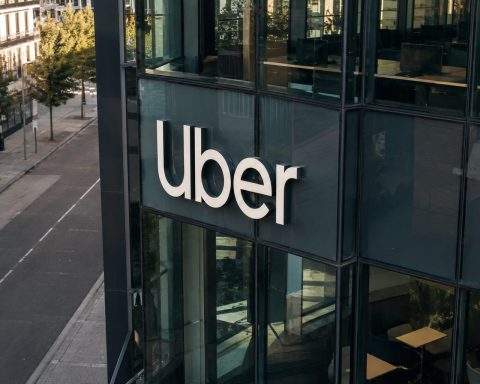
Uber Technologies, Inc. NYSE:UBER edged higher before Wednesday’s open after BMO Capital Markets kept its Outperform rating and $119 target. The latest verified delayed print was $75.43 at 04:10 EDT, up 0.25% from Tuesday’s $75.24 close Finviz premarket data.
The target stands 58% above the close. That gap turns Uber’s autonomous-vehicle plan into a cash-flow test, not just a technology wager.
Uber expects to commit more than $10 billion to AVs over several years. Its trailing free cash flow has also crossed $10 billion, according to the company’s second-quarter remarks. The periods differ, but the scale shows why funding discipline matters.
Uber shares remain near the bottom of their nine-session range
USD per share; daily closes through September 1, then the latest verified premarket print
As of .
Sources: MarketMinute; Finviz.
BMO said the AV strategy could become a major revenue and profit driver. The firm reiterated its call on September 1 Investing.com. Rosenblatt also began coverage with a Buy rating and $100 target.
Broader expectations are less aggressive. The median target is $101, with estimates ranging from $72 to $150, according to Financial Times market data. Uber remains about 26% below its 52-week high.
Fresh targets put the AV thesis above the current tape
USD per share; current is the September 1 close
Median, low and high: FT/LSEG, September 1. BMO: September 1 call.
The operating base is still expanding. Second-quarter gross bookings reached $58.0 billion, up 24% as reported. Revenue rose 12% to $14.2 billion Uber results.
Adjusted EBITDA climbed 33% to $2.8 billion. Quarterly free cash flow was also $2.8 billion. Chief Executive Dara Khosrowshahi said Uber was “investing from a position of strength.”
Cash generation is scaling with bookings
Quarter ended June 30, 2026. Source: Uber.
Scale gives the strategy more routes to revenue. Uber said AVs were live on its platform in seven cities. It expects as many as 15 by year-end, while partners have committed about 120,000 vehicles.
The spending is not a single cheque. It spans equity investments, infrastructure and vehicle purchase commitments. Uber is also exploring outside financing to preserve balance-sheet flexibility.
The AV plan is broad, multi-year and partner-led
Bars show separate measures, not a common scale. Source: Uber Q2 prepared remarks.
One commitment shows the structure. Uber may invest up to $1.25 billion in Rivian Automotive, Inc. NASDAQ:RIVN through 2031. Payments depend on autonomy milestones company release.
The Rivian plan starts with 10,000 R2 robotaxis in 2028. An option covers another 40,000 from 2030. Pony AI Inc. NASDAQ:PONY separately plans more than 2,000 European robotaxis with Uber.
Near-term profits still come from the core marketplace. Uber forecasts third-quarter gross bookings of $58.25 billion to $60.25 billion. Non-GAAP earnings are expected at $0.84 to $0.88 per share.
Risks: Commercial AV launches depend on regulators, safety performance and partner technology. Delays could put investment ahead of revenue. Outside financing could also cost more if credit conditions tighten.
Investors now have two markers. Year-end city launches will test deployment speed. The next quarterly report, expected in early November, will show whether cash generation keeps pace.
Related articles: NYSE:UBER