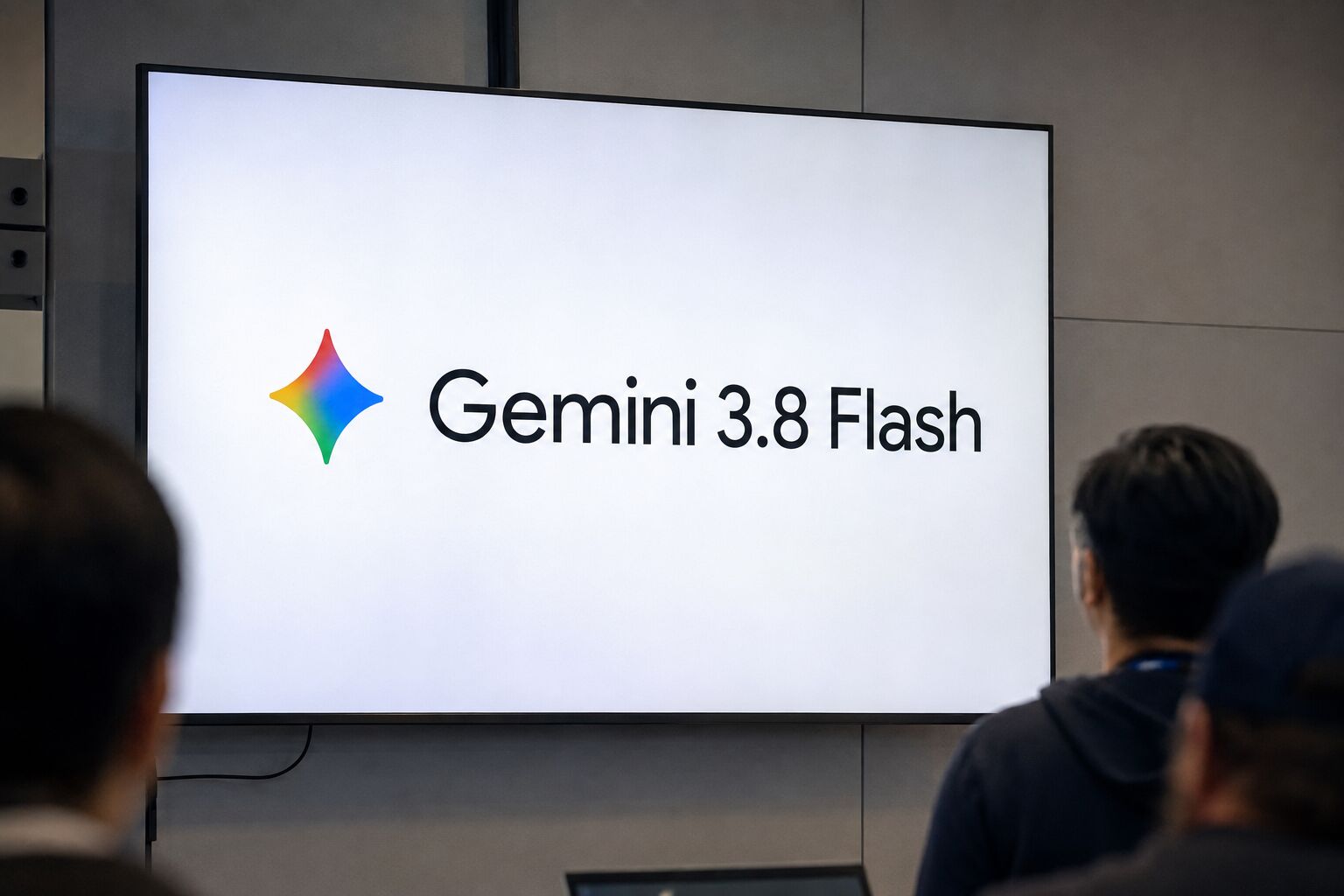

MOUNTAIN VIEW, California, September 3, 2026, 14:47 PDT — Alphabet shares climbed 1.7% after the company announced it would maintain prices for its Gemini product, putting its 35.6% cloud margin under renewed scrutiny.
- Alphabet Class A shares were at $342.69 at 17:44 ET, rising 1.65% from the previous close on Wednesday.
- Through December 31, Gemini 3.8 Flash is priced at $0.75 for each million input tokens and $3.75 for every million output tokens.
- Google Cloud posted an 82% increase in revenue for the June quarter, reaching $24.77 billion, with its operating margin at 35.6%.
Shares of Alphabet Inc. NASDAQ:GOOGL rose 1.65% on Thursday following Google’s rollout of Gemini 3.8 Flash at the current API introductory price. The release features improved benchmark results while maintaining the original pricing set for 3.7 Flash.
This decision positions usage growth as the near-term evaluation point for investors. Google has the opportunity to expand usage ahead of the planned price doubling set for January 1, 2027. However, the company noted that more complex tasks could require increased reasoning steps and token usage.
Google executives Tulsee Doshi and Raluca Ada Popa described 3.8 Flash as the company’s “best reasoning and coding model yet.” The standard release can be accessed by developers, business users and subscribers. Flash Cyber is only available for trusted defenders.
Alphabet Class A: regular session into aftermarket
$342.69 +1.65%The stock finished regular trading at $342.48 and was last quoted near $342.69 at 17:44 ET, putting it 1.65% higher than Wednesday’s closing price of $337.12. Volume during the session reached approximately 17.5 million shares.
Gemini 3.8 Flash API price step
U.S. dollars per one million tokens
Both rates double after the introductory period. Source: Google, September 2, 2026.
Processing one million input and output tokens is priced at $4.50 at launch. The identical workload will be $9 in the following year. The initial, unaltered rate helps ease upfront adoption. The planned price rise creates an opportunity for future monetization.
The stable model handles inputs in text, images, video, audio, and PDF formats. It can process up to 1,048,576 tokens as input and generate as many as 65,536 tokens in its output. Code execution and function calls are enabled.
Google’s reported Gemini 3.8 evidence
Company-reported evaluations; internal tests may not predict customer workloads. Source: Google launch report.
Google stated that 3.8 Flash received a 54.9% HLE-Verified score. Flash Cyber achieved a 47.2% pass@1 result on CWE-Bench, which was 0.6 percentage point below the top frontier model. Google has not released corresponding customer revenue figures for these models.
The financial environment is exceptionally robust. Google Cloud’s revenue surged 82% to $24.77 billion during the June quarter. Operating income more than tripled to $8.81 billion. The company’s calculated margin increased to 35.6% from 20.7%.
Google Cloud’s widening earnings base
Quarter ended June 30, 2026. Margin calculated from reported figures. Source: Alphabet earnings release.
The margin allows for flexibility in pricing to encourage adoption. However, it does not serve as a strict indicator of profit from the model alone. Cloud also markets infrastructure, Workspace, and TPU hardware. According to Alphabet, Cloud expenses increased due to higher technical usage and employee-related costs.
Alphabet CEO Sundar Pichai stated that the company’s AI investments are “redefining what’s possible” throughout its operations. In the second quarter, Gemini models handled 22 billion API tokens per minute. According to Alphabet, almost 90% of Fortune 100 firms adopted Gemini Enterprise. Second-quarter results
Infrastructure investment continues to offset gains. Capital expenditure for the June quarter totaled $44.92 billion, while operating cash flow stood at $39.07 billion. This led to a negative free cash flow of $5.86 billion, based on Alphabet’s measurement.
Risks: Benchmark improvements might not lead to more paid usage. Greater reasoning complexity can drive up inference expenses. The planned 2027 price hike has the potential to dampen adoption. Flash Cyber’s limited availability further curbs near-term revenue opportunities.
Investors are watching for two numbers to align: Gemini usage and Cloud margin. If usage grows but lacks solid unit economics, the launch case could be undermined. Ongoing margin gains would make the stable introductory price appear more calculated.
Related articles: NASDAQ:GOOGL