
As of Dec. 22, 2025 (22.12.2025), the AI stocks story is being driven by three forces that investors can’t ignore: (1) geopolitics around high-end AI chips, (2) the escalating “power and data center” buildout, and (3) a fresh round of 2026 forecasts that are widening the gap between “AI winners” and “AI valuation risk.”
This morning’s action is happening against a year-end backdrop where U.S. markets are entering a holiday-shortened week, and AI-linked tech remains a major swing factor for the broader indices.
What’s moving AI stocks today: the 5 biggest themes investors are reacting to
1) Nvidia and China: the H200 headline is back, and it’s moving the whole AI chip complex
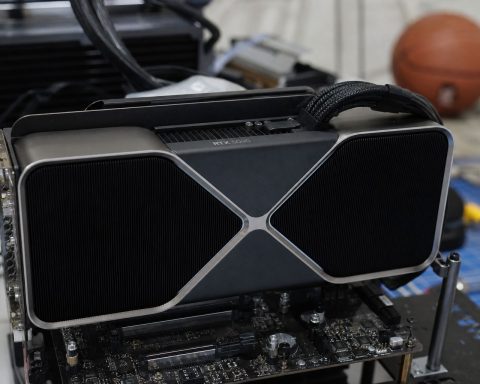
The most market-moving AI stock headline today is Nvidia’s plan to begin shipping H200 AI chips to China by mid-February 2026, sourcing initial volumes from existing inventory and potentially scaling capacity later. Reuters reported shipments could start with 5,000 to 10,000 chip modules (roughly 40,000 to 80,000 H200 chips)—but the plan is still contingent on Chinese approval.
This matters for AI chip stocks beyond Nvidia because it reframes a core question that’s hovered over the sector in 2025: how big is the “reachable” market when export rules and licensing can shift quickly? The same Reuters report notes the policy backdrop has changed, with the U.S. allowing H200 exports to China with a 25% tariff/fee under President Trump—reversing prior restrictions. Reuters
Investors.com also tied the China report to a notable move in Nvidia shares on Dec. 22 and highlighted that AMD is preparing to roll out its MI308 for China under approvals already in motion.
Why it’s bullish: reopening or partially reopening China demand can extend the revenue runway for certain “in-scope” accelerators—even as Nvidia prioritizes newer architectures elsewhere. Reuters
Why it’s risky: policy reversals can cut both ways, and the entire trade can reprice on regulatory headlines.
2) Washington enters the chat again: lawmakers press for transparency on Nvidia chip sales to China
A second catalyst today is political—and it can affect valuations just as quickly as earnings. Reuters reports that Sen. Elizabeth Warren and Rep. Gregory Meeks urged the U.S. Commerce Department to disclose license applications and approvals tied to Nvidia’s H200 exports to China, asking for briefings before any approvals are granted and pressing on national security implications.
For investors, that’s a reminder that AI hardware stocks can trade like a blend of high-growth tech and regulated industrials—especially when national security is involved.
3) Alphabet’s $4.75B Intersect deal puts “power” at the center of the AI stock narrative
If 2024 was about “who has the best model,” and 2025 became “who has the most GPUs,” Dec. 22, 2025 is increasingly about “who can secure electricity.”
Today, Alphabet (Google) announced it will acquire clean-energy developer Intersect for $4.75 billion in cash plus assumed debt to help meet soaring energy demand tied to AI data centers.
Reuters adds that Intersect brings a large development pipeline, with $15 billion in assets operational or under construction, and projects expected to generate 10.8 gigawatts by 2028—a scale the report compares as more than 20 times the Hoover Dam’s output.
This is a key moment for AI stocks today because it strengthens the market’s view that the winners in AI won’t just be model builders; they’ll be the companies that can scale compute + power + real estate + grid connections fast enough to meet demand.
AP also frames the deal as a direct response to AI’s growing electricity footprint and notes Alphabet’s stock has surged in 2025 amid its AI push.
4) Microsoft’s 2026 “AI inflection point” forecast gets louder—despite capex anxiety
While chip headlines often dominate, one of today’s most widely circulated AI stock forecasts is about Microsoft.
Barron’s reports that Wedbush’s Dan Ives reiterated an Outperform rating with a $625 price target, describing Microsoft as an AI front-runner and framing 2026 as pivotal—despite investor concerns around heavy data-center and AI spending.
Investopedia adds that the bullish case leans on Microsoft’s central role in AI infrastructure via Azure and Copilot, and cites Visible Alpha analyst ratings/targets pointing to broad buy-side support.
This is the market’s recurring tug-of-war in one stock:
- Bull case: AI monetization through enterprise software + cloud usage can compound revenue.
- Bear case: capex intensity pressures margins and raises the “how soon do returns show up?” question.
5) The “AI capex bill” is showing up in corporate debt—and credit markets are watching
One of the most underappreciated drivers of AI stock volatility is not the AI models themselves, but the financing required to build the infrastructure.
Reuters reports that global tech companies issued a record $428.3 billion in bonds in 2025, driven in large part by AI-related investment. The same analysis notes leverage and coverage metrics have been shifting in ways that credit investors are increasingly tracking, with mentions of widening caution signals such as rising CDS spreads for some large issuers.
Equity investors care because when markets begin pricing credit risk more aggressively, the highest-multiple AI infrastructure names often feel it first.
Market context today: AI-linked tech remains a key index driver into the holiday week
Reuters reports U.S. stocks opened the week higher as tech extended a rebound, with Nvidia among notable movers and the Philadelphia Semiconductor Index rising—while investors look ahead to major economic releases later in the week, all in a holiday-shortened schedule.
That matters for AI stocks because year-end positioning, lighter liquidity, and macro data can amplify moves in the same handful of AI bellwethers (chips, hyperscalers, and AI software platforms).
The supply chain story investors are tracking: memory is the next bottleneck
AI hardware isn’t just GPUs. It’s also memory—and it’s increasingly a constraint.
A Reuters report today says soaring AI-driven demand for memory chips is intensifying shortages and raising costs, with knock-on effects hitting consumer electronics like videogame consoles. The report highlights DRAM tightness as chipmakers prioritize higher-margin data-center customers, and cites analysts projecting potential 10–15% price increases for consoles (and potentially higher for PCs).
For AI investors, this feeds into two conclusions:
- Pricing power can shift upstream to suppliers during shortages.
- AI’s infrastructure buildout is now large enough to reshape entire end markets—not just data centers.
Bullish vs. bearish takes hitting the tape today
The bullish case: AI spending is broadening, not shrinking
Today’s headlines support the view that AI investment is expanding into “adjacent necessities”:
- AI chips and export channels (Nvidia’s H200 plan) Reuters
- Energy and data center infrastructure (Alphabet–Intersect) Reuters
- Enterprise AI monetization narratives (Microsoft price-target upgrade/forecast) Barron’s
In other words: the AI trade is increasingly about the full stack—chips, cloud, software, power, and financing.
The bearish case: valuation and payoff anxiety is still real
Even on a day with multiple bullish catalysts, 2025’s big unresolved question remains: how durable are margins and returns once AI becomes “every company’s capex line item”?
One high-profile skeptical voice in today’s coverage: Business Insider reports that investor Michael Burry criticized Nvidia’s approach as “power hungry” and argued that energy constraints could become a strategic disadvantage—especially relative to China’s infrastructure buildout. Business Insider
Meanwhile, Barron’s highlights a Trivariate Research screen of stocks it considers overvalued going into 2026, including several names associated with AI infrastructure enthusiasm and high multiples (Broadcom and Oracle among them).
Europe adds a different kind of AI risk: Palantir contract scrutiny
Not all AI stock risk is about chips and capex. For AI software vendors tied to government work, trust and security can become headline risk.
The Guardian reports that UK MPs questioned government contracts with Palantir after a Swiss investigation raised concerns around security and suitability for sensitive deployments.
This kind of story can influence how investors price:
- procurement risk,
- regulatory risk,
- and the durability of government-led AI growth narratives.
AI stocks: what to watch next (Dec. 22, 2025 and into early 2026)
Watchlist item 1: “China approvals” and the practical pace of shipments
For Nvidia (and other semiconductor names), the near-term question isn’t just policy—it’s execution: timing, approvals, customer qualification, and the scope of allowable end users.
Watchlist item 2: energy becomes an investor KPI
Alphabet’s Intersect deal signals that power access is turning into a competitive moat. Expect investors to ask more detailed questions about:
- power purchase structures,
- grid interconnect timelines,
- and co-located generation/storage strategies.
Watchlist item 3: the capex-to-cashflow conversation
With record debt issuance tied to AI investment, markets may grow less tolerant of vague ROI timelines—particularly for companies that need to refinance frequently or sustain very high spending levels.
Watchlist item 4: “AI winners” vs. “AI crowded trades”
Year-end flows can exaggerate leadership. The key question for 2026 forecasts is whether AI leadership broadens—or concentrates further into a few names with the best combination of infrastructure, distribution, and monetization.
Bottom line for AI stocks today (22.12.2025):
The market is treating AI less like a single theme and more like an industrial-scale buildout. Nvidia’s China shipment plan is reopening a major demand narrative, Alphabet’s Intersect acquisition underscores that electricity is now strategic, and Microsoft’s bullish 2026 forecasts show investors still reward credible monetization pathways—even as capex, debt, and valuation concerns remain the swing risks.
Related articles: NASDAQ:NVDA