
SAO PAULO, August 1, 2026, 16:14 BRT – Ambev NYSE:ABEV saw a significant increase in cash flow, with 79% of the rise stemming from working capital adjustments.
- Operating cash flow for the second quarter increased by 54.5% to R$4.71 billion.
- Company data show that working-capital relief accounted for 79% of the rise.
- The ADR rose 1.6% over the past week. Brazil’s central bank is scheduled to convene August 4-5.
Ambev S.A. (NYSE:ABEV; BVMF:ABEV3) reported operating cash flow of R$4.71 billion for the second quarter, representing a 54.5% rise. However, the company’s filing indicates that 79% of this growth was attributable to working-capital relief.
Cash flow before changes in working capital increased by only 1.3%. The impact from receivables, inventories and payables reduced by R$1.32 billion. The rate of operating-cash conversion improved by 24.3 percentage points to 73.9% of normalized EBITDA.
The document provides this reconciliation. The working-capital and conversion numbers are derived from company information.
| Q2 cash-flow measure | 2025 | 2026 | Change |
|---|---|---|---|
| Cash pre working capital | R$6.21 bln | R$6.29 bln | +1.3% |
| Working capital drag on cash | R$2.27 bln | R$0.95 bln | R$1.32 bln decrease |
| Operating cash flow | R$3.05 bln | R$4.71 bln | +54.5% |
| Operating cash flow as % of EBITDA | 49.6% | 73.9% | +24.3 pp |
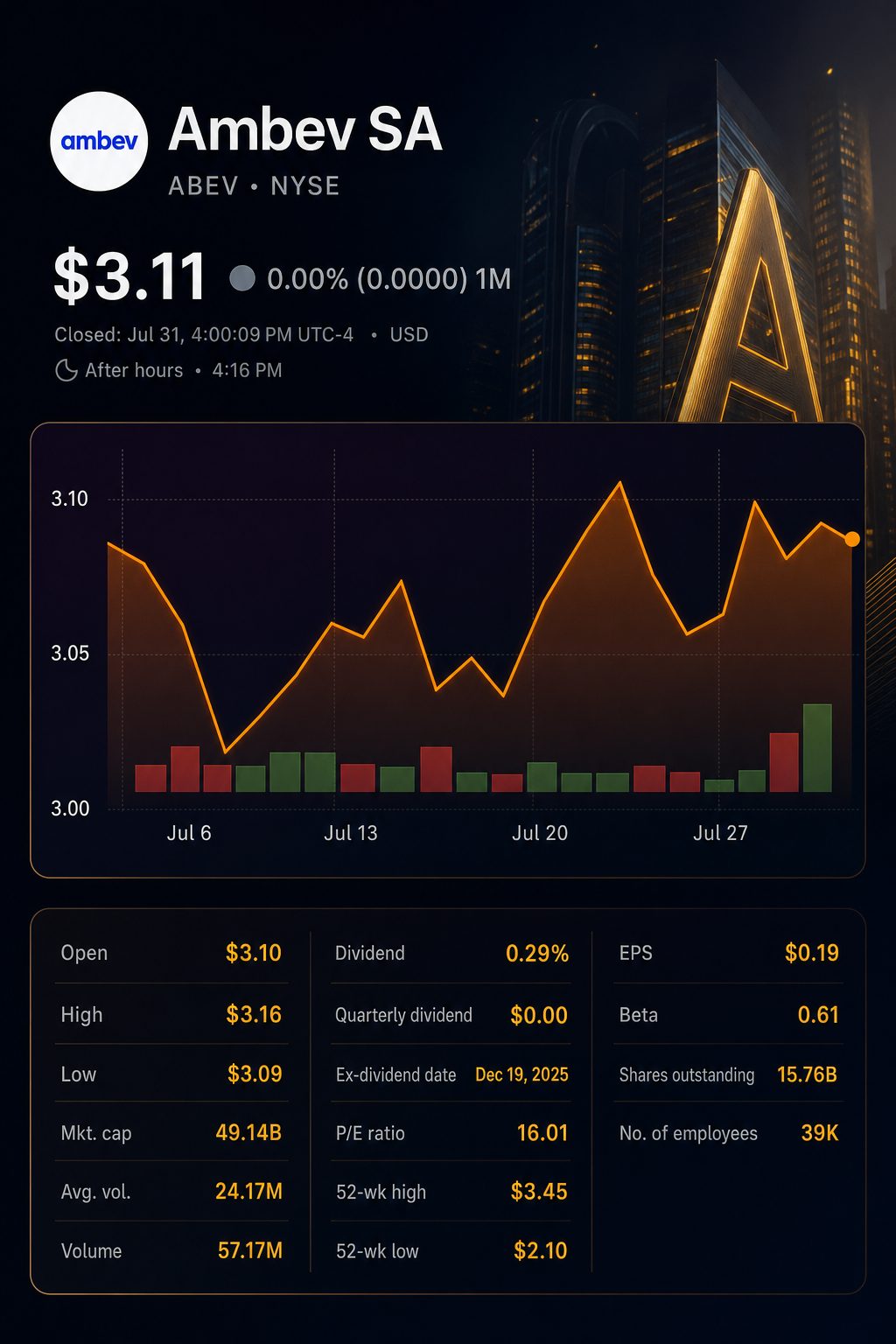
Markets did not operate on Saturday. The New York ADR finished Friday at $3.11, an increase of 1.6% compared to the previous Friday. Ambev’s shares in São Paulo settled at R$15.99, up 2.2%.
Shares on both listings rose by under 1% on the day results were announced. The weekly trend stayed positive, though the reaction to the increase in cash was muted.
| Listing | July 31 close | Weekly move | July 30 move | Friday volume |
|---|---|---|---|---|
| NYSE ADR | $3.11 | up 1.6% | gained 0.65% | 57.17 mln |
| B3 common shares | R$15.99 | advanced 2.2% | increased 0.38% | 38.24 mln |
Based on closing prices from July 24.
On Friday, ADR turnover reached 2.1 times the 65-day average. Despite the increased activity, no distinct rerating was observed. Investors appear to be distinguishing between growth in recurring earnings and the timing of the balance sheet.
Underlying performance outpaced total reported revenue. Organic revenue advanced by 6.1%, compared with a 0.3% rise in reported revenue. The gap was mainly due to currency movements and changes in scope.
| Q2 group measure | 2025 | 2026 | Growth |
|---|---|---|---|
| Volume | 39.57 mln hl | 39.73 mln hl | +1.4% organic |
| Revenue | R$20.09 bln | R$20.15 bln | +6.1% organic |
| Normalized EBITDA | R$6.15 bln | R$6.38 bln | +8.9% organic |
| EBITDA margin | 30.6% | 31.6% | +80 bps organic |
| Normalized profit | R$2.83 bln | R$3.49 bln | +23.3% reported |
Chief Executive Carlos Lisboa stated the strategy delivered “another quarter of beer volume growth.” Overall consolidated volume grew 1.4% on an organic basis. Normalized earnings per share climbed 24.2% to R$0.22.
Brazil Beer accounted for the primary increase in volume. Premium volumes advanced by the mid-twenties percent, while no-alcohol beer expanded roughly 30%. Gross merchandise value at Brazil’s BEES Marketplace climbed 87%.
| Brazil segment | Volume | Revenue | Normalized EBITDA | EBITDA margin |
|---|---|---|---|---|
| Beer | up 5.0% | increased 8.9% | rose 12.8% | improved 110 bps |
| Non-alcoholic beverages | fell 4.4% | gained 1.4% | jumped 13.8% | up 320 bps |
Data reflects organic fluctuations.
The listed subsidiary recorded higher growth than parent company Anheuser-Busch InBev SA/NV (EBR:ABI; NYSE:BUD). The parent’s organic volume grew 0.9%, revenue increased 5.6% and EBITDA was up 5.8%. Ambev achieved 1.4% organic volume growth, a 6.1% rise in revenue and an 8.9% increase in EBITDA, respectively.
Ambev continues to deliver significant cash returns. As of Thursday, it had distributed about R$5.9 billion to shareholders, with close to 95% of its share buyback executed. The board has also authorized approximately R$1.1 billion in additional interest on capital to be paid out by December.
Attention turns to Brazil’s central bank next week. The Copom is scheduled to meet on August 4-5, while the Selic rate currently stands at 14.25%. Inflation for mid-July eased to 4.52%, which came in lower than any forecast in a Reuters survey.
Liam Peach, economist at Capital Economics, commented that the figures “provide scope for another 25-basis-point interest rate cut.” Reduced rates could help boost consumer confidence. This might also have implications for the real and Ambev’s ADR conversion. Reuters
Risks: Improvements in cash flow could diminish should working capital return to typical levels. Non-alcoholic volume in Brazil continues to show softness. Fluctuations in currency may still mask organic growth within reported figures.
Related articles: NYSE:ABEV



![Australia Stock Market Today 08.22.2026 [UPDATE: 08.22.2026 08:37 AEST] [Weekly Recap and Week Ahead: Healthcare Leads, CPI Looms]](https://ts2.tech/wp-content/uploads/2026/08/AU-market-dashboard-2026-08-22-0837-480x384.jpg "Australia Stock Market Today 08.22.2026 [UPDATE: 08.22.2026 08:37 AEST] [Weekly Recap and Week Ahead: Healthcare Leads, CPI Looms]")