Marcin Frąckiewicz

CEO of TS2 Space and founder of TS2.tech. Expert in satellites, telecommunications, and emerging technologies, covering trends in space, AI, and connectivity.

Android 17’s Massive Upgrades Revealed: Features, Leaks, Release Date & How It Outshines Android 14 & 15

Android’s Epic Evolution: A Complete History from Android 1.0 to Android 15 (2008–2025)

Android 1.0 debuted publicly on September 23, 2008 on the T-Mobile G1 (HTC Dream), launching Google’s first public Android release. Android 1.5 Cupcake, released in April 2009, introduced the first on-screen keyboard and home-screen widgets and began the dessert-naming tradition. Android 1.6 Donut, released in September 2009, added support for multiple screen sizes and CDMA networks such as Verizon, expanding Android’s device reach. Android 2.0–2.1 Eclair, launched October 2009 (2.0) with turn-by-turn Google Maps Navigation and pinch-to-zoom, followed by 2.1 in early 2010. Android 2.2 Froyo, released May 2010, brought a Just-In-Time compiler, mobile hotspot, USB tethering, and Flash support

11 August 2025
The Ultimate Windows Version Comparison: From 1985’s Windows 1.0 to Windows 11 and Beyond

The Ultimate Windows Version Comparison: From 1985’s Windows 1.0 to Windows 11 and Beyond

Windows 1.0 debuted in November 1985 as Microsoft’s first graphical user interface on PCs, running on top of MS-DOS as an “operating environment” with tiled windows due to an Apple licensing agreement. Windows 2.0, released in December 1987, introduced overlapping windows, desktop icons, keyboard shortcuts, expanded memory and 16-color VGA graphics, and bundled early Word and Excel. Windows 3.0 (May 1990) and Windows 3.1 (April 1992) brought mainstream adoption with 386 Enhanced Mode, up to 16 MB RAM, 256-color graphics, Program Manager and File Manager, and the Ctrl+Alt+Del soft reboot. Windows 95, launched August 24, 1995, introduced the Start Menu
11 August 2025
From Macintosh System 1 to macOS Sequoia: The Epic Evolution of Apple’s OS

From Macintosh System 1 to macOS Sequoia: The Epic Evolution of Apple’s OS

The original Macintosh debuted in January 1984 with System 1, introducing windows, icons, menus, and mouse-based interaction. System 7, released in 1991, added virtual memory and 32-bit addressing, along with built-in networking features like AppleTalk. In 1997 Apple acquired NeXT, giving Mac OS X a Unix-based core (Darwin/BSD) with the Mach kernel, leading to Mac OS X 10.0 Cheetah in March 2001. The PowerPC-to-Intel transition was announced at WWDC 2005, and by 2007 the entire Mac lineup had shifted to Intel, aided by Rosetta and Universal Binaries; Leopard 10.5 (2007) introduced Time Machine, Spaces, and Boot Camp. OS X 10.6
11 August 2025
Astrophotography Showdown: Sony A7 IV vs Canon EOS Ra vs Nikon D810A – Which Captures the Cosmos Best?

Astrophotography Showdown: Sony A7 IV vs Canon EOS Ra vs Nikon D810A – Which Captures the Cosmos Best?

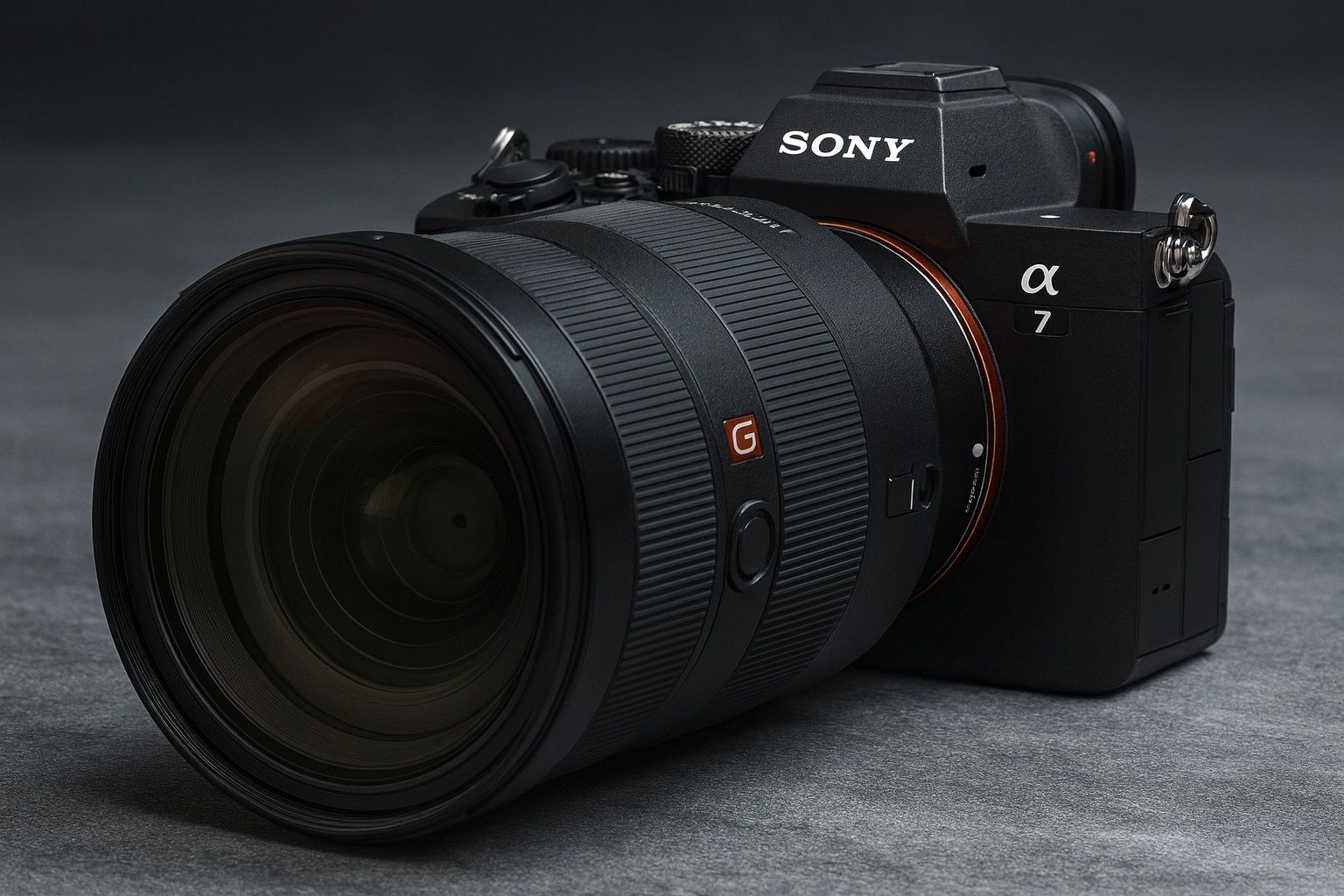
The Sony A7 IV uses a 33MP back-illuminated CMOS sensor with ~5.12µm pixels and delivers unusually clean high-ISO performance, with ISO 12,800 showing little noise and star-eater largely mitigated. The Canon EOS Ra modifies its infrared-cut filter to pass roughly four times as much hydrogen-alpha light, offers 30× magnification live view for precise focusing, and provides base ISO 100–40,000 (expandable to 102,400). The Nikon D810A is built around a 36.3MP sensor with a specially tuned IR-cut that passes four times more Hα light, removes the optical low-pass filter for maximum sharpness, and has a base ISO of 200 with superb
10 August 2025
Northern Lights Alert: Best Places, Timing & Photography Tips for 2025’s Auroras

Northern Lights Alert: Best Places, Timing & Photography Tips for 2025’s Auroras

The absolute peak of Solar Cycle 25 is expected around July 2025, with about 115 sunspots mid-year. Noaa SWPC recorded a G2 geomagnetic storm on August 9, 2025, and issued G1–G2 watches on multiple days that month. Norway’s Tromsø (69°N), Alta, and the Svalbard archipelago (74–81°N) offer frequent auroras, with best viewing from late September through March and peak darkness November–January. Iceland’s prime viewing runs September to April, with the Westfjords and northern Iceland offering the clearest skies near popular spots like Thingvellir National Park and the Reykjanes Peninsula. Yellowknife in the Northwest Territories (62°N) experiences about 240 aurora nights
10 August 2025
Battle of the Telescopes: StellaLyra 8″ & Apertura AD8 Dobsonians vs. Vaonis Vespera II Smart Scope (2025 Comparison)

Battle of the Telescopes: StellaLyra 8″ & Apertura AD8 Dobsonians vs. Vaonis Vespera II Smart Scope (2025 Comparison)

StellaLyra 8″ f/6 and Apertura AD8 are both 203 mm (8″) parabolic-mirror Dobsonians with a 1200 mm focal length (≈ f/6). Vaonis Vespera II uses a 50 mm f/5 quadruplet apochromatic refractor with a built‑in camera and a Sony IMX585 sensor (8.3 MP). The StellaLyra and Apertura are manual Dobsonians on wooden alt-az mounts, while the Vespera II is a motorized GoTo system with auto‑initialization and tracking. The Vespera II offers a native field of view around 1.6° × 0.9°, enabling large targets to be captured on its screen. Visual observing with the 8″ Dobs delivers real-time eyepiece views, whereas
10 August 2025
The Best Telescopes of 2025: What the Pros Are Using and What You Should Buy

The Best Telescopes of 2025: What the Pros Are Using and What You Should Buy

The Celestron NexStar 8SE is a 203 mm Schmidt-Cassegrain with a GoTo computerized fork mount and f/10 optics, delivering bright, detailed views but at a high price for beginners. The Sky-Watcher 8-inch Dobsonian is a 203 mm reflector on a manual alt-azimuth mount with f/6, offering a large light bucket at low cost but no tracking. The Celestron NexStar Evolution 9.25 has a 235 mm aperture, premium Go-To fork mount with built-in battery and WiFi app, but is heavy (~28 kg) and expensive. The Sky-Watcher SkyMax 150 Maksutov-Cassegrain delivers high-power planetary detail with a 150 mm aperture and f/12, but
10 August 2025
Spectacular Venus–Jupiter “Cosmic Kiss” Dazzles Early Morning Skies (Don’t Miss It!)

Spectacular Venus–Jupiter “Cosmic Kiss” Dazzles Early Morning Skies (Don’t Miss It!)

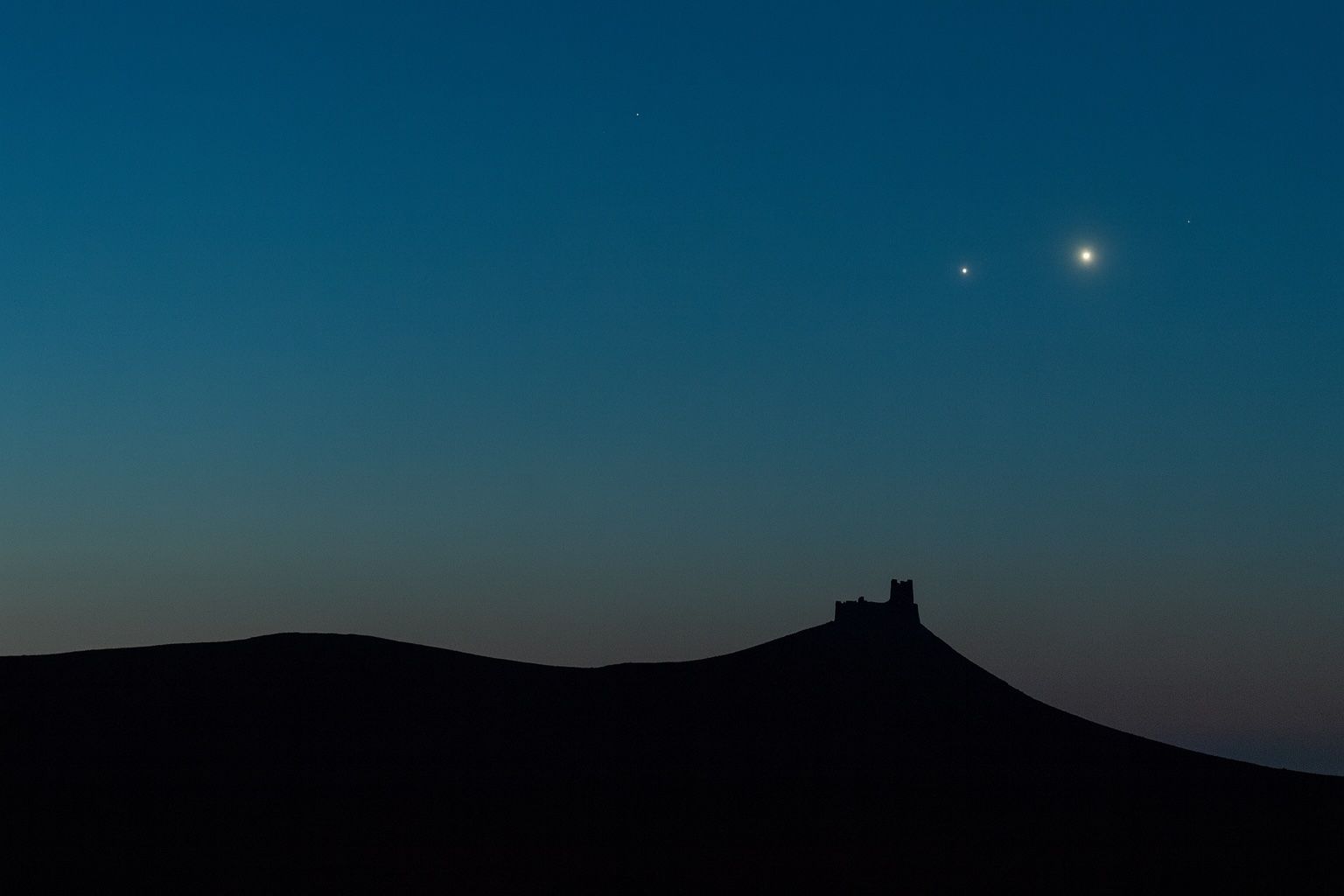
The Venus–Jupiter conjunction occurs August 11–13, 2025, with its closest approach on August 12 at about 0.86° apart. Venus will shine around magnitude -4.0 and Jupiter around -1.8 to -2 during the pairing. The pair sits about 35° from the Sun, enabling viewing in a dark dawn sky. Observers should view about 45 minutes to an hour before sunrise, when the planets are 5–10° above the horizon and will rise to 15–20° as dawn progresses. In the dawn sky, Venus appears lower and brighter, with Jupiter above, forming a striking naked-eye close pair. With binoculars or a telescope, both planets
10 August 2025
August 2025 Night Sky Spectacles: Rare Black Moon, Nebula Treasure, Mars in Virgo & Saturn’s Shadow Show

August 2025 Night Sky Spectacles: Rare Black Moon, Nebula Treasure, Mars in Virgo & Saturn’s Shadow Show

On August 23, 2025, the Moon undergoes a seasonal Black Moon New Moon in Virgo at 06:06 UTC, the third New Moon in a season with four. The Dumbbell Nebula, M27, in Vulpecula is a bright planetary nebula visible throughout August 2025 and was first discovered by Charles Messier in 1764. Mars in August 2025 has a brightness of about magnitude 1.6 and a disk roughly 5 arcseconds across. Mars makes a close approach to Beta Virginis (Zavijava) on August 2, 2025, passing about 8 arcminutes to the southeast. By August 24, 2025, Mars will be about 2.7° south of
10 August 2025
Six Planets Will Align in the Sky This Month—Here’s When and How to Watch the Rare “Planet Parade”

Six Planets Will Align in the Sky This Month—Here’s When and How to Watch the Rare “Planet Parade”

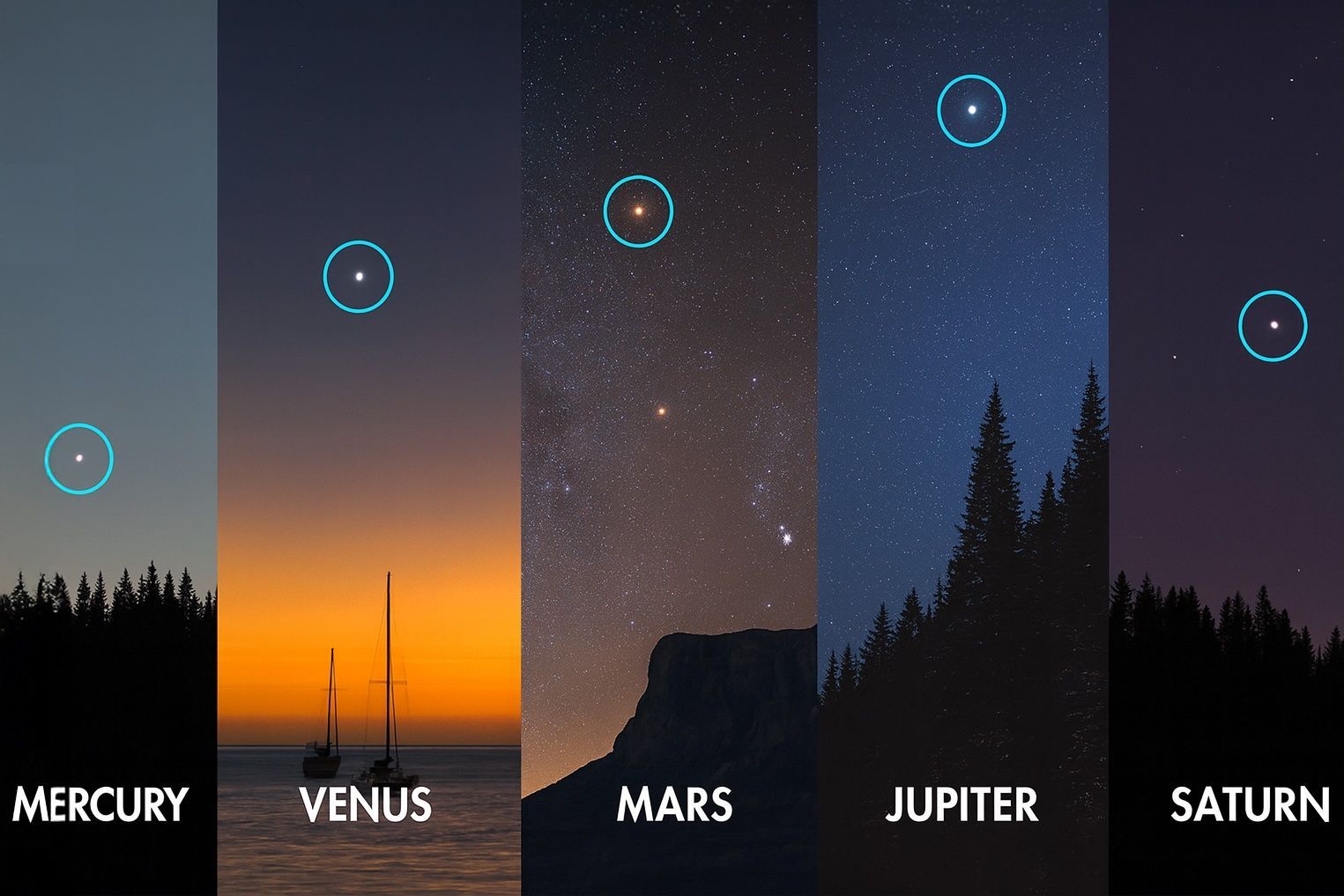
On August 10, six planets—Mercury, Venus, Jupiter, Saturn, Uranus, and Neptune—will line up in a broad arc in the pre-dawn sky. Four of these planets (Mercury, Venus, Jupiter, Saturn) are visible to the naked eye, while Uranus and Neptune require binoculars or a small telescope. NASA notes that planetary parades of this kind occur only every few years, and become rarer as more planets join the lineup. The best viewing period is in mid-to-late August, with the prime nights around August 23 when the Moon is near new and does not wash out the view. Venus and Jupiter come very
10 August 2025
Full Moons 2025–2026: Supermoons, Blood Moons & Cultural Celebrations You Can’t Miss

Full Moons 2025–2026: Supermoons, Blood Moons & Cultural Celebrations You Can’t Miss

Sept. 7, 2025 – Corn Moon full moon coincides with a total lunar eclipse (Blood Moon) visible in Asia, Africa, and Australia. Oct. 6–7, 2025 – Harvest Moon is a near-perigee supermoon, peaking around 11:48 PM EDT, with the Mid-Autumn Moon Festival celebrated across China and Asia. Nov. 5, 2025 – Beaver Moon is a supermoon and the closest full moon of 2025, about 356,980 km from Earth and appearing roughly 14% bigger and 30% brighter. Dec. 4, 2025 – Cold Moon is the third consecutive full supermoon of 2025. Jan. 3, 2026 – Wolf Moon is a supermoon, peaking
10 August 2025
December 2025’s Dazzling Cold Moon – A Final Supermoon Lighting Up the Long Winter Night

December 2025’s Dazzling Cold Moon – A Final Supermoon Lighting Up the Long Winter Night

The December 4, 2025 full Moon, known as the Cold Moon, peaks at 23:15 UTC (6:15 p.m. EST; 3:15 p.m. PST in Los Angeles). This full Moon is a supermoon, about 7–8% larger in apparent size and roughly 15% brighter than a typical full Moon. It is the final in a series of three back-to-back 2025 supermoons, following October and November events. It is the closest full Moon to the winter solstice in 2025, though it occurs a couple weeks before the solstice and is also called the Long Night Moon. Because the Moon is at perigee, tides around the
10 August 2025
1 518 519 520 521 522 586

Stock Market Today

AT&T stock price: T slips after $6.5B bond sale as payrolls, CPI loom next week

AT&T stock price: T slips after $6.5B bond sale as payrolls, CPI loom next week

7 February 2026
AT&T shares closed down 0.7% at $27.13 on Friday, underperforming the S&P 500’s 1.97% gain. The company completed a $6.5 billion global notes sale this week, with maturities from 2031 to 2056 and coupons between 4.4% and 6%. Investors await delayed U.S. jobs and inflation data, along with T-Mobile’s upcoming earnings update.
GE Vernova stock price jumps toward $800 — what to know before Monday trade

GE Vernova stock price jumps toward $800 — what to know before Monday trade

7 February 2026
GE Vernova shares jumped 5.7% to $779.35 Friday after Baird upgraded the stock and the Dow closed above 50,000. The company’s onshore wind unit reported 1.1 GW in U.S. repower orders for 2025, a figure previously disclosed. GE Vernova also completed a $2.6 billion senior notes offering to help fund its Prolec GE stake purchase. Next earnings report is set for April 22.
Go toTop