Mateusz Kaczmarek

A technology and finance expert writing for TS2.tech. He analyzes developments in satellites, telecommunications, and artificial intelligence, with a focus on their impact on global markets. Author of industry reports and market commentary, often cited in tech and business media. Passionate about innovation and the digital economy.

Connected Canada: A Comprehensive Look at Internet Access in 2025

Connected Canada: A Comprehensive Look at Internet Access in 2025

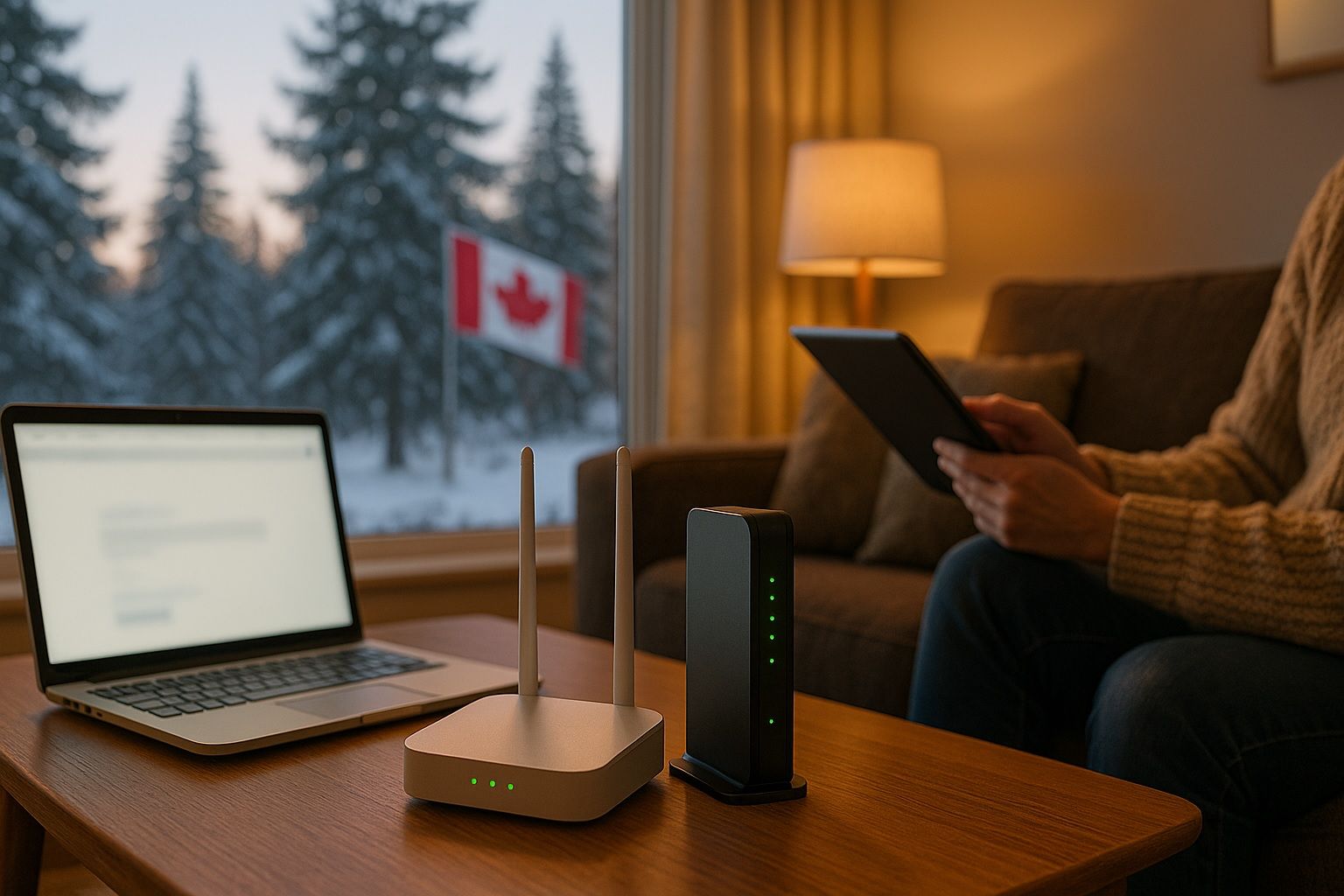
By early 2025, about 93.5% of Canadian households have access to high‑speed internet (50 Mbps down/10 Mbps up), up from 79% in 2014. The Universal Broadband Fund (UBF) started in 2020 with a $3.225 billion budget and targets 98% of households with 50/10 by 2026 and 100% by 2030. Bell Canada had fiber passed to about 7.3 million premises by mid‑2023, while Telus passed more than 3.1 million premises with fiber in British Columbia and Alberta. Rogers Communications became Canada’s largest broadband provider after acquiring Shaw in 2023, serving roughly 7 million internet customers, with the combined Rogers/Shaw passing about

Mega-Constellations Exposed: How Swarms of Tiny Satellites Are Taking Over Low Earth Orbit

Mega-Constellations Exposed: How Swarms of Tiny Satellites Are Taking Over Low Earth Orbit

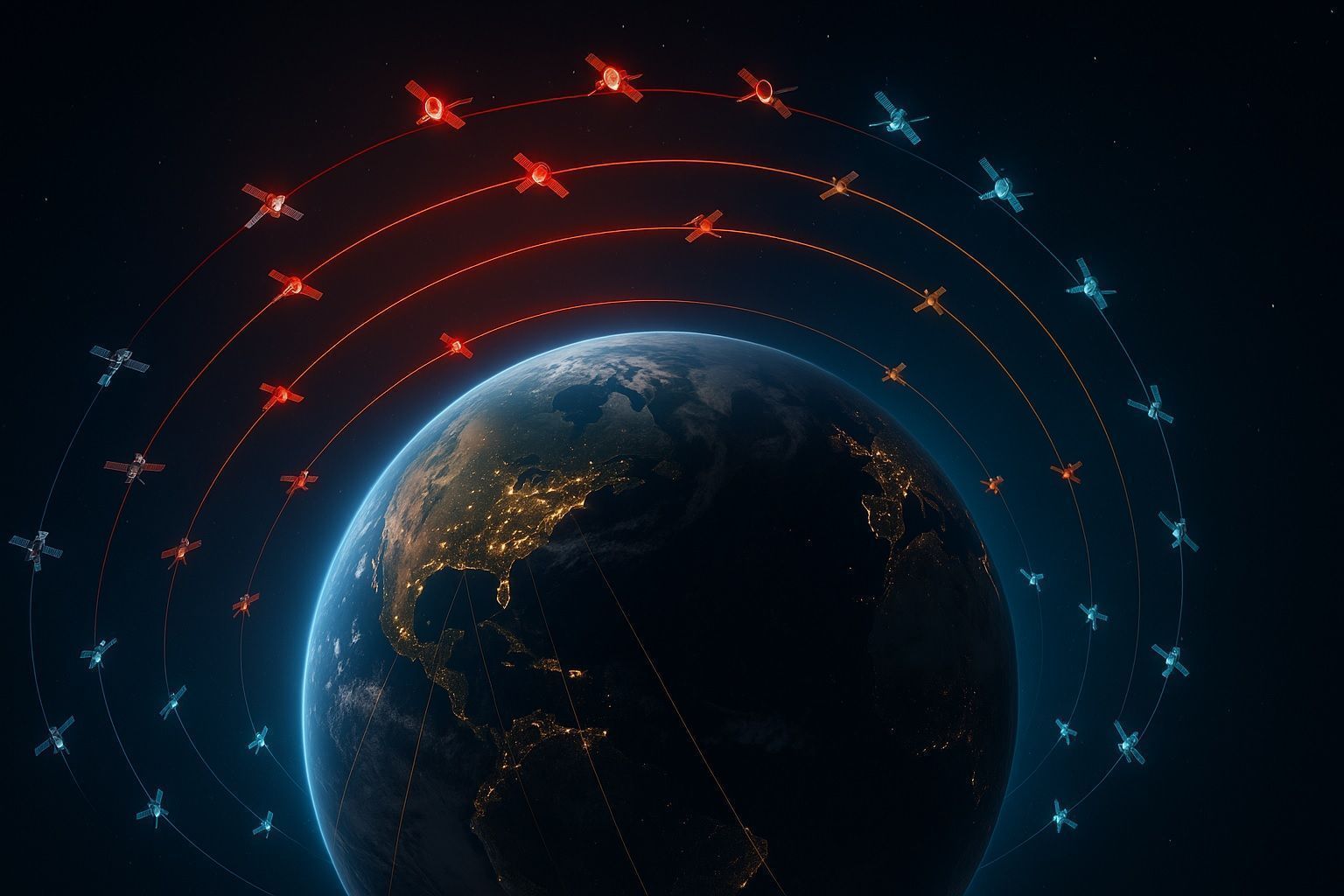
By 2024, small satellites accounted for over 95% of all satellites launched annually. SpaceX’s Starlink operates the world’s largest constellation with over 7,000 active satellites in orbit as of late 2024. Starlink’s initial shell consisted of about 4,400 satellites at roughly 550 km altitude and 53° inclination, with FCC approval for about 12,000 satellites and potential expansion to 42,000. Iridium uses 86.4° near-polar orbits in six planes at ~780 km to achieve global coverage including polar regions. OneWeb’s Gen1 network aimed for ~1,200 km orbit with ~86–87° inclination and had deployed 618 satellites by March 2023, before merging with Eutelsat
5 June 2025
How Satellite Internet Is Revolutionizing Disaster Response and Humanitarian Relief

How Satellite Internet Is Revolutionizing Disaster Response and Humanitarian Relief

Hurricane Maria in 2017 damaged 95% of cell towers in Puerto Rico, leaving the island largely without phone service. SpaceX’s Starlink uses a low-Earth-orbit (LEO) satellite constellation of hundreds to thousands of satellites, lowering latency to about 20–40 ms with ~600 ms for geostationary satellites. Starlink can deliver 100–200 Mbps per user, versus about 25 Mbps on legacy satellite links. Ground terminals are plug-and-play, roughly pizza-box-sized dishes that require only a power source and a clear view of the sky to connect. In Ukraine since 2022, SpaceX shipped thousands of Starlink terminals, with tens of thousands in operation, becoming essential
Internet Access in Cameroon: The Race to Connect a Nation

Internet Access in Cameroon: The Race to Connect a Nation

As of early 2025, about 12.4 million Cameroonians were internet users, representing 41.9% of the population. As of 2024, roughly 60% of Cameroonians live in urban areas, with internet access heavily concentrated in cities and rural areas almost inaccessible. Cameroon’s fiber backbone extends over 12,000 kilometers and is connected to five landfall cables: SAT-3, WACS, ACE, SAIL, and NCSCS, with SAIL linking Kribi to Brazil. Plans are underway to add more than 4,000 kilometers of fiber, expanding the backbone to about 17,000–22,000 km and improving regional redundancy. The mobile market is dominated by Orange Cameroon (about 11.7 million subscribers, 39.6%
When the Grid Goes Dark: How Satellite Phones Keep Us Connected in Emergencies

When the Grid Goes Dark: How Satellite Phones Keep Us Connected in Emergencies

Iridium operates 66 active LEO satellites in a cross-linked constellation, providing truly global coverage including the poles. Inmarsat uses 3–4 GEO satellites at about 36,000 km altitude to cover most of the globe from roughly 70°N to 70°S, and its IsatPhone 2 offers 8 hours of talk time. Globalstar runs about 48 LEO satellites to provide regional coverage (roughly 50°N to 50°S) with the Globalstar GSP-1700 handset. Thuraya uses two GEO satellites, with Thuraya 4-NGS launched in 2025 to expand service across Europe, the Middle East, Africa, Asia, and Australia, while it does not cover the Americas. Geostationary satellite networks
4 June 2025
Inside the Sky Shield: How Secure Is Your Satellite Internet?

Inside the Sky Shield: How Secure Is Your Satellite Internet?

Satellite internet data travels from your dish to a satellite, then to a gateway and onto the internet, with traditional GEO orbits at about 35,786 km and newer systems like SpaceX Starlink using low Earth orbit swarms and inter-satellite laser links. Geostationary (GEO) latency is roughly 500–700 ms for a round trip, while Starlink’s low Earth orbit (LEO) latency is about 20–40 ms, impacting secure handshakes such as TLS. Signals require line-of-sight, and because satellite beams cover broad areas, adversaries can jam or disrupt links from within the footprint with a powerful transmitter. Unencrypted satellite downlinks can be intercepted since
Satellite vs Fiber Internet: The 2025 Latency & Bandwidth Showdown

Satellite vs Fiber Internet: The 2025 Latency & Bandwidth Showdown

In the race for high-speed internet, satellite and fiber-optic broadband represent two very different approaches. Fiber-optic (terrestrial broadband) is often considered the gold standard – delivering data at nearly the speed of light through glass cables buried underground or strung on poles mcsnet.ca. Satellite internet, by contrast, beams data to orbiting satellites and back to Earth, enabling connectivity virtually anywhere on the planet. Each technology has unique strengths and weaknesses, especially when it comes to latency (network delay) and bandwidth (data throughput). This report provides an up-to-date comparison of satellite vs. fiber internet as of mid-2025, examining how they work,
The Sky Connect: How Satellite Internet Is Revolutionizing Rural and Remote Life

The Sky Connect: How Satellite Internet Is Revolutionizing Rural and Remote Life

LEO satellites orbit at roughly 500–1,200 km, delivering latency of about 20–50 ms and broadband speeds comparable to terrestrial networks, versus GEO’s ~600 ms latency. SpaceX Starlink has launched over 7,000 satellites since 2019, provides coverage in about 130 countries, had more than 4 million subscribers by late 2024, and offers 50–200 Mbps to rural homes with a pizza-box–sized dish. OneWeb has 618 active LEO satellites with global coverage achieved in early 2023, merged with Europe’s Eutelsat in 2022, and now focuses on enterprise and government backhaul rather than consumer services. ViaSat-3 consists of three GEO high-throughput satellites launched in
Battle for the Final Frontier: Starlink vs OneWeb vs Kuiper vs Telesat Lightspeed

Battle for the Final Frontier: Starlink vs OneWeb vs Kuiper vs Telesat Lightspeed

Starlink has launched over 8,000 satellites since 2019, serves 125 countries, and by April 2025 reached the 250th dedicated Starlink launch, establishing SpaceX’s network as the largest in orbit. OneWeb, founded in 2014, began Gen1 launches in 2019 with 618 of 648 satellites deployed by March 2023, filed for Chapter 11 in 2020, was rescued by a UK/India $1 billion bailout, and merged with Eutelsat in September 2023. Project Kuiper, unveiled in 2019, has FCC approval for 3,236 satellites, started production with 27 satellites launched in April 2025 on an Atlas V, uses three shells at 590–630 km with inclinations
Cambodia’s Internet Boom or Digital Doom? Inside the Kingdom’s Connected Revolution

Cambodia’s Internet Boom or Digital Doom? Inside the Kingdom’s Connected Revolution

Cambodia has over 22 million cellular subscriptions in a population of about 17 million, yielding a mobile penetration of roughly 131.5% due to multiple SIM ownership. As of early 2023, fixed internet subscriptions were about 310,000 nationwide, underscoring a mobile-first connectivity pattern. Cambodia’s first submarine cable, the Malaysia-Cambodia-Thailand link, landed in 2017, and a Hong Kong–Sihanoukville upgrade planned for 2024 will add 640 km of undersea fiber within Cambodian territory. The core backbone is operated by Telecom Cambodia, Viettel/Metfone, and CFOCN, with 38 licensed ISPs and five fiber-infrastructure operators reported in 2023. In early 2023 about 11.37 million Cambodians were
3 June 2025
Why Starlink Keeps Hitting Red Tape Around the World

Why Starlink Keeps Hitting Red Tape Around the World

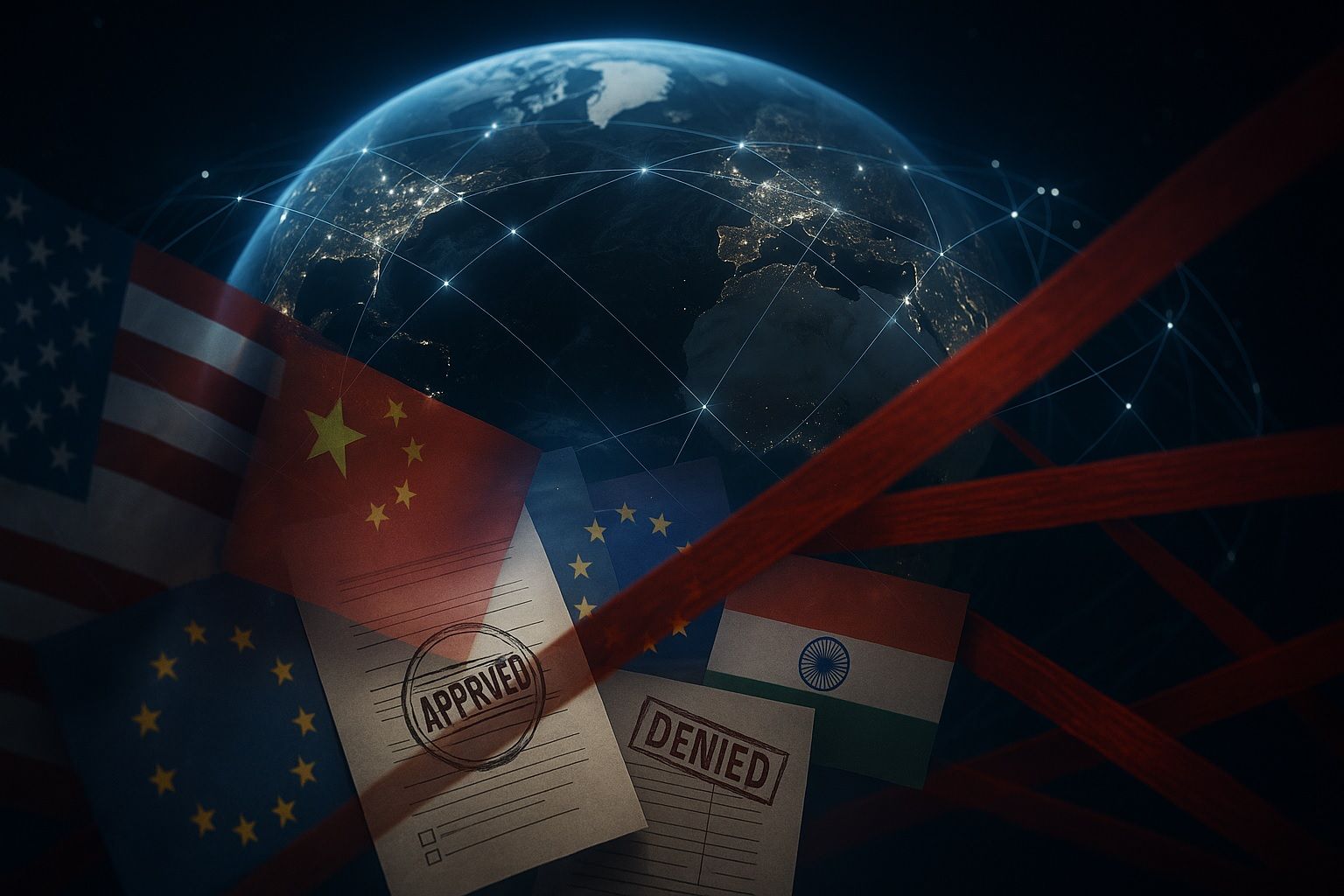
In May 2023 the U.S. FCC sided with Starlink over proposed uses of the 12.2–12.7 GHz band, preserving it for satellite services and preventing two-way 5G interference. In August 2022 the FCC denied Starlink’s $885 million Rural Digital Opportunity Fund subsidy due to performance concerns and high equipment costs, including a roughly $600 dish. By late 2024 Starlink had deployed about 7,000 satellites and controlled nearly two-thirds of all active satellites in orbit, signaling its regulatory and market prominence. France’s Conseil d’État annulled Arcep’s Starlink frequency license in April 2022 for lack of a required public consultation, leading to a
No Signal? No Problem – Starlink’s Direct-to-Cell Satellites Are Eliminating Dead Zones

No Signal? No Problem – Starlink’s Direct-to-Cell Satellites Are Eliminating Dead Zones

August 2022: SpaceX and T-Mobile announced a partnership to provide direct-to-cell connectivity via Starlink satellites, with texting expected in 2023–24 and voice/data thereafter. January 2024: SpaceX achieved the first SMS directly via satellite, enabling a two-way text conversation between ordinary smartphones relayed entirely through space after the first batch of D2C-equipped satellites launched. Gen2 Starlink satellites carry the Direct-to-Cell payload, and the smaller V2 Mini satellites launched on Falcon 9 in 2023–24 were equipped to support these tests. By late 2024, more than 400 Starlink satellites had Direct-to-Cell capability, enabling voice calls, video calls, and IoT tests such as Cat-1

Stock Market Today

Wilmar share price slips on Friday as palm oil traders brace for POC2026 and Feb 26 results

Wilmar share price slips on Friday as palm oil traders brace for POC2026 and Feb 26 results

7 February 2026
Singapore, Feb 7, 2026, 15:31 SGT — Market closed. Wilmar International shares ended the week on a softer note, closing down 0.86% on Friday at S$3.44 in Singapore, with the market shut on Saturday. (Yahoo Finance) The pullback matters because Wilmar sits on the intersection of edible oils and global commodity flows. Traders are heading into a week that could reset expectations for crude palm oil prices, a key input across the sector. The stock’s next real test is not the weekend tape. It’s Monday’s reopen, and then a late-February earnings read that could force investors to pick a view
CapitaLand Investment share price jumps as CapitaLand REIT payouts roll in — what’s next for 9CI

CapitaLand Investment share price jumps as CapitaLand REIT payouts roll in — what’s next for 9CI

7 February 2026
CapitaLand Investment shares rose 1.3% to S$3.12 on Friday, bucking a 0.8% drop in Singapore’s benchmark index. CapitaLand Integrated Commercial Trust reported a 16.4% jump in second-half distributable income, while CapitaLand Ascendas REIT posted a 1.4% full-year rise. CapitaLand China Trust saw full-year DPU fall to 4.82 cents amid weaker yuan and occupancy. CLI reports FY2025 results on Feb. 11.
Keppel stock holds near 12-year high after profit jump, special dividend; buyback adds support

Keppel stock holds near 12-year high after profit jump, special dividend; buyback adds support

7 February 2026
Keppel shares closed at S$11.64 on Friday, up 0.17%, after surging 6.1% the previous day on stronger FY2025 profit and a larger dividend plan. The company bought back 151,400 shares for about S$1.74 million. Keppel reported a 29% rise in full-year profit to S$1.02 billion and proposed a total distribution of 47 cents per share, including a special dividend partly paid in Keppel REIT units.
Go toTop