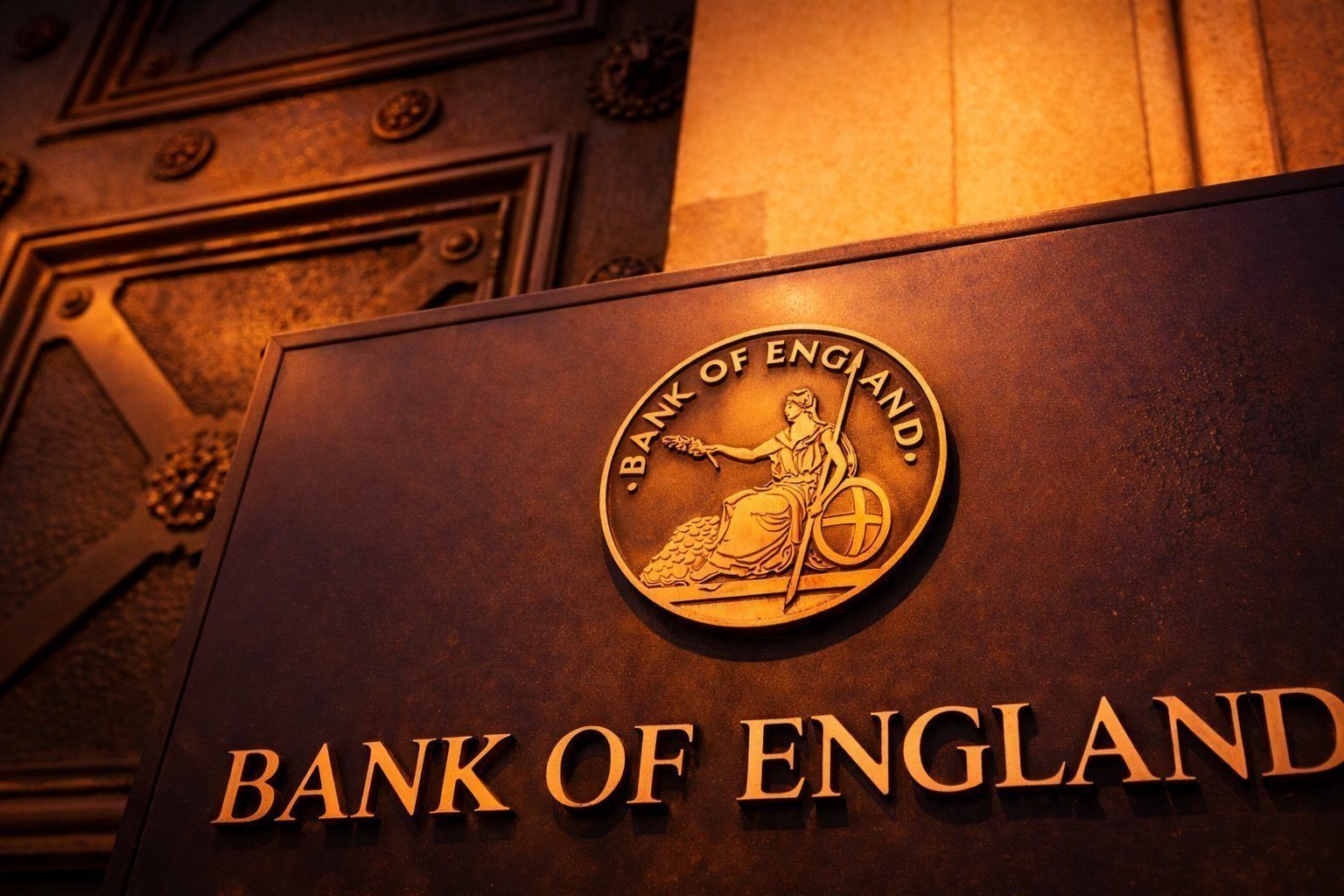

Borrowers could get an early Christmas boost today as the Bank of England prepares to lower the UK Bank Rate from 4% to 3.75%, a move widely seen as the most likely outcome after a sharper-than-expected fall in inflation and fresh signs that the economy is losing momentum.
The decision, due at 12pm UK time on Thursday, 18 December 2025, would be the fourth interest-rate reduction of 2025 and the sixth cut in the current easing cycle, after policymakers paused in November with a split vote.
Why a Bank of England rate cut now looks “nailed on”
The catalyst is the latest inflation data: the UK’s Consumer Prices Index (CPI) fell to 3.2% in November from 3.6% in October, undershooting forecasts and coming in below what the Bank itself had projected.
Both Reuters and The Guardian report that a key driver was an unusual seasonal dynamic: food prices fell when they often rise ahead of Christmas, while Black Friday discounting and changes in tobacco prices also pushed the headline rate down.
Just as importantly for policymakers, measures that can signal underlying pressure also eased:
- Core inflation (excluding items like energy and food) also cooled, according to Reuters.
- Services inflation, closely watched by the Bank as a proxy for domestically generated price pressure, edged down to 4.4% in the same release.
This weakening inflation backdrop is landing at the same time as the labour market shows strain and growth remains fragile, increasing the case for lower borrowing costs.
The economy is slowing — and the MPC is split on what comes next
Even with inflation falling, the Bank of England has been cautious about declaring victory. The central concern is that the UK still has more persistent price pressures than peers, even after the drop in CPI — and it remains an inflation outlier among advanced economies.
That helps explain why the Monetary Policy Committee (MPC) held rates at 4% in November in a 5–4 vote, breaking the cadence of steady reductions seen earlier in the cycle.
For today’s meeting, reporting and market pricing indicate a narrow outcome is still possible, with analysts expecting a close vote and particular attention on whether Governor Andrew Bailey tips the balance toward a quarter-point cut.
The bigger strategic question is less about whether rates fall today, and more about how far they can fall in 2026 without reigniting inflation — a topic already dividing economists and investors.
What markets expect after today’s decision
Financial markets have been treating a quarter-point cut as close to certain, but the path beyond that is where expectations diverge.
Reuters reports that investors are fully pricing only one additional cut in 2026, most likely by around April, while seeing a meaningful—but not guaranteed—chance of a second cut later next year.
That reflects a push-and-pull in the data:
- Falling inflation and softer jobs growth make cuts easier to justify.
- But policymakers remain wary of services inflation and wage dynamics, which can keep price growth sticky even when headline inflation drops.
In other words: even if the Bank of England cuts interest rates today, officials may try to frame it as careful risk management, not the start of a rapid cutting cycle.
Sterling and gilts: the cut is priced in, so guidance matters more
With a rate cut widely expected, investors are watching for the details that could move the pound and UK government bond yields.
Reuters reports sterling was broadly steady ahead of the decision after weakening following the inflation surprise, while traders focus on how policymakers explain the decision and what the vote split suggests about the next move.
This dynamic is typical for “priced-in” central bank decisions: once a headline move becomes consensus, markets often react more to the tone—hawkish or dovish—than to the cut itself. Reuters
What a Bank of England rate cut means for mortgages in 2025 and 2026
For households, the most searched question on days like today is straightforward: will mortgage rates fall?
The answer is “likely, but unevenly and not instantly.”
Sky News’ Money blog reports that many experts expect mortgage pricing to drift lower as the base rate falls, but with the ultra-low rates of the 2010s unlikely to return. In commentary collected by Sky, industry voices suggest:
- Some expect rates in the 3% range to become achievable as 2026 progresses, with 3.5% seen by many as the next key psychological benchmark.
- Others argue the market is settling into a “new normal” where mortgage deals “slide down and not fall,” reflecting the idea that cuts will be gradual. Sky News
- Sky also notes that the lowest widely available two-year fixes were already starting around the mid-3% area, and that lender competition (plus wholesale funding costs like swap rates) can move pricing even before the Bank acts.
The most immediate impact tends to be on tracker and variable-rate borrowers, whose monthly payments can adjust more quickly when the base rate changes—while many fixed-rate customers only feel relief when they refinance.
Savings rates: good news for borrowers, tougher for savers
A lower Bank Rate can also gradually push down the rates offered on easy-access savings accounts and new fixed-rate savings deals—especially if banks anticipate further easing.
The Bank of England itself has previously stressed that Bank Rate influences the interest paid on savings as well as the cost of borrowing, even if retail products don’t move one-for-one with the base rate.
The Resolution Foundation has also highlighted that the impact of rate moves can be uneven across age groups, because households with more savings benefit from higher deposit rates, while those with more debt feel the pain when rates rise—and relief when they fall.
Politics and policy: why Rachel Reeves’ budget is part of the inflation story
Today’s rate decision is also unfolding against a changing fiscal backdrop.
Reuters reports that part of the UK’s inflation “stickiness” this year has been linked to policy-driven factors—such as regulated prices and tax changes—while The Guardian notes that Chancellor Rachel Reeves has made reducing living costs a priority and argued that falling inflation will be welcomed by families. Reuters+2The Guardian+2
Both outlets also point to budget measures affecting household bills. Reuters reports that the government’s changes to how certain climate-related costs are funded could temporarily lower inflation from April 2026, though policymakers have warned that temporary relief may not change longer-run inflation pressures.
A busy global central bank day — and a cautious market mood
The Bank of England is not the only central bank in focus on 18 December 2025. Reuters notes that policymakers at the European Central Bank, Norges Bank, and Sweden’s Riksbank are also delivering decisions today, with expectations generally for no change outside the UK.
Global markets, meanwhile, have been skittish. A Reuters markets wrap described a risk-off tone in Asia linked to renewed concerns around tech and AI spending, while investors brace for central bank signals that could confirm diverging policy paths across countries.
In other UK business news today: Currys’ profits jump ahead of peak trading
Away from central banks, UK corporate updates are also shaping the day’s business narrative.
Electronics retailer Currys reported that its first-half adjusted profit before tax rose to £22 million, up from £9 million a year earlier, alongside an 8% rise in revenue to £4.23 billion. Like-for-like revenue grew 4% in both the UK & Ireland business and in the Nordics, according to Reuters.
Currys also said early second-half trading, including Black Friday, has been in line with expectations—important because the company traditionally earns only a small part of annual profit in the first half.
What to watch at 12pm: the three signals that could move markets
If you’re following the Bank of England interest-rate decision today, three details are likely to drive headlines and market reaction:
- The vote split — whether the cut is comfortable or another knife-edge outcome.
- The language on inflation risks, especially services inflation and wage growth.
- Forward guidance for 2026 — whether the Bank points to gradual easing or signals that rates may have to stay restrictive longer than borrowers hope.
For borrowers, savers and businesses, today’s likely quarter-point cut is significant—but the real story may be the Bank’s message about how close the UK is to “normal” interest rates, and what it will take to get inflation sustainably back to target. Reuters+2Reuters+2