
London, June 11, 2026, 11:17 BST
FTSE 100 climbs as HSBC, StanChart, Prudential rally
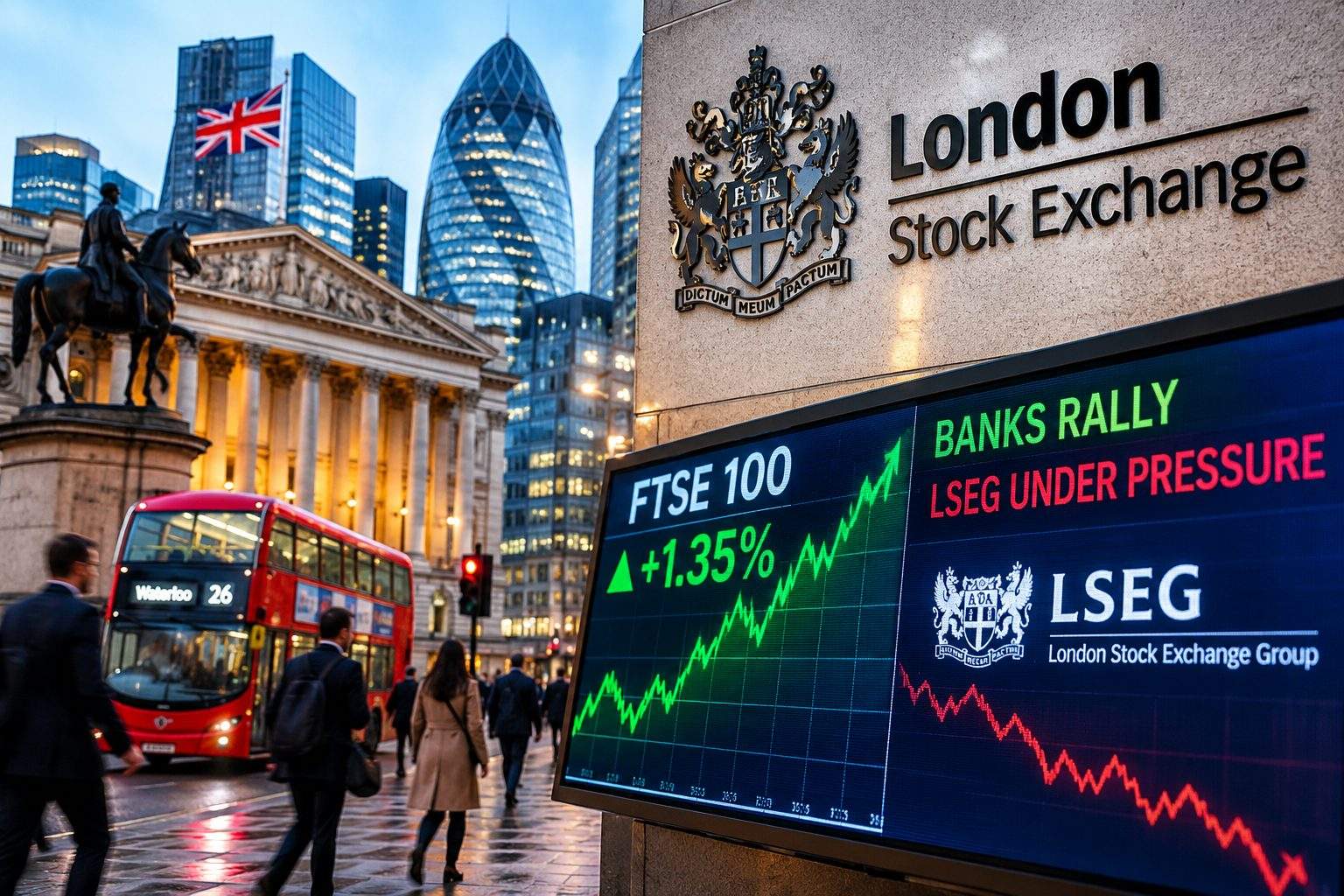
The FTSE 100 gained 0.6% to 10,316.05 at 0917 GMT on Thursday, lifted by a rebound in HSBC, Standard Chartered and Prudential. HSBC and Standard Chartered rose 2% each. Prudential jumped 3.4%. Mid-cap FTSE 250 traded flat. Market gains stayed limited with concerns over the Middle East and new doubts about funding the artificial-intelligence rally.
FTSE momentum shifted on Thursday as the index bounced back from Wednesday’s close near mid-May lows. Defensive names like energy and consumer staples held the market steady on Wednesday, but on Thursday the flow went into financials. It wasn’t a full risk-on trade.
Markets stayed jumpy as crude hovered just below $95 a barrel and traders kept an eye on tensions in the Middle East. Investors were waiting for the European Central Bank’s rate call later today. Daniela Hathorn, senior market analyst at Capital.com, said how markets move would come down to whether Christine Lagarde frames any tightening as “a one-off” or signals a “broader tightening cycle”. Reuters
Banks got support from the rate outlook. Data from LSEG and Reuters showed traders see a 25-basis-point rate increase by the Bank of England in September. One basis point is one-hundredth of a percent. That went some way to showing why lenders kept buyer interest while the rest of the market was shaky.
Tech and data traded softer. Oracle’s push for more AI spending stirred up some fresh worry that companies could cut regular software budgets to make room for new AI. UBS took down its rating on European IT stocks, moving to neutral from attractive.
London Stock Exchange Group shares fell 110p, or 1.22%, to 8,902p on the sell side and 8,904p to buy at 10:09 BST, according to Bez Kabli. The FTSE 100 was up 0.53% at the time. “Still, AI isn’t a straight win yet,” Bez Kabli wrote, summing up the mood. Bez Kabli
LSEG shares are up 27% since Elliott Management’s stake came out, Reuters said, though they plunged almost 13% in one day back in February on AI disruption worries. UBS analyst Michael Werner called it a “show me” story, saying LSEG still has to prove it can charge for AI. Deutsche Bank’s Benjamin Goy called the stock “pretty cheap.” BofA’s Hubert Lam said management had clarified LSEG’s spot in the “AI ecosystem.” But Blue Whale’s Stephen Yiu said the risk from disruption is still real. Reuters put LSEG’s forward P/E around 18, lower than Moody’s and MSCI but above FactSet. Reuters
LSEG is pushing to get paid for putting its data inside AI systems. CEO David Schwimmer in April said the “LSEG Everywhere” drive was ongoing, with over 150 customers hooked up or onboarding to its Model Context Protocol server, which gives AI agents access to licensed LSEG data with controls. First-quarter total income excluding recoveries was up 9.8% on an organic constant-currency basis, which leaves out currency moves and some portfolio items. LSEG
Frasers Group gained only slightly after making a €2 billion cash bid for Hugo Boss. Mike Ashley’s firm already owns 26.06% of the German retailer. The offer was just 4.3% above Hugo Boss’s Wednesday close.
Wizz Air shares rose after the company posted annual operating profit above forecasts, but the results weren’t straightforward. The carrier predicted weaker first-quarter RASK and skipped fiscal 2027 guidance, citing the Iran conflict. CEO Jozsef Varadi told Reuters, “No one is guiding.” Bernstein analyst Alex Irving said the airline’s second-half capacity plans “took us by surprise.” Reuters
Halma slumped. The safety and detection tech firm forecast low double-digit organic constant-currency revenue growth through March 2027, including roughly five points of extra growth from photonics. WSJ said shares dropped 11%, on track for the biggest drop since March 2020 if it holds.
But some worry Thursday’s bounce is narrow. A new jump in oil could stoke inflation and push central banks to sound more hawkish. Fresh nerves around AI spending could weigh on software and data stocks again. LSEG is also dealing with a UK debate about an equities consolidated tape, a pooled market-data feed that might threaten parts of its data business.
London is trading more on balance sheets than stories right now. Banks are catching bids, but AI-linked stocks still need to prove themselves.




![US Stock Market Today 08/22/2026 [UPDATE: 09:05 EDT] [Bond Shock Breaks Tech Streak: Weekly Recap and Week Ahead]](https://ts2.tech/wp-content/uploads/2026/08/US-market-dashboard-2026-08-22-0859-480x384.jpg "US Stock Market Today 08/22/2026 [UPDATE: 09:05 EDT] [Bond Shock Breaks Tech Streak: Weekly Recap and Week Ahead]")