
NEW YORK, July 14, 2026, 17:05 EDT
- Carvana shares ended the day at $70.38, gaining 8.29%. The S&P 500 was up 0.38%.
- Consumer prices dropped 0.4% in June from May, with core inflation flat and Treasury yields moving lower.
- Carvana’s first-quarter originated finance receivables jumped 60%, but the reported loan-sale gain per retail unit slipped roughly 7%, based on numbers from the company’s filing.
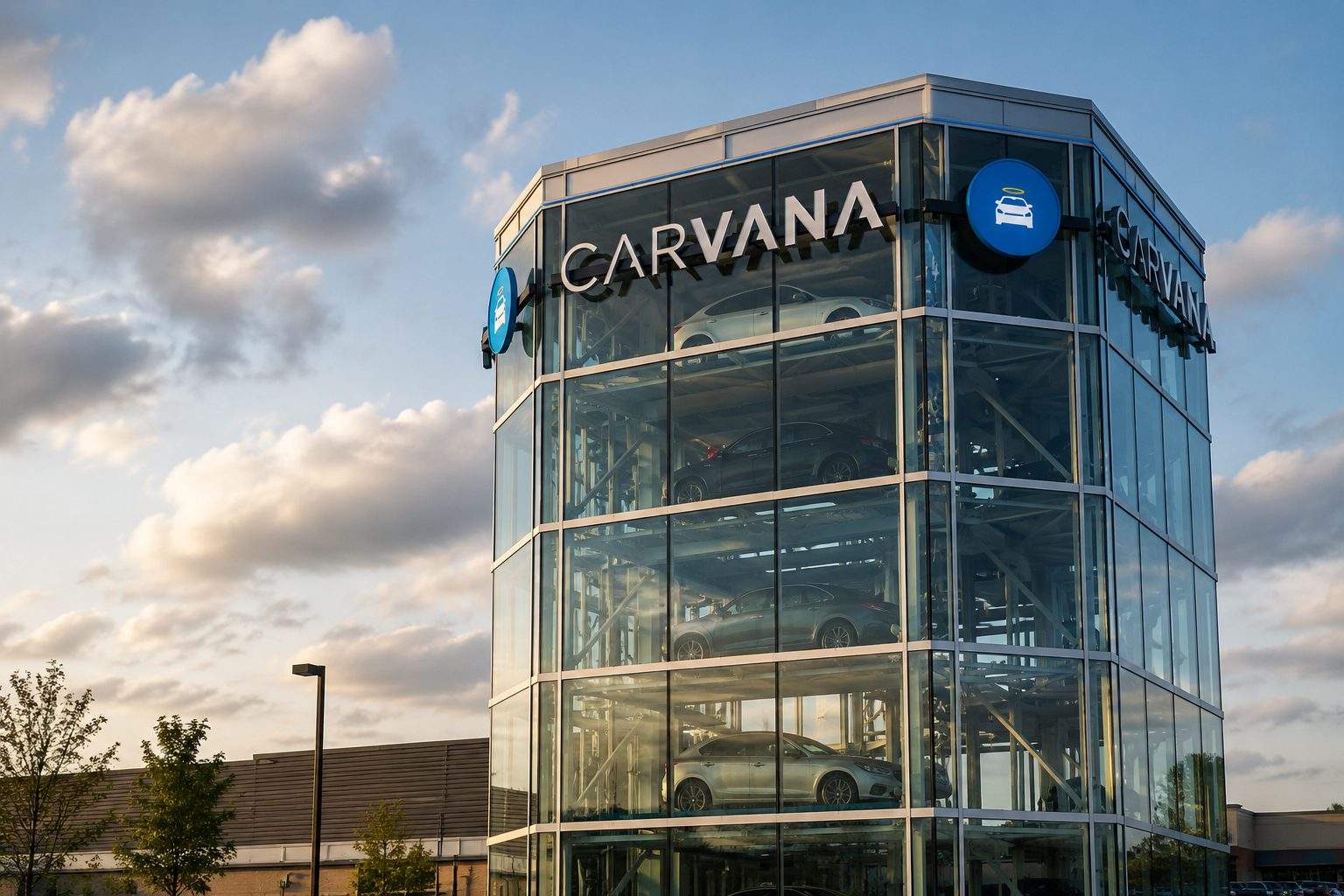
Carvana Co. NYSE:CVNA shares surged 8.3% Tuesday after a softer U.S. inflation print sent Treasury yields sliding, which offered more support to the debt-reliant used-car platform than to the general market or rival dealerships. Carvana finished at $70.38, ahead of the S&P 500 by 7.9 points. The gain looked tied to macro factors.
This matters because Carvana is now tying more of its growth to financing. The company originated $4.254 billion in finance receivables in the first quarter, up 59.9% from last year. Retail unit sales grew 40% to 187,393 in the same period. On a per-vehicle basis, originations climbed about 14% to $22,701 from $19,866, according to Carvana’s numbers. Financing isn’t a side business here.
Carvana’s reported gain on loan sales rose 29.7% to $354 million, which is lower than growth in loan originations and vehicles sold. On a rough same-quarter comparison, that comes out to about $1,889 per retail vehicle, down 7.3% from $2,039 last year. Tuesday’s rally shows the market is betting that lower rates will cut the pressure before Carvana puts out next results. Investors are paying up for relief before they see it.
| Carvana financing measure | Q1 2026 | Q1 2025 | Change |
|---|---|---|---|
| Retail vehicles sold | 187,393 | 133,898 | +40.0% |
| Finance receivables originated | $4.254 billion | $2.660 billion | +59.9% |
| Originations per retail unit | $22,701 | $19,866 | +14.3% |
| Reported gain on loan sales | $354 million | $273 million | +29.7% |
| Loan-sale gain per retail unit | $1,889 | $2,039 | -7.3% |
*Figures are based on reporter’s calculations, not on company metrics. Timing of loan sales can differ from when the vehicles are sold in the quarter.
The June Consumer Price Index was the main catalyst, dropping 0.4% from May. Economists had expected just a 0.1% decline. Core prices were flat, and used-car and truck prices dipped 0.2%. The two-year Treasury yield fell seven basis points to 4.189%. The 10-year eased four basis points to 4.571%. “The inflation report seems to have weakened the argument that the Fed is going to raise rates,” said Chuck Carlson at Horizon Investment Services. Timing is important now. Bureau of Labor Statistics
Carvana moved much more than other auto retailers. All three stocks got a boost from the inflation report.
| Security | Tuesday close | Daily move | Move versus S&P 500 |
|---|---|---|---|
| Carvana NYSE:CVNA | $70.38 | rose 8.29% | outperformed by 7.91 points |
| CarMax NYSE:KMX | $55.73 | up 1.41% | beat by 1.03 points |
| AutoNation NYSE:AN | $196.28 | gained 1.56% | ahead by 1.18 points |
| S&P 500 | 7,543.89 | added 0.38% | — |
Carvana closed up, beating CarMax by roughly 6.9 points and AutoNation by 6.7 points. The difference shows Carvana is more sensitive to rates, growth bets and investor positions than any widespread revaluation for used-car dealers.
Carvana shares rallied even after Jefferies Financial Group NYSE:JEF trimmed its price target to $90 from $95 but kept a Buy call. The new target is still about 28% above where the stock closed Tuesday. There was no fresh operating update from Carvana, according to its investor-relations site. The last release was July 7. The stock moved before any news.
Carvana started the quarter with strong growth, but unit economics were weaker. First-quarter revenue jumped 52% to $6.432 billion, and adjusted EBITDA was $672 million. Gross profit per retail unit slipped 2.2% to $6,783. The adjusted EBITDA margin came in at 10.4%, down from 11.5%. CEO Ernie Garcia III and CFO Mark Jenkins said Carvana had been “the fastest growing and most profitable automotive retailer” for nine quarters in a row. The latest numbers show a more mixed margin picture. SEC
Used-car prices are tough to pin down. Cox Automotive said wholesale used-vehicle values edged up 0.1% in June and are 2.1% higher than a year ago, but still sit about 1% under the March high. Government data show the consumer price index for used cars fell 0.2% in June. Steady wholesale prices may help inventory values, but softer retail inflation keeps a lid on fast gains. Selling used vehicles remains tricky.
The rates move could snap back. Oil and gas prices have bounced again since June, with traders still pricing in about 60% odds of a Fed hike in September after the inflation data Tuesday. Carvana listed $5.0 billion in principal debt as of March 31 and kept $461 million available in its at-the-market equity line. Markets are still watching credit spreads, borrower trends, reconditioning expenses and potential dilution. Cutting rates doesn’t wipe out debt.
Carvana is set to post Q2 numbers after the bell on July 29. Execs have guided for back-to-back records in retail units and adjusted EBITDA, provided the market stays steady. Now, investors look to Tuesday’s optimism and plan to zero in on three metrics: loan originations, loan-sale gains, and if gross profit per unit rebounds as sales volumes climb. The market wants solid numbers.
Related articles: Stock Market