Today: 8 July 2026

Internet Access in Iraq

Internet Access in Iraq

Iraq’s internet infrastructure has expanded significantly since the early 2000s, though much of the core network remains under government ownership. The Ministry of Communications controls the national fiber-optic backbone and international gateways, leasing bandwidth to private ISPs​ trade.gov. Iraq is connected via terrestrial fiber links to all six neighboring countries and to undersea cables like Gulf Bridge International, but overall capacity is still catching up to demand​ trade.gov. The state fixed-line network is in poor condition, with limited fiber-to-the-home projects concentrated in Baghdad​ trade.gov. As a result, most Iraqis access the internet through wireless means – either mobile networks, Wi-Fi at internet cafes, or local neighborhood Wi-Fi providers – since last-mile fixed broadband is not widely available​ trade.gov. These community-based networks share bandwidth leading to relatively low speeds per user​ trade.gov.
24 February 2025
Internet Access in Afghanistan: A Comprehensive Overview

Internet Access in Afghanistan: A Comprehensive Overview

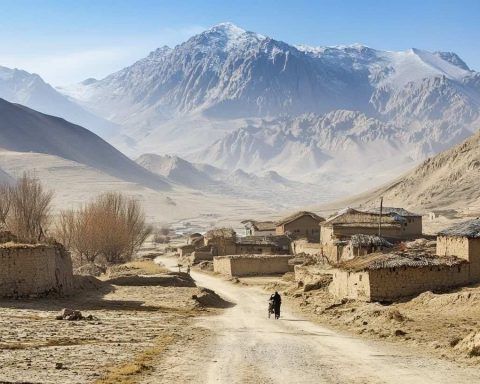
Afghanistan’s internet infrastructure is relatively underdeveloped, relying heavily on mobile networks and limited fixed broadband. After 2001, the country had to build its telecom network from scratch, as the previous Taliban regime had effectively banned the internet​ Wired. In the two decades that followed, mobile telecommunications saw rapid growth – rising from zero subscribers in 2001 to nearly a 100% mobile subscription penetration by 2021​ Businesswire. A nationwide fiber-optic backbone was being rolled out and even a 400 km cross-border fiber link to China was near completion in 2021​ Businesswire. However, the Taliban’s return to power in August 2021 stalled or halted many of these projects​ Businesswire​ Businesswire, casting uncertainty on the finalization of the fiber network.
24 February 2025
Internet Access in Ukraine: Overview

Internet Access in Ukraine: Overview

Ukraine has a well-developed internet infrastructure with extensive fiber-optic networks and numerous providers. Thousands of Internet Service Providers operate in Ukraine, from national telecoms to small local companies. In fact, over 4,200 ISPs were registered as of August 2024​ interfax.com, reflecting a highly competitive market. The largest providers hold relatively small market shares – for example, Kyivstar’s network leads with about 19% of the market, followed by Vodafone Ukraine with ~9% and Lifecell with ~5%​ pulse.internetsociety.org. The state-run Ukrtelecom and various regional fiber operators also serve significant user bases, but no single company dominates nationally​ pulse.internetsociety.org. This diverse provider landscape has kept internet access competitive and affordable for consumers, with the Internet Society rating Ukraine’s ISP market competitiveness as “excellent”​ pulse.internetsociety.org.
24 February 2025
Internet Access in Mozambique

Internet Access in Mozambique

Mozambique’s internet infrastructure is still developing and heavily reliant on mobile networks. Fixed-line broadband penetration is minimal, with the state-owned Telecomunicações de Moçambique being the only operator offering integrated fixed-line services​ trade.gov. The country is primarily served by three mobile network providers:
23 February 2025
Internet Access in Libya: A Comprehensive Overview

Internet Access in Libya: A Comprehensive Overview

Libya’s internet infrastructure is recovering and evolving after years of conflict. Under Muammar Gaddafi’s regime, the telecom sector was entirely state-controlled and private competition was virtually nonexistent​ mondaq.com. The primary telecommunications holding is the Libyan Post, Telecommunication and Information Technology Company, which oversees key state-owned providers​ libyareview.com. Major service providers include:
16 February 2025
Internet Access in China

Internet Access in China

China’s internet landscape is characterized by massive scale, state-controlled infrastructure, and strict governance. With over a billion users online, China hosts the world’s largest internet community, but this access comes with significant restrictions and a parallel digital ecosystem separate from the global internet. Below is an overview of key aspects of internet access in China, from infrastructure and service providers to censorship policies and emerging trends.
Internet Access in Syria

Internet Access in Syria

Syria was relatively late in opening internet access to the public. An internet connection was established in the country by 1997, but for years Syria was the only connected Middle Eastern country that did not allow general public access Hrw. In the late 1990s, only government institutions and a few individuals could get online Hrw. This cautious rollout reflected official policy: the regime under President Hafez al-Assad took a “go-slow” approach, fearing the free flow of information. All media in Syria were tightly controlled, and officials were wary that the internet could enable dissent Hrw. Even Bashar al-Assad advocated for expanding internet access, but security services resisted due to concerns over “making it safe” for a traditional society Hrw. Public internet access only truly began around 2000, shortly after Bashar al-Assad took power Thenetmonitor.
7 February 2025
1 2,150 2,151 2,152

Stock Market Today

  • Canadian Natural Resources (TSX:CNQ) Drops 19% From High, Dividend Yield at 4.5%
    July 8, 2026, 4:22 PM EDT. Shares in Canadian Natural Resources are down 19% from the 52-week high, last trading at $57.74. The company has a $120 billion market cap. First-quarter numbers were solid, with output at 1.64 million BOE per day, up 4% from a year ago. Adjusted net earnings came in at $2.4 billion, and adjusted funds flow hit $4.4 billion. CNQ returned $1.5 billion to shareholders through dividends and buybacks. The dividend has been raised every year for 26 years, now yielding 4.5%. CNQ is targeting 100% shareholder returns once it meets its net debt goal. Even with shares down, steady cash flow and years of dividend growth keep it on income investors' lists.
Go toTop