Today: 1 July 2026
Browse Category

Aerospace 15 June 2025 - 15 August 2025

Space Showdown: Starlink Doubleheader, Vulcan’s Debut, Ariane 6 Triumph & Cosmic Discoveries (Aug 14–15, 2025)

Space Showdown: Starlink Doubleheader, Vulcan’s Debut, Ariane 6 Triumph & Cosmic Discoveries (Aug 14–15, 2025)

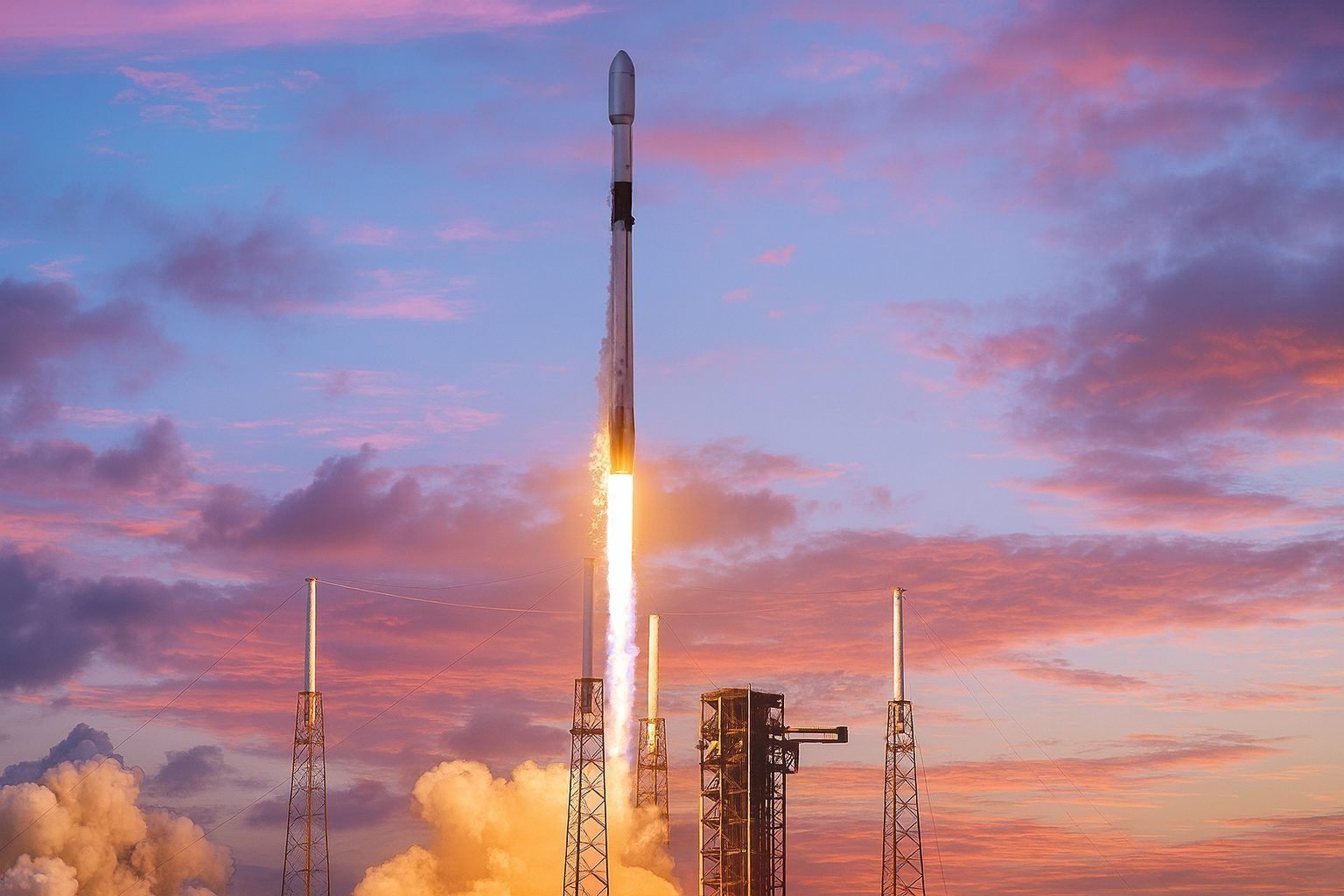
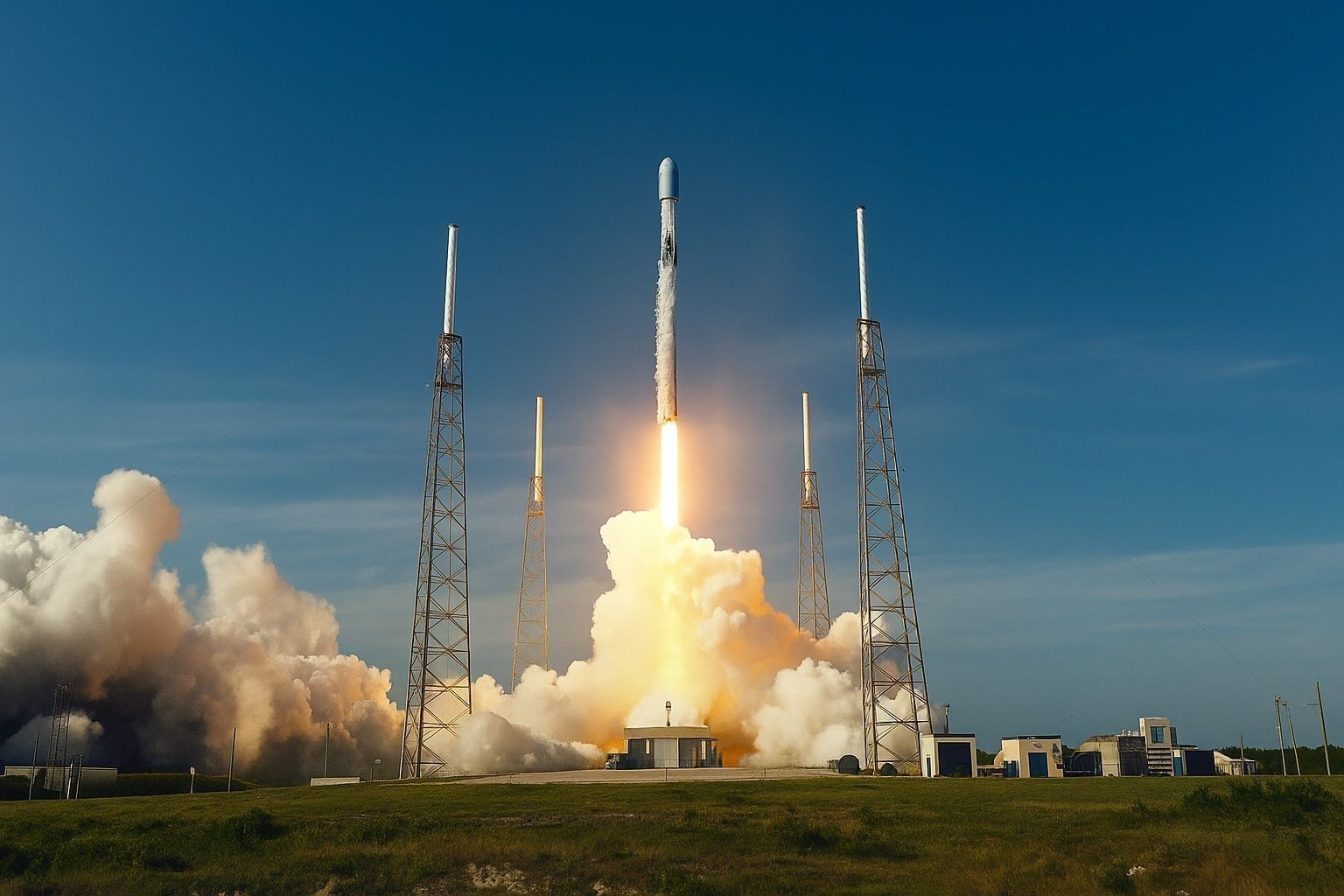
SpaceX demonstrated its unprecedented launch cadence on Aug. 14 by launching two Falcon 9 missions just half a day apart space.com. In the early morning hours, a Falcon 9 lifted off from Vandenberg Space Force Base in California carrying 24 Starlink internet satellites; by 8:29 a.m. EDT the same day, another Falcon 9 roared from Cape Canaveral, Florida with 28 Starlink satellites space.com. SpaceX confirmed successful deployment of all satellites space.com. Both missions saw veteran first-stage boosters safely recovered at sea, one marking its 10th flight space.com. These back-to-back launches brought SpaceX’s 2025 launch count to 99 Falcon 9 flights, with over 8,100 active Starlink satellites now in orbit space.com – a staggering expansion of the Starlink megaconstellation. However, even as SpaceX pushes boundaries in launch frequency, it faces headwinds on the regulatory front. On Aug. 14, California’s Coastal Commission unanimously vetoed SpaceX’s proposal to nearly double its allowed annual Falcon 9 launches from Vandenberg reuters.com. The state regulators previously opposed a smaller expansion last year, citing environmental oversight concerns. The U.S. Space Force – which operates Vandenberg – has signaled it may override the state, asserting federal primacy in launch operations reuters.com. SpaceX, for its part, has sued the
Future Combat Air Systems: The Global Race for Sixth-Generation Fighters

Future Combat Air Systems: The Global Race for Sixth-Generation Fighters

Around the world, a high-stakes race is underway to develop the next generation of combat aircraft – often dubbed “sixth-generation” fighters or Future Combat Air Systems. These ambitious programs aim to leap beyond today’s stealth jets by around the 2030s–2040s, incorporating groundbreaking technologies in stealth, artificial intelligence, uncrewed drone “wingmen”, advanced sensors, and networked “combat cloud” data systems. The United States, Europe, and Asia are all investing heavily to ensure air dominance in future decades. Major initiatives include Europe’s multinational FCAS/SCAF project, the U.S. Next Generation Air Dominance program, and the newly formed UK-Italy-Japan Global Combat Air Programme – each with unique goals, timelines and strategic drivers. Meanwhile, countries like China, Russia, India, South Korea, and Turkey are pursuing their own advanced fighter projects, eager not to be left behind. This report provides a detailed overview and comparative analysis of these future combat air programs. We’ll examine each program’s objectives, key technologies, development partnerships, projected timelines and costs, as well as the geopolitical and industrial factors at play. Expert commentary and quotes from defense officials and analysts are included to shed light on the promises and challenges facing each effort. The global push for sixth-gen fighters is not just a
9 July 2025
Latest Satellite News / Updated: 2025, June 29th, 23:59 CET

Latest Satellite News / Updated: 2025, June 29th, 23:59 CET

Commercial Maxar satellite imagery shows Fordo bomb craters rapidly clearing and heavy engineering near damaged ventilation shafts after Iran’s airstrikes, with General Dan Kane confirming the use of 12 Massive Ordnance Penetrator bombs described as turning “night into day”. Natanz enrichment complex repairs have begun, with ISW analysts noting restoration work and reports of a destroyed radar installation in Khuzestan province. Japan launched the final H-2A rocket carrying the GOSAT-GW greenhouse gas and water-cycle satellite, retiring the H-2A after 50 missions with a 98% success rate and equipping GOSAT-GW with a microwave radiometer and greenhouse gas sensor. The H-2A retirement
Airbus CO3D: AI-Powered, Laser-Linked Constellation for 50 cm Global 3D Mapping

Airbus CO3D: AI-Powered, Laser-Linked Constellation for 50 cm Global 3D Mapping

Airbus’s Constellation Optique 3D is a cutting-edge Earth observation project poised to revolutionize how we map and monitor the planet. Set for launch in July 2025, CO3D is a constellation of four laser-linked, AI-enabled optical satellites that will deliver 50 cm resolution imagery and generate a global 3D map of Earth’s land surfaces airbus.com cnes.fr. Developed in partnership with the French Space Agency, this dual-use system promises unprecedented detail and timeliness in geospatial data. From advanced optical sensors to onboard artificial intelligence and inter-satellite laser communications, CO3D brings a host of innovations that could make it a game changer in Earth observation airbus.com. Below, we delve into the project’s history, technical features, applications, and how it stacks up against other players like Maxar and Planet Labs, as well as analogous missions from NASA. The CO3D program traces its origins to 2019, when CNES selected Airbus Defence & Space to build a new constellation to succeed the stereo imaging capability of the French Pléiades satellites cnes.fr. Pléiades provided high-resolution 2D and limited 3D imagery, but CO3D is designed to take this further by covering the entire globe in three dimensions with much higher fidelity cnes.fr. Under the contract, Airbus is tasked
F-35 Lightnig II Uncovered: Inside the $1 Trillion Stealth Fighter Dominating the Skies

F-35 Lightnig II Uncovered: Inside the $1 Trillion Stealth Fighter Dominating the Skies

An F-35A Lightning II in flight. The fifth-generation F-35 is designed as a multi-role stealth fighter, intended to dominate both air-to-air and air-to-ground engagements.The Lockheed Martin F-35 Lightning II is a family of single-seat, single-engine fifth-generation stealth fighters developed under the Joint Strike Fighter program Wikipedia. It was conceived as a multirole platform equally adept at air superiority and precision strike missions, with advanced sensors enabling electronic warfare and intelligence, surveillance, and reconnaissance roles Wikipedia. The F-35 program began in the 1990s to replace aging aircraft like the F-16, F/A-18, and AV-8B Harrier II across U.S. and allied fleets Wikipedia. In 2001, Lockheed’s X-35 design beat Boeing’s X-32 to win the JSF contract, leading to the F-35’s development as a coalition fighter funded by the U.S. and eight partner nations Wikipedia. The F-35 first flew in 2006 and has since become the largest and most ambitious defense procurement in history – estimated to cost around $1.7–2 trillion over its life cycle including R&D, production of 2,500+ jets, and decades of operations Airandspaceforces. It entered service with the U.S. Marine Corps in 2015, the Air Force in 2016, and the Navy in 2019 Wikipedia. As of 2025, over 1,170 F-35s have
1 5 6 7

Stock Market Today

  • JD Vance reports up to $7.4 million in 2023 income, most from book royalties
    June 30, 2026, 11:22 PM EDT. Vice President JD Vance took in up to $7.4 million last year, with most of that coming from book royalties, his new financial disclosure shows. Vance lists assets such as crypto and real estate, pointing to a mix of holdings beyond his income streams. Book royalty payments make up a big share of his total reported earnings.
Go toTop