
LEO Gold Rush: The Billion-Dollar Race to Own Low Earth Orbit (2024–2030)

The second space race is here – not for the Moon, but for low Earth orbit. A global “LEO gold rush” is underway as companies and governments deploy megaconstellations of satellites promising broadband internet everywhere, connecting billions of devices, powering next-gen military networks, and imaging the entire planet daily. This comprehensive report examines the players, business models, investments, geopolitical dynamics, tech challenges, and market forecasts shaping the LEO constellation boom from 2024 to 2030.

Satellite Internet FAQ

Satellite Internet FAQ

Q: What is satellite internet?A: Satellite internet is a form of wireless internet access delivered via satellites orbiting the Earth. Unlike cable or DSL, which transmit data through underground wires, satellite internet beams data from ground stations to satellites in space and then down to a dish at the user’s location satelliteinternet.com. This means you can get online in areas where land-based internet isn’t available. Satellite internet is available nationwide and in many remote regions, making it a reliable way for rural homes and businesses to connect online satelliteinternet.com.

The Space Race for the Internet: Inside the Billion-Dollar Satellite Mega-Constellation Boom

The Space Race for the Internet: Inside the Billion-Dollar Satellite Mega-Constellation Boom

Stacks of Starlink satellites awaiting deployment in orbit. A new space race is underway—not for the Moon or Mars, but to blanket Earth in high-speed internet from space. Private companies and governments are launching mega-constellations of satellites by the thousands, aiming to beam broadband connectivity to every corner of the globe. The stakes are enormous: billions of dollars are pouring into these projects, and the outcome could redefine how the world connects and who controls that connectivity. Rocket launches carrying dozens of satellites at a time have become routine, signaling a technological revolution that promises to bridge digital divides and create a truly global internet infrastructure. This report dives into the history, technology, key players, and far-reaching implications of this 21st-century space race.
Mega-Constellations Exposed: How Swarms of Tiny Satellites Are Taking Over Low Earth Orbit

Mega-Constellations Exposed: How Swarms of Tiny Satellites Are Taking Over Low Earth Orbit

Low Earth Orbit generally refers to orbits up to about 2,000 km above Earth’s surface nasa.gov. At these altitudes, satellites circle the globe in ~90–120 minutes, close enough for low-latency communications and high-resolution observations. In recent years, small satellites – typically massing from a few kilograms up to a few hundred kilograms – have revolutionized LEO activities. These minisatellites, microsatellites, and even tiny nanosatellites pack advanced capabilities into compact frames nasa.gov. Smaller size means lower cost: they can be built and launched much more cheaply than traditional one-ton satellites en.wikipedia.org. This cost reduction, combined with improvements in electronics and solar power, has enabled deploying constellations – large networks of small satellites working in concert. In effect, dozens or thousands of satellites working together can provide continuous global coverage or high revisit rates that a single big satellite in LEO could never achieve.
The Sky Connect: How Satellite Internet Is Revolutionizing Rural and Remote Life

The Sky Connect: How Satellite Internet Is Revolutionizing Rural and Remote Life

Imagine a village high in the mountains or deep in the rainforest, once cut off from the online world, suddenly gaining high-speed internet from the sky. This is the promise of satellite internet. By beaming broadband connectivity from orbit, satellite networks are bridging the digital divide and transforming life in far-flung communities. In 2023, an estimated 2.6 billion people remained offline globally – largely in rural areas itu.int twn.my. Satellite internet technology is now poised to change that, bringing education, healthcare, and economic opportunity to places fiber cables and cell towers could never reach.
Battle for the Final Frontier: Starlink vs OneWeb vs Kuiper vs Telesat Lightspeed

Battle for the Final Frontier: Starlink vs OneWeb vs Kuiper vs Telesat Lightspeed

Low-Earth orbit satellite internet has become a hotly contested “final frontier” of the telecom industry. Multiple players – notably SpaceX’s Starlink, the UK/India-backed OneWeb, Amazon’s Project Kuiper, and Canada’s Telesat Lightspeed – are racing to blanket the globe in affordable, high-speed internet from space. All seek to deliver broadband to areas poorly served by terrestrial networks, using constellations of hundreds or thousands of satellites in low orbit. This report provides a comprehensive comparison of these major LEO satellite internet projects – from their backgrounds and technical designs to market strategies, pricing, regulatory issues, partnerships, challenges, and future outlook.
Internet Access in Bhutan: Current Status, Challenges, and Future Outlook

Internet Access in Bhutan: Current Status, Challenges, and Future Outlook

Bhutan – a small Himalayan kingdom known for its Gross National Happiness philosophy – was a late adopter of modern communications, introducing television and the internet only in 1999 freiheit.org. In the two decades since, Bhutan has rapidly embraced the digital age. Today, internet connectivity reaches all 20 districts and even every school in the country, with 87% of the population online – surpassing global averages un-dco.org. This report provides a comprehensive overview of internet access in Bhutan, covering the current infrastructure for broadband and mobile networks, the government’s policies and regulatory framework, the role of satellite internet, disparities between urban and rural connectivity, internet affordability and speeds, key challenges, digital literacy and adoption, notable initiatives to improve connectivity, and the trends shaping the future of Bhutan’s internet landscape. Key insights are drawn from Bhutanese government agencies, telecom providers, international development partners, and satellite service companies to ensure an up-to-date and in-depth analysis.
Global Satellite and Space Industry Report 2025: Market Overview and Outlook to 2030

Global Satellite and Space Industry Report 2025: Market Overview and Outlook to 2030

The global space industry is experiencing robust growth in the mid-2020s, driven by commercial innovation and rising government investment. In 2024, the global space economy reached an estimated $415 billion in revenue, up 4% from the previous year sia.org. Commercial satellite activities dominate, accounting for about $293 billion of this total sia.org. The number of operational satellites has exploded, from roughly 3,371 in 2020 to 11,539 satellites in orbit by the end of 2024 sia.org – a more than threefold increase in just four years. This surge, largely due to new “mega-constellations” of small satellites, highlights a key trend: space infrastructure is growing faster than industry revenues, indicating falling costs per satellite and improved launch economies.
Inside OneWeb’s Global Internet Play: How This Satellite Network Is Quietly Disrupting Starlink’s Orbit

Inside OneWeb’s Global Internet Play: How This Satellite Network Is Quietly Disrupting Starlink’s Orbit

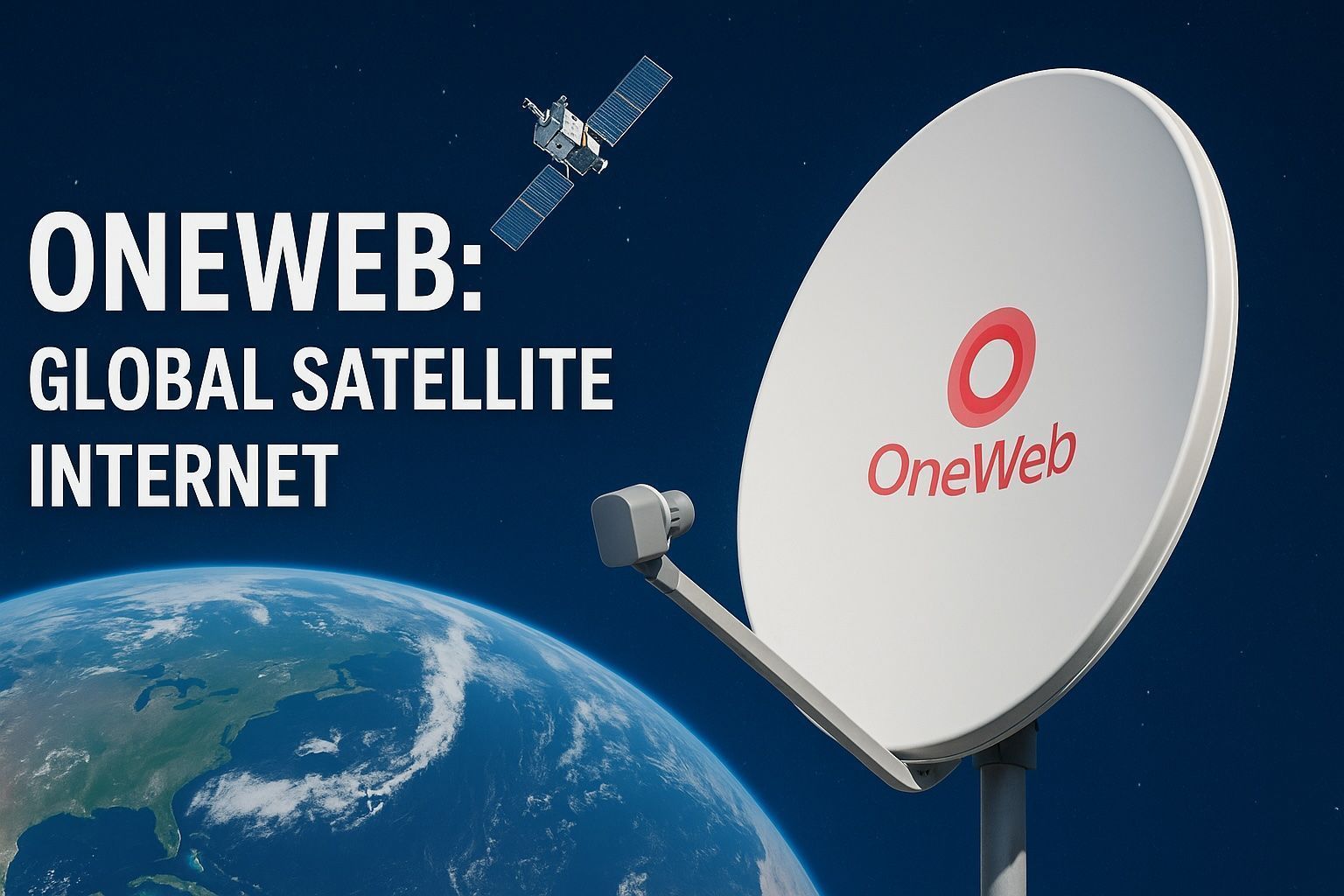
OneWeb is building a global satellite internet constellation that aims to bridge the digital divide by delivering broadband connectivity to remote and underserved regions of the world. Founded in 2012, the company has deployed hundreds of small low-Earth-orbit satellites at ~1,200 km altitude to blanket the Earth in coverage en.wikipedia.org en.wikipedia.org. Unlike SpaceX’s Starlink, OneWeb has “quietly” pursued a different business model – focusing on enterprise, government, and telecommunications partners rather than individual users en.wikipedia.org. Backed by major investors and now merged with Europe’s Eutelsat, OneWeb has overcome bankruptcy and logistical hurdles to complete its first-generation constellation by 2023 nasaspaceflight.com nasaspaceflight.com. This report provides a comprehensive look at OneWeb’s satellite technology, coverage, service plans, target users, deployment timeline, business model, and funding. It also compares OneWeb with other satellite broadband players like Starlink, SES’s O3b system, and Amazon’s upcoming Project Kuiper, highlighting OneWeb’s unique position and challenges in the market.
1 47 48 49

US Stock Market Today Updates

AI PORTFOLIO

Top Stock Picks

Today’s highest-ranked model selections.

#1 Strong buy

Alphabet

NASDAQ:GOOGL 92/100 • ★★★★½
#2 Strong buy

Taiwan Semiconductor Manufacturing

NYSE:TSM 89/100 • ★★★★½
#3 Buy

S&P Global

NYSE:SPGI 88/100 • ★★★★
#4 Buy on weakness

Amazon

NASDAQ:AMZN 86/100 • ★★★★
#5 Buy on weakness

Microsoft

NASDAQ:MSFT 84/100 • ★★★★
View full portfolio
Editorial model selection. Not personalised advice.
MARKET CALENDAR

Key Events Today

The catalysts most likely to move markets.

#1

U.S. index futures reopen at 18:00 ET

This is the clearest scheduled U.S.-market price-discovery point today and can transmit weekend news into equity-index futures before Monday's cash session.

#2

New Zealand retail sales at 18:45 ET

The Q2 retail package can move NZD and regional risk sentiment. Spillover to U.S. assets is usually secondary unless the result is unusually large.

#3

No scheduled domestic U.S. data or corporate reports

The absence of U.S. releases, earnings, IPO pricings and split events leaves fewer scheduled catalysts, increasing the relative importance of weekend headlines and positioning at the futures reopen.

View full calendar
Times and estimates may change. Verify before trading.