Today: 29 June 2026
Browse Category

NASDAQ:PL 29 May 2025 - 23 June 2025

Bunker‑Buster Earthquake: New Satellite Images Expose Fordow’s Ruin—What the Bombs Hit, What Survived, and Why It Matters

Bunker‑Buster Earthquake: New Satellite Images Expose Fordow’s Ruin—What the Bombs Hit, What Survived, and Why It Matters

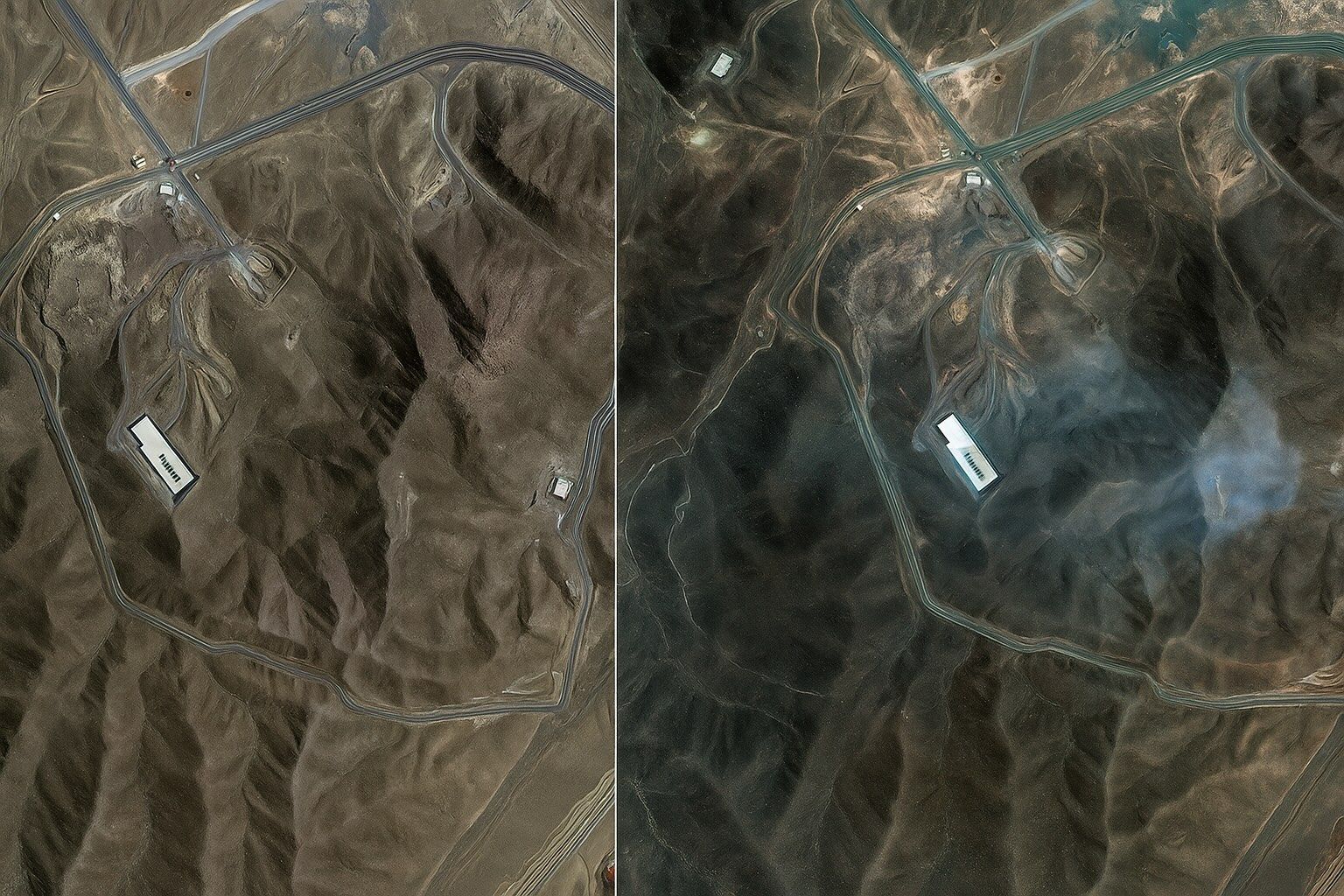
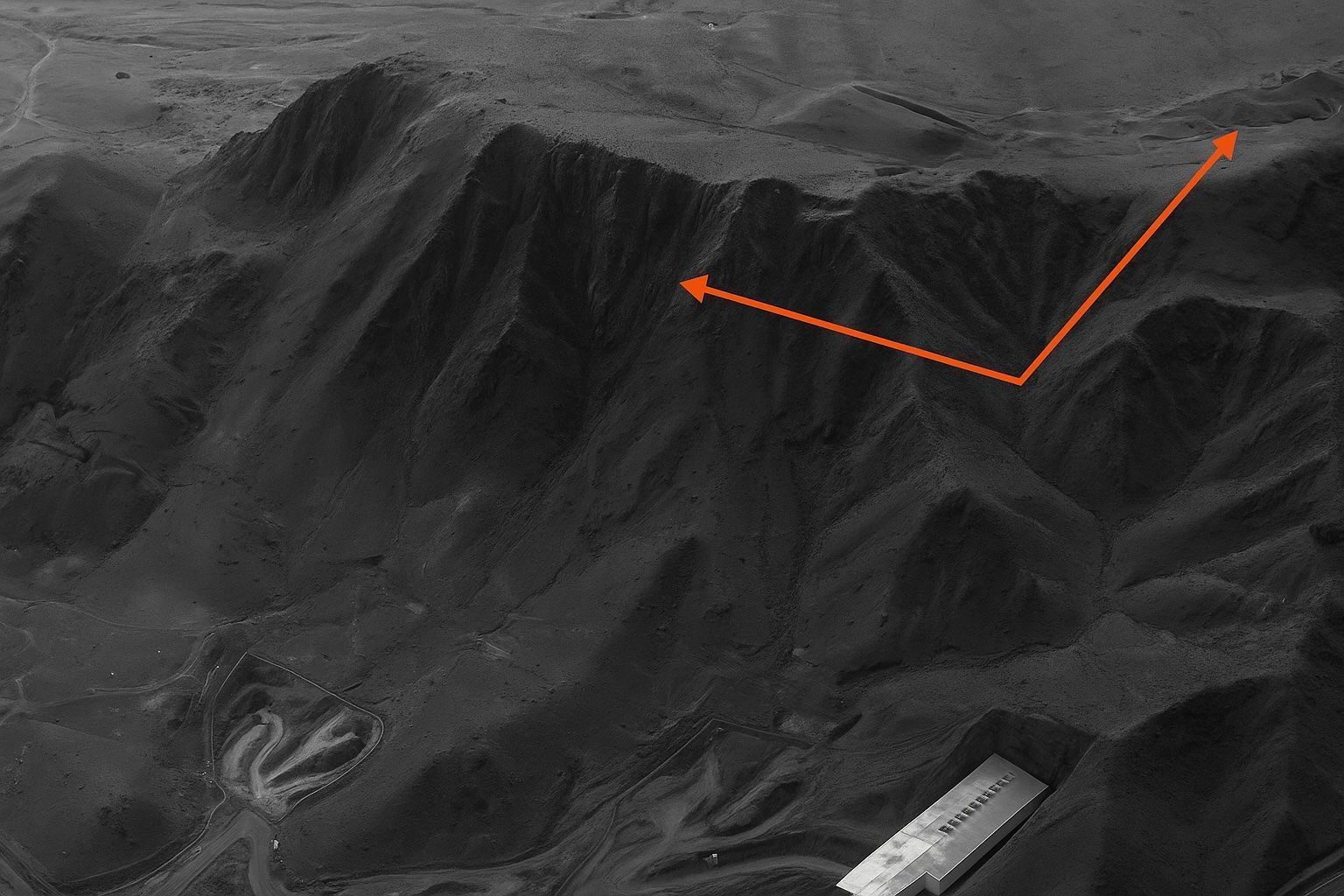
Recent commercial satellite photographs released by Maxar Technologies, Planet Labs and multiple newsrooms confirm that the Fordow Fuel Enrichment Plant outside Qom—the deepest, most heavily‑fortified node in Iran’s nuclear network—absorbed direct hits from U.S. Massive Ordnance Penetrator bombs during the 22 June allied air‑raid. High‑resolution before‑and‑after imagery shows at least six fresh penetrator holes in the limestone ridge above the centrifuge halls, collapsed tunnel portals, landslide debris and scorched support buildings, leading independent analysts and even the U.N. nuclear‑watchdog chief to conclude that “very significant damage” has almost certainly incapacitated the site. Yet Tehran’s denial of catastrophic loss, evidence of last‑minute truck convoys, and the unresolved question of where 408 kg of 60 % enriched uranium went leave the international community guessing whether Fordow’s destruction is a decisive setback or merely a costly pause in Iran’s march toward a bomb. omni.se reuters.com wsj.com ft.com Commissioned secretly in 2006 and publicly acknowledged in 2009, Fordow is carved 80‑100 m inside Kuh‑e‑Fordow mountain, buffered by reinforced concrete and IRGC air‑defence rings. Designed for 3,000 centrifuges, it recently ran tandem IR‑6 cascades enriching uranium to 60 %. gulfnews.com aljazeera.comAnalysts long called it “the be‑all and end‑all of Iran’s nuclear operation,” a phrase coined
Mind‑Blowing Satellite Images Reveal Fordow’s Cavernous Crater: Inside the High‑Resolution Photo Forensics that Exposed the Collapse of Iran’s Underground Nuclear Fortress

Shock From Space: Commercial Satellite Photos Reveal How U.S. Bunker‑Busters Crushed Iran’s Fordow Nuclear Mountain

SummaryNewly released high‑resolution pictures from Maxar and Planet Labs show the once‑impenetrable Fordow uranium‑enrichment plant gashed open after the 22 June U.S. air‑strike, with blast‑sealed tunnel mouths, greyed mountain rock and lingering smoke plumes. Image‑forensics, expert interviews and open‑source intelligence indicate that successive GBU‑57 “Massive Ordnance Penetrator” bombs pulverised access shafts, cut external power and likely collapsed internal galleries. While Tehran and the IAEA report no off‑site radiation, analysts say excavation alone could take many months—buying Washington and Jerusalem a strategic pause in Iran’s nuclear advance. Below is a deep‑dive into what the pixels show, how they were interpreted, and what the geopolitical fallout may be. The IAEA reported “no increase in off‑site radiation levels” after sampling air monitors near Qom, and Gulf states confirmed desalination plants showed normal readings. reuters.com dw.comCivil‑safety engineer Simon Bennett notes underground hits bury most UF₆ fallout in tonnes of rock, making chemical rather than radiological hazards the main concern. reuters.com
22 June 2025
Mind‑Blowing Satellite Images Reveal Fordow’s Cavernous Crater: Inside the High‑Resolution Photo Forensics that Exposed the Collapse of Iran’s Underground Nuclear Fortress

Mind‑Blowing Satellite Images Reveal Fordow’s Cavernous Crater: Inside the High‑Resolution Photo Forensics that Exposed the Collapse of Iran’s Underground Nuclear Fortress

A cascade of newly released commercial‑satellite photographs confirms that last weekend’s U.S. bunker‑buster raid on Iran’s Fordow enrichment plant gouged fresh holes into the mountain and triggered a landslide of rock and debris that experts say may have entombed the centrifuge halls. The imagery—captured by Maxar, Planet Labs and others—has become the centerpiece of a fast‑moving open‑source intelligence effort that is mapping the strike’s true impact long before inspectors set foot on site. Below is an in‑depth report that pieces together what the pixels show, what analysts and officials are saying, and what it means for the future of Iran’s nuclear program. Analysts look for five classic indicators of penetrator strikes: entry craters, radial debris ejection, thermal scarring, rock‑face fracturing and surface subsidence. All five appear in the Fordow images: subsidence fissures snake up the ridge, and shadow analysis indicates cavity collapse of at least 8 m. haaretz.comwtop.com
Explosive Satellite Images Reveal Fordow’s Secret Moves Before U.S. Strike—Inside the High‑Stakes Showdown Over Iran’s Nuclear Future

Explosive Satellite Images Reveal Fordow’s Secret Moves Before U.S. Strike—Inside the High‑Stakes Showdown Over Iran’s Nuclear Future

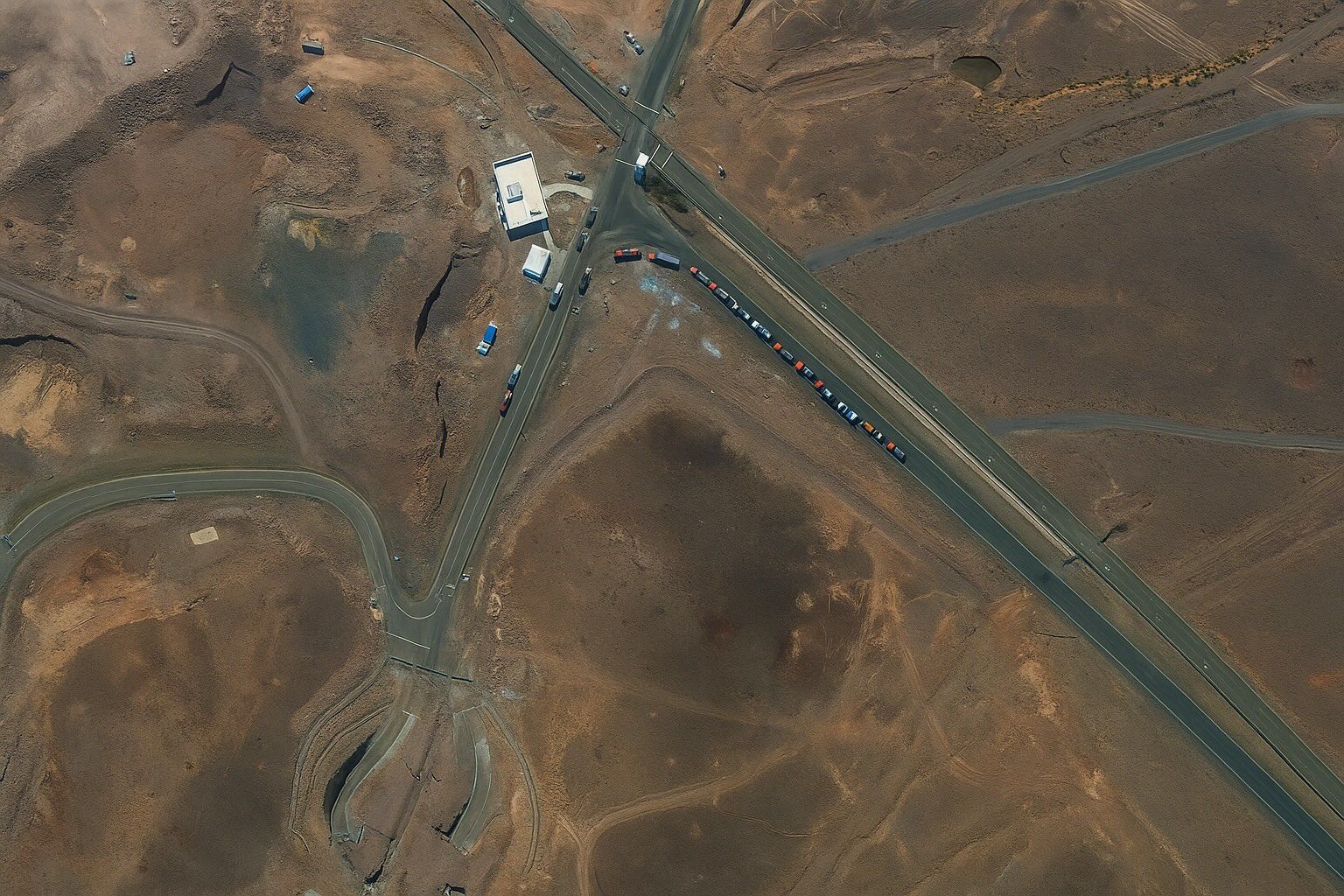
In the 48 hours before U.S. B‑2 bombers punched bunker‑busting holes into Iran’s Fordow, Natanz and Isfahan complexes, a burst of commercial‑satellite photos captured trucks, bulldozers and security convoys swarming Fordow’s tunnel mouths. Analysts read the pictures as a frantic effort to shift centrifuges or shielding materials—clues that helped tip Washington’s calculus toward a lightning strike. What follows is an in‑depth reconstruction of those decisive days, the imagery behind the decision, and what experts say the post‑strike pictures reveal about Iran’s remaining nuclear potential. Fordow—carved beneath roughly 90 metres of limestone outside Qom—houses Iran’s most advanced uranium‑enrichment cascades. Its geological armor means “only the heftiest U.S. ordnance can touch the main halls,” an Australian Broadcasting Corporation imagery brief noted, showing tunnel portals and blast traps in PlanetScope pictures from 20 June 2025 abc.net.au.
Sky Watchers: The 2025–2033 Boom in Weather & Climate Satellite Constellations

Sky Watchers: The 2025–2033 Boom in Weather & Climate Satellite Constellations

The period 2025–2033 is witnessing an unprecedented boom in satellite constellations dedicated to weather forecasting and climate monitoring. Around the globe, space agencies and private companies are deploying hundreds of new satellites to observe Earth’s atmosphere, oceans, and environment with greater fidelity and frequency than ever before. In fact, forecasts indicate over 5,400 Earth observation satellites will be launched from 2024 to 2033, nearly triple the number from the previous decade Mundogeo. This surge is driven by advances in miniaturization, lower launch costs, and the urgent need for high-quality data on weather patterns and climate change. The result is a rapidly expanding network of satellites – from large next-generation meteorological observatories to swarms of CubeSats – that promise global coverage, faster revisit times, and new environmental insights. This report provides an overview of this landscape, examining major government programs, private-sector constellations, upcoming missions, technological trends, and the market and geopolitical forces shaping this boom. Today’s weather and climate satellite infrastructure is truly global and multi-layered. It includes a mix of geostationary satellites parked 36,000 km above the equator providing continuous regional coverage, and polar-orbiting satellites circling the Earth to scan every latitude in successive swaths. Traditionally, a handful of governmental
Live Satellite Images and Real-Time Maps: Top Platforms for Web & Mobile

Live Satellite Images and Real-Time Maps: Top Platforms for Web & Mobile

Live satellite imagery has become increasingly accessible, allowing anyone to view near real-time maps of Earth from space on web browsers or smartphones. This report reviews major platforms and services – both free public tools and professional-grade commercial systems – that provide live or near-real-time satellite images. We include official links, key features, platform availability, common use cases, pricing info, and relevant user or provider quotes for each service. The goal is a comprehensive guide to the current landscape of real-time satellite mapping in 2025. These services are freely available to the general public, offering up-to-date satellite views through web interfaces or mobile apps.
How Satellite Technologies Are Transforming Ukraine: From Warzones to Wheat Fields

How Satellite Technologies Are Transforming Ukraine: From Warzones to Wheat Fields

IntroductionSince the outbreak of full-scale war in 2022, Ukraine has increasingly turned to satellite technologies to support both its defense and its civilian needs. From military intelligence and battlefield communications to precision farming and disaster monitoring, satellites now play a pivotal role in Ukraine’s resilience. In many ways, Ukraine has become a proving ground for how space-based services can transform a nation in crisis, leveraging images from orbit, satellite internet links, and remote sensing data to overcome challenges on the ground. The following report examines how satellites are being used in Ukraine’s warzones and wheat fields alike – encompassing defense and reconnaissance, agriculture, environmental and infrastructure monitoring, telecommunications, and the contributions of key players like TS2 Space. Each section combines historical context with recent developments to illustrate the profound impact of satellite technology across Ukrainian society. The Russia-Ukraine war has vividly demonstrated the strategic value of satellites for military intelligence, surveillance, and reconnaissance. Commercial satellite imagery has given Ukraine and its allies an unprecedented view of the battlefield. High-resolution photos from companies like Maxar, Planet Labs, and BlackSky have documented everything from the buildup of Russian forces to the aftermath of missile strikes Satellitetoday Satellitetoday. Analysts note that the war
Satellite Imagery: Principles, Applications, and Future Trends

Satellite Imagery: Principles, Applications, and Future Trends

Satellite imagery refers to images of Earth collected by orbiting satellites. These images are a form of remote sensing, meaning the data are acquired from a distance without direct contact. Satellites carry sensors that detect electromagnetic radiation reflected or emitted from the Earth's surface. Most imaging satellites use passive sensors that rely on sunlight as the illumination source, while others use active sensors that emit their own signal and measure the return Nasa Nasa. By capturing this radiation and converting it to digital images, satellites provide a detailed and synoptic view of Earth's surface and atmosphere. The images must be georeferenced and corrected for distortions to be useful in Geographic Information Systems Wikipedia. In essence, satellite imagery allows us to observe and monitor Earth on a global scale. It is often complementary to aerial photography, offering broader coverage albeit at typically lower resolution Wikipedia. Modern satellite images can resolve objects as small as about 30–50 cm across in high-end commercial systems Wikipedia, while public-domain missions like Landsat have 10–30 m resolution Wikipedia. Satellites capture different parts of the electromagnetic spectrum, enabling not only natural-looking photographs but also false-color images and data layers beyond human vision. These characteristics make satellite imagery
Satellite Technology in Military and Defense: A Global Overview

Satellite Technology in Military and Defense: A Global Overview

A modern military satellite orbiting Earth. Such orbiting assets have become essential strategic tools, often described as the “ultimate high ground” in warfare. Military satellites are artificial satellites used for defense and security purposes, providing capabilities that are now indispensable in modern warfare en.wikipedia.org. Since the earliest reconnaissance satellites of the Cold War era, space-based assets have evolved into “silent sentinels” that offer unrivaled advantages in intelligence, communications, and precision operations aerospacedefensereview.com. In the 21st century, military satellites are vital force multipliers – indicating a nation’s military strength and readiness – by delivering real-time surveillance and secure connectivity across the globe aerospacedefensereview.com. These systems give militaries a strategic edge: they can spy on adversaries from orbit, relay orders and data instantly over vast distances, guide weapons with pinpoint accuracy, and even detect missile launches in their boost phase. In essence, space has become a critical warfighting domain, with military planners regarding orbital assets as key to maintaining information dominance and situational awareness on the battlefield aerospacedefensereview.com af.mil. As a result, investments in military space technology have surged worldwide, driving rapid innovation and international competition in this high-ground arena.

Stock Market Today

  • Stock Market Puts Out Summer Picks at Shawano Shop
    June 29, 2026, 2:57 PM EDT. Abby of the Stock Market in Shawano featured summer merchandise on Fox 11 Living. The store sells olive oils, vinegars, gourmet foods, wine, spirits, craft beers, plus gifts. It's at 103 S. Main St. in Shawano. Focus is on local and summer-themed products. Details and events at shawanostockmarket.com or their Facebook.
Go toTop