Share price
$290.87
+$3.25 · +1.13%
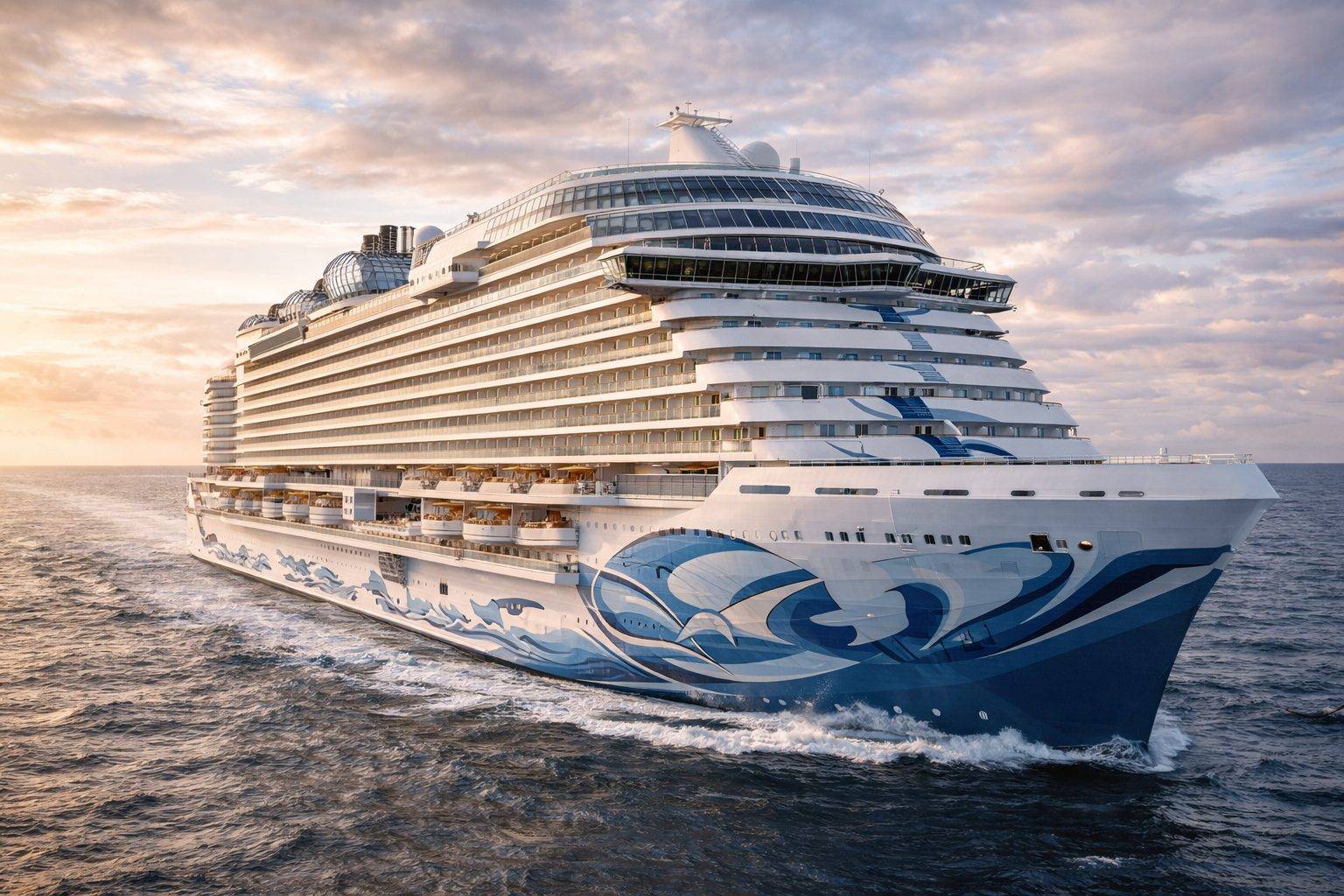
Royal Caribbean Group will drop two previously announced 2027 cruises as it reallocates vessels to meet Asia-Pacific market demand. The canceled trips account for approximately 77,700 double-occupancy berth-days, which corresponds to only 0.14% of forecasted 2026 passenger capacity.
NYSE:RCL · fleet redeployment and yield test
Market snapshot: August 21, 2026, 14:37 EDT
U.S. regular session open
Navigator · 18 nights
3,386 berths
Ovation · 4 nights
4,180 berths
Estimate excludes cabins above double occupancy and is not revenue guidance.
| Metric | Q2 2026 |
|---|---|
| Revenue | $4.8bn |
| Adjusted EPS | $4.21 |
| Net yield growth | +1.2% |
| Load factor | 110% |
| Adjusted EBITDA | $1.8bn |
| Liquidity | $6.9bn |
| Guide | Range / rate |
|---|---|
| Adjusted EPS | $17.73–$17.87 |
| Revenue growth | ~9% |
| Capacity growth | +6.6% |
| Net yields, constant FX | +1.75%–2.25% |
| Q3 capacity growth | +8.5% |
| Q3 adjusted EPS | $6.26–$6.36 |
Investor read: the cancellations are operationally small. The decision matters because it tests whether Asia-Pacific itineraries can beat U.S. West Coast yields while preserving 110% load factors. Rebooking costs, fuel, port constraints, geopolitics and weaker pricing can still erase the benefit.