Browse Category

Satellite Technology News 16 June 2025 - 17 August 2025

From Satellite Struggles to Starlink: Inside Solomon Islands’ Internet Access Revolution

From Satellite Struggles to Starlink: Inside Solomon Islands’ Internet Access Revolution

The Coral Sea Cable System is a 4,700 km submarine fiber‑optic link completed in late 2019 and brought online in 2020, connecting Solomon Islands to Papua New Guinea and Australia with an initial 200 Gbps capacity and up to 20 Tbps total. Since going live, the Coral Sea cable has allowed ten times more data at the same price for users in Honiara and provincial capitals. Our Telekom launched 4G/LTE in Honiara in 2017, Bmobile-Vodafone followed around 2018, and by 2025 4G is present in parts of Guadalcanal, Malaita, Western, and Choiseul, with 50 remote villages lit in 2024–2025 via

Space Race Heats Up: Satellite Launch Blitz, Lunar Power Plays & Billion-Dollar Space Deals (Aug 5–6, 2025 Roundup)

Space Race Heats Up: Satellite Launch Blitz, Lunar Power Plays & Billion-Dollar Space Deals (Aug 5–6, 2025 Roundup)

SpaceX Sets Launch Records, Amazon’s Kuiper Mission Up Next Rocket Lab Delivers Japanese Radar Satellite China Launches Internet Satellites, Sparks Debris Concerns NASA Mission Updates: Small-Sat Setbacks & Mars Rover Milestone ISS Crew Rotation and U.S.-Russia Cooperation Europe Preps Ariane 6 Debut and Future Missions Big Commercial Deals: Smartphone Constellations & Moon Ventures Space Policy Highlights: Nuclear Power in the Moon Race Sources: Space.com; SpaceNews; NASA Press Releases and Blogs; Reuters; Associated Press; ESA; TS2 Space Roundup; SatNews; Advanced Television; Qazinform space.com news.satnews.com ts2.tech abcnews.go.com ts2.tech nasa.gov science.nasa.gov ts2.tech cfpublic.org ts2.tech esa.int electronicspecifier.com ts2.tech advanced-television.com ts2.tech spacepolicyonline.com spacepolicyonline.com.
Inside the Struggle for Internet Access in Western Sahara: From Political Blackouts to Satellite Lifelines

Inside the Struggle for Internet Access in Western Sahara: From Political Blackouts to Satellite Lifelines

As of January 2024, Western Sahara had about 398,000 internet users, roughly 67.1% of the population, up by 65,000 users (a 19% increase) from 2023. By early 2024 about 87% of the population lived in urban areas (Laayoune, Dakhla, Smara, Boujdour), while about 32.9% remained offline, concentrated in rural or nomadic communities. The median fixed broadband speed in early 2024 was about 19.9 Mbps, a 30% year-over-year improvement but still behind global averages. Over 57% of Western Sahara’s population uses social media, totaling around 341,000 people, with social media penetration near 58%. Connectivity in Western Sahara is dominated by Maroc
Space Race Heats Up: Europe’s Bid for Autonomy, Starlink’s Global Surge, and the New Era of Satellite Power / Updated: 2025, July 11th, 00:31 CET

Space Race Heats Up: Europe’s Bid for Autonomy, Starlink’s Global Surge, and the New Era of Satellite Power / Updated: 2025, July 11th, 00:31 CET

In 2024 the US conducted 154 orbital launches, while Europe managed only three, underscoring Europe’s push to establish launch facilities in Sweden and Norway for continental autonomy. Starlink now has over 7,500 satellites in orbit and 5 million users, and operates on 1,000 aircraft, including 54 Qatar Airways Boeing 777s. France and the UK each invested over €163 million in Eutelsat, making France the largest shareholder and the UK holding a 10.9% stake, to expand Eutelsat’s LEO fleet and support Europe’s IRIS² project. Amazon’s Kuiper project is projected to generate $7.1 billion in consumer revenue by 2032, with about $23
China’s AO-MDR Laser Link Delivers 1 Gbps from Geostationary Orbit

China’s AO-MDR Laser Link Delivers 1 Gbps from Geostationary Orbit

A 2-watt laser on a geostationary satellite delivered a 1 Gbps downlink to Earth from 36,000 km away. The AO-MDR system combines Adaptive Optics and Mode Diversity Reception to overcome atmospheric turbulence. The ground receiver used an 1.8-meter telescope with a 357-actuator deformable mirror to correct wavefront distortions. After AO correction, the beam was split into eight spatial modes by a multi-plane light converter, with a path-picking algorithm selecting the three strongest modes to decode. Usable signal frames increased from about 72% to 91.1%, dramatically improving link reliability. The infrared wavelength was 1.5 micrometers, an eye-safe band common in telecom
26 June 2025
Eyes in the Sky, Data in the Cloud – Satellite Downlink & Cloud Integration Market Skyrockets by 2032

Eyes in the Sky, Data in the Cloud – Satellite Downlink & Cloud Integration Market Skyrockets by 2032

The market is projected to grow from $14.44 billion in 2025 to $55.17 billion by 2032, a CAGR of 21.1%. In 2025, agriculture accounts for about 40% of revenue, while government and military end-users account for about 46.8%. North America leads with about 44–45% of global market share in 2025, while Asia-Pacific is the fastest-growing region at about 37% share. By 2032, Asia-Pacific is projected to approach or surpass North America in market size, with North America and APAC each around one-third of the market and Europe near 20%. The number of active satellites is projected to rise to 58,000+
EU Declares War on Space Junk: A Deep Dive into the New Space Act, the Starlink Dilemma and the Hidden Climate Costs of Orbital Debris

EU Declares War on Space Junk: A Deep Dive into the New Space Act, the Starlink Dilemma and the Hidden Climate Costs of Orbital Debris

The EU Space Act was presented on 25 June 2025 and would impose EU-wide rules on launch licensing, debris-mitigation, end-of-life disposal, cybersecurity and environmental impact, with fines up to 2% of global turnover. If approved, most provisions would apply from 2030, including special traffic-coordination duties for mega (100+) and giga (1,000+) constellations. The debris crisis features about 40,000 tracked objects orbiting Earth and more than 1.2 million pieces larger than 1 cm, with at least 3,000 new debris fragments created in 2024. Starlink has launched 7,578 satellites, of which 7,556 were operational as of 30 May 2025. SpaceX logged over
25 June 2025
Cosmic IoT Revolution: How Optimized Satellite Constellations Are Connecting Every Corner of Earth

Cosmic IoT Revolution: How Optimized Satellite Constellations Are Connecting Every Corner of Earth

Starlink has over 7,500 active LEO satellites as of 2025 at about 550 km altitude, with plans to up to 42,000, uses Ku/Ka bands and laser inter-satellite links, and is piloting Direct-to-Cell IoT connectivity with latency around 20–50 ms. OneWeb has approximately 600 active satellites out of 648 in its first-generation network in near-polar orbits at about 1,200 km, delivering ~70 ms latency and enterprise backhaul IoT capability, with global coverage achieved in early 2023 and a merger with Eutelsat. Iridium operates 66 active cross‑linked LEO satellites at around 780 km, uses Ka-band inter-satellite links, provides truly global 100% coverage,
Quantum Leap: Satellite QKD’s Race to Secure the Global Data Economy (2024–2031)

Quantum Leap: Satellite QKD’s Race to Secure the Global Data Economy (2024–2031)

The global QKD market (including terrestrial and satellite) is projected to grow from about $0.48 billion in 2024 to $2.63 billion by 2030, a CAGR of roughly 32.6%. Space-based QKD is forecast to reach about $1.1 billion by 2030, representing roughly 40–45% of the total QKD market. China’s Micius satellite, launched in 2016, demonstrated QKD over 1,200 km and enabled a 7,600 km intercontinental secure video call in 2017, and by 2025 its Beijing–South Africa link achieved about 12,800 km. The ESA/EC EAGLE-1 mission is planned for launch in late 2025 or early 2026 as Europe’s first satellite-based QKD system
Starlink Goes Dark-Busting in Iran: How Elon Musk’s Satellite Beams Shattered Tehran’s Internet Blackout and Triggered a Global Free-Speech Showdown

Starlink Goes Dark-Busting in Iran: How Elon Musk’s Satellite Beams Shattered Tehran’s Internet Blackout and Triggered a Global Free-Speech Showdown

On 13–14 June 2025 Israeli strikes hit Iranian nuclear and missile sites, driving Iran’s internet speeds below 15% of normal per NetBlocks, and within about 24 hours SpaceX activated Starlink in Iran with Elon Musk posting “The beams are on.” Starlink operates 6,300-plus satellites at roughly 550 km altitude, making Iran unable to sever fiber backhaul or submarine cables to block the service. An estimated 20,000 dishes were already scattered across Iran before the crisis due to underground smuggling networks. Recent direct-to-device tests let ordinary phones send SOS messages through Starlink even without a dish. Iranian state media warned citizens
Rocketing Satellite Stocks: Global Space Industry Performance & Bold 2025 Forecasts

Rocketing Satellite Stocks: Global Space Industry Performance & Bold 2025 Forecasts

In 2024, Rocket Lab surged over 360%, Intuitive Machines jumped 720%, and Redwire climbed 436% amid a wave of small-cap space-stock rallies. By early 2025, many space stocks retraced 40–60% from their 2024 highs as investors reassessed profitability and valuations. Rocket Lab USA (NASDAQ: RKLB) reported Q1 2025 revenue of $122.6 million, up 32% year over year, with a backlog of $1.07 billion, five Electron launches in the quarter, and Neutron selected for a $5.6 billion U.S. Space Force launch program, while 2025 revenue guidance remains about 30% higher. Virgin Galactic (NYSE: SPCE) saw its stock fall about 50% in
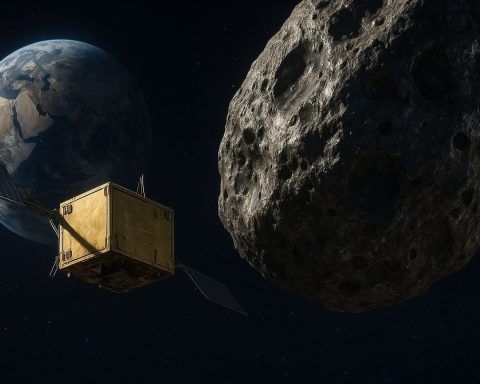
AstroForge Brokkr‑2 (Odin) Mission Overview and Objectives

AstroForge Brokkr‑2 (Odin) Mission Overview and Objectives

Odin (Brokkr-2) launched on Feb 26, 2025 aboard SpaceX Falcon 9 as part of Intuitive Machines’ IM-2 lunar mission. Its target was near-Earth asteroid 2022 OB5, about 20–30 meters in size (up to ~100 meters diameter) and suspected to be M-type metal-rich, with a flyby planned roughly 300 days after launch to confirm its metallic content. Odin is a ~120 kg fully fueled deep-space probe built on Orbital Astronautics’ ORB-50 platform, with about 1×1×0.7 m dimensions and an approximate development cost of US$3.5 million. The spacecraft uses electric propulsion with xenon thrusters supplied by Dawn Aerospace, enabling a cruise of
1 3 4 5 6

Stock Market Today

CrowdStrike stock jumps nearly 5% after Aramco pact — what investors watch next

CrowdStrike stock jumps nearly 5% after Aramco pact — what investors watch next

7 February 2026
CrowdStrike shares jumped 4.8% to $395.50 after the company announced a non-binding memorandum of understanding with Saudi Aramco. The move ended a seven-session losing streak for the stock, which remains about 30% below its 52-week high. Investors await more details on the Aramco talks and CrowdStrike’s March 3 earnings report. Trading volume topped 4.9 million shares, well above average.
Visa stock price edges up as Visa & Main rolls out — what’s next for NYSE:V

Visa stock price edges up as Visa & Main rolls out — what’s next for NYSE:V

7 February 2026
Visa shares closed up 0.74% at $331.58 Friday, holding steady after hours. The company launched “Visa & Main,” a $100 million working-capital facility for small businesses through Lendistry. Investors are watching program adoption and Visa’s Feb. 10 dividend record date. The S&P 500 rose 1.97% and American Express gained 1.28%.
Spotify stock rebounds after-hours as Bookshop.org move and new features tee up Q4 earnings

Spotify stock rebounds after-hours as Bookshop.org move and new features tee up Q4 earnings

7 February 2026
Spotify shares rose 2.4% in late after-hours trading Friday, closing at $422.61. The company this week announced U.S. and U.K. users can order physical books via Bookshop.org in-app, and introduced new audiobook and music features. Spotify raised Premium prices by $1 in select markets, sending shares down 4.5% Thursday. Investors await Q4 earnings on Feb. 10 for updates on revenue and new product impact.
Go toTop