Today: 18 July 2026
Browse Category

Scientific Discoveries 8 June 2025 - 4 November 2025

Alien Probe or Cosmic Relic? Interstellar Comet 3I/ATLAS Baffles Scientists (updated 27.10.2025)

Third Interstellar Comet 3I/ATLAS Stuns Scientists With Surprising Brightening and Blue Glow

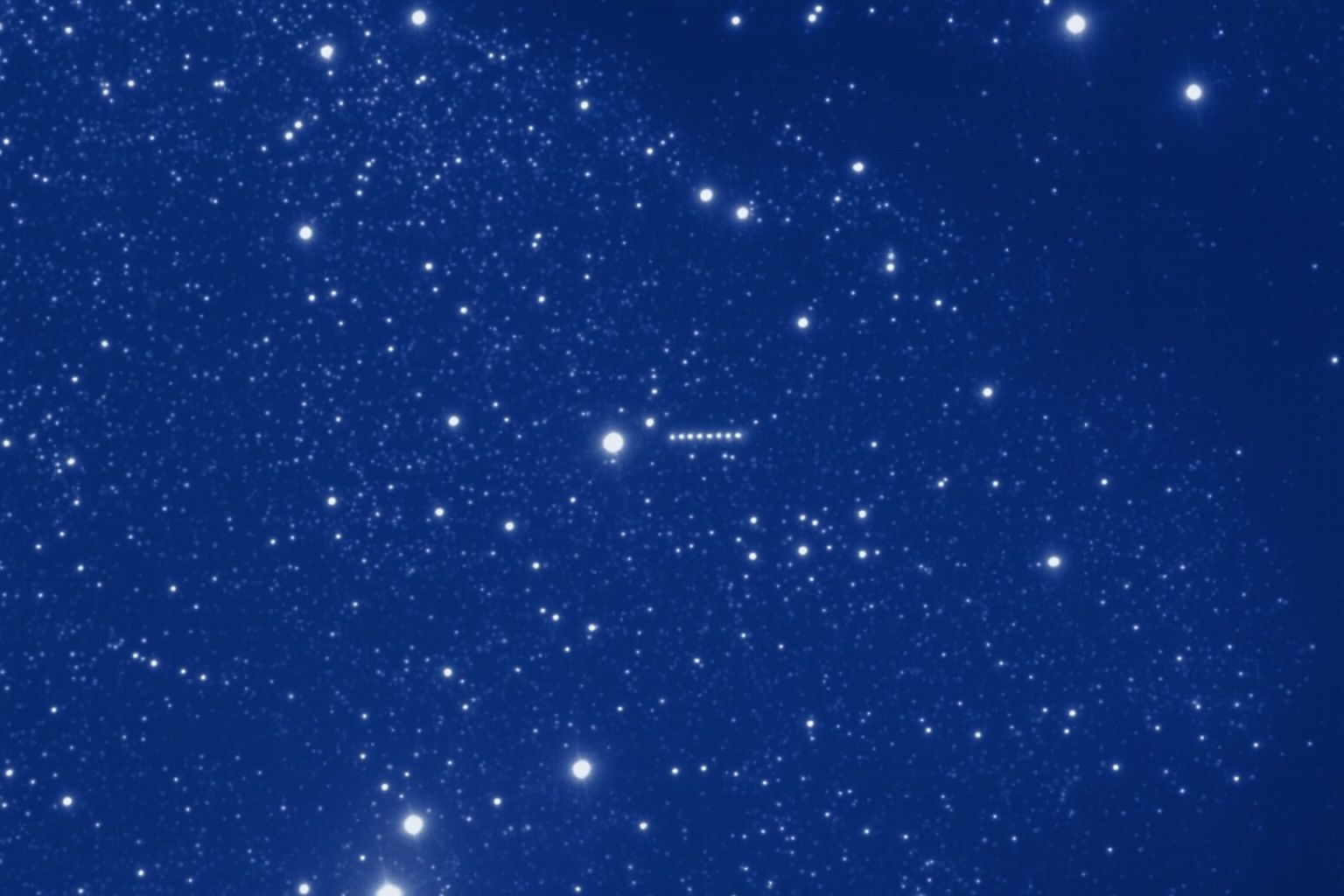
Comet 3I/ATLAS was first spotted on July 1, 2025, by the NASA-funded ATLAS telescope in Río Hurtado, Chilenewsweek.com. Right away, its orbit stood out as hyperbolic, meaning it isn’t bound to the Sun by gravity and is just passing through. This identified 3I/ATLAS as an interstellar object – a rare visitor from another star system. It is only the third such interstellar traveler ever detected, after the mysterious cigar-shaped 1I/ʻOumuamua in 2017 and the comet 2I/Borisov in 2019space.com. The “3I” designation literally means third interstellar, and “ATLAS” honors the discovery teamnewsweek.com.
4 November 2025
Interstellar Comet 3I/ATLAS Stuns Scientists with Surprising Bright Outburst and Ancient Origins

Interstellar Comet 3I/ATLAS Stuns Scientists with Surprising Bright Outburst and Ancient Origins

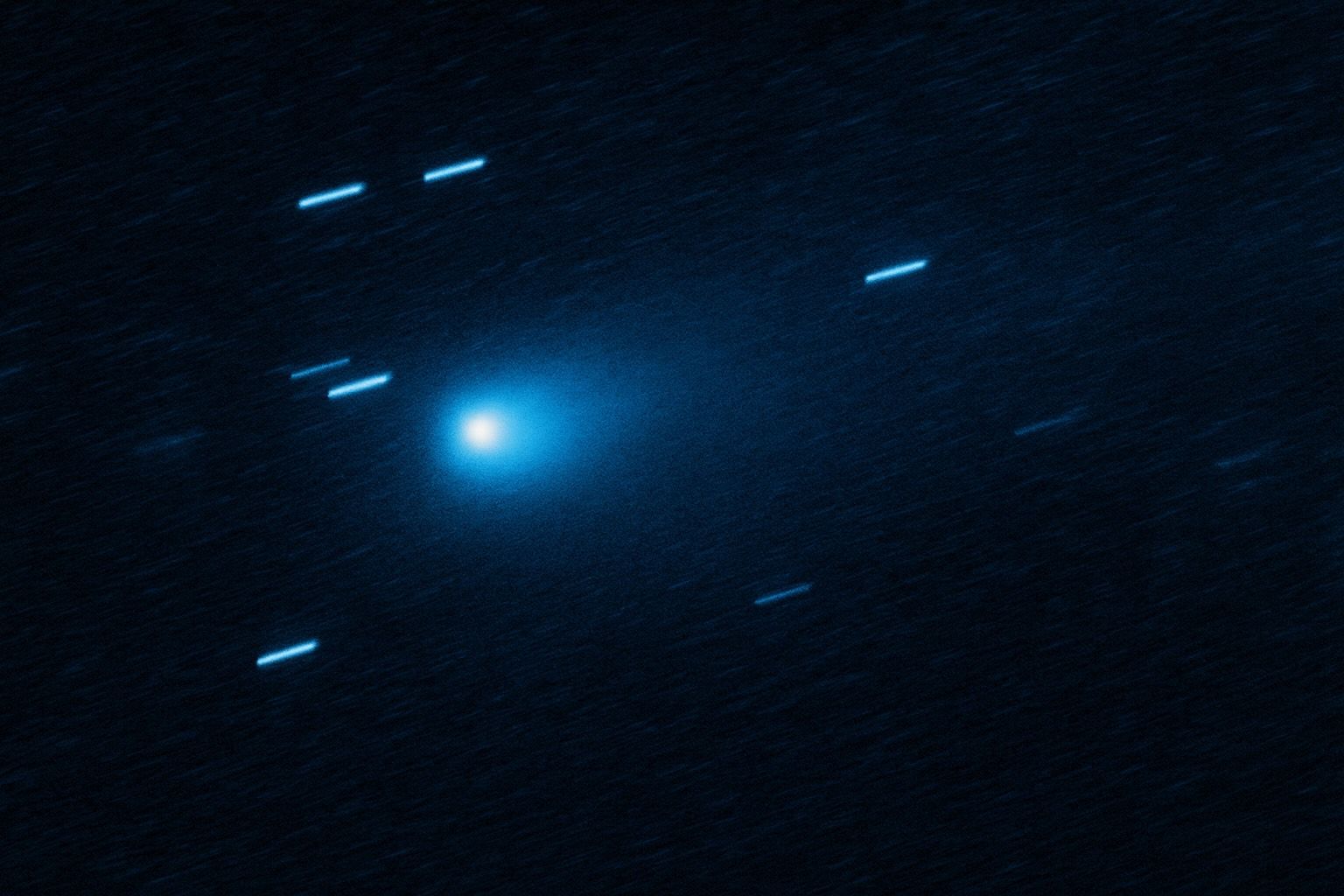
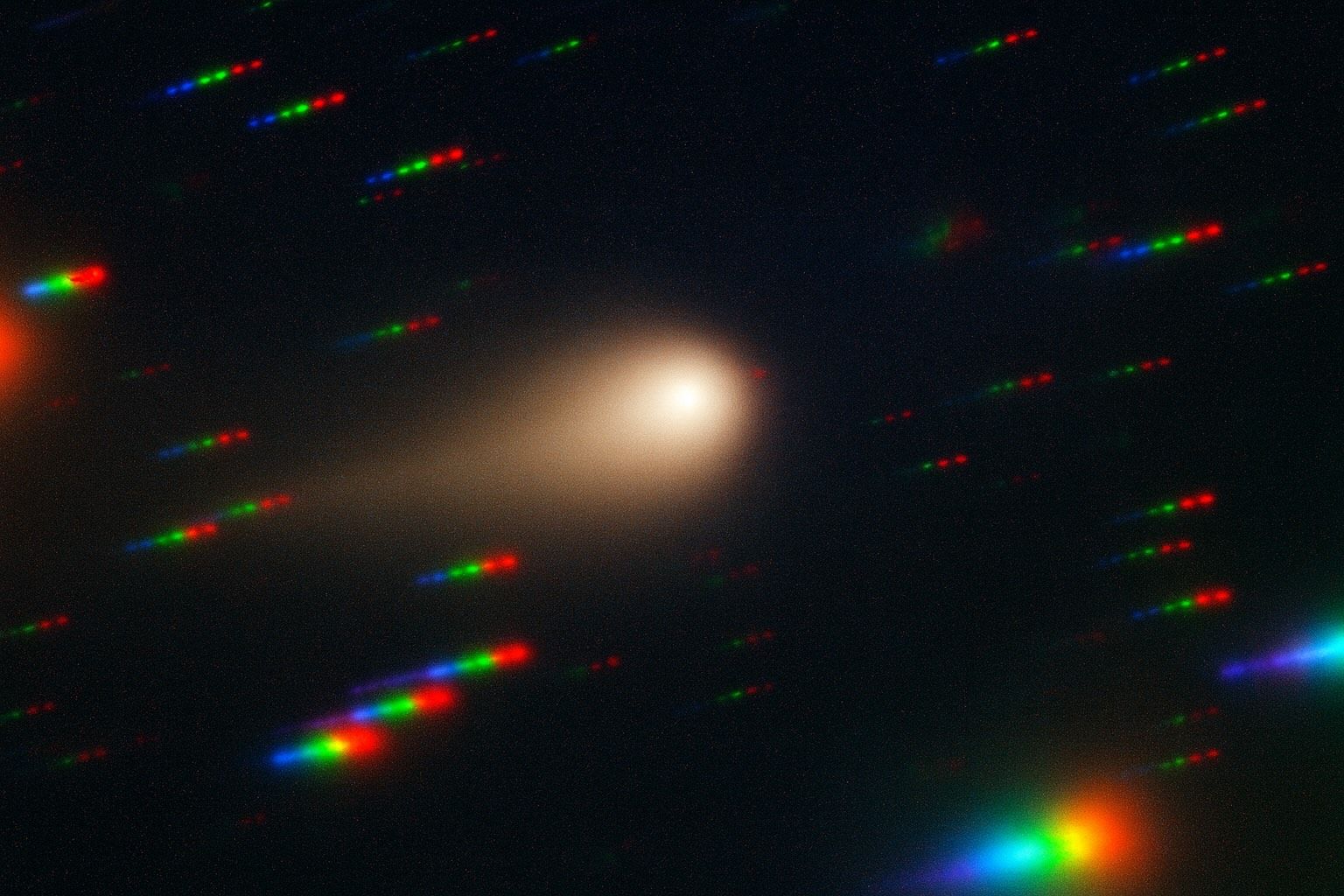
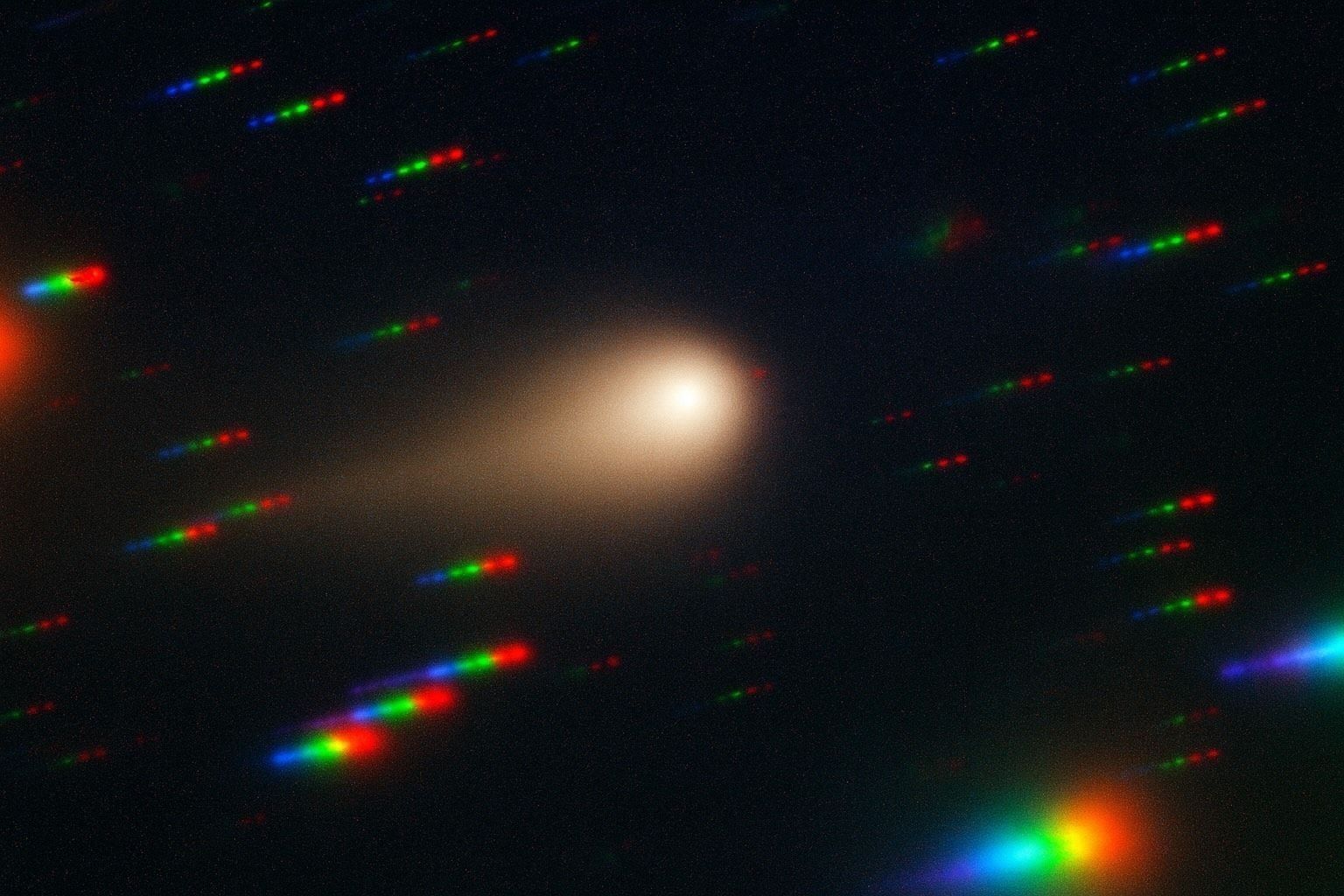
In July 2025, astronomers discovered something extraordinary: a dim, fuzzy comet hurtling toward the inner solar system on a path not bound to the Sun. Follow-up observations confirmed this object – now named 3I/ATLAS – was on a hyperbolic trajectory, meaning it came from interstellar space and would soon depart forever Nasa Wikipedia. The “3I” designation marks it as the third interstellar object ever observed, after the asteroid-like 1I/ʻOumuamua and comet 2I/Borisov Nasa. Unlike ʻOumuamua, 3I/ATLAS immediately showed typical comet behavior – a diffuse cloud of gas and dust around an icy nucleus Nasa. This firmly categorized it as an interstellar comet, akin to Borisov Space.
Interstellar Comet 3I/ATLAS Stuns Scientists – Brightening, Blue Glow & Mystery Acceleration

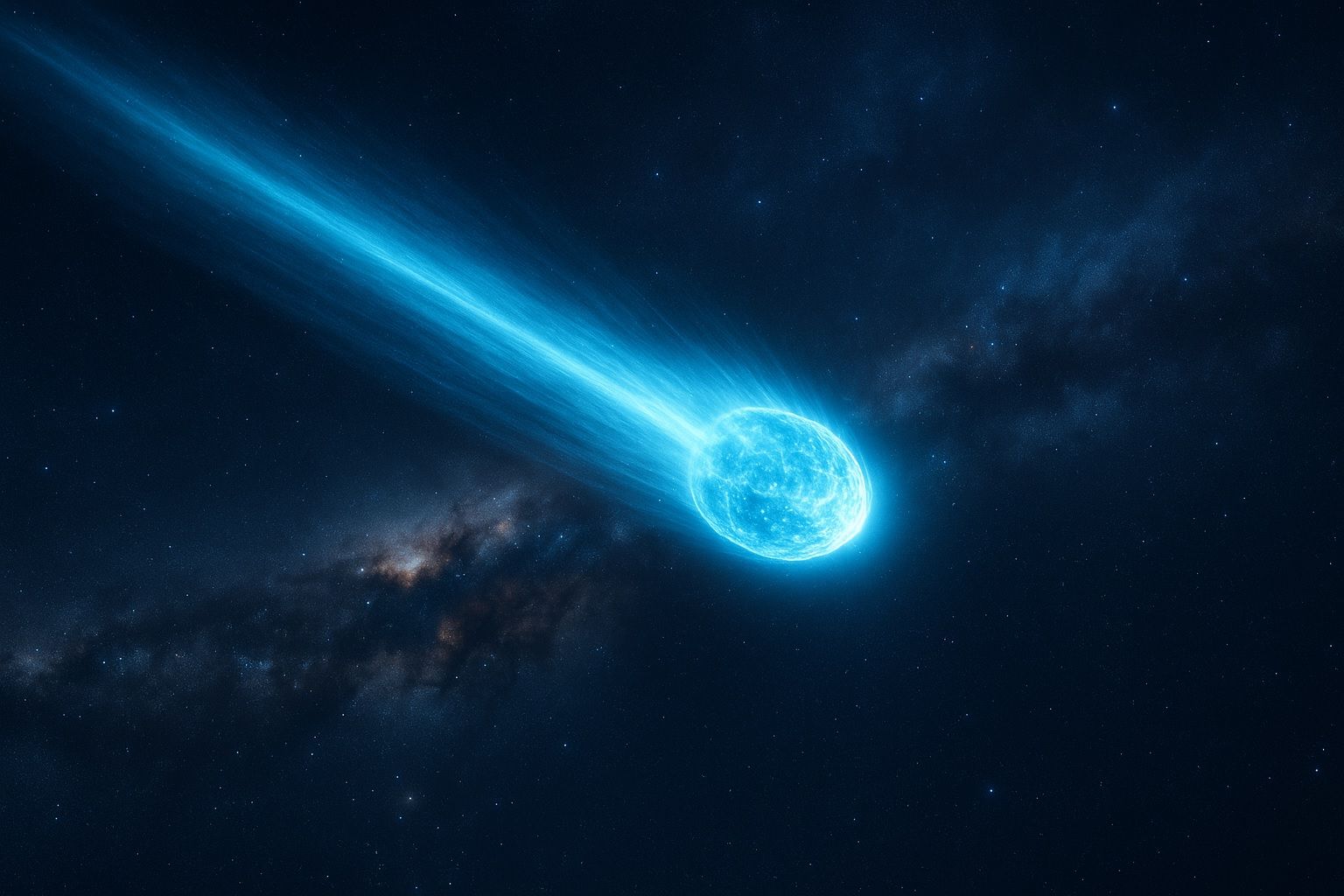
Interstellar Comet 3I/ATLAS Stuns Scientists – Brightening, Blue Glow & Mystery Acceleration

When astronomers spotted a faint new object moving rapidly through the outer solar system in July 2025, they quickly realized it was not an ordinary comet. Its extra-high velocity and open-ended trajectory indicated it was an interstellar interloper – an object arriving from far outside the Sun’s domainscientificamerican.com. Officially designated 3I/ATLAS, this comet has since commanded the full attention of the astronomical community. “We’ve never had an object like this to study before,” as one scientist marveledtheguardian.com.
Dueling Dinosaurs Fossil Shocks Scientists: ‘Teenage T. rex’ Was a New Species All Along

Dueling Dinosaurs Fossil Shocks Scientists: ‘Teenage T. rex’ Was a New Species All Along

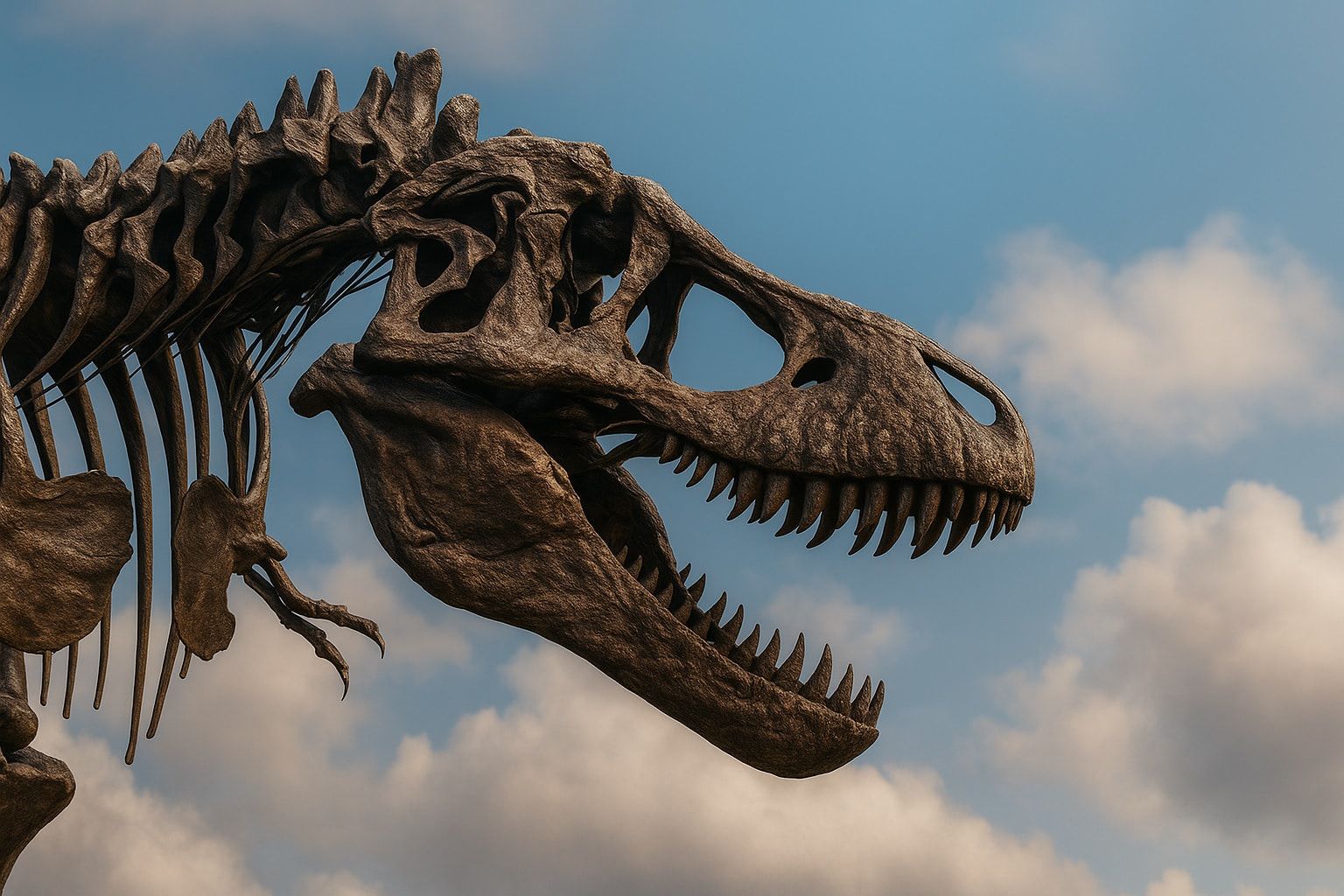
For over 40 years, paleontologists have wrangled over mysterious tyrannosaur fossils that didn’t quite fit the mold of T. rex. The controversy began with a small skull found in 1942 in Montana’s Hell Creek Formation – the same Late Cretaceous deposit that yielded T. rex. In 1988, some researchers formally named that skull Nanotyrannus lancensis, meaning “dwarf tyrant,” proposing it was a new pygmy tyrannosaur speciesnationalgeographic.com. However, many experts argued these remains were simply juvenile T. rex specimens that hadn’t grown to full sizenationalgeographic.com. The question — teenage T. rex or new dinosaur? — became one of paleontology’s most polarizing debates.
31 October 2025
Alien Probe or Cosmic Relic? Interstellar Comet 3I/ATLAS Baffles Scientists (updated 27.10.2025)

Mysterious Interstellar Comet 3I/ATLAS Nears Sun – 10-Billion-Year Visitor Sparks Alien Theories and Scientific Awe

In July 2025, astronomers spotted a faint newcomer inbound toward the Sun – one that was not gravitationally bound to our star at all. The object, now designated 3I/ATLAS, is only the third interstellar visitor ever detected in our solar systemts2.tech. It was first observed on July 1, 2025 by the ATLAS sky-survey telescope in Río Hurtado, Chile, and its discovery immediately caused excitement. The reason? Its orbit was hyperbolic, meaning it’s not a periodic comet from our Oort Cloud but rather an interstellar interloper on a one-way trip through our cosmic neighborhoodts2.tech.
Hidden ‘Planet-Killer’ Asteroid Found in Sun’s Glare Exposes Dangerous Blind Spot

Hidden ‘Planet-Killer’ Asteroid Found in Sun’s Glare Exposes Dangerous Blind Spot

Astronomers are buzzing about 2025 SC79, a newfound asteroid that’s zipping around the sun at near-record pace. Scott S. Sheppard, an astronomer at Carnegie Science, first spotted the object on September 27 using the Blanco 4-meter telescope in Chilecarnegiescience.educarnegiescience.edu. What he found was astonishing: an asteroid orbiting the sun in just 128 days, making it the second-fastest asteroid ever recordedspace.com. Only one known asteroid orbits faster – 2021 PH27, a 1-km rock discovered by Sheppard in 2021 that races around the sun in 113 dayslivescience.com.
26 October 2025
Rare Interstellar Comet 3I/ATLAS – a 10-Billion-Year-Old Time Capsule – Flies Past Mars

Rare Interstellar Comet 3I/ATLAS – a 10-Billion-Year-Old Time Capsule – Flies Past Mars

Humanity has waited a long time to study a comet from another star – and suddenly, within a decade, we’ve had three. 3I/ATLAS is the latest of these rare interstellar interlopers. It was first detected moving through the outer Solar System in June 2025 with an exceptionally eccentric orbit. Follow-up observations quickly confirmed what its speed and trajectory implied: this object was not bound to the Sun’s gravityts2.tech. By July 2025, the Minor Planet Center designated it the third interstellar object ever foundts2.tech. Like its predecessors – the cigar-shaped 1I/‘Oumuamua and cometary 2I/Borisov – 3I/ATLAS is an outsider: it originated around a distant star and is merely passing through our cosmic neighborhoodesa.int.
Blastoff and Breakthroughs: SpaceX Smashes Records, Mars Life Clue, and More (Oct 4–5, 2025)

Blastoff and Breakthroughs: SpaceX Smashes Records, Mars Life Clue, and More (Oct 4–5, 2025)

SpaceX’s relentless launch pace hit a new high this weekend. On Oct. 3, a Falcon 9 rocket roared off the pad at Vandenberg Space Force Base carrying 28 Starlink broadband satellites into low Earth orbit space.com. This mission marked SpaceX’s 125th Falcon 9 flight of the year, already a record-setting cadence, and the booster successfully landed on the Of Course I Still Love You droneship ~8 minutes later space.com. The reused booster completed its second flight space.com. Starlink deployment was confirmed about an hour after liftoff, adding to SpaceX’s ever-growing internet constellation space.com. With over 8,500 Starlink satellites active, Starlink now makes up two-thirds of all operational satellites space.com – a staggering figure illustrating SpaceX’s dominance in low-orbit communications. More than 70% of SpaceX’s launches in 2025 have been Starlink missions, underscoring how launching its own satellites has kept pads busy at an unprecedented rate space.com. SpaceX’s next big leap is looming: the company is targeting Oct. 13 for the highly anticipated second test flight of Starship, its giant Mars-capable rocket space.com. After an April test ended explosively, SpaceX has made upgrades and secured FAA clearance, aiming to finally reach orbit with Starship – a milestone that could open a
Rogue Planet Gobbles 6 Billion Tons of Gas per Second — Behaving Like a Star

Rogue Planet Gobbles 6 Billion Tons of Gas per Second — Behaving Like a Star

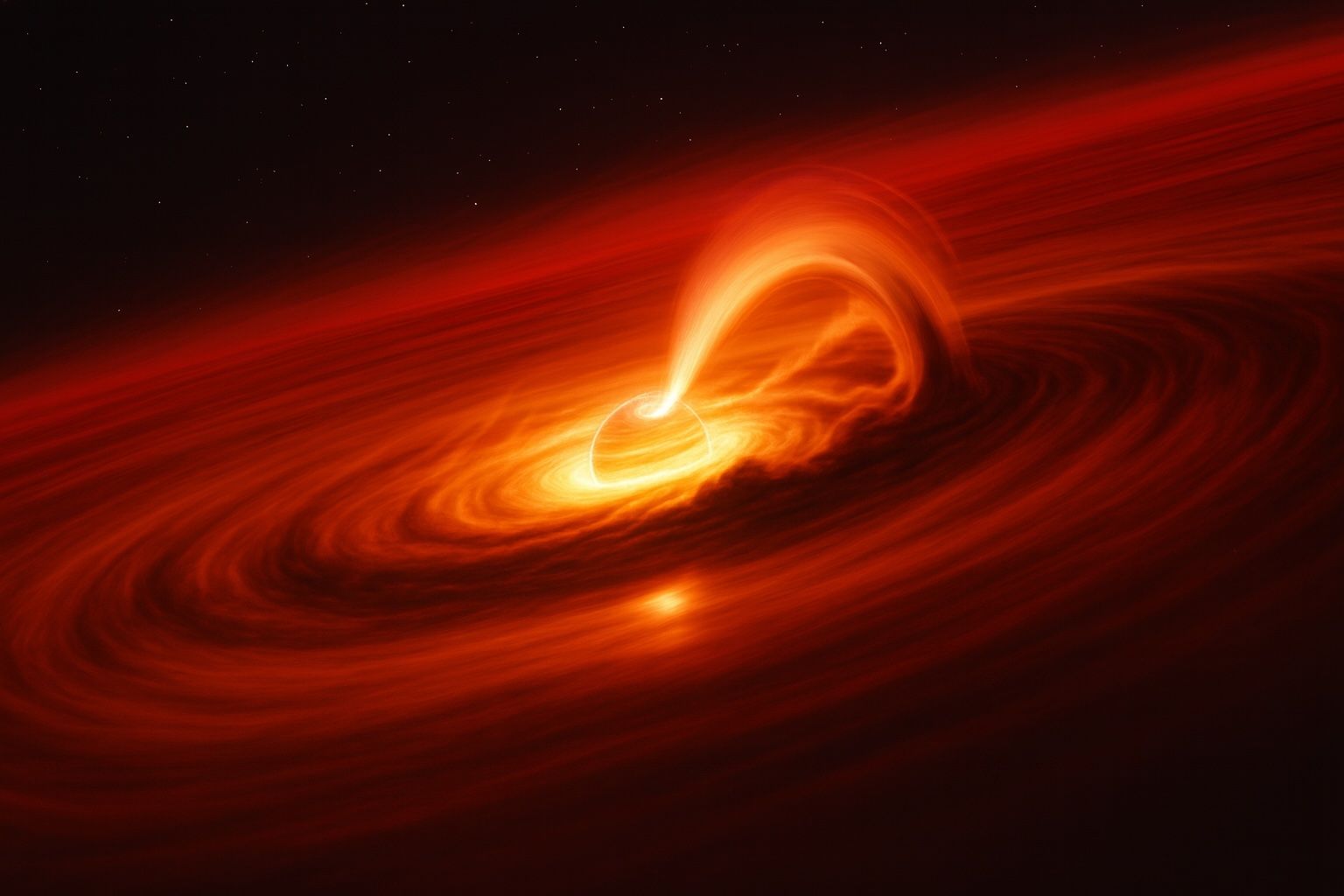
Astronomers have long known that rogue planets drift through space without a host star sciencealert.com. Most are cold and quiet, but Cha 1107-7626 is anything but quiet. In late June 2025, it suddenly brightened dramatically. Follow-up observations revealed an EXor‑type accretion burst – a rapid feeding episode like those seen in infant stars sciencealert.com. By August, the planet’s accretion rate had skyrocketed: at its peak it was pulling in roughly 6 billion tons of cosmic gas and dust every second phys.org. This translates to about 10⁻⁷ Jupiter masses per year – an unheard‑of rate for any planet sciencealert.com.
Life on Mars? Saturn’s Surprise and More – The Biggest Science Breakthroughs (Sept 21–22, 2025)

Life on Mars? Saturn’s Surprise and More – The Biggest Science Breakthroughs (Sept 21–22, 2025)

Webb Hints at Atmosphere on an Earth-Like Exoplanet: Astronomers using NASA’s James Webb Space Telescope announced intriguing results from the TRAPPIST-1 planetary system. JWST observed the Earth-sized exoplanet TRAPPIST-1e as it passed in front of its star, and the data “hints that Trappist-1e may have an atmosphere” scitechdaily.com. This planet lies in the star’s temperate habitable zone, where liquid water could exist. If further Webb observations confirm an atmosphere, it would mark the first-ever detection of an atmosphere on a rocky world in a star’s habitable zone scitechdaily.com – a major milestone in the quest to find life-friendly planets. Researchers caution it’s not confirmed yet; the initial spectrum is challenging to interpret, and more telescope time will test if those “wiggles” truly indicate air around this “Goldilocks” planet.
22 September 2025
Space Spectacle: NASA Unveils New Astronauts, SpaceX Launch Blitz & Cosmic Breakthroughs (21–22 Sep 2025)

Space Spectacle: NASA Unveils New Astronauts, SpaceX Launch Blitz & Cosmic Breakthroughs (21–22 Sep 2025)

NASA’s Space Weather Trio Set for Launch: At Kennedy Space Center, NASA and NOAA are on the cusp of launching three spacecraft that promise new insight into solar storms and the Solar System’s boundary. On Sept. 21, officials declared the IMAP mission and its two co-manifested satellites “go” for launch science.nasa.gov. IMAP will travel ~1.5 million km sunward to the Sun–Earth L1 point to map the heliosphere – the magnetic bubble shielding our Solar System – and study how solar wind particles and cosmic rays interact at that frontier nasa.gov science.nasa.gov. Riding along is NOAA’s Space Weather Follow-On, designed to give Earth ~30 minutes advance warning of solar eruptions, and NASA’s Carruthers Geocorona Observatory, a smallsat that will image Earth’s outermost atmosphere in ultraviolet light nasa.gov nasa.gov. Liftoff is scheduled for Sept. 23 at 7:32 a.m. EDT on a SpaceX Falcon 9 from Launch Complex 39A, with coverage on NASA TV and the new NASA+ streaming service nasa.gov science.nasa.gov.
Quantum Tech Frenzy: Breakthroughs, Bold Alliances & Crypto Panic Rock Late August 2025

Quantum Tech Frenzy: Breakthroughs, Bold Alliances & Crypto Panic Rock Late August 2025

IBM and AMD announced a landmark partnership to co-develop “quantum-centric” supercomputing architectures that tightly integrate quantum processors with classical high-performance computers newsroom.ibm.com newsroom.ibm.com. Revealed on August 26 and drawing buzz through the week, the collaboration seeks to merge IBM’s cutting-edge quantum computing technology with AMD’s CPUs, GPUs, and AI accelerators newsroom.ibm.com. The goal is a new class of hybrid systems where quantum co-processors tackle parts of problems that classical systems struggle with, while classical exascale machines handle complementary tasks such as large-scale data analysis newsroom.ibm.com newsroom.ibm.com.
Interstellar Comet 3I/ATLAS: Origin, Trajectory and Scientific Stakes In 2025’s Third‑Ever Extrasolar Visitor

Interstellar Comet 3I/ATLAS: Origin, Trajectory and Scientific Stakes In 2025’s Third‑Ever Extrasolar Visitor

In early July 2025 astronomers using the NASA‑funded ATLAS telescope in Chile discovered a hyper‑fast object now designated 3I/ATLAS—only the third confirmed interstellar body to enter our Solar System after ’Oumuamua and Borisov. Follow‑up astrometry shows an inbound velocity of ≈58 km s⁻¹ and an orbital eccentricity of ≈6.1, values far in excess of anything gravitationally bound to the Sun, proving an extrasolar origin. First photometric estimates put the nucleus at 9‑20 km—an order of magnitude larger than Borisov—and early images already reveal a developing coma and tail. Dynamical modelling by Oxford–Canterbury researchers traces its trajectory back to the Milky Way’s thick disc, implying the ice‑rich body may be ≥7 billion years old—much older than the Solar System itself. Although 3I/ATLAS will dive just inside Mars’ orbit on 30 October, it never comes closer than 1.6 au to Earth and poses no hazard. Instead it offers an unprecedented laboratory for studying planet formation chemistry beyond our neighbourhood, and it is galvanising plans for rapid‑response spacecraft such as ESA’s 2029 Comet Interceptor.
June 2025 Space News: Breakthroughs, Missions, and the Expanding Frontier / Updated: 2025, June 28th, 16:00 CET

June 2025 Space News: Breakthroughs, Missions, and the Expanding Frontier / Updated: 2025, June 28th, 16:00 CET

Shubhanshu Shukla became India’s 634th person in space, traveling to the ISS on the Axiom-4 mission after a 28-hour journey and a 41-year hiatus. NASA and Roscosmos are conducting investigations as four astronauts arrive at the ISS amid a mysterious air leak detected in the Russian Zvezda module. The Vera C. Rubin Observatory achieved first light with a 3,200-megapixel camera, discovering over 2,000 asteroids in 10 hours and planning to image the entire sky every few nights for a decade. The James Webb Space Telescope directly imaged its first exoplanet, TWA 7b, a Saturn-mass world about 111 light-years away. Japan’s
Eyes on the Infinite: The Next Generation of Space Telescopes Set to Rewrite the Cosmos

Eyes on the Infinite: The Next Generation of Space Telescopes Set to Rewrite the Cosmos

In the coming decade, a trio of advanced space observatories will open new windows on the universe, tackling some of the most profound mysteries in astronomy. These next-generation telescopes – NASA’s Nancy Grace Roman Space Telescope, and the European Space Agency’s PLATO and ATHENA missions – are poised to revolutionize our understanding of everything from dark energy and galactic evolution to exoplanets and high-energy phenomena. Each telescope has distinct goals and cutting-edge technology, but all share a common purpose: to expand our cosmic vision and rewrite the story of the cosmos. Below, we explore each mission in depth, followed by a comparative summary of their key features.
Go toTop