Browse Category

Scientific Discoveries News 8 June 2025 - 26 October 2025

Hidden ‘Planet-Killer’ Asteroid Found in Sun’s Glare Exposes Dangerous Blind Spot

Hidden ‘Planet-Killer’ Asteroid Found in Sun’s Glare Exposes Dangerous Blind Spot

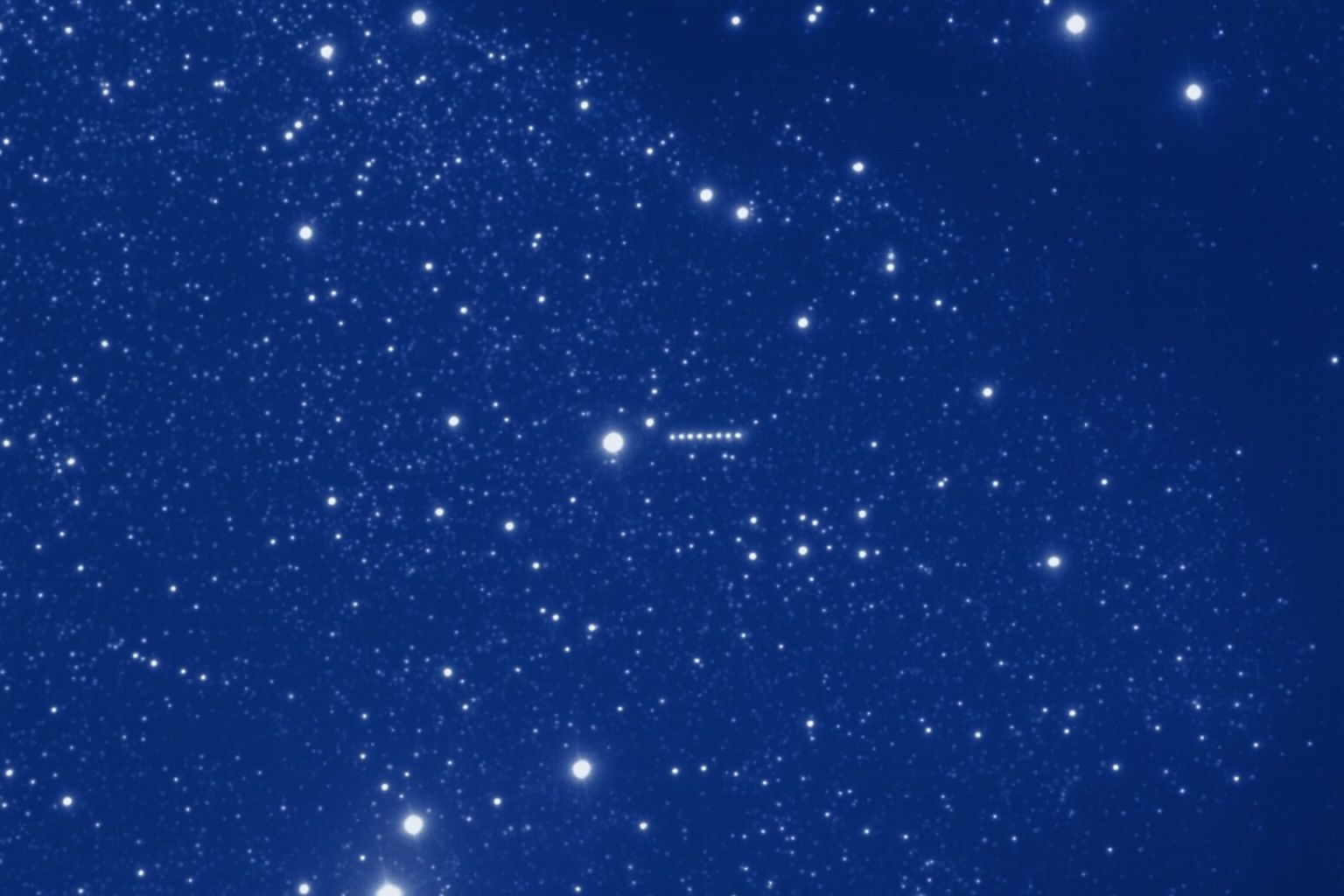
A “Twilight” Asteroid Breaks Speed Records Astronomers are buzzing about 2025 SC79, a newfound asteroid that’s zipping around the sun at near-record pace. Scott S. Sheppard, an astronomer at Carnegie Science, first spotted the object on September 27 using the Blanco 4-meter telescope in Chilecarnegiescience.educarnegiescience.edu. What he found was astonishing: an asteroid orbiting the sun in just 128 days, making it the second-fastest asteroid ever recordedspace.com. Only one known asteroid orbits faster – 2021 PH27, a 1-km rock discovered by Sheppard in 2021 that races around the sun in 113 dayslivescience.com. Even Mercury, the innermost planet, takes 88 days for one
26 October 2025
Rare Interstellar Comet 3I/ATLAS – a 10-Billion-Year-Old Time Capsule – Flies Past Mars

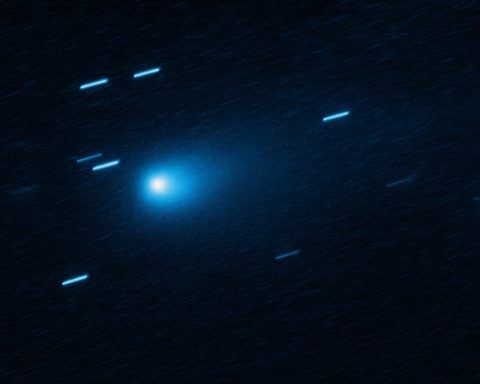
Alien Comet 3I/ATLAS Is Spewing Water Like a Fire Hose — And Scientists Are Stunned

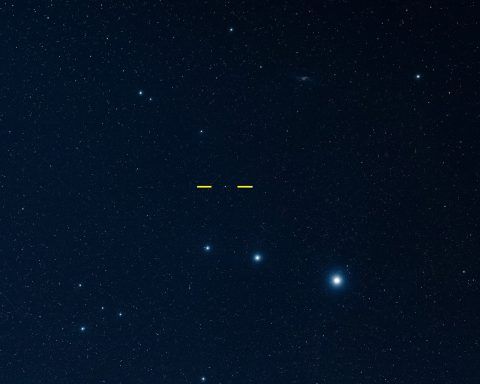
These astounding discoveries come from coordinated observations worldwide. Below we delve into the details: what we’ve learned about 3I/ATLAS, how it compares to other interstellar visitors, and why scientists are so excited. What Is 3I/ATLAS? A Rare Interstellar Comet 3I/ATLAS (sometimes simply called “ATLAS”) is an interstellar comet – a chunk of ice and rock that formed around a distant star and is now speeding through our Solar System on a one-way trip. It was first spotted on July 1, 2025, by the Asteroid Terrestrial-impact Last Alert System (ATLAS) telescope in Chilets2.tech. Follow-up analyses quickly confirmed its hyperbolic orbit and
Rare Interstellar Comet 3I/ATLAS – a 10-Billion-Year-Old Time Capsule – Flies Past Mars

Rare Interstellar Comet 3I/ATLAS – a 10-Billion-Year-Old Time Capsule – Flies Past Mars

A Visitor from Beyond the Solar System Humanity has waited a long time to study a comet from another star – and suddenly, within a decade, we’ve had three. 3I/ATLAS (officially 3I/2025 A1) is the latest of these rare interstellar interlopers. It was first detected moving through the outer Solar System in June 2025 with an exceptionally eccentric orbit. Follow-up observations quickly confirmed what its speed and trajectory implied: this object was not bound to the Sun’s gravityts2.tech. By July 2025, the Minor Planet Center designated it the third interstellar object ever foundts2.tech. Like its predecessors – the cigar-shaped 1I/‘Oumuamua and cometary 2I/Borisov – 3I/ATLAS is
Blastoff and Breakthroughs: SpaceX Smashes Records, Mars Life Clue, and More (Oct 4–5, 2025)

Blastoff and Breakthroughs: SpaceX Smashes Records, Mars Life Clue, and More (Oct 4–5, 2025)

Key Facts Major Launches and Missions SpaceX’s relentless launch pace hit a new high this weekend. On Oct. 3, a Falcon 9 rocket roared off the pad at Vandenberg Space Force Base carrying 28 Starlink broadband satellites into low Earth orbit space.com. This mission marked SpaceX’s 125th Falcon 9 flight of the year, already a record-setting cadence, and the booster successfully landed on the Of Course I Still Love You droneship ~8 minutes later space.com. The reused booster (serial B1097) completed its second flight space.com. Starlink deployment was confirmed about an hour after liftoff, adding to SpaceX’s ever-growing internet constellation space.com. With over 8,500
Rogue Planet Gobbles 6 Billion Tons of Gas per Second — Behaving Like a Star

Rogue Planet Gobbles 6 Billion Tons of Gas per Second — Behaving Like a Star

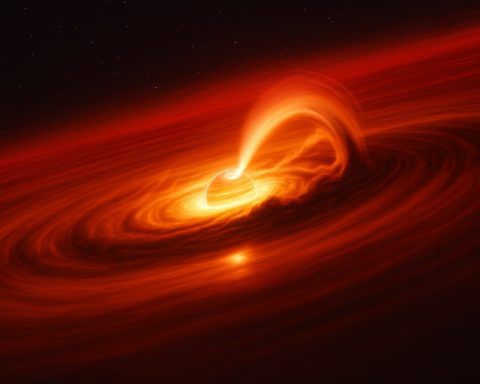
A Cosmic Feeding Frenzy Astronomers have long known that rogue planets (also called free‑floating planetary‑mass objects) drift through space without a host star sciencealert.com. Most are cold and quiet, but Cha 1107-7626 is anything but quiet. In late June 2025, it suddenly brightened dramatically. Follow-up observations revealed an EXor‑type accretion burst – a rapid feeding episode like those seen in infant stars sciencealert.com. By August, the planet’s accretion rate had skyrocketed: at its peak it was pulling in roughly 6 billion tons of cosmic gas and dust every second phys.org. This translates to about 10⁻⁷ Jupiter masses per year – an unheard‑of rate for any planet sciencealert.com. Víctor Almendros‑Abad, an
Space Spectacle: NASA Unveils New Astronauts, SpaceX Launch Blitz & Cosmic Breakthroughs (21–22 Sep 2025)

Space Spectacle: NASA Unveils New Astronauts, SpaceX Launch Blitz & Cosmic Breakthroughs (21–22 Sep 2025)

Key Facts Major Launches and Mission Updates NASA’s Space Weather Trio Set for Launch: At Kennedy Space Center, NASA and NOAA are on the cusp of launching three spacecraft that promise new insight into solar storms and the Solar System’s boundary. On Sept. 21, officials declared the IMAP mission (“Interstellar Mapping and Acceleration Probe”) and its two co-manifested satellites “go” for launch science.nasa.gov. IMAP will travel ~1.5 million km sunward to the Sun–Earth L1 point to map the heliosphere – the magnetic bubble shielding our Solar System – and study how solar wind particles and cosmic rays interact at that
Quantum Tech Frenzy: Breakthroughs, Bold Alliances & Crypto Panic Rock Late August 2025

Quantum Tech Frenzy: Breakthroughs, Bold Alliances & Crypto Panic Rock Late August 2025

Key Facts IBM & AMD Forge Quantum‑Centric Supercomputing Alliance IBM and AMD announced a landmark partnership to co-develop “quantum-centric” supercomputing architectures that tightly integrate quantum processors with classical high-performance computers newsroom.ibm.com newsroom.ibm.com. Revealed on August 26 and drawing buzz through the week, the collaboration seeks to merge IBM’s cutting-edge quantum computing technology with AMD’s CPUs, GPUs, and AI accelerators newsroom.ibm.com. The goal is a new class of hybrid systems where quantum co-processors tackle parts of problems (like molecular simulations) that classical systems struggle with, while classical exascale machines handle complementary tasks such as large-scale data analysis newsroom.ibm.com newsroom.ibm.com. IBM CEO
Interstellar Comet 3I/ATLAS: Origin, Trajectory and Scientific Stakes In 2025’s Third‑Ever Extrasolar Visitor

Interstellar Comet 3I/ATLAS: Origin, Trajectory and Scientific Stakes In 2025’s Third‑Ever Extrasolar Visitor

<li ATLAS imaged the interstellar candidate on 1 July 2025, with precovery back to 14 June 2025, and it was designated C/2025 N1 (ATLAS) and later 3I/ATLAS as the third confirmed interstellar object after Oumuamua and Borisov. <li A JPL orbital solution yields eccentricity e = 6.1 ± 0.1 and hyperbolic excess velocity V∞ ≈ 58 km/s, indicating an extrasolar origin from Galactic longitude about 5° toward the Galactic Center. <li The object’s nucleus is estimated at 9–20 km in diameter, with a developing coma and tail already visible, including a compact coma at about 4.5 AU from the Sun.
June 2025 Space News: Breakthroughs, Missions, and the Expanding Frontier / Updated: 2025, June 28th, 16:00 CET

June 2025 Space News: Breakthroughs, Missions, and the Expanding Frontier / Updated: 2025, June 28th, 16:00 CET

Shubhanshu Shukla became India’s 634th person in space, traveling to the ISS on the Axiom-4 mission after a 28-hour journey and a 41-year hiatus. NASA and Roscosmos are conducting investigations as four astronauts arrive at the ISS amid a mysterious air leak detected in the Russian Zvezda module. The Vera C. Rubin Observatory achieved first light with a 3,200-megapixel camera, discovering over 2,000 asteroids in 10 hours and planning to image the entire sky every few nights for a decade. The James Webb Space Telescope directly imaged its first exoplanet, TWA 7b, a Saturn-mass world about 111 light-years away. Japan’s
Eyes on the Infinite: The Next Generation of Space Telescopes Set to Rewrite the Cosmos

Eyes on the Infinite: The Next Generation of Space Telescopes Set to Rewrite the Cosmos

The Nancy Grace Roman Space Telescope is planned to launch in late 2026 (latest commitment by May 2027) aboard SpaceX’s Falcon Heavy to a halo orbit around the Sun-Earth L2, about 1.5 million kilometers from Earth. Roman uses a 2.4-meter primary mirror repurposed from Hubble and a 300-megapixel Wide Field Instrument that covers about 0.28 square degrees, enabling sky surveys roughly 1,000 times faster than Hubble. Its Coronagraph Instrument aims to directly image exoplanets and disks by suppressing starlight with deformable mirrors, potentially detecting planets a billion times fainter than their stars. Roman’s microlensing survey is expected to find over

Stock Market Today

Apple stock price ends week higher as Dow hits 50,000; jobs and CPI loom next

Apple stock price ends week higher as Dow hits 50,000; jobs and CPI loom next

7 February 2026
Apple closed up 0.8% at $278.12 Friday, then slipped 0.3% after hours. The S&P 500 jumped 1.97% and the Nasdaq rose 2.18% as chipmakers rallied, while Amazon fell 5.6% on higher capex guidance. Investors await U.S. jobs data Feb. 11 and CPI Feb. 13. Apple’s next dividend is $0.26 per share, payable Feb. 12.
Broadcom Stock Gets a Google AI Spend Lift as Jefferies Sees 60% Upside

Broadcom Stock Gets a Google AI Spend Lift as Jefferies Sees 60% Upside

7 February 2026
Google raised its 2026 capital expenditure forecast to $175 billion–$185 billion, with most spending expected on data-center chips. Broadcom shares rose about 2% after the announcement, while Nvidia and AMD slipped. Jefferies reiterated a buy rating on Broadcom, maintaining a $500 price target, implying a 62% upside from Wednesday’s close.
No $2,000 IRS stimulus check is coming in February 2026 — but Trump’s tariff-check talk keeps the rumors alive

No $2,000 IRS stimulus check is coming in February 2026 — but Trump’s tariff-check talk keeps the rumors alive

7 February 2026
The IRS has not announced new federal stimulus payments for February 2026, and Congress has not approved fresh checks. Trump told NBC he is considering $2,000 tariff rebate checks but has not committed, saying any payout would likely come later in 2026. The IRS warns taxpayers to ignore texts and emails about “stimulus payments” and verify notices through official channels.
Go toTop