Browse Category

Space Exploration News 8 June 2025 - 8 July 2025

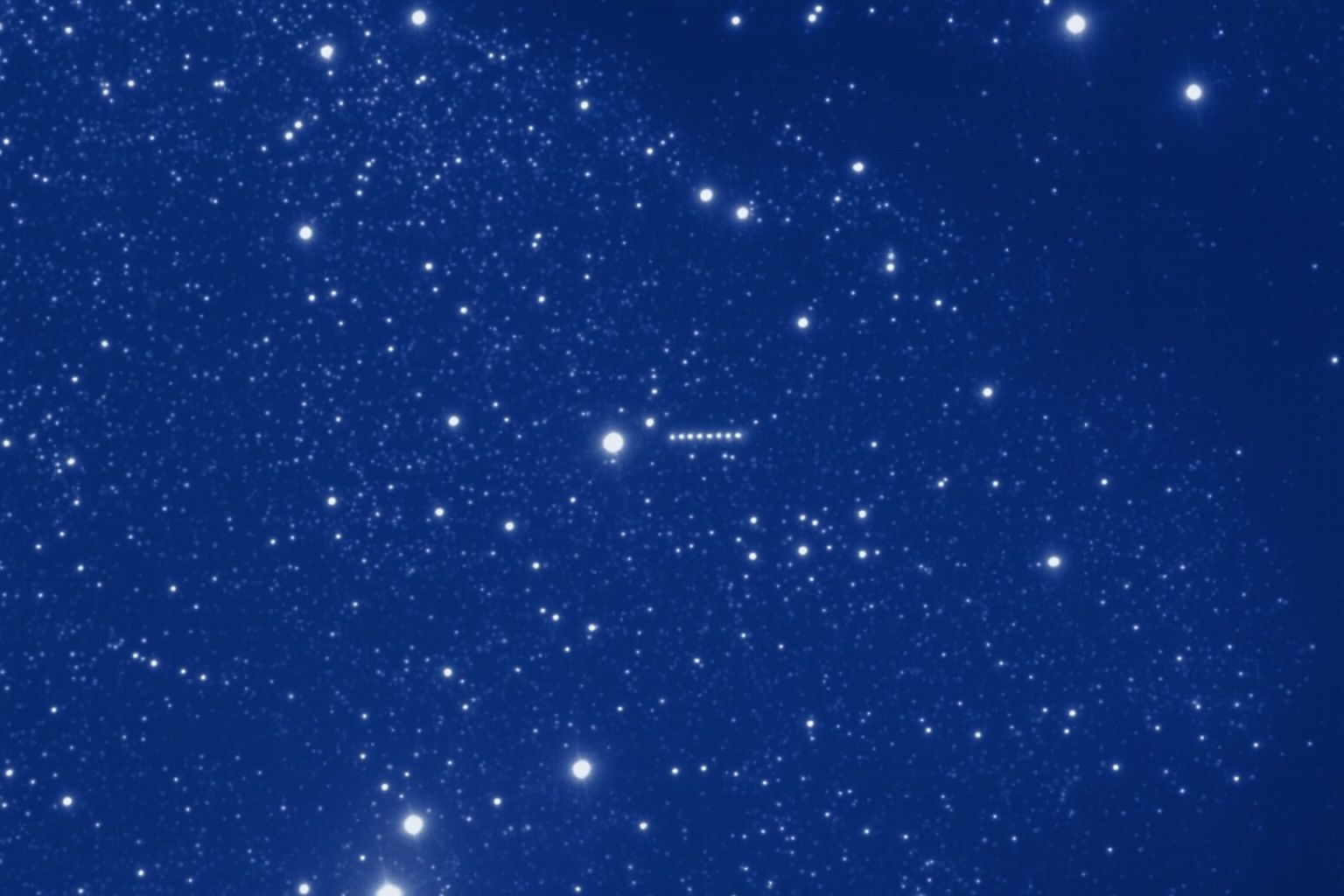
Interstellar Comet 3I/ATLAS: Origin, Trajectory and Scientific Stakes In 2025’s Third‑Ever Extrasolar Visitor

Interstellar Comet 3I/ATLAS: Origin, Trajectory and Scientific Stakes In 2025’s Third‑Ever Extrasolar Visitor

<li ATLAS imaged the interstellar candidate on 1 July 2025, with precovery back to 14 June 2025, and it was designated C/2025 N1 (ATLAS) and later 3I/ATLAS as the third confirmed interstellar object after Oumuamua and Borisov. <li A JPL orbital solution yields eccentricity e = 6.1 ± 0.1 and hyperbolic excess velocity V∞ ≈ 58 km/s, indicating an extrasolar origin from Galactic longitude about 5° toward the Galactic Center. <li The object’s nucleus is estimated at 9–20 km in diameter, with a developing coma and tail already visible, including a compact coma at about 4.5 AU from the Sun.

Space News Today: Global Advances, Challenges, and New Frontiers / Updated: 2025, July 7th, 12:00 CET

Space News Today: Global Advances, Challenges, and New Frontiers / Updated: 2025, July 7th, 12:00 CET

Boeing secured a $2.8 billion contract to develop next‑generation nuclear communications satellites for the U.S. military. Spanish operator Hisdesat completed two satellites in orbit and signed for two more in 2025, backed by Indra, targeting €1 billion in space revenue by 2030. SpainSat NG II, developed by Hisdesat and Airbus, is set to launch October 22–29 with NATO as its first client for both military and civil applications. SpaceX’s Starlink now accounts for more than 60% of all active satellites, following launches including Starlink 10-28 from Cape Canaveral and a Vandenberg mission delivering 70 small satellites. SpaceX plans a 40-antenna
Space Science in July 2025: Breakthroughs, Setbacks, and the Expanding Frontier / Updated: 2025, July 4th, 00:00 CET

Space Science in July 2025: Breakthroughs, Setbacks, and the Expanding Frontier / Updated: 2025, July 4th, 00:00 CET

Astronomers confirmed 3I/ATLAS (C/2025 N1) as the third confirmed interstellar object to visit our solar system, about 20 km wide, detected by NASA’s ATLAS survey, and it will pass inside Mars’ orbit in October 2025 at a minimum distance of 1.6 AU. NASA’s James Webb Space Telescope directly imaged exoplanet TWA 7 b, a Saturn-mass world 34 light-years away, making it the lightest planet ever directly imaged and potentially habitable. MethaneSAT, an $88 million methane-emissions satellite backed by Jeff Bezos, Google, and the Environmental Defense Fund, launched in March 2024 and lost contact after just over a year, deemed unlikely
Space News Roundup: July 2025 / Updated: 2025, July 3rd, 00:00 CET

Space News Roundup: July 2025 / Updated: 2025, July 3rd, 00:00 CET

SpaceX marked its 500th Falcon 9 launch with the deployment of 27 Starlink satellites and the 29th booster reuse. MTG-S1, Europe’s first geostationary hyperspectral infrared atmospheric sounder, launched July 1, 2025 on a SpaceX Falcon 9 alongside the Sentinel-4 instrument for hourly air-quality data over Europe and North Africa. MethaneSAT, an $88 million climate satellite funded by Jeff Bezos and EDF and launched in March 2024, was declared lost after losing contact on June 20, 2025. James Webb Space Telescope directly imaged TWA 7b, a Saturn-mass exoplanet about 110 light-years away, with a surface temperature around 120°F. James Webb mapped
Major Astronomy News in June 2025: Webb’s Exoplanet Discovery, Rubin’s First Images, Space Missions & More

Major Astronomy News in June 2025: Webb’s Exoplanet Discovery, Rubin’s First Images, Space Missions & More

The James Webb Space Telescope directly imaged a Saturn-mass exoplanet, TWA 7 b, about 0.3 Jupiter masses at 50 AU from its star, marking Webb’s first direct exoplanet discovery. The missing baryon problem was resolved using 69 fast radio bursts, showing about 76% of ordinary matter lies in hot intergalactic gas, ~15% in halos around galaxies, and ~9% in galaxies. Comet C/2014 UN271 (Bernardinelli–Bernstein), the largest Oort Cloud comet, showed CO outgassing jets at 16.6 AU with a nucleus about 140 km across, observed by ALMA. Solar Orbiter delivered the first views of the Sun’s south pole from an inclination
SpaceX: Mid-2025 Comprehensive Report (June 27th, 2025)

SpaceX: Mid-2025 Comprehensive Report (June 27th, 2025)

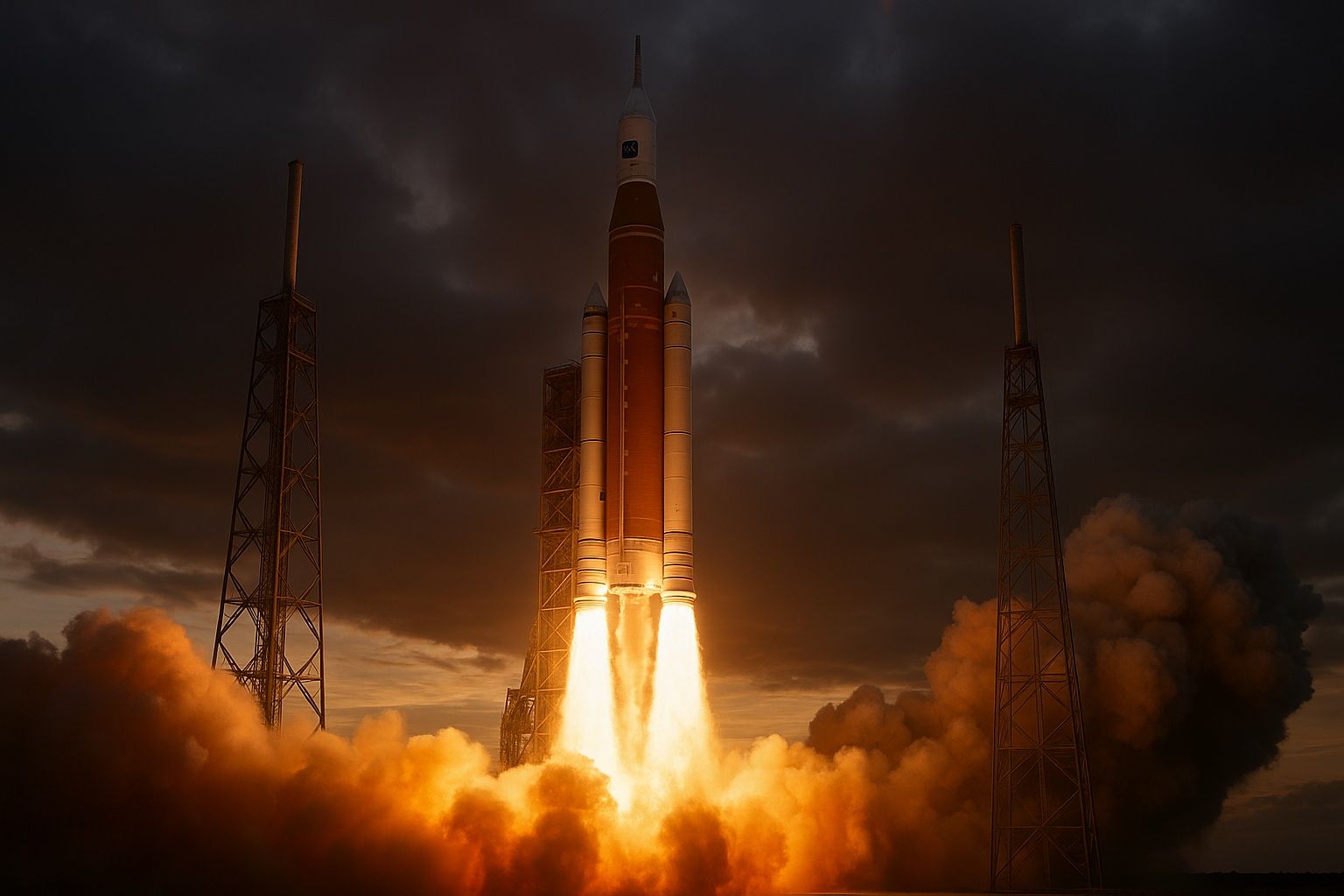
Summary of Recent Developments (Mid-2025) SpaceX’s Starship vehicle lifting off on its ninth test flight from Starbase, Texas in May 2025. Starship is the company’s next-generation, fully-reusable rocket system under development. In summary, by mid-2025 SpaceX is breaking launch records, advancing Starship’s development amid regulatory hurdles, expanding its Starlink network, and securing a growing share of civil and commercial space contracts. The following sections provide an in-depth analysis of the company’s history, technology, strategy, competition, and outlook. Company Background and History Founding and Vision: Space Exploration Technologies Corp. (SpaceX) was founded in 2002 by entrepreneur Elon Musk with the audacious
Global Technology Trends in June-2025: AI, Quantum, EVs, Space & Beyond

Global Technology Trends in June-2025: AI, Quantum, EVs, Space & Beyond

The global AI market is valued around $758 billion in 2025 and is projected to reach $3.68 trillion by 2034. Generative AI and large language models drove a 76% increase in spending in 2025. 78% of companies use AI in at least one function as of mid-2025. At Apple’s June 2025 WWDC, Apple unveiled on-device AI features including Live Translation, a “Personal Voice” assistant, and opened its core on-device AI model to third-party developers. Foldable smartphones are forecast to ship 27.6 million units in 2025, up about 70% CAGR since 2020. Apple’s Vision Pro AR headset, launched in 2024, will
Satellite Definition: Ultimate Guide from Sputnik to SpaceX and Beyond

Satellite Definition: Ultimate Guide from Sputnik to SpaceX and Beyond

Sputnik 1, launched on October 4, 1957, was the world’s first artificial satellite. Sputnik 2, launched in 1957, carried Laika the dog into orbit, the first living creature in space. Explorer 1, launched January 31, 1958, discovered Earth’s Van Allen radiation belts, proving satellites could do serious science. TIROS-1, launched in 1960, was the first weather satellite, demonstrating that orbiting cameras could observe cloud patterns and improve forecasting. Telstar 1, launched in July 1962, became the first active communications satellite and relayed the first live television signals across the Atlantic. Geostationary orbit at about 35,786 km above the equator allows
AstroForge Brokkr‑2 (Odin) Mission Overview and Objectives

AstroForge Brokkr‑2 (Odin) Mission Overview and Objectives

Odin (Brokkr-2) launched on Feb 26, 2025 aboard SpaceX Falcon 9 as part of Intuitive Machines’ IM-2 lunar mission. Its target was near-Earth asteroid 2022 OB5, about 20–30 meters in size (up to ~100 meters diameter) and suspected to be M-type metal-rich, with a flyby planned roughly 300 days after launch to confirm its metallic content. Odin is a ~120 kg fully fueled deep-space probe built on Orbital Astronautics’ ORB-50 platform, with about 1×1×0.7 m dimensions and an approximate development cost of US$3.5 million. The spacecraft uses electric propulsion with xenon thrusters supplied by Dawn Aerospace, enabling a cruise of
ISRO’s Lunar Success (Chandrayaan-3) and Momentum for Mars Exploration

ISRO’s Lunar Success (Chandrayaan-3) and Momentum for Mars Exploration

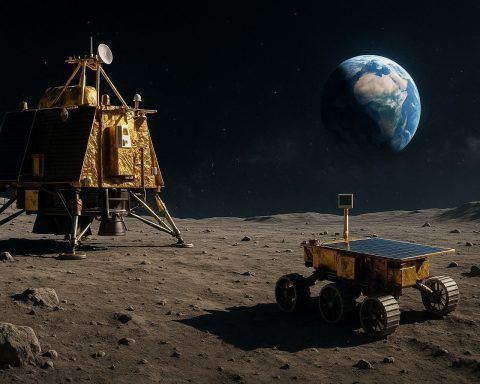
Chandrayaan-3, launched July 2023, achieved a soft landing near the Moon’s south pole on August 23, 2023, with lander Vikram and six-wheeled rover Pragyan. The mission conducted 14 days of surface operations and returned at least 1100 images and data, including ChaSTE soil temperature measurements to 10 cm depth. Chandrayaan-3 marked India’s first soft landing in the lunar south polar region and made India the fourth country to soft-land on the Moon. The mission cost was about $75 million. India’s Mars Orbiter Mission (MOM / Mangalyaan-1) launched on November 5, 2013 atop a PSLV-XL, with a dry mass of about
16 June 2025
The GEO Reboot: How 2040 Will Look from 36,000 km Up

The GEO Reboot: How 2040 Will Look from 36,000 km Up

By 2040, analysts expect the global GEO replacement rate to be 10–15 new satellites per year, totaling about 200 GEO satellites from 2024 to 2040 and replacing most of today’s roughly 350-satellite fleet. A typical GEO satellite is designed for about 15 years, but all-electric propulsion and on-orbit servicing can push operational life to 20–30 years, as shown by MEV extensions of Intelsat-901 and 10-02 in 2020–2021. NASA is phasing out the dedicated TDRS relay fleet by the mid-2030s and shifting to commercial SATCOM services from providers such as SpaceX, SES, Viasat, and Inmarsat, with NASA stopping new TDRS users
Unlocking the Sun: Inside NASA and ESA’s Daring Missions to Touch the Solar Inferno

Unlocking the Sun: Inside NASA and ESA’s Daring Missions to Touch the Solar Inferno

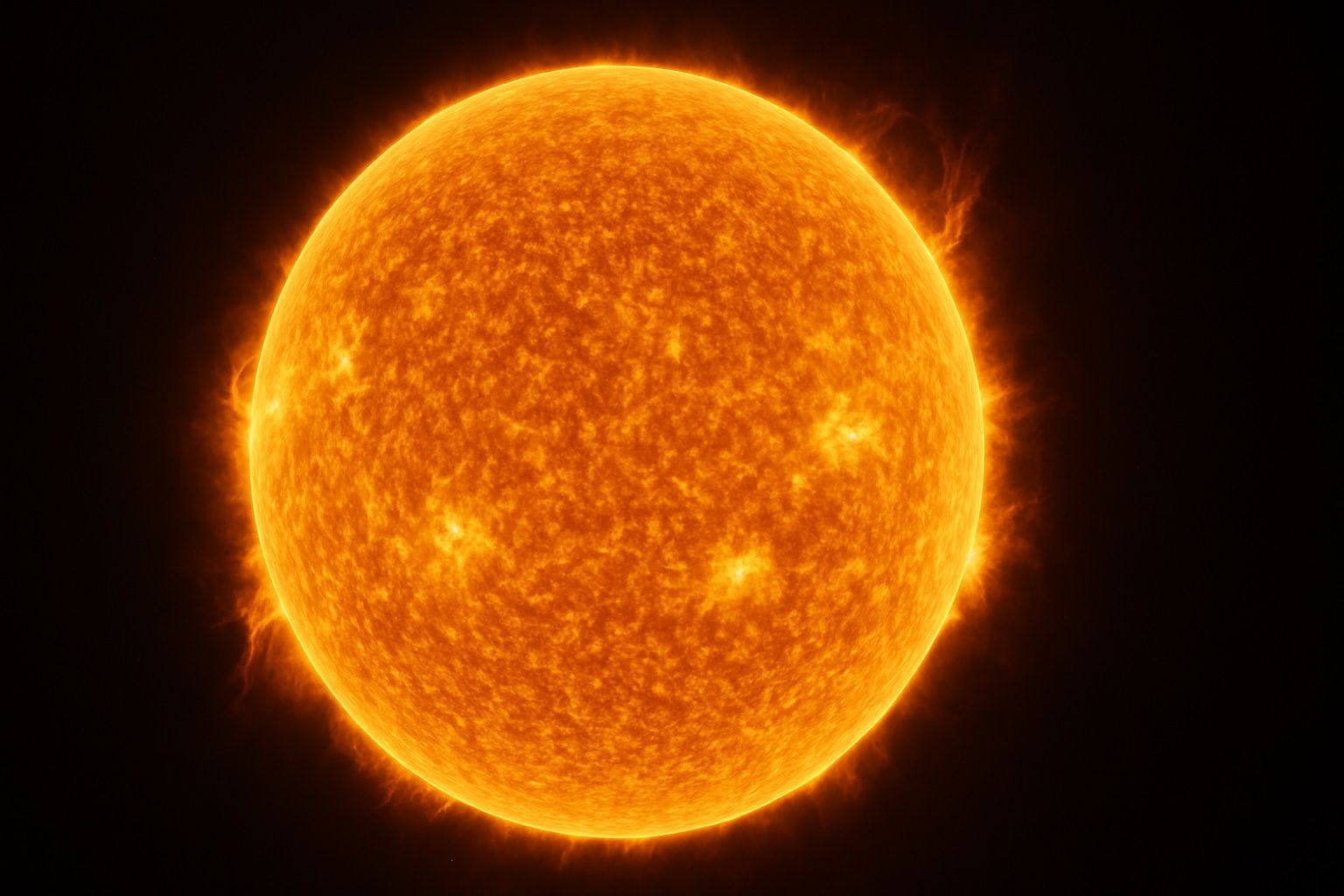
Parker Solar Probe, launched August 12, 2018 on a Delta IV Heavy, became NASA’s first mission to fly through the Sun’s corona and “touch the Sun” in April 2021 when it crossed the Alfvén critical boundary during its 8th orbit. At its closest approaches Parker reaches about 3.8–4 million miles (6.2 million km) from the Sun, roughly 9 solar radii, traveling faster than 430,000 mph (700,000 km/h). The probe’s heat shield is a 4.5-inch-thick carbon-composite foam sandwich that keeps instruments near room temperature while the shield surface heats to about 2,500°F (1,377°C). Parker carries four instrument suites—FIELDS, SWEAP, IS☉IS, and
8 June 2025
1 15 16 17

Stock Market Today

Corning stock price hits record close — what’s driving GLW and the next big test

Corning stock price hits record close — what’s driving GLW and the next big test

7 February 2026
Corning shares jumped 8.3% to a record $122.16 Friday, gaining 11% over two sessions amid strong demand for AI infrastructure stocks. The move follows a $6 billion optical fiber deal with Meta and upgraded company forecasts. Shares traded as high as $122.56 and rose 0.6% after hours. COO Avery Nelson sold 1,894 shares for tax withholding, retaining 66,050.
PepsiCo stock: €2.5 billion bond deal lands as investors size up the price-cut gamble

PepsiCo stock: €2.5 billion bond deal lands as investors size up the price-cut gamble

7 February 2026
PepsiCo priced €2.5 billion in euro notes across four maturities, with settlement set for Feb. 11, according to an SEC filing. The company plans to use proceeds for general corporate purposes, including repaying commercial paper. Shares closed at $170.49 Friday, up 1.8%. PepsiCo is also cutting U.S. snack prices by up to 15% after consumer pushback.
Go toTop