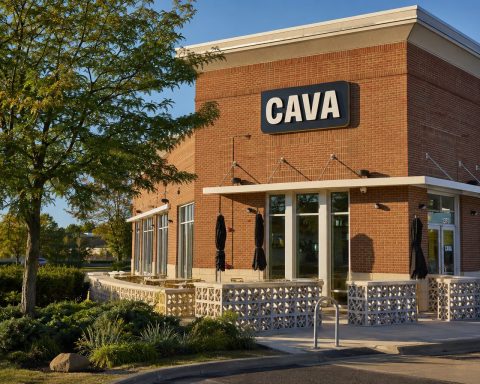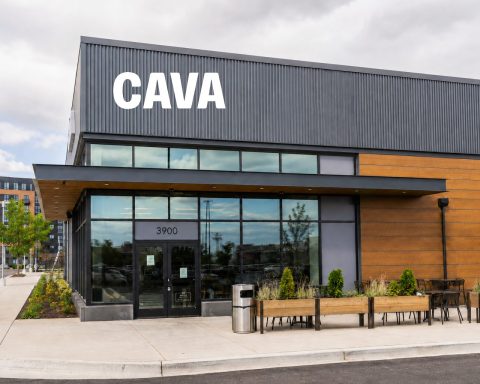

CAVA Group, Inc. NYSE:CAVA ended Wednesday, December 24, 2025, with a notable pop in a holiday-shortened U.S. trading session—a day when stocks and options markets wrapped early ahead of Christmas.
CAVA shares finished the session around $62.10, up roughly 4.6% versus the prior close, after trading between roughly $59.12 and $62.15 on the day, with volume around 2.30 million shares.
After the close, CAVA saw a sharp dip in extended-hours trading, with prints around $59.31 reported by 8:00 p.m. ET—about $2.79 (roughly 4.5%) below the regular-session close.
So what changed on Christmas Eve—and what are investors and analysts focused on as 2025 winds down?
Why CAVA stock moved on Dec. 24, 2025
A key piece of context: December 24, 2025 was an early-close day for U.S. equity and options markets (1:00 p.m. ET), which often leads to thinner liquidity and sometimes bigger-than-usual percentage moves in individual stocks.
On the news and analysis side, one of the most-circulated CAVA items dated Dec. 24, 2025 was a Zacks-focused “trending stock” style write-up (widely syndicated), highlighting how frequently CAVA was being searched and summarizing consensus estimate changes, revenue expectations, and valuation grading. Finviz
Importantly, this type of “investor attention” coverage doesn’t automatically mean a company released new material information that day—it often reflects what the market is already debating: growth durability, same-store sales momentum, and whether valuation is justified.
The fundamental backdrop: CAVA’s latest quarterly results and 2025 outlook
The most recent major company update investors have been digesting into late December is CAVA’s third-quarter 2025 report (fiscal quarter ended Oct. 5, 2025).
Highlights CAVA reported for Q3 2025 included:
- Revenue:$289.8 million (up 20.0% year over year)
- Same-restaurant sales growth:1.9%
- Net new restaurant openings:17 in the quarter, bringing total CAVA restaurants to 415
- Restaurant-level profit margin:24.6%
- Digital revenue mix:37.6%
- Average unit volume (AUV):$2.9 million (company-reported metric) Cava Investor Relations
Just as important for the stock narrative: in that same update, CAVA maintained its unit opening target but trimmed key operating expectations for the full year.
CAVA’s updated full-year fiscal 2025 outlook (as of Nov. 4, 2025) included:
- Net new CAVA openings:68 to 70 (unchanged)
- Same-restaurant sales growth:3.0% to 4.0% (reduced from 4.0% to 6.0%)
- Restaurant-level profit margin:24.4% to 24.8% (reduced from 24.8% to 25.2%)
- Pre-opening costs:$18.0 to $19.0 million (raised from $15.5 to $16.5 million)
- Adjusted EBITDA:$148.0 to $152.0 million (reduced from $152.0 to $159.0 million) Cava Investor Relations
That mix—still-expanding store count but cooler same-store sales expectations and margin pressure—has basically been the core tug-of-war in CAVA stock through the second half of 2025.
Demand and margin pressures: what CAVA and media reporting have emphasized
Broader reporting after the Q3 print focused on two issues that matter a lot for restaurant stocks:
- Consumer pullback (especially among younger diners)
- Cost pressures (including specific mentions of tariff-related impacts)
Reuters reported that CAVA cut its annual same-store sales growth forecast again in 2025 and pointed to weaker demand among budget-conscious consumers (notably ages 25 to 35), while also citing tariff-linked cost pressure (including imported beef) and a lower restaurant-level margin.
Meanwhile, mainstream business coverage has also spotlighted CAVA’s positioning choice: not leaning heavily into discounting even as much of the restaurant industry pushes deals to defend traffic. The Wall Street Journal described CAVA maintaining a “no-discounting” stance while emphasizing perceived value (with bowls often in the low teens). Wall Street Journal
For investors, this matters because discounting can be a short-term traffic lever—but it can also compress margins and, if overused, “train” customers to wait for deals. CAVA’s strategy signals confidence in brand strength, but it raises the bar on execution: menu innovation, throughput, hospitality, and digital experience have to keep earning the premium.
Expansion is still the engine: store growth, new-unit productivity, and the long runway story
If you want the bull-case summary for CAVA Group stock, it’s basically this: open more restaurants, keep unit economics strong, and let the brand travel.
CAVA’s own commentary in the Q3 release leaned into that theme, pointing to continued market share growth and strong new restaurant productivity trends.
And earlier in 2025, Fast Company reported CAVA planned to open up to 68 new restaurants in fiscal 2025, while reiterating the company’s longer-term ambition to reach 1,000 locations by 2032—a target that keeps CAVA in the “long runway” conversation even when same-store sales cool from peak levels. Fast Company+1
The key nuance for 2026 and beyond is that unit growth can carry revenue even when comps slow—but the market typically pays up only if it believes:
- new units stay productive,
- margins don’t deteriorate structurally,
- and the brand doesn’t “run out of great sites.”
CAVA analyst forecasts on Dec. 24, 2025: price targets are still widely spread
As of Dec. 24, 2025, analyst target data across major aggregators still shows meaningful disagreement—which is exactly what you’d expect from a growth restaurant stock navigating a comps slowdown.
Here’s what several widely followed forecast aggregators showed around today’s tape:
- StockAnalysis: consensus rating “Buy” with an average price target around $78.84 (low $52, high $120). StockAnalysis
- MarketBeat: consensus price target around $81.00 (low $52, high $150), implying material upside from late-December prices (methodology varies by provider).
- Investing.com: average 12‑month target around $67.63 (high $86, low $51) and an overall Buy-leaning rating summary.
Why the mismatch? Different platforms pull from different analyst sets, refresh on different schedules, and treat stale targets differently. The useful takeaway isn’t one magic number—it’s the range: some analysts still underwrite a strong rebound, while others cluster closer to the current price because comps/margins have become harder to model confidently.
The Zacks-style “estimate revision” lens (dated Dec. 24, 2025)
The Zacks-syndicated article dated Dec. 24, 2025 put the spotlight on earnings estimate revisions and included these consensus-style figures:
- Expected EPS for the current quarter:$0.03 (year-over-year decline noted in the piece)
- Expected EPS for the current fiscal year:$0.54
- Expected EPS for next fiscal year:$0.59
- Expected sales for the current quarter:$268.15 million
- Expected sales for the current fiscal year:$1.17 billion
- Expected sales for next fiscal year:$1.42 billion Finviz
It also listed a Zacks Rank #3 (Hold) and a valuation style grade indicating the stock trades at a premium versus peers (per its scoring framework).
(As always with syndicated estimate summaries: treat them as descriptive of the consensus at that moment, not as guarantees—restaurant fundamentals can shift fast when traffic trends shift.)
Sentiment check: short interest eased, but it’s still elevated
Another “current” line of analysis heading into Dec. 24 is short interest.
MarketBeat reported that as of Nov. 28, 2025, CAVA had about 14.15 million shares sold short, roughly 13.88% of the public float, and that short interest declined versus the prior reporting period (days-to-cover around 3.1).
Benzinga likewise highlighted a decline in short interest as a percentage of float, while noting CAVA remained above peer averages in shorting intensity (based on the outlet’s framing).
High short interest doesn’t automatically mean “bearish equals correct”—but it does tell you the stock is still a battleground. That can amplify moves in either direction when new information hits.
Insider selling: another data point investors keep watching
MarketBeat’s insider-tracking page indicated that insiders sold a substantial amount of stock over the last 24 months (as compiled by that service), totaling over 6 million shares and roughly $490 million in value.
Insider selling is nuanced—executives sell for many non-bearish reasons (taxes, diversification, scheduled plans). But in a premium-growth story like CAVA, investors tend to watch insider behavior closely because valuation already assumes strong execution.
Where CAVA stock stands right now: the “rebound vs. reality” snapshot
By the numbers on Dec. 24:
- Close: about $62.10 (regular session) Investing.com
- 52-week range: roughly $43.41 to $144.49 Investing.com
- After-hours: about $59.31 reported later in the evening Public
That paints a very 2025 picture: CAVA can still rip higher on good days—but it’s also still living under the shadow of its former highs, and every rally tends to be judged against the same questions:
- Can same-store sales re-accelerate without heavy discounting?
- Can restaurant-level margins stabilize while labor/food/delivery costs fluctuate?
- Does unit expansion continue at the planned pace without diluting returns?
What to watch next for CAVA Group NYSE:CAVA heading into 2026
With Christmas week limiting headline flow, the next genuinely stock-moving catalyst is typically some mix of:
- The next earnings release and updated forward guidance (especially comps and margins)
- Evidence that traffic is recovering (not just price/mix)
- Updates on restaurant openings pace and build costs
- Any signal that discounting pressure in the sector is easing—or that CAVA’s brand is strong enough to keep resisting it
If CAVA surprises to the upside on traffic and margins, the stock’s valuation can re-rate quickly. If comps stay muted while costs stay sticky, the market tends to demand a lower multiple—no matter how exciting the long-term store-count story is.