
NEW YORK, June 24, 2026, 05:07 EDT
- Cerebras traded at $193.25 ahead of the open, off 14.8% from its $226.72 close on Tuesday, before trading started on Nasdaq.
- Cerebras reported that revenue almost doubled in Q1, but it set full-year core gross margin guidance at 38% to 41%, down from the first quarter’s 47%.
- Cloud and services now make up 43% of revenue, higher than 30% last year, according to the company. Gross margin for the segment dropped 19.3 percentage points.
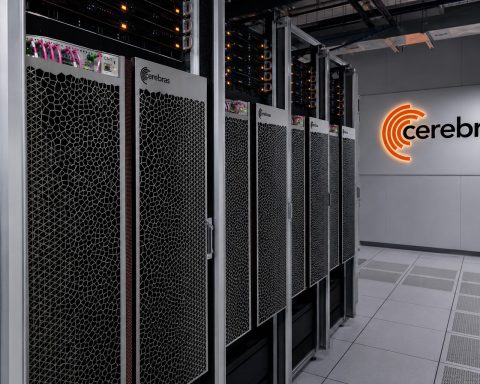
Cerebras Systems Inc. stock was due for its first full-day move after the AI chipmaker’s first earnings report as a public company. Sales jumped, but costs rose just as fast. The company is running into higher expenses as it tries to scale up growth.
Nasdaq’s main session was still closed. According to the exchange, trading hours are 9:30 a.m. to 4 p.m. ET, with premarket from 4 a.m. Pre-market moves showed Cerebras at $193.25, down from Tuesday’s $226.72 close, Google Finance data showed. Nasdaq’s 2026 holiday schedule does not list June 24 as a closure.
That puts the stock just 4.5% over its $185 IPO price. Cerebras took in around $6.38 billion in gross proceeds last month when underwriters exercised the full option, with Class A shares starting Nasdaq trade as CBRS on May 14.
Cerebras is still expensive on sales. With a market cap of $49.79 billion Tuesday, the stock traded at about 58 times the midpoint of its 2026 core revenue forecast of $855 million to $865 million. At $193.25 premarket, that multiple drops to around 49 times, using the earlier share count.
Cerebras posted GAAP revenue of $193.4 million, rising 94% year over year, and logged a GAAP net loss of $14.0 million. Core revenue, which excludes items like pass-through costs and warrant amortization, came in at $191.3 million, up 92%. Core net loss was $2.5 million, cutting losses from a year ago.
Cloud and other services revenue jumped to $82.8 million from $29.8 million, raising its part of total revenue to 42.8%. It was 30.0% in the same period last year. But gross margin for that segment dropped to 48.9% from 68.2%. Hardware margin increased, up to 41.3% from 30.5%.
Cloud and services brought in about $20.2 million of gross profit on $53.0 million in new revenue, for a 38% margin. Hardware had $24.4 million of gross profit on $40.9 million new revenue, close to 60%. That’s basically why investors dumped the stock, despite the revenue beat.
Chief Executive Andrew Feldman says speed should help with pricing. “Fast AI is more valuable than slow AI,” Feldman said in the earnings release. Chief Financial Officer Bob Komin said on the post-earnings call that renting outside capacity will “depress core cloud and other services margin temporarily,” Reuters reported. Cerebras
The gap remains wide versus bigger AI-chip rivals. Cerebras’ full-year adjusted gross margin still lags Nvidia’s mid-70% range and AMD’s mid-50% range, Reuters reported. Ben Bajarin, CEO of Creative Strategies, told Reuters the big chip design at Cerebras probably hurts its margins, since these chips are tough to produce.
AI inference is still the main story for the bull view. Cerebras says it landed a multi-year deal with OpenAI for 750 megawatts of compute, valued at over $20 billion. AWS is using its Trainium chips with Cerebras CS-3 systems to speed up response times in Amazon Bedrock. OpenAI’s Sachin Katti called Cerebras a “dedicated low-latency inference solution.” Cerebras
Morgan Stanley analysts led by Joseph Moore wrote after the quiet period that demand for “fast, low-latency inference” is rising fast, calling Cerebras a “unique chance” to invest in an AI processor company going after Nvidia. Wall Street looks willing to pay for that story. Reuters
Capacity could be what drives Cerebras shares in the next few quarters, not demand. Cerebras listed risks like needing capital, limited data center space, ongoing losses and a heavy reliance on big customers. Names include OpenAI, Group 42, Mohamed bin Zayed University of Artificial Intelligence, and AWS. If leased capacity sits idle longer than planned or Nvidia and AMD push inference prices down, shares might hover near the IPO price, still looking pricey against revenue.