
New York, January 5, 2026, 15:27 ET — Regular session
- Chevron (CVX) climbed with energy shares after Venezuela headlines shifted the policy spotlight
- Traders are focused on U.S. sanctions and licensing signals tied to Venezuelan crude flows
- Chevron’s next scheduled catalyst is its Jan. 30 earnings report and conference call
Chevron (CVX) shares were up $8.62, or 5.5%, at $164.52 in afternoon trading, after earlier touching $171.50.
The move followed weekend developments in Venezuela and U.S. comments pointing to a push for American oil companies to help rebuild the country’s oil industry, a jolt that lifted the broader energy complex.
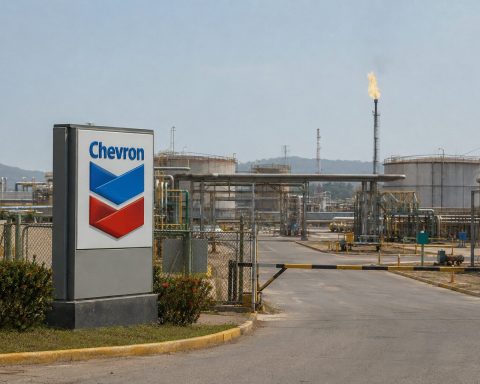
Chevron is seen as the most direct U.S. beneficiary because it is the only U.S. major still operating in Venezuela under a U.S. waiver — a license that allows limited activity despite sanctions. “This type of crude aligns well with the configuration of U.S. Gulf Coast refineries,” said Ahmad Assiri, research strategist at Pepperstone, referring to Venezuela’s heavy sour crude, a dense oil with higher sulfur content. Reuters
The Trump administration is planning meetings with oil executives later this week to discuss boosting Venezuelan output, a source familiar with the matter said. Chevron exports about 150,000 barrels per day (bpd) from Venezuela to the U.S. Gulf Coast, according to Reuters.
Peers also advanced, though less sharply than Chevron. Exxon Mobil was up 2.3% and ConocoPhillips gained 3.4% in afternoon trading.
Oil prices strengthened as traders assessed how the upheaval could alter crude flows from Venezuela. Brent futures were up 96 cents, or 1.58%, at $61.71 a barrel, while U.S. West Texas Intermediate gained 95 cents, or 1.66%, to $58.27; OPEC+ — a coalition of OPEC and allies — kept output steady on Sunday.
For Chevron shareholders, the near-term swing factor is Washington’s next step on sanctions and export rules — the mechanics that decide whether Venezuelan barrels can move and who can market them. If policy opens the door wider, Chevron’s existing foothold matters more than any headline about reserves.
But the trade has clear downside scenarios. Policy can turn abruptly, licenses can tighten, and restoring production from aging fields is capital-heavy work that unfolds over years, not weeks.
Separately, Chevron said it will hold its fourth-quarter earnings conference call on Jan. 30 at 11:00 a.m. ET, with CEO Mike Wirth and CFO Eimear Bonner among the speakers. Investors will be listening for guidance on shareholder returns and any commentary on how Venezuela policy affects near-term planning.
Next up for traders is read-through from the administration’s talks with oil executives later this week and any new language on sanctions and licenses. The next fixed date on the calendar is Chevron’s Jan. 30 earnings release and outlook.
Related articles: NYSE:CVX