
U.S. markets are closed today for Christmas Day, after an early close on December 24—giving investors a moment to digest a surge of late-December headlines that are reshaping the “data center stocks” trade. New York Stock Exchange
The story going into 2026 is no longer just “AI needs more servers.” It’s a tighter, more complex investment narrative: hyperscalers and AI platforms are projected to keep spending aggressively, but grid capacity, permitting, and financing structures are rapidly becoming the real swing factors for returns. Goldman Sachs
Below is a news-and-forecast roundup as of 25 December 2025, with a practical map of the subsectors investors are using to express the theme—from data center REITs and colocation operators to power/thermal suppliers and “powered land” infrastructure plays.
What’s driving data center stocks right now: AI spending is still accelerating
A key reason data center equities remain a core “AI infrastructure” proxy is that major AI players and hyperscalers are expected to keep raising capital expenditure. Goldman Sachs recently argued AI companies may invest more than $500 billion in 2026, pointing to a pattern of estimates rising over time and frequently underestimating AI-related capex. Goldman Sachs
For markets, that matters because AI capex doesn’t flow into a single ticker—it cascades into:
- Colocation and hyperscale campuses (leasing and power commitments),
- Electrical gear and cooling (power distribution, thermal management),
- Grid interconnect and generation (utilities, developers, “colocation with power”).
In other words, “data center stocks” are increasingly a supply-chain theme—not just a real-estate theme.
Today’s on-the-ground signal: Microsoft’s buildout continues (even on a market holiday)
One of the clearest real-world indicators of continued demand is simply the pace of construction announcements.
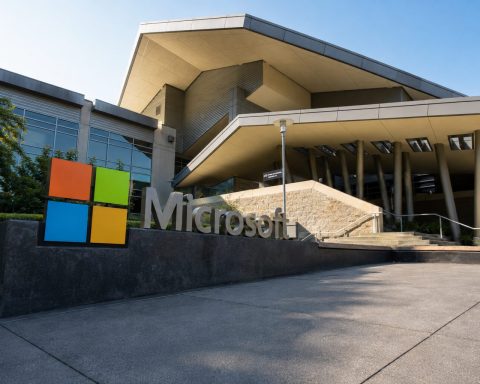
A local Texas report dated Dec. 25, 2025 says Microsoft plans a $400 million data center west of San Antonio (near Castroville), with an estimated completion timeline into 2028. The piece describes the project as a colocation facility and notes broader regional clustering around power and fiber access.
For investors, the takeaway isn’t the single project—it’s that the AI-and-cloud cycle is still translating into multi-year physical infrastructure commitments, which tend to support longer-duration revenue streams for landlords, contractors, and equipment suppliers.
The new bottleneck: electricity, grid access, and “who pays” for upgrades
1) U.S. power demand forecasts are now explicitly tied to data centers
Reuters reported in December that the U.S. Energy Information Administration expects power consumption to hit record highs, projecting 4,199 billion kWh in 2025 and 4,267 billion kWh in 2026, up from 4,110 billion kWh in 2024, citing data centers (including AI and crypto) as part of the demand driver.
EIA’s Short-Term Energy Outlook commentary also highlights that U.S. electricity generation growth is being driven by large customers (including data centers), with demand concentrated in regions such as ERCOT and PJM.
2) The “power premium” is becoming investable
S&P Global’s December analysis frames the situation bluntly: load growth from data centers is expected to exceed what grid generation and transmission can deliver in the most constrained places and hours—pushing the market toward customer-sited energy resources and other “faster path to power” solutions. S&P Global
BloombergNEF, meanwhile, forecasts U.S. data-center power demand hitting 106 GW by 2035, a sizable upward revision versus its prior outlook—driven not only by more projects, but by larger projects.
3) Policy and regulation are moving fast—because the stakes are now systemic
Two late-December items show the political and regulatory intensity around data centers:
- Georgia: The Associated Press reports state regulators approved a Georgia Power plan to increase power capacity by 50%, citing projected demand from data centers; the plan involves major long-term cost and ratepayer debates, alongside utility assurances that large users will pay their share.
- Federal (PJM / “colocation” rules): AP also reports that federal regulators (FERC) issued a unanimous order designed to clarify how massive users can effectively plug data centers directly into power plants in the PJM territory—an approach aimed at speeding power access while addressing cost-allocation questions. AP News
Investor implication: grid and regulatory outcomes are no longer background variables. They are becoming primary inputs to revenue timing (when megawatts actually come online), capex intensity, and local political risk.
M&A is roaring back: data centers are becoming “scarce assets”
If 2024 was about AI training clusters, late 2025 is also about ownership of scarce, power-secured infrastructure.
Reuters reports that data center investments (including M&A, asset sales and equity investments) hit nearly $61 billion through the end of November—already above 2024’s record total—citing strong sponsor demand and scarce availability of high-quality data center assets.
Alphabet’s Intersect deal is the clearest example: buy the power, not just the servers
Reuters reports Alphabet will acquire clean energy developer Intersect for $4.75 billion in cash plus assumed debt, as Big Tech increases investment in energy infrastructure to support AI. Reuters also notes Intersect’s portfolio and pipeline scale, including projections tied to gigawatt-level capacity.
Alphabet’s own investor release frames the logic as bringing data center load and power generation development into closer lockstep, with Intersect remaining operationally separate under its brand and leadership.
Why this matters to “data center stocks”: it signals a strategic shift. In constrained markets, the winning asset may be power + land + permits as much as the building.
A hidden downside: the grid scramble can revive dirtier generation
Power scarcity doesn’t just raise leasing spreads—it can reshape the generation mix.
Reuters reported on December 23 that rising electricity demand from AI data centers is contributing to the return of older “peaker” plants in parts of the U.S., particularly in the PJM region, alongside broader concerns about pollution impacts and community burden. Reuters
For investors, this creates a two-sided dynamic:
- Positive for near-term reliability solutions and certain power-market economics,
- Negative for permitting risk, community backlash, and potential tighter emissions policy (depending on jurisdiction).
Where investors are placing bets: the data center stocks “stack” (with prices as of Dec. 24 close)
Because the market is closed today, the most recent trading prices are from Dec. 24, 2025.
1) Data center REITs and landlords: “sell megawatts as much as square feet”
- Equinix (EQIX): $758.72
- Digital Realty (DLR): $155.19
- Iron Mountain (IRM) (data centers plus legacy storage): $105.65
What investors watch here: leasing spreads, backlog conversion, development pipeline timelines, and—more than ever—time-to-power.
A Zacks research report dated Dec. 25, 2025 lists EQIX with a 6–12 month price target of $796 and a long-term recommendation of Neutral, while emphasizing continued demand for interconnected infrastructure alongside concerns such as interest expense and debt burden.
2) “Picks and shovels”: power, cooling, and electrical infrastructure
- Vertiv (VRT): $143.95
- Eaton (ETN): $327.05
- Carrier Global (CARR): $53.50
These names tend to trade on:
- order strength tied to data center buildouts,
- margin and backlog quality,
- supply-chain constraints (transformers, switchgear, thermal components),
- and visibility into 2026–2027 delivery schedules.
3) Networking and compute adjacency: AI traffic and switching demand
- Arista Networks (ANET): $151.49
- NVIDIA (NVDA) (accelerators powering many AI clusters): $178.64
These aren’t “data center landlords,” but they’re frequently included in “data center stocks” baskets because their revenue is closely tied to AI cluster expansion and interconnect needs.
4) Higher-beta infrastructure and “powered capacity” developers
- Applied Digital (APLD): $17.63
- Iris Energy (IREN): $41.98
This bucket can move sharply with single contract updates, financing news, and the credibility of timelines to convert power access into revenue.
Analyst sentiment check: optimism is rising, but timing and financing matter
A notable mid-December analyst datapoint circulating in market news: TipRanks, citing TheFly, reports Goldman Sachs assumed coverage of Digital Realty (DLR) with a Buy rating and a $188 price target, arguing the company could see an extended period of growth supported by backlog and development activity.
The broader context for those calls is consistent with the macro forecasts above: AI demand looks durable, but capacity delivery (not just capacity planning) is what differentiates winners.
The 2026 playbook: 6 catalysts that can move data center stocks fast
- Hyperscaler capex revisions
If 2026 capex expectations keep ratcheting upward (as some Wall Street research suggests), landlords and equipment suppliers may see renewed multiple expansion. - Grid queue breakthroughs (or setbacks)
Regional interconnect approvals in constrained markets can swing sentiment—because “MW delivered” is becoming the real KPI. S&P Global - Colocation and “direct connect to generation” frameworks
FERC’s moves around colocation in PJM could become a template other regions watch—potentially changing who captures value (utilities vs. large-load customers vs. plant owners). AP News - Utility buildouts and political pushback
State-level decisions—like Georgia’s—highlight the emerging political economy of data centers: jobs and tax base vs. ratepayer concerns. - M&A and privatization
Deal volumes are rising, and scarcity of high-quality assets can support valuations—but it can also increase competitive pressure on public REITs to keep pipelines full. - The “dirty power” narrative
If reliability needs push more peakers and legacy generation back into service, permitting and community risk may rise—especially in dense data center corridors. Reuters
Bottom line for investors following data center stocks
As of Dec. 25, 2025, the data center sector sits at the intersection of three forces:
- Demand certainty (AI and cloud workloads still expanding), Goldman Sachs
- Supply constraint (power availability, grid queues, and policy), S&P Global
- Capital and ownership shifts (record dealmaking and Big Tech buying upstream power solutions).
That combination can be bullish—but it also means 2026 may reward investors who track execution metrics (energized capacity, time-to-power, contracted megawatts, and financing discipline) as closely as they track AI headlines.
This article is for informational purposes only and is not investment advice.
Related articles: NASDAQ:MSFT