
SAN FRANCISCO, May 6, 2026, 14:02 (PDT)
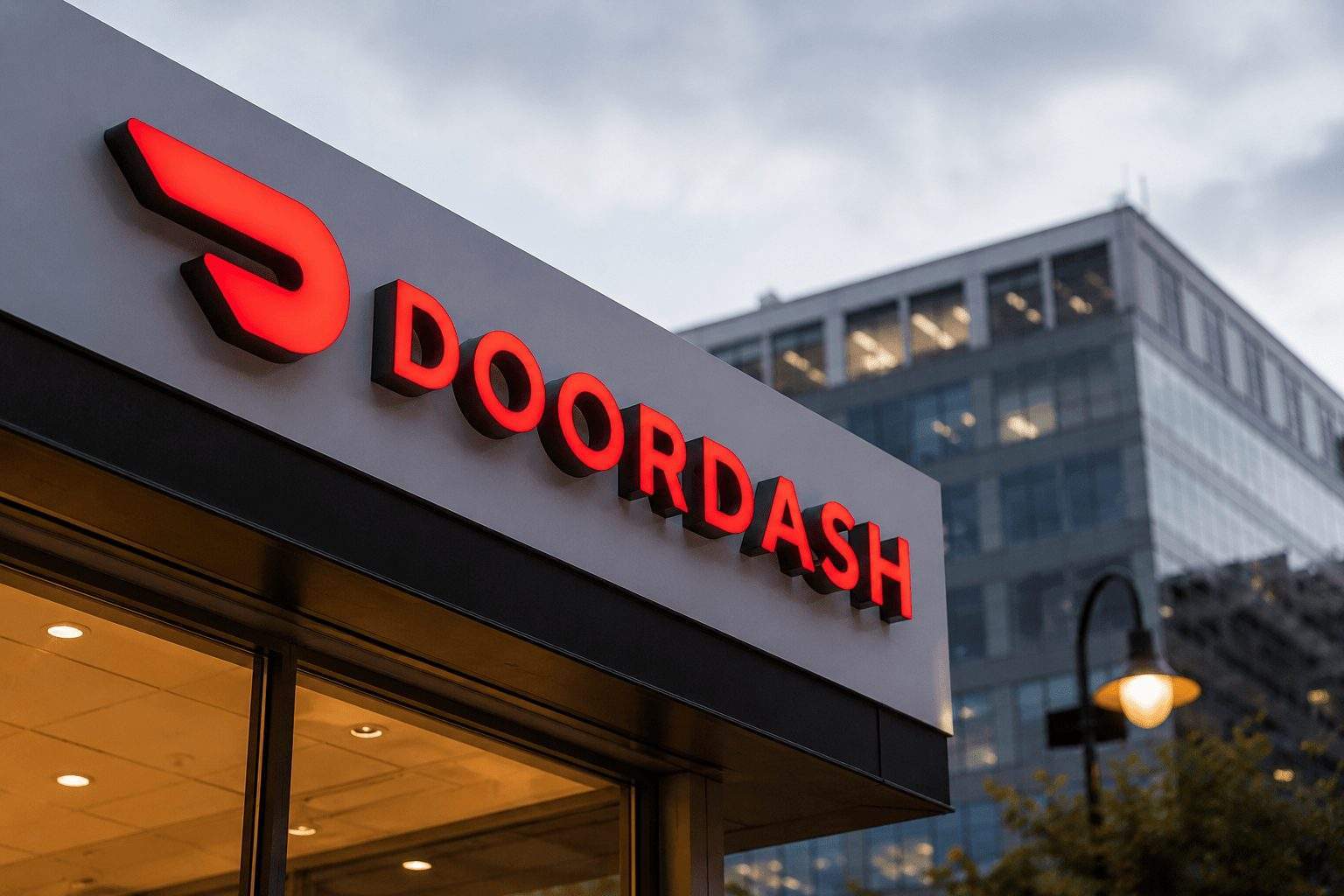
Shares of DoorDash jumped roughly 10% after hours Wednesday, as the company projected second-quarter marketplace gross order value between $32.4 billion and $33.4 billion—topping what analysts had been looking for. Marketplace gross order value (GOV) counts up every dollar spent on completed orders across its platforms, factoring in taxes, tips, and fees.
Investors want to see that DoorDash can still chase growth even as spending ramps up across groceries, retail, restaurants, new countries, and its tech stack—all at once. For the first quarter, DoorDash pointed to strong product efforts and solid consumer appetite as factors behind all-time highs in both monthly active users and membership signups.
The news landed on a hectic day in delivery and on-demand commerce. Instacart, according to Reuters, projected its second-quarter gross transaction value to top Wall Street’s estimates. Uber—the parent of Uber Eats—also issued a second-quarter bookings outlook that cleared analysts’ bars.
DoorDash reported total orders jumped 27% year-over-year, reaching 933 million in the quarter ending March 31. Marketplace GOV surged 37% to $31.6 billion, with revenue up 33% to $4.036 billion. Adjusted EBITDA came in 28% higher, landing at $754 million. Net income, however, slipped 5% to $184 million.
Results landed unevenly versus Wall Street’s forecasts. DoorDash turned in adjusted earnings of 42 cents a share, topping the 36-cent consensus from analysts polled by LSEG, Reuters reported. Revenue, though, fell short—analysts had been looking for $4.14 billion.
Shares bounced, signaling investors brushed off the revenue miss. Bloomberg noted the company’s guidance for second-quarter GOV landed above its own estimate of roughly $32.3 billion; Reuters had analysts’ consensus pegged at $31.8 billion.
Deals gave DoorDash a boost. The company reported first-quarter GOV up 24% and revenue up 21%, both figures not factoring in the acquisition of Deliveroo, its UK delivery unit still in integration. Orders, minus Deliveroo, climbed 16%.
DoorDash highlighted gains beyond its main restaurant segment. The company reported that U.S. grocery and retail brought in more new customers than any previous quarter, while its selection widened in categories like apparel and auto parts. On the international side, DoorDash noted that Deliveroo saw an uptick in monthly active users, orders, and GOV across the U.K., France, and Italy.
Cost remains the sticking point. DoorDash projects spending over $50 million on its Dasher gas relief program in Q2, according to the company. The effort, as noted by AP, is designed to help U.S. and Canadian drivers manage rising fuel expenses. To cover these payouts, DoorDash said it plans to shift investment away from certain other parts of the business.
Margins remain pressured. DoorDash’s adjusted EBITDA margin on GOV eased to 2.4%, down from last year’s 2.6%. Reuters noted the midpoint of DoorDash’s Q2 adjusted EBITDA outlook—$770 million to $870 million—lands just under the analyst consensus of $822.5 million.
Even so, DoorDash left its longer-term 2026 profit outlook unchanged. The company reaffirmed it still sees adjusted EBITDA as a percentage of GOV ticking up from 2025—Deliveroo out of the mix for both years. For this year, DoorDash expects Deliveroo will add roughly $200 million to adjusted EBITDA.
Related articles: Earnings Reports




![Asia Stock Market Today 28/08/2026 [UPDATE: 00:51 SGT] [Salesforce Leads KASE Global Into Final Minutes After Asia’s Split Close]](https://ts2.tech/wp-content/uploads/2026/08/Asia-market-dashboard-2026-08-28-0051-480x384.jpg "Asia Stock Market Today 28/08/2026 [UPDATE: 00:51 SGT] [Salesforce Leads KASE Global Into Final Minutes After Asia’s Split Close]")