Data in this article is current as of the close of trade on Friday, 21 November 2025 (Sydney time). It may change when markets reopen.
1. Where DroneShield’s share price stands heading into Monday
DroneShield Limited ASX:DRO goes into Monday’s ASX open as one of the most volatile and scrutinised stocks on the Australian market.
- Recent price: around A$1.71–A$1.72 per share, after falling roughly 9% in Friday’s session.
- One‑week move: down about 26% compared with a closing price near A$2.33 seven days earlier.
- 52‑week range: roughly A$0.585 to A$6.71, putting the current price about 75% below its October peak.
- Market capitalisation: around A$1.5 billion as of 21 November 2025.
- Valuation: data providers show a triple‑digit trailing P/E ratio north of 200, reflecting a small earnings base and a still‑rich valuation despite the sell‑off.
In other words: even after a brutal correction, DroneShield remains a relatively expensive, high‑beta defence tech stock sitting in the middle of a governance storm.
2. From 800% winner to 75% drawdown: how we got here
Earlier in 2025, DroneShield was an ASX market darling.
- The stock surged about 800% into early October, helped by booming demand for counter‑drone technology, strong revenue growth and a series of high‑profile contract wins.
- It hit a lifetime high on 9 October, then began to unwind as profit‑taking and short‑selling increased.
- By 21 November, shares were about 75% below that peak, wiping out roughly A$4.3 billion in market value in the space of weeks.
Despite that collapse, one‑year performance metrics still show DroneShield massively outperforming the broader market and its sector, underscoring just how extreme the earlier rally was.
The core story now is no longer growth and contracts, but trust: can investors rely on management, disclosure and governance?
3. The $7.6 million contract error that woke up the regulator
The turning point came around 10 November 2025, when DroneShield announced roughly US$7.6 million in contracts with a U.S. government customer. The market initially reacted euphorically; the shares jumped intraday as investors celebrated another big win in the booming counter‑UAS market.
What happened next spooked both the ASX and shareholders:
- The company later acknowledged that part of the “new” November contracts were actually modifications to an order it had already announced in September. ASX Announcements+2ASX Announcements+2
- Trading in DRO was briefly paused as the company moved to withdraw the initial announcement and issue a corrected one.
- ASX Compliance sent detailed query letters asking DroneShield to explain the error, the timing of disclosures and the processes that allowed the misclassification.
DroneShield has described the mis‑labelling of contracts as an “administrative error” and says it is taking steps to ensure it does not happen again. ASX Announcements+1
However, the episode has fed a narrative that the company’s rapid growth outpaced its reporting controls — and that in a hot, meme‑like rally, details that should have been exact were instead sloppy.
4. A$70 million in director share sales in six days
Layered on top of the disclosure error was an eye‑watering wave of insider selling:
- Between 6 and 12 November, CEO Oleg Vornik, chairman Peter James and director Jethro Marks exercised large blocks of performance options and then sold almost all of their shares.
- ASX director transaction data show millions of shares sold on‑market at prices mostly between A$3.20 and A$3.50, with individual trades worth several million dollars each.
- In total, media and data services estimate about A$70 million of stock was sold by the three directors over those days.
DroneShield initially told the ASX it only became aware of these trades after the market closed on 12 November, and that the directors did not coordinate their selling.
Subsequent reporting by The Australian suggested that the board actually approved the share sales in advance, contradicting earlier statements and intensifying questions about candour with the exchange and investors.
For many shareholders, the optics are brutal:
Senior insiders offloaded huge positions near the highs, just as contract disclosures turned out to be wrong and before the stock collapsed.
That combination is at the heart of the current crisis of confidence.
5. Short sellers and “17 red flags”
Well before the sell‑down, some professional investors were already betting against DroneShield.
- Plato Investment Management’s Alpha Fund, which manages about A$2.4 billion, has been short DRO since late September, arguing the company displayed “17 red flags” — around eight times what it usually sees in a problematic stock. afndaily.com+2opalesque.com+2
- Plato’s David Allen has cited extreme valuation, aggressive accounting, and poor scores on audit and remuneration governance as key concerns.
- According to regulator data highlighted by Reuters, reported short positions in DroneShield have surged about 62% over the last two weeks, as more funds bet on further downside.
Short interest, in itself, doesn’t prove a company is over‑ or under‑valued. But it does mean that downside pressure can intensify quickly if negative news continues — and upside can be violent if news improves and shorts rush to cover.
6. Leadership shock and a cancelled investor call
Governance worries are not limited to contracts and share sales.
US CEO resignation
- In mid‑November, DroneShield’s US chief executive, Matt McCrann, resigned abruptly. Coverage from outlets including Bloomberg and local media framed the departure as another blow to investor confidence, and shares fell sharply on the day.
A sudden leadership change in the strategically important U.S. arm raises questions about:
- execution risk in DroneShield’s largest growth market, and
- whether internal disagreements over strategy or governance played a role (something the company has not publicly detailed).
Investor call that never happened
Amid the backlash, DroneShield scheduled an investor call intended to calm markets — then cancelled it at short notice.
- Reuters and domestic financial press report that the cancellation on Friday added to the perception that management is on the back foot and reluctant to face tough questions.
- The board is now expected to front certain broker clients and investors in coming days after previously avoiding direct engagement, according to The Australian.
For a stock whose rally was partly built on a passionate retail following and upbeat communication, the silence and mixed messaging are being interpreted as another red flag.
7. What’s still going right in DroneShield’s underlying business
Lost in the governance drama is the fact that the core business remains in a structurally growing niche.
According to company materials and recent research:
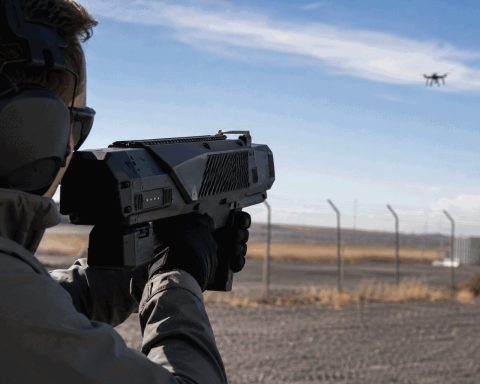
- DroneShield is a pure‑play counter‑UAS (counter‑drone) specialist, using RF sensing, sensor fusion, electronic warfare and AI to detect and defeat hostile drones and autonomous systems.
- Its products — including DroneGun, RfPatrol and DroneSentry systems — are used by military, government, law enforcement and critical infrastructure operators worldwide, with more than 4,000 units sold and over 70 in‑country partners.
- Company estimates and third‑party reports put the global counter‑drone market at US$10+ billion and growing, driven by conflicts in Ukraine and the Middle East and rising concern about cheap drones in grey‑zone warfare and terrorism.
Financially:
- Recent quarters showed strong revenue growth and progress toward sustained profitability, which helped fuel the earlier 2025 rally.
- On 10 November, alongside the problematic announcement, DroneShield highlighted continued momentum in order flow, particularly from repeat U.S. government customers — suggesting underlying demand remains robust even if one announcement was mis‑labelled.
This is why some analysts and commentators — especially before the worst of the sell‑off — argued that the long‑term growth story might ultimately reassert itself once governance issues are addressed.
For now, however, business fundamentals are being overshadowed by questions about the people running it.
8. Key dates and catalysts around 24 November 2025
Heading into Monday’s open, investors should be aware of several near‑term events and overhangs:
24 November 2025 – new shares hitting the market
MarketIndex’s forecast calendar shows an “Issued Shares” event on 24/11/2025, reflecting the conversion of a large block of performance options into ordinary shares. Market Index
The Australian has reported:
- 44.5 million performance options recently vested into shares, and
- about 31.1 million new shares are being issued, with a smaller broker having already dumped nearly 30 million shares linked to these deals earlier this month.
This effectively increases free float just as confidence is fragile — a potential source of additional selling pressure if new holders choose to cash out.
Ongoing ASX compliance focus
DroneShield has already responded to multiple ASX query letters regarding:
- timing and content of the November contract announcement, and
- director share sales and Appendix 3Y filings.
As of 23 November 2025, there is no public announcement of a formal ASIC enforcement action specifically targeting DroneShield; most commentary refers to ASX compliance scrutiny rather than a confirmed regulator investigation into the company itself.
However, any further ASX statements — or the absence of them — will shape sentiment in the days ahead.
Next reporting dates
Current calendars flag 24 February 2026 for DroneShield’s next preliminary and annual report releases.
Those numbers will be crucial for:
- proving whether the contract pipeline converts into sustainable earnings, and
- showing whether management has actually tightened governance and reporting.
9. How the market is reading DroneShield now
Putting the pieces together, here’s how sentiment broadly looks before Monday’s open:
- Valuation reset, but not cheap by conventional metrics
Even after a 75% drawdown, DroneShield still trades at a lofty trailing P/E on modest profits, meaning investors are being asked to pay up for a growth story at a time when trust in management is damaged. - House broker has cooled
DroneShield’s own house broker (reported to be Bell Potter) has reportedly shifted to a much more cautious stance, describing the stock as “going nowhere for the rest of 2025” and effectively “dead money” while the governance overhang persists. fool.com.au+1 - Professional money is sceptical
Short sellers like Plato are vocal, calling DroneShield one of the most extreme risk profiles globally, with 17 identified red flags. - Retail and momentum investors are bruised
Articles and forum posts describe the rout as a “rug pull” and a “governance meltdown”, with some fund managers quoted as saying faith may be permanently lost among parts of the market. Capital Brief+2Reddit+2
At the same time, more constructive voices note that:
- the underlying defence-tech demand drivers remain intact,
- the company still has a differentiated product set in a fast‑growing niche, and
- if governance can be reset, the stock may eventually re‑rate from far lower levels.
This leaves DroneShield in a classic high‑risk, high‑uncertainty zone.
10. Questions to ask yourself before trading DroneShield on 24 November
If you’re considering buying, selling or simply holding DroneShield around Monday’s open, it may help to work through some practical questions:
- Time horizon
- Are you looking at hours and days, or years?
- Short‑term moves are likely to be dominated by headlines, not fundamentals.
- Governance tolerance
- Are you comfortable owning a company where senior insiders have just sold out almost entirely, after a huge rally and amid disclosure errors? Market Index+2Reuters+2
- Information comfort
- Do you feel you have enough clarity from management?
- The cancelled investor call and limited direct commentary mean many investors feel they’re flying partly blind.
- Regulatory risk
- How would you react if ASX or ASIC took a harder line, or if new compliance findings were released?
- Even if no enforcement action eventuates, the reputational damage is already significant.
- Position sizing
- Given the volatility, can you size any position small enough that a further large drop would be tolerable within your overall portfolio?
- Opportunity cost
- With the house broker calling the stock “dead money” for the rest of 2025, are there other defence or tech names with cleaner stories that might offer a better risk‑reward profile for your timeframe? fool.com.au+1
Bottom line: a powerful technology story in a governance penalty box
DroneShield heads into the 24 November 2025 ASX open as:
- a market‑moving defence tech name in a structurally attractive niche,
- but also a case study in how quickly trust can unravel when disclosure missteps, insider selling and communication gaps collide.
The upside case rests on:
- continued growth in counter‑drone demand,
- proven products and global reference customers, and
- the possibility of a governance “reset” that restores credibility over time. DroneShield+2DroneShield+2
The downside case centres on:
- ongoing regulatory and media scrutiny,
- the risk that key institutions and retail investors simply move on,
- heavy short interest, and
- fresh share supply from newly issued stock.
For now, DroneShield is best thought of as a high‑risk, sentiment‑driven stock where governance, not just growth, will determine whether the next big move is a recovery or another leg down.
This article is for general information only and does not constitute financial advice. It does not take into account your objectives, financial situation or needs. Consider speaking with a licensed financial adviser or doing your own detailed research before making any investment decisions.
Related articles: ASX:DRO