
As U.S. markets prepare for a shortened Black Friday session on Friday, November 28, 2025, Eli Lilly and Company NYSE:LLY will open trading as one of the most closely watched stocks on Wall Street. The drugmaker has just joined the exclusive $1 trillion market‑cap club thanks to explosive demand for its GLP‑1 weight‑loss and diabetes drugs, alongside new momentum in Alzheimer’s disease and oncology.
At last trade, Lilly shares were around $1,104 with a market capitalization near $990 billion, giving the company a trailing P/E ratio of roughly 54x earnings and a forward P/E in the mid‑30s—valuations that remain elevated even after a modest pullback from the trillion‑dollar peak.
Friday’s session will also run on shortened hours: the NYSE and Nasdaq will open at 9:30 a.m. Eastern and close at 1:00 p.m., as they do every year on the day after Thanksgiving.
Below is a look at where Eli Lilly stock stands heading into the open, the latest company‑specific news driving the story, and what traders and long‑term investors will be watching most closely.
Key points before Friday’s open
- Stock near record territory: LLY trades just above $1,100 per share, up more than 35% year‑to‑date and over 75% since the launch of weight‑loss drug Zepbound in late 2023.
- Newly minted $1T heavyweight: Lilly recently became the first pharmaceutical and healthcare company in history to reach a $1 trillion valuation, powered by its GLP‑1 tirzepatide franchise (Mounjaro and Zepbound).
- Q3 2025 earnings re‑rated the stock: Third‑quarter revenue hit about $17.6 billion, up 54% year‑over‑year, with over $10 billion coming from metabolic (diabetes/obesity) products alone.
- Fresh policy & access headlines: Lilly has signed pricing and access deals with the U.S. government, backed emerging direct‑to‑employer obesity programs, and is shifting away from CVS for its own employee drug plan—all of which could reshape GLP‑1 coverage and margins.
- Pipeline & AI investments: New approvals for Alzheimer’s drug donanemab/Kisunla in Europe and India, a $1.2 billion manufacturing expansion in Puerto Rico, and an AI supercomputing partnership with NVIDIA highlight the breadth of Lilly’s next‑wave growth bets.
- Analysts remain overwhelmingly bullish: Major firms including Truist, JPMorgan and Morgan Stanley have all raised price targets this month, now clustering around $1,150–$1,180, modestly above current levels.
Where Eli Lilly stock stands heading into Black Friday
As of late Thursday trading, Eli Lilly shares change hands around $1,104, down slightly on the day but still within range of all‑time highs notched earlier this week.
According to multiple data providers, Lilly now sports:
- Market cap: ~$988–$989 billion Yahoo Finance+1
- Trailing P/E: roughly 54x (TTM earnings) Companies Market Cap+3Yahoo Finance+3GuruFocus+3
- Forward P/E: mid‑30s (based on 2026 estimates) Yahoo Finance+1
- Dividend yield: around 0.5–0.6%, with a quarterly dividend of $1.50 per share and total 2025 dividends of $6.00.
Short interest remains low for such a widely debated growth name. As of mid‑November, roughly 7.25 million shares, or about 0.8–0.9% of the float, were sold short, with a days‑to‑cover ratio of around 1.4–1.9 days.
Takeaway: Heading into Friday’s open, Lilly is priced as a premium growth franchise: low dividend, heavy reliance on GLP‑1 demand, but with some of the strongest revenue and earnings trajectories in large pharma.
How Lilly joined the $1 trillion club
In the past week, multiple outlets confirmed that Lilly has become the first pharma and healthcare group ever to reach a $1 trillion valuation, joining tech giants like Apple, Nvidia and Amazon in the 13‑digit market‑cap tier.
The key driver: GLP‑1 drugs for obesity and diabetes, particularly tirzepatide marketed as Mounjaro (diabetes) and Zepbound (obesity). According to recent coverage:
- GLP‑1 metabolic products now generate more than half of Lilly’s total revenue, exceeding $10 billion in Q3 2025 alone.
- In the first nine months of 2025, Lilly’s tirzepatide franchise delivered roughly $24.8 billion in sales and has already overtaken Merck’s Keytruda—previously the world’s top‑selling drug—on quarterly revenue.
- Analysts at Truist Securities now estimate that Mounjaro + Zepbound + the future oral GLP‑1 pill orforglipron could collectively reach an extraordinary $100+ billion in peak annual sales, redefining the notion of a “mega‑blockbuster.” BioSpace+1
Lilly’s Q3 2025 results, released on October 30, cemented that narrative:
- Revenue: about $17.6 billion, up 54% year‑over‑year.
- GLP‑1 metabolic sales alone: roughly $10.1 billion in the quarter.
- Management raised full‑year 2025 revenue and EPS guidance, citing sustained demand for obesity and diabetes treatments and progress across oncology and neuroscience.
For many investors, these numbers justify Lilly’s premium multiple; for skeptics, they highlight how much of that trillion‑dollar value is tied to a single therapeutic area.
Fresh catalysts now shaping the LLY story
Several important developments in the last few weeks may influence sentiment around Lilly stock as trading resumes on Friday.
1. Direct‑to‑employer and pricing deals for weight‑loss drugs
Lilly has moved aggressively to expand and reshape access to its GLP‑1 drugs:
- On November 21, the company announced it will roll out an employer‑focused obesity care model in early 2026. The program gives employers flexible cost‑sharing options and integrates clinical support, aiming to bypass traditional pharmacy benefit managers (PBMs) and make it easier to cover branded GLP‑1 drugs.
- The same Reuters report notes that digital health firms Waltz Health and 9amHealth are launching direct‑to‑employer programs in collaboration with Lilly and rival Novo Nordisk, offering employers more transparent access to GLP‑1 therapies while pushing back against gray‑market compounded versions.
- Earlier this month, Lilly and Novo Nordisk agreed with the U.S. administration to cut prices on weight‑loss drugs for Medicare, Medicaid and cash‑paying patients, in exchange for broad coverage and policy clarity.
Separately, Lilly also struck a strategic agreement with the Trump administration to sell Zepbound and Mounjaro at reduced prices through a direct‑to‑consumer platform dubbed TrumpRx, as well as into Medicare. Commentators suggest that the deal could actually expand revenue by dramatically increasing patient reach, despite lower per‑dose pricing.
Implication for the stock: These initiatives broaden the volume opportunity but add complexity to the pricing and margin outlook for the GLP‑1 franchise—one key theme for investors to keep in mind into 2026.
2. PBM shake‑up: Lilly drops CVS for its own employees
Another notable access story with reputational and policy overtones:
- On November 12, Reuters reported that Lilly will drop CVS Health’s Caremark drug plan for its employees and move them to PBM Rightway starting January 1. The change follows Caremark’s decision earlier this year to remove Zepbound as a preferred product in favor of Novo Nordisk’s Wegovy.
Lilly framed the switch as part of a routine review of benefit providers, but the move underscores a larger tug‑of‑war between drugmakers and PBMs over GLP‑1 pricing and formulary status. Investors will be watching for any ripple effects on commercial coverage for Zepbound next year.
3. Manufacturing expansion and the oral GLP‑1 pill
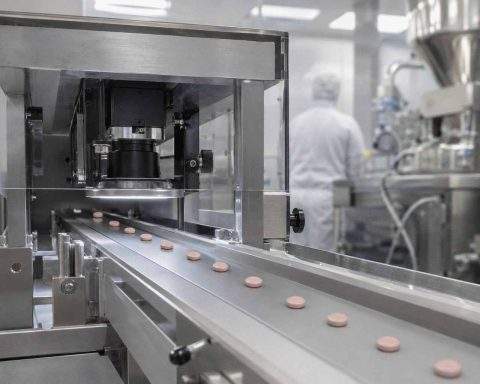
To support its growth ambitions and hedge against possible U.S. tariffs, Lilly plans to invest more than $1.2 billion expanding its manufacturing site in Carolina, Puerto Rico:
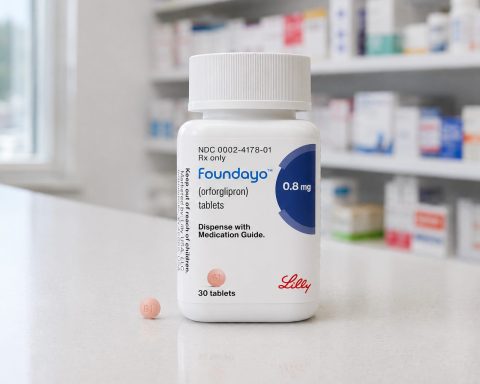
- The upgraded facility will help produce orforglipron, Lilly’s once‑daily oral GLP‑1 pill. The company expects to file global marketing applications by year‑end 2025, aiming to complement injectable tirzepatide with a more convenient pill option.
- The Puerto Rico build‑out is part of a broader $50 billion U.S. manufacturing expansion plan, including at least four new sites, as the company positions itself for long‑term domestic production of obesity, diabetes, cardiovascular and oncology medicines.
Early Phase 3 readouts suggest orforglipron can deliver high single‑ to low double‑digit average weight loss over 72 weeks versus low single‑digit losses on placebo, according to analysts who have reviewed the data.
For Friday’s trade: Any new commentary on orforglipron timelines, regulatory interactions or manufacturing ramp could sway sentiment, given how central this pill is to Lilly’s long‑range GLP‑1 narrative.
4. Alzheimer’s franchise: EU and India approvals for donanemab/Kisunla
Lilly is also expanding beyond metabolic disease into Alzheimer’s, where it is emerging as a key player:
- On September 25, the European Commission granted marketing authorisation for Kisunla (donanemab) to treat mild cognitive impairment and mild dementia in early Alzheimer’s disease, based on a positive opinion from the European Medicines Agency. The approval includes genetic‑based restrictions and risk‑mitigation measures, such as careful monitoring for ARIA (amyloid‑related imaging abnormalities).
- On November 18, India’s CDSCO approved donanemab for adults in the early symptomatic stages of Alzheimer’s, again focusing on patients with mild cognitive impairment or mild dementia and confirmed amyloid pathology.
These authorisations build on earlier U.S. regulatory decisions and further globalize Lilly’s Alzheimer’s footprint. They also arrive just as Novo Nordisk reported that its GLP‑1 semaglutide failed to slow Alzheimer’s disease in a key trial, diminishing one potential competitor in that space.
5. AI‑powered R&D: partnership with NVIDIA
On October 28, Lilly announced a high‑profile partnership with NVIDIA to build what it calls the most powerful supercomputer owned by a pharmaceutical company, dedicated to AI‑driven drug discovery.
The investment is meant to accelerate:
- In‑silico screening and molecular design
- Simulation of clinical outcomes
- Optimization of trial design and patient selection
While near‑term financial impact is limited, the deal reinforces Lilly’s branding as a technology‑forward biopharma leader, which may support its premium valuation.
Analyst sentiment and valuation check
Despite concerns about concentration risk and rich multiples, analyst sentiment remains strongly positive:
- Truist Securities raised its LLY price target from $1,038 to $1,182 on November 19, maintaining a “Buy” rating.
- JPMorgan recently lifted its target to $1,150, reiterating an “Overweight” stance.
- Morgan Stanley has an “Overweight” rating with a target around $1,171 after its latest increase.
With LLY trading near $1,104, these targets imply mid‑single‑digit to low‑double‑digit upside from current levels, depending on whose model you use.
On the valuation front:
- Most data providers put Lilly’s trailing P/E at ~54x and its forward P/E in the low‑ to mid‑30s, substantially above the large‑cap pharma peer group.
- Some fundamental models are far more conservative: one DCF‑based estimate pegs intrinsic value near $415 per share, implying the stock trades at more than 2.5x that fair‑value estimate today.
In other words, Wall Street largely agrees that Lilly is a standout growth story—but there is a growing debate over how much of that future growth is already priced in.
Risk factors investors should keep in mind
Even as the stock hovers around historic highs, several risks could influence trading on Friday and beyond:
- Pricing and reimbursement pressure
- Agreements with the U.S. government and direct‑to‑employer programs improve access but could compress margins over time.
- Heavy dependency on GLP‑1 drugs
- A large share of revenue and valuation now rests on tirzepatide and related metabolic products. Any safety signal, regulatory surprise, or strong new competitor could hit the stock hard.
- Manufacturing and supply constraints
- Rapidly scaling global demand for GLP‑1s requires flawless execution on new facilities like the Puerto Rico site and U.S. manufacturing expansion. Delays could cap near‑term sales.
- Regulatory and safety risk in Alzheimer’s
- Donanemab/Kisunla approvals come with boxed risks such as ARIA and tight patient selection criteria; any adverse developments could slow uptake or trigger label changes.
- Valuation & sentiment swings
- A stock trading above 50x trailing earnings and just shy of $1T in market cap is vulnerable to multiple compression if growth expectations moderate or macro risk appetite shifts. Commentary pieces already frame Lilly as a prime example of “euphoria” in GLP‑1 names.
- Policy and PBM pushback
- Moves like dropping CVS’s Caremark for Rightway highlight broader friction in the U.S. drug distribution system; future PBM or government actions could affect access and net pricing.
What could move LLY during Friday’s shortened session?
There are no major company‑specific events slated for November 28 on Lilly’s investor calendar; the next scheduled highlight is a fireside chat at Citi’s Global Healthcare Conference on December 2, 2025.
However, several factors could still drive volatility in the half‑day session:
- Follow‑through on the $1T milestone: Media coverage and retail attention around Lilly’s historic valuation may continue to attract momentum traders, even as some institutional investors lock in profits.
- Macro conditions and light holiday liquidity: With markets closing at 1:00 p.m. Eastern and many desks lightly staffed, thin liquidity can exaggerate price moves on relatively small order flows.
- Any new headlines on GLP‑1 coverage or regulation: Updates around Medicare negotiations, PBM formulary decisions, or enforcement actions against compounders could quickly spill into LLY’s tape.
- Sector read‑throughs: News on competitors—especially Novo Nordisk in obesity or Biogen and other players in Alzheimer’s—often influences Lilly’s trading given how closely linked these stories are.
For now, the balance of news flow heading into Friday’s open skews constructive: strong recent earnings, expanding global approvals, visible manufacturing investment and sustained analyst enthusiasm. But with the stock already priced for exceptional growth, any disappointment—however small—could produce an outsized reaction.
Final note
This article is for informational purposes only and does not constitute investment, legal or medical advice. Eli Lilly stock may not be appropriate for every investor, and decisions should always be based on your own research, risk tolerance, time horizon and, where appropriate, consultation with a qualified financial professional.
Related articles: NYSE:LLY