
Eli Lilly and Company NYSE:LLY ended Tuesday, December 23, 2025, modestly lower as investors digested a major competitive jolt in the booming obesity-drug market. LLY closed at $1,071.64, down about 0.45%, and was little changed in early after-hours trading.
The market’s attention today wasn’t on a fresh Lilly press release or an earnings surprise—it was on Novo Nordisk’s newly approved Wegovy pill, the first oral GLP‑1 cleared in the U.S. for chronic weight management. That approval, announced Monday and dominating headlines today, is reshaping near-term expectations for how the next phase of the GLP‑1 race will be fought: pills, pricing, and access.
Below is what matters after today’s close—and what investors will likely be watching before the opening bell tomorrow (Wednesday, Dec. 24).
LLY after the bell: where the stock stands heading into Dec. 24
- Close (Dec. 23): $1,071.64 (‑0.45%) FinancialContent
- After-hours (shortly after the close): $1,071.64 (flat) Google
- Tuesday trading range: roughly $1,057.11 to $1,088.29
- Volume: about 2.0 million shares
The takeaway: LLY didn’t break down on Tuesday’s news flow—but it also didn’t rally through it. The stock is still trading at a high absolute price level, so even a “quiet” day like today can reflect meaningful positioning shifts under the surface—especially in a holiday-shortened week.
What moved Eli Lilly stock today: Novo’s Wegovy pill changes the conversation
The dominant catalyst for GLP‑1 names on Dec. 23 was Novo Nordisk’s FDA approval for an oral version of Wegovy (once-daily oral semaglutide 25 mg). Reuters reported that Novo shares surged on the news and that Lilly’s shares were flat to slightly lower in volatile trading, underscoring that investors viewed this as a competitive development—not a demand-killer for the overall category.
Why the Wegovy pill matters to LLY investors
Lilly’s obesity and diabetes franchise (Zepbound/Mounjaro) has been central to its premium valuation. When anything alters the future “shape” of the market—who wins needle-averse patients, how payers respond, and what happens to pricing power—LLY tends to react, even if nothing changed at Lilly itself that day.
The FDA’s decision effectively signals that the obesity market’s next growth wave may come from:
- patients who don’t want injections,
- simpler logistics and potentially broader distribution, and
- new pricing/access strategies aimed at cash payers and underinsured populations.
Today’s biggest headline in detail: FDA clears the first GLP‑1 weight-loss pill
Multiple outlets framed the approval as a milestone:
- Reuters: The FDA approved Novo’s Wegovy pill on Monday, giving Novo a first-to-market edge in oral obesity treatment. Reuters highlighted a 64-week late-stage study in which participants on 25 mg oral semaglutide lost about 16.6% of body weight on average (vs. placebo).
- ABC News: Also cited a 64-week trial with an average weight loss of 16.6% among trial completers, and emphasized manufacturing/logistics advantages like no refrigeration.
- The Washington Post: Noted that results on the highest dose were around 14% weight loss over 64 weeks, and explicitly contrasted that with Lilly’s injectable Zepbound, which has shown around 20% weight loss in trials.
- AP: Reported trial results around 13.6% over about 15 months and emphasized the “first daily oral” GLP‑1 for weight loss. AP News
Different articles cite different topline numbers because they’re referencing different trial analyses and populations (e.g., “treatment adhered to,” “trial completers,” or broader averages). The core point for LLY holders is unchanged: a credible oral alternative is now real and commercially imminent. Reuters+2AP News+2
Competitive impact: “Pills are the new battleground,” and Lilly is next in line
Reuters’ reporting today put the competitive chessboard in plain terms:
- The Wegovy pill gives Novo a first-mover advantage in oral obesity treatment.
- But analysts questioned whether pills are a “game changer” versus injections and suggested Novo’s advantage could be short-lived if Lilly’s oral candidate reaches the market soon after. Reuters
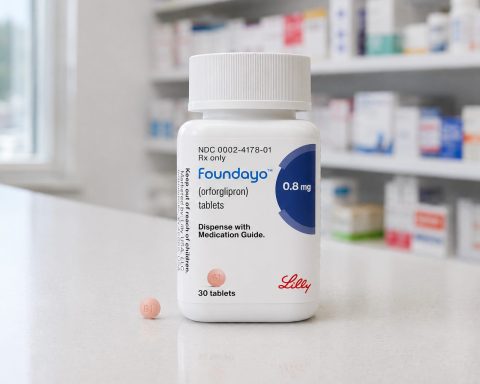
- Reuters cited BMO Capital’s Evan Seigerman saying the early advantage could fade with Lilly’s orforglipron expected to be approved in 2026.
This is a crucial nuance for anyone watching LLY overnight: today’s headline is negative only if you believe Novo’s pill meaningfully delays, diminishes, or derisks the future demand curve for Lilly’s portfolio. A large portion of the market appears to view it instead as:
- confirmation the category is expanding, and
- a reminder that the next “winner-takes-more” fight may be about oral convenience + pricing/access, not just injectable efficacy.
Pricing and access: the $149 starter dose and the direct-to-consumer pivot
If you’re trying to understand what could move LLY tomorrow morning, don’t just watch the clinical numbers—watch the access model.
Reuters reported that Novo is launching the Wegovy pill in January 2026 and is explicitly targeting cash-paying consumers, distributing through major pharmacies (including CVS and Walmart) and platforms such as GoodRx and telehealth player Ro.
Reuters also noted that, under a Trump administration deal, both Novo and Lilly agreed to offer starter doses of their weight-loss pills at $149 per month for Medicare/Medicaid patients and certain cash-paying customers through a White House direct-to-consumer channel (“TrumpRx”). Reuters+2Reuters+2
Meanwhile, The Washington Post reported that Novo said the starting dose for the Wegovy pill will be $149 per month, with pricing for higher doses to be disclosed around launch.
Why this matters for LLY:
- If GLP‑1 “consumerization” accelerates (cash pay, telehealth, simplified access), it can expand the market.
- But it can also intensify price transparency and pricing pressure, two variables that investors often treat as “multiple movers” for premium-priced pharma stocks.
The forecast angle investors are focusing on tonight
Today’s reporting also carried several forward-looking signposts:
- Reuters said analysts expect obesity pills could capture around 20% of the market by 2030, because oral options can address injection hesitancy and broaden access.
- Reuters also described the obesity-drug market as potentially ~$150 billion per year by the next decade.
- In another Reuters report, a bank analyst estimated peak annual sales for the Wegovy pill at about 24 billion Danish crowns (roughly $3.8B) and stressed that launch execution will matter as pricing pressures build.
For LLY bulls, the “tomorrow morning” interpretation is often: a bigger market can still mean a bigger Lilly, especially if Lilly’s oral program remains on track. For LLY skeptics, the interpretation is: a bigger market invites more entrants and more pricing scrutiny, which can compress the premium multiple.
Both views can coexist—and that’s why LLY can trade “flat” on huge obesity headlines: the market is trying to weigh expansion against erosion.
What to know before the market opens tomorrow, Dec. 24, 2025
Here are the practical “watch points” that could matter most between tonight and tomorrow morning:
1) Any new details on Wegovy pill pricing beyond the starter dose
The starter price is now widely reported, but the market will be sensitive to:
- pricing for higher doses,
- how quickly supply scales,
- whether payers signal coverage changes, and
- whether telehealth channels accelerate adoption.
2) Analyst notes and competitive framing around Lilly’s orforglipron timeline
Reuters’ coverage is already framing Novo’s advantage as potentially short-lived if Lilly’s pill arrives in 2026. Any fresh desk notes overnight that reframe timing (or expected efficacy/convenience tradeoffs) can move LLY premarket.
3) Holiday trading conditions can exaggerate moves
Tomorrow is not a normal session, and that matters for interpreting any early price action.
The NYSE and Nasdaq will close early at 1:00 p.m. ET on Wednesday, Dec. 24, 2025, and will be closed on Dec. 25. New York Stock Exchange+1
SIFMA recommended an early close for many U.S. fixed-income markets at 2:00 p.m. ET on Dec. 24.
Short sessions often bring:
- lighter liquidity,
- wider spreads,
- faster “headline-to-tape” reactions, and
- less reliable late-day price discovery.
4) Policy and access headlines remain a live wire for GLP‑1 valuations
Even when the news is nominally “about Novo,” pricing/access frameworks can spill over to Lilly quickly—especially when headlines involve government pricing programs and direct-to-consumer pathways. Reuters+2Reuters+2
Bottom line for Eli Lilly stock tonight
Eli Lilly stock finished Dec. 23 slightly lower and steady after hours, but the real story is strategic: the FDA’s Wegovy pill approval accelerates the shift from “injections dominance” toward a two-front competitive war—injectable efficacy vs. oral convenience, with pricing and distribution likely to determine who wins the next leg. Google+2Reuters+2
For tomorrow morning, LLY investors should be prepared for continued headline sensitivity around:
- how fast Novo can execute an oral launch,
- what “affordable access” actually looks like in practice, and
- whether analysts treat Novo’s first move as a temporary lead—or a lasting change in competitive dynamics.
Related articles: NYSE:LLY