Updated: Wednesday, Dec. 17, 2025 — 6:00 p.m. ET (U.S. market closed; after-hours trading active)
Electric vehicle (EV) stocks ended the Wednesday session with a familiar late‑2025 feel: big headlines, bigger volatility, and a market backdrop that made growth names hard to hold into the close. The broader selloff in tech—driven by renewed anxiety around expensive AI trades—pulled down several EV-linked stocks, especially those that investors increasingly treat as “AI adjacency” plays. AP News+2The Wall Street Journal+2
But beneath the index-level risk‑off mood, the EV tape was anything but quiet:
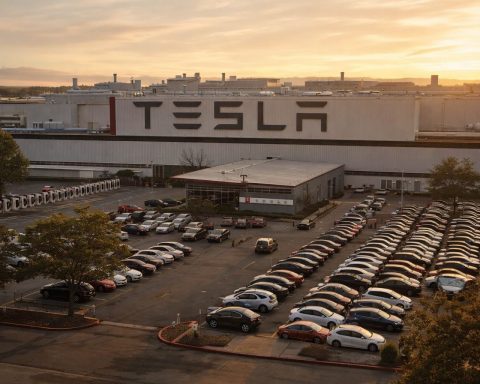
- Tesla (TSLA) traded at record levels intraday before sliding sharply, as investors weighed a California Autopilot marketing ruling (and, more importantly today, the market’s AI jitters). Reuters+1
- QuantumScape (QS) grabbed the day’s most tangible EV-specific catalyst: a new joint development agreement with a Top‑10 global automaker, extending a year of commercial engagement milestones. Business Wire+1
- Ford (F) reinforced a theme that’s reshaping the U.S. EV landscape in late 2025: battery and capacity plans are being rewritten as demand cools and incentives fade—highlighted by a canceled European battery supply deal with LG Energy Solution. Reuters+1
What follows is a detailed, publication-ready breakdown of today’s EV stock action, the major news from Dec. 17, 2025, and the forecasts and analyst narratives shaping expectations into 2026.
EV Stocks Snapshot at 6:00 p.m. ET: Prices and Moves
As of around 6:00 p.m. ET (including after-hours quotes where available), key U.S.-listed EV and EV‑infrastructure names traded as follows:
- Tesla (TSLA): $467.26, -4.62%
- Rivian (RIVN): $17.60, -1.57%
- Lucid (LCID): $11.13, -3.39%
- Ford (F): $13.15, -1.44%
- General Motors (GM): $80.19, -2.95%
- QuantumScape (QS): $10.74, -0.92%
- ChargePoint (CHPT): $7.21, -4.12%
- EVgo (EVGO): $2.77, -3.15%
- Blink Charging (BLNK): $0.79, -4.82%
The broad takeaway: today wasn’t an “EV sector day” as much as a “macro + AI positioning day”—with a few stock-specific catalysts punching through the noise.
Why EV Stocks Moved Today: The Market Backdrop Was Risk‑Off
Wednesday’s market tone mattered. U.S. equities fell in a tech-led slide, with the Nasdaq down about 1.8% and the S&P 500 down about 1.2%, marking one of Wall Street’s sharper pullbacks in recent weeks. AP News+1
This is crucial for EV investors because:
- Tesla is increasingly traded like a hybrid: EV manufacturer + “physical AI” option.
- Several EV-adjacent names (batteries, charging, autonomy, power electronics) trade as high-duration growth, which tends to suffer when risk appetite drops.
- In late 2025, investor narratives around EV demand are colliding with post-incentive reality—creating a higher bar for companies that still rely on capital markets.
Even pre-market, major outlets framed the day as one where investors were watching AI, big tech and rates closely, with Tesla entering the session near record territory after recent autonomy headlines. Investopedia+1
Tesla (TSLA): California Autopilot Ruling Hits the Tape—But the Market Selloff Hit Harder
The headline
Tesla’s California regulatory overhang resurfaced today after a state administrative judge’s proposals—finding Tesla’s Autopilot/FSD branding misleading—were adopted in a way that kept penalties on the table but delayed immediate impact.
Reuters reported that the California DMV adopted the judge’s proposals, including a 30‑day suspension of Tesla’s sales license, but stayed that suspension for 90 days, and stayed any suspension of Tesla’s manufacturing license indefinitely. The DMV indicated Tesla could avoid a suspension by making specific changes/confirmations to its marketing and driver-monitoring representations, and the company also has a path to appeal/review. Reuters+1
Why investors weren’t panicking (today)
Investor’s Business Daily emphasized that the market appeared relatively calm about the regulatory development given the grace period and Tesla’s ability to adjust language, citing an analyst view that it likely wouldn’t disrupt the business materially in the near term. Investors
The bigger driver: Tesla’s “AI trade” correlation
Multiple market summaries tied Tesla’s sharp move more to the broader tech/AI retreat than to California alone. That framing matters because it explains the pattern EV investors have watched all quarter: TSLA often rallies on autonomy headlines, then sells off with tech risk when sentiment flips. Barron’s+2The Wall Street Journal+2
What to watch next for Tesla
For TSLA bulls and bears alike, the near-term checklist is now unusually clear:
- Regulatory timing: whether the DMV process leads to operational disruption—or stays confined to marketing language and legal proceedings. Reuters+1
- Robotaxi execution: Tesla’s autonomy narrative remains a major valuation pillar, repeatedly cited as a key reason the stock had pushed back toward records this week. Investopedia+1
- Demand reality in a post-credit market: sentiment on the “EV business” side of Tesla is facing tougher questions as incentives have rolled off and industry pricing pressure persists. Cox Automotive Inc.+1
Ford (F): A $6.5 Billion Battery Deal Gets Scrapped—A Signal on EV Investment Discipline
Ford was one of the most consequential EV headlines of the day—not because it’s the hottest EV stock, but because Ford’s decisions ripple across the battery ecosystem and suppliers.
What happened
Reuters reported that Ford canceled a $6.5 billion EV battery supply deal with South Korea’s LG Energy Solution, originally planned to start supplying batteries in 2026 and 2027 in Europe. The cancellation came against a backdrop of weaker EV demand and shifting policy under the Trump administration, alongside Ford’s previously announced large EV-related writedown and model adjustments. Reuters+1
Reuters also pointed to broader retrenchment signals in the battery buildout world, including an ended joint venture between Ford and SK On for U.S. battery plants. Reuters+1
Why it matters for EV stocks broadly
This isn’t just “Ford news.” It’s a reminder that:
- Battery capacity forecasts are being rebaselined, not just delayed.
- European EV supply chains can change quickly when automakers revise production plans.
- Policy uncertainty and tariffs can push management teams toward capital preservation and away from big, long-dated commitments. Cox Automotive Inc.+1
For investors, this sets up a 2026 landscape where companies with strong balance sheets and proven demand are likely to be rewarded, while marginal players face a tighter funding environment.
QuantumScape (QS): New Automaker JDA Puts Solid‑State Batteries Back on the Watchlist
If you were looking for a clean, company-specific EV catalyst today, QuantumScape delivered it.
The news (and why traders cared)
QuantumScape announced it achieved its final annual commercial engagement goal for 2025, highlighted by signing a joint development agreement (JDA) with a new automotive OEM customer described as a Top‑10 global automaker. Business Wire
The company also listed other commercial engagement progress over the past year, including expanded collaboration/licensing with Volkswagen’s PowerCo and agreements tied to scaling ceramic separator production with Murata Manufacturing and Corning. Business Wire+1
Investing.com summarized the market reaction by pointing to the JDA headline and positioning it as a “global automaker partnership” style catalyst that often moves pre‑revenue battery developers. Investing.com
The investor lens: what QS needs to prove next
For QS, the long-term argument has always been “commercialization is coming,” and today’s announcement is best read as:
- A credibility milestone (more OEM engagement), not proof of mass production.
- A reinforcement that strategic partners—not just retail speculation—still matter in the solid-state race. Business Wire+1
Investors focused on QS in 2026 will likely demand clearer visibility on scaling, timelines, and repeatable manufacturing metrics.
GM (GM): Analysts Push the “Value + EV + Software” Narrative
While GM isn’t usually bucketed with pure-play EV makers, it remains one of the most important “EV stocks” in the U.S. market because it straddles cash-generating ICE profits and an expanding EV footprint.
A Zacks analysis published on Nasdaq today made the case that GM is near a 52‑week high for reasons that include financial performance, buybacks, and EV progress—specifically citing GM’s U.S. EV sales growth and positioning as the “second-leading EV seller,” with 144,668 EVs sold in the first nine months of 2025, up 105% year over year (per the article). Nasdaq
The same analysis emphasized valuation and capital returns—an angle that has mattered more in late 2025 as investors have become less tolerant of long-dated EV payoffs without near-term cash flow. Nasdaq
Rivian (RIVN): A Fresh 2026 Forecast Raises the Stakes on the R2 Launch
Rivian didn’t have a single dominant “breaking news” headline today on the scale of Tesla/California or Ford/LGES. Instead, the day’s most widely circulating forecast-style content came from an updated Rivian outlook published this afternoon.
A notable forecast scenario (not a promise)
A Motley Fool analysis updated on Dec. 17 modeled a 2026 scenario where analysts expect $6.9 billion in sales, and argued that if investor confidence improves and Rivian trades around a price-to-sales ratio of 7, the stock could trade around $39.27 per share (scenario-based math, not a guaranteed target). The Motley Fool
The key risk factor remains execution
That same analysis made Rivian’s hinge point explicit: the 2026 story depends heavily on rolling out the R2 successfully and continuing to improve cost structure. The Motley Fool
For SEO-minded investors searching “Rivian stock forecast 2026,” the takeaway is straightforward: Rivian still trades on future product execution, and forecasts vary widely depending on assumptions about margins, production cadence, and capital needs.
Lucid (LCID): “Survive to Scale” and the Dilution Question
Lucid’s stock remains one of the market’s most debated EV tickers because it combines a high-end brand narrative with persistent cash burn—making funding strategy a central part of any valuation argument.
Today’s analysis focus: liquidity and dilution risk
A Motley Fool commentary syndicated on Nasdaq today contrasted Lucid with Ferrari, but the Lucid section was blunt: even with delivery records, the company has lowered its full‑year production forecast, moved more slowly than hoped on Gravity deliveries, and faces ongoing pressure from tariffs, the end of the $7,500 federal tax credit, and cash burn—raising dilution concerns. Nasdaq
The article also highlighted Lucid’s recent liquidity actions: expanding a credit facility to roughly $2 billion and issuing $875 million in convertible notes due 2031 (with proceeds used largely to manage nearer-dated convertibles). Nasdaq
Why this matters for EV stock investors
In a post-incentive environment, the market has been less forgiving of EV companies that require frequent capital raises. With LCID, the debate into 2026 is less about “Is the product impressive?” and more about:
- How long can liquidity last?
- At what cost to shareholders?
- Can volume scale fast enough to narrow losses meaningfully? Nasdaq+1
The Big EV Demand Forecast From Dec. 17: Cox Sees a 2026 Slowdown After Incentives Expired
Beyond single-stock headlines, today also delivered one of the most important “industry-level” forecasts for EV investors to anchor on.
Cox Automotive’s Dec. 17 outlook projected 2025 U.S. new-vehicle sales of 16.3 million (best since 2019), but described a clear Q4 slowdown influenced by tariffs, inflation and reduced EV incentives. It also stated that EV and plug‑in hybrid sales accelerated ahead of the end-of-September expiration of $7,500 tax credits, followed by an expected EV sales collapse afterward. Cox Automotive Inc.
Looking into next year, Cox forecast the 2026 new-vehicle sales pace would decline by 2.4% to 15.8 million, citing slower economic growth, less job creation, and the lack of EV tax incentives as factors expected to weigh on sales. Cox Automotive Inc.
A parallel mainstream view: affordability is still the wall
A Washington Post report published today echoed the affordability pressure—highlighting high prices and interest rates as constraints, and noting EV sales momentum cooled after the expiration of the federal credit, with an example that Ford’s EV sales fell sharply in November even as hybrids improved. The Washington Post
For EV stocks, this macro reality creates a higher premium on:
- cost leadership (price cuts without margin collapse),
- financing and incentives,
- and product-market fit beyond early adopters.
What EV Stock Investors Are Watching Next
If today felt like a tug-of-war between autonomy optimism and demand/incentive realism, you’re not imagining it. Here are the catalysts most likely to move EV stocks next:
1) Autonomy, regulation, and liability
- Tesla’s California marketing dispute is a reminder that language, claims, and consumer expectations can become market catalysts. Reuters+1
2) Battery deals and capital spending discipline
- Ford’s canceled LGES deal is the type of signal investors may treat as “the EV capex cycle is resetting.” Reuters
3) The post-tax-credit demand curve
- With credits gone, demand normalizes to affordability and economics. Cox’s forecast suggests 2026 could be slower, not faster, for industry volumes. Cox Automotive Inc.+1
4) Funding and dilution risk for smaller EV players
- Lucid’s liquidity actions and the broader capital market environment remain central to the LCID narrative. Nasdaq
5) Commercialization milestones for next-gen battery tech
- QS’s JDAs can spark rallies, but the market will ultimately demand scalable, repeatable production proof points. Business Wire+1
Bottom Line: Dec. 17 Was a “Narrative Stress Test” for EV Stocks
At 6:00 p.m. ET, the scoreboard shows a down day for most EV names, but the deeper story is about what the market is rewarding as 2025 closes:
- It rewarded credible partnerships and milestones (QuantumScape’s JDA buzz) even in a rough tape. Business Wire+1
- It punished high-multiple, narrative-heavy exposure when AI sentiment softened (Tesla’s sharp reversal from record territory). AP News+1
- It emphasized that the EV market is now operating in a world where incentives have reset, rates still matter, and capital discipline is back in style (Cox forecast; Ford battery deal cancellation). Cox Automotive Inc.+1
Not investment advice. EV stocks can be highly volatile, and the same headlines can mean different things depending on time horizon, risk tolerance, and portfolio concentration.